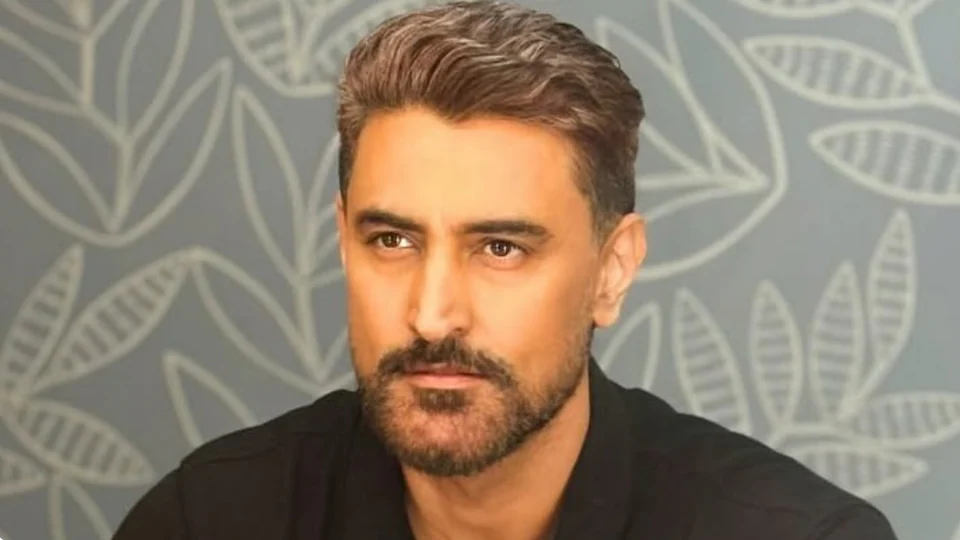
Actor Kunal Kapoor has sparked a conversation about the fear of failure in Indian society, arguing that the shame associated with making mistakes often prevents people from pursuing better opportunities and making important life decisions. In a candid note shared on X, the actor highlighted how the pressure to succeed affects students, professionals and people in relationships, leaving many afraid to step outside their comfort zones.
Kapoor, who is preparing for the release of Ramayana, in which he plays Indra Dev, said that India needs to change its attitude towards failure if it wants to encourage greater ambition and progress. According to the actor, the problem is not simply a lack of opportunities or ambition but also a deeply rooted fear of getting things wrong.
His remarks have brought attention to a familiar experience for many Indians: the pressure to meet expectations, avoid mistakes and maintain the appearance of success, even when a different choice might lead to a more fulfilling life.
Kunal Kapoor Says Fear of Failure Is Holding India Back
In his post on X, Kapoor described the fear of failure as one of the biggest obstacles holding India back. He observed that people often learn to associate failure with shame from a young age, making it difficult to accept setbacks as a normal part of learning and personal growth.
He pointed to the pressure surrounding academic performance, explaining that students can feel as though their futures are at risk when they fail an examination. The same fear, he suggested, follows people into adulthood, influencing their decisions about careers, relationships and other important aspects of life.
Kapoor wrote that people sometimes remain in unhappy marriages because leaving is perceived as a failure. Similarly, employees may continue working in jobs they dislike because they fear they will not find another opportunity.
The actor’s central argument was that the stigma attached to failure can become more damaging than the situation a person is trying to escape. Instead of evaluating whether a decision is right for them, people may prioritise how their choices will be viewed by others.
His post read, “I think one of the biggest things holding India back is our fear of failure. We’re taught to fear it from the time we’re young. Students are pushed to breaking point because failing an exam feels like the end of the world.”
He added that people often remain in difficult personal and professional circumstances because they are terrified of being seen as unsuccessful.
The message challenges the idea that success must follow a straight path. It also raises an important question: how can people make meaningful progress if the possibility of making a mistake is treated as something to be ashamed of?
Why Failure Carries So Much Shame in Indian Society
In many Indian households, success is closely associated with academic results, a stable career, financial security and social respectability. These expectations can provide motivation and direction, but they can also create an environment in which mistakes feel unacceptable.
For students, the pressure may begin with examinations and entrance tests. Marks can influence access to higher education and career opportunities, making academic performance an important concern. However, when a disappointing result is treated as a reflection of a child’s intelligence or worth, the experience can become emotionally overwhelming.
Similar expectations can shape professional choices. A person may feel compelled to pursue a career considered prestigious by their family rather than explore a field that better matches their interests or abilities. Someone who changes careers, starts a business or returns to education later in life may face questions about why they abandoned an established path.
Social expectations can also influence relationships. People may hesitate to leave unhealthy situations because they worry about criticism, family pressure or the perception that their relationship has failed. In such circumstances, maintaining appearances can take precedence over personal well-being.
Kapoor’s observations highlight how the fear of judgement can affect decisions across different stages of life. When a setback is treated as a permanent label rather than a temporary experience, people may become reluctant to experiment, change direction or acknowledge that something is not working.
This does not mean that every difficult situation should be abandoned or that all risks are worth taking. Rather, it suggests that decisions should be evaluated on their actual consequences and possibilities, instead of being judged solely through the lens of social approval.
Kunal Kapoor Connects the Fear of Failure to Generations of Scarcity
Kapoor also acknowledged that the fear of failure did not emerge without reason. He linked the attitude to generations of scarcity, pointing to a history in which opportunities were limited and survival often took priority over experimentation.
In his post, the actor wrote, “And to be fair to us, it comes from generations of scarcity. Too many people, too few opportunities. When survival is the priority, taking risks feels like a luxury.”
This observation offers a broader perspective on why families may place such a strong emphasis on security. For people who have experienced financial uncertainty, unemployment or limited access to education, a stable job can represent far more than professional achievement. It can mean the ability to support a family, pay for essential needs and protect the next generation from hardship.
Under such circumstances, choosing a conventional career path may be a practical response to uncertainty. Parents who encourage their children to pursue secure employment may be acting out of concern rather than a desire to restrict their ambitions.
However, attitudes that develop under conditions of scarcity can continue even when circumstances change. The understandable desire to avoid financial risk may gradually become a broader reluctance to attempt anything unfamiliar.
For example, a young professional might avoid applying for a more challenging position because rejection feels embarrassing. An aspiring entrepreneur may never test a business idea because failure could attract criticism. A student may choose a subject to satisfy family expectations rather than explore a genuine interest.
Kapoor’s argument does not dismiss the importance of financial security. Instead, it suggests that a society must find a balance between protecting people from avoidable hardship and allowing them enough freedom to explore new possibilities.
‘Failure Shouldn’t Be a Life Sentence’: Kunal Kapoor on Building a More Confident India
Kapoor argued that India cannot fully realise its potential if people are constantly afraid of making mistakes. In his view, encouraging ambition requires more than telling people to work harder or dream bigger. It also requires changing how society responds when someone falls short of expectations.
He wrote, “But you cannot build a great country if its people are terrified of getting things wrong. We don’t just need more ambition. We need to become a country where failure isn’t a life sentence.”
The phrase captures the heart of his message. Failure can have real consequences, whether it involves financial losses, missed opportunities or disappointment. Yet those consequences do not necessarily define a person’s future.
A failed examination can reveal gaps in preparation or the need for a different learning strategy. A rejected job application can help someone identify skills they need to develop. A business that does not succeed can offer lessons about customers, planning and financial management. A career change may involve uncertainty but can also open a path towards more suitable work.
These outcomes are not automatically positive, and not every failure leads to success later. However, treating setbacks as information rather than permanent personal defeats can make it easier to respond constructively.
For India, a healthier attitude towards failure could encourage more people to develop new skills, explore different career paths and test ideas. It could also help reduce the pressure to maintain an image of success at all costs.
Such a change would require participation from families, educational institutions, workplaces and wider social networks. People need environments in which mistakes can be acknowledged honestly, lessons can be learned and second chances are possible.
Why Parents’ Reactions to Children’s Mistakes Matter
One of the most practical aspects of Kapoor’s message was his suggestion that the change could begin with everyday interactions, particularly the way adults respond when children fail.
He wrote that the transformation might start “with how we react to our kids or people around us, when they fail.”
The observation shifts the discussion from a broad social problem to individual behaviour. Children learn how to interpret mistakes partly through the responses they receive from parents, teachers and other adults.
If a child performs poorly in an examination and is met with humiliation, anger or comparisons with classmates, the experience may reinforce the belief that mistakes threaten their value or acceptance. The child may become more concerned about avoiding criticism than understanding what went wrong.
By contrast, adults can acknowledge disappointment while helping children identify practical next steps. They can discuss which topics were difficult, whether the child needs additional support and how preparation might change before the next examination.
This approach does not mean ignoring academic performance or removing expectations. Children still need guidance, discipline and realistic feedback. The difference lies in separating the result from the child’s identity.
A poor result can be a reason to improve a study plan, but it should not automatically become a judgement about a child’s intelligence, character or future potential.
Parents can also help by talking openly about their own mistakes. When adults acknowledge that they have changed their minds, learned new skills or recovered from disappointments, children see that uncertainty is a normal part of life.
Schools can reinforce the same lesson by encouraging questions, rewarding thoughtful effort and helping students understand mistakes during the learning process. Together, these practices can make it easier for young people to develop confidence without assuming that confidence means never failing.
How Fear of Failure Can Affect Careers and Personal Relationships
Kapoor’s post extended beyond childhood and education to highlight the decisions adults make when they fear losing security or social approval. His examples of unhappy marriages and unsatisfying jobs point to the wider consequences of treating failure as something that must be avoided at any cost.
Career decisions and the pressure to appear successful
Professional life often involves uncertainty. People may need to learn unfamiliar skills, apply for competitive roles, change industries or accept that a chosen path no longer suits their circumstances.
Fear of rejection can discourage people from taking these steps. An employee may remain in an unsuitable role because a job search could end in disappointment. Someone with a new idea may avoid presenting it because criticism could be uncomfortable.
At the same time, taking risks does not mean making impulsive decisions. Career changes and business ventures benefit from research, financial planning and a clear understanding of possible outcomes. The goal is to make informed decisions without allowing the mere possibility of failure to prevent action.
Relationships and the fear of being judged
Relationships can also become difficult to evaluate when social reputation is involved. People may worry that ending a marriage or long-term relationship will be interpreted as an inability to make good decisions.
However, the appearance of success and the reality of a relationship are not necessarily the same. A decision about whether to remain in a relationship involves personal circumstances, safety, responsibilities and emotional well-being, not simply how others might perceive it.
Kapoor’s comments encourage people to reconsider the assumption that changing course is always a sign of defeat. Sometimes, recognising that a situation is no longer working can be an important step towards making a more considered decision.
Kunal Kapoor’s Post Receives a Response From a Fan
Kapoor did not identify a specific film project, individual or incident as the reason behind his comments. Instead, he shared a broader reflection on the way society views failure and the pressure people experience in their everyday lives.
His post also drew a response from a fan who connected the actor’s remarks to his upcoming role in Ramayana. The fan commented, “Spoken like a true king, Lord Indra.”
Kapoor acknowledged the message with folded-hands emojis, keeping the interaction brief.
The exchange offered a glimpse into how the actor’s public presence extends beyond his film work. He frequently uses X to share candid thoughts, discuss films he enjoys, comment on current events and interact with users on the platform.
His latest post was not an announcement about a film or a direct response to a particular controversy. It was a personal observation about a social attitude that affects education, work and relationships.
About Ramayana: Kunal Kapoor Plays Indra Dev
Kapoor is preparing for the release of Ramayana, directed by Nitesh Tiwari, in which he plays Indra Dev. The ambitious mythological project features a prominent ensemble cast and is planned as a two-part cinematic release.
Ranbir Kapoor plays Lord Ram, Sai Pallavi portrays Sita, and Yash takes on the role of Ravana. The cast also includes Lara Dutta, Sunny Deol, Ravi Dubey, Sheeba Chaddha and Arun Govil in key roles.
According to the release schedule provided for the film, the first part is slated to reach cinemas on Diwali 2026, while the second part is planned for release in 2027.
The film has attracted attention for its scale and its engagement with a story that occupies an important place in India’s cultural and religious traditions. Its casting and production ambitions have made it one of the prominent upcoming Indian film projects.
What Kunal Kapoor Said About the Film’s Scale
In an earlier interview with News18, Kapoor discussed the scale of the production and the importance of presenting the story with the resources it requires.
He said, “This is a very important film in our cultural history. It’s a really important part of our cultural ethos. I think it’s important that we have filmmakers and teams who can give it the kind of scale it needs. This is mounted at a scale that we’ve never seen before.”
His remarks reflected the significance he attaches to the project and the scale at which the team is attempting to bring the epic to the screen.
Why Kunal Kapoor’s Message About Failure Matters
Kapoor’s comments arrive amid continuing conversations about academic pressure, career uncertainty, family expectations and the meaning of success. Although these experiences differ from person to person, his message draws attention to a common challenge: the difficulty of making choices when the fear of judgement becomes stronger than the desire for change.
Changing this attitude does not require people to stop caring about results or abandon the pursuit of excellence. Instead, it involves recognising that achievement and setbacks can coexist, and that one disappointing outcome does not necessarily determine what happens next.
Families can help by responding to mistakes with guidance rather than humiliation. Schools can focus on learning as well as results. Employers can create environments where people can raise concerns, test ideas and learn from reasonable mistakes without automatically facing blame.
Individuals, too, can reconsider how they define failure. Rather than treating every setback as evidence of inadequacy, they can ask what happened, what can be learned and whether a different approach might work better.
Kapoor’s message ultimately calls for a cultural shift in which people are allowed to make mistakes, reassess their choices and try again. His point is not that failure should be celebrated in every circumstance, but that it should not automatically become a source of lifelong shame.
By encouraging a more balanced response to setbacks, India could create greater room for curiosity, experimentation and personal growth. As Kapoor’s post suggests, that change may begin with something simple: how people respond when a child, a colleague, a friend or a family member gets something wrong.
For breaking news and live news updates, like us on Facebook or follow us on Twitter and Instagram. Read more on Latest Entertainment on thefoxdaily.com.






COMMENTS 0