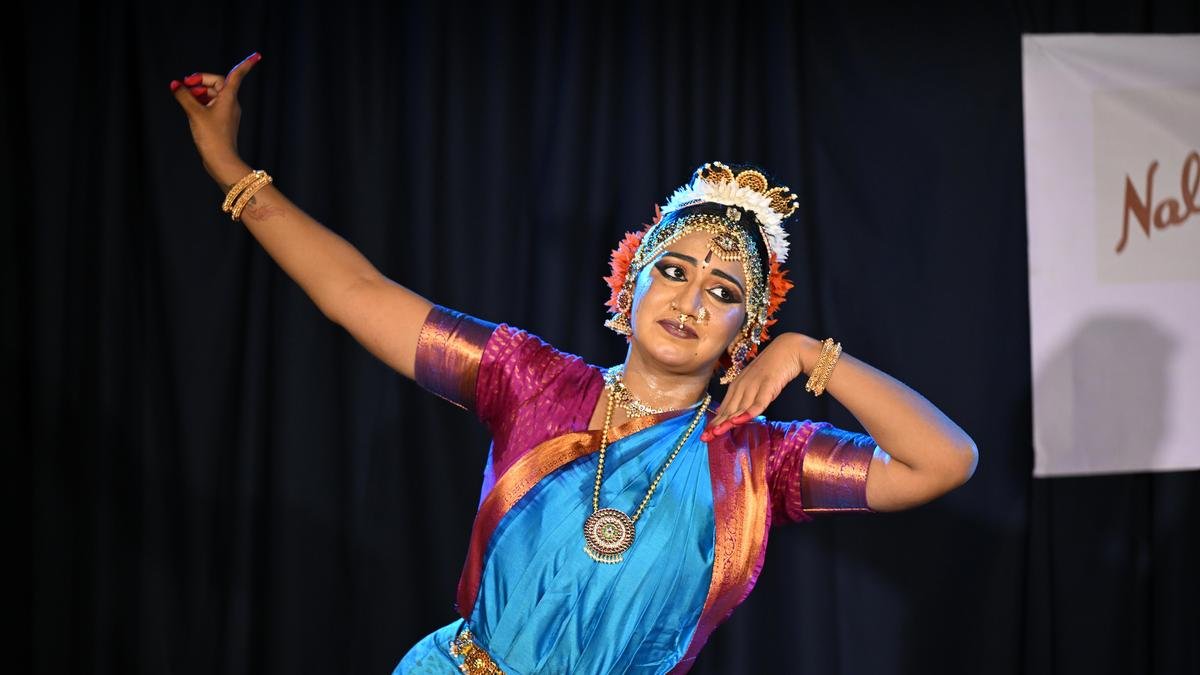
Classical dance survives not merely because of its history but because each generation of performers finds new ways to preserve, interpret and present its timeless vocabulary. L. Shruthi’s Kuchipudi recital at the Aadi Dance Festival 2026 was a reminder of this delicate balance between tradition and individual expression. A senior disciple of gurus Seetha Nagajothy and P. Nagajothy, Shruthi presented a carefully curated repertoire that reflected the strength of the Vempati bani while showcasing her own command over rhythm, expression and stage presence.
The Delhi-based dancer’s performance was not designed as a display of technical brilliance alone. Instead, it followed the traditional architecture of a Kuchipudi recital, moving through devotion, mythology, character portrayal and rhythmic mastery. Through compositions associated with legendary choreographer Vempati Chinna Satyam and her own gurus’ creative vision, Shruthi highlighted the artistic depth of a dance form that continues to evolve while remaining rooted in centuries-old aesthetics.
Kuchipudi’s Living Tradition and the Importance of Repertoire
Kuchipudi occupies a unique place among India’s classical dance traditions. Originating from Andhra Pradesh, the form combines expressive storytelling, graceful movements, rhythmic complexity and dramatic interpretation. Traditionally associated with dance dramas, Kuchipudi has also developed a strong solo recital format that allows performers to explore individual compositions while maintaining the grammar of the art form.
The preservation of repertoire plays a crucial role in classical dance. Each composition carries not only choreography but also the artistic philosophy of the creators who shaped it.
- Movement vocabulary reflects the style of a particular tradition.
- Abhinaya preserves emotional interpretations passed through generations.
- Musical choices establish the mood and spiritual character of compositions.
- Rhythmic patterns demonstrate the technical foundation of the dancer.
Shruthi’s recital succeeded because it respected this relationship between heritage and performance.
A Strong Connection With the Vempati Chinna Satyam Legacy
The influence of Vempati Chinna Satyam was central to the evening’s presentation. Considered one of the most influential figures in modern Kuchipudi, Vempati played a significant role in transforming the dance form into a widely recognised classical stage tradition.
His approach emphasised elegance, refined movements, dramatic clarity and a structured presentation style. The continuation of his artistic lineage through disciples such as Seetha Nagajothy and P. Nagajothy allows contemporary performers to remain connected with this important chapter of Kuchipudi history.
Shruthi’s performance reflected this lineage through her disciplined approach to movement and her attention to the emotional character of each composition.
Opening With Devotion: Vani Ki Vandhanam
The recital began with Vani ki Vandhanam, an invocation dedicated to Goddess Saraswati, the embodiment of knowledge, music and the arts.
Composed and choreographed by Seetha Nagajothy with music by K.G. Rupa, the piece used the expansive possibilities of Ragamalika and Adi tala to create a devotional atmosphere.
Shruthi approached the opening item with restraint and clarity. Rather than rushing through movements, she allowed the composition’s spiritual mood to emerge naturally.
The piece established the tone of the evening by highlighting one of Kuchipudi’s essential qualities—the ability to combine technical structure with emotional surrender.
Koluvaithiva Rangasayi: Balancing Rhythm and Devotion
The second presentation, Koluvaithiva Rangasayi, moved deeper into devotional expression.
Originally choreographed by Vempati Chinna Satyam, the composition celebrates Lord Ranganatha and describes the magnificence of the deity reclining on Adisesha.
The piece presented a challenging combination of lyrical beauty and rhythmic complexity. Shruthi navigated both aspects effectively, moving between intricate jathis and softer expressive passages.
This contrast is one of Kuchipudi’s defining strengths. A dancer must demonstrate precision without losing emotional connection, and Shruthi maintained this balance throughout the performance.
Bhamakalapam: Bringing Satyabhama Alive Through Abhinaya
The emotional centre of the recital arrived with Bhamakalapam, one of Kuchipudi’s most celebrated dramatic traditions.
The character of Satyabhama offers dancers a rich opportunity to explore contrasting emotions. She is confident, passionate, proud and deeply expressive. Portraying her requires more than attractive movements; it demands psychological understanding of the character.
Shruthi captured the different shades of Satyabhama through her abhinaya. Her expressions conveyed the heroine’s elegance, self-assurance and emotional intensity.
This section demonstrated the importance of storytelling in classical dance. Every gesture, glance and pause contributes to character development.
The Technical and Emotional Demands of Kuchipudi Abhinaya
Abhinaya remains one of the most challenging aspects of Indian classical dance because it requires the performer to communicate complex emotions without spoken dialogue.
A successful abhinaya performance depends on:
- Facial expressions
- Eye movements
- Hand gestures
- Body language
- Understanding of literature and music
Shruthi’s portrayal reflected a clear understanding of these elements. Her expressions supported the narrative rather than appearing as isolated gestures.
This emotional intelligence allowed the audience to connect with the characters beyond the technical aspects of the choreography.
Tarangam: Ending With Kuchipudi’s Signature Brilliance
The recital concluded with Narayana Tirtha’s Tarangam from Shri Krishna Leela Tarangini, a composition deeply associated with Kuchipudi performance tradition.
Conceptualised and choreographed by Seetha Nagajothy and P. Nagajothy, the piece combined musical variety with one of Kuchipudi’s most recognisable visual elements—the brass plate sequence.
The dancer’s ability to balance on the edge of a brass plate while maintaining rhythmic precision requires extraordinary control and concentration.
Shruthi’s execution highlighted:
- Balance
- Coordination
- Confidence
- Rhythmic discipline
The concluding sequence created a fitting finale, bringing together the technical and devotional dimensions explored throughout the recital.
A Recital Built Around Variety and Structure
| Composition | Focus | Artistic Challenge |
|---|---|---|
| Vani Ki Vandhanam | Devotional invocation | Creating spiritual atmosphere through movement |
| Koluvaithiva Rangasayi | Divine beauty and devotion | Balancing jathis with expressive passages |
| Bhamakalapam | Character portrayal | Exploring emotional complexity of Satyabhama |
| Tarangam | Rhythmic conclusion | Technical control and brass plate balance |
The carefully selected repertoire ensured that the recital represented multiple dimensions of Kuchipudi rather than focusing on a single aspect of the form.
Why Traditional Repertoire Still Matters Today
In contemporary performing arts, there is often a discussion about balancing innovation with preservation. While experimentation is essential for keeping classical forms relevant, traditional repertoire remains the foundation through which artistic identity is maintained.
Pieces like Bhamakalapam and Tarangam continue to survive because they offer endless possibilities for interpretation. Every generation of dancers brings different experiences and perspectives while preserving the essential structure of the work.
Shruthi’s recital demonstrated that tradition does not mean repetition. Instead, it provides a framework for creativity.
The Role of Festivals in Preserving Classical Arts
Events such as Brahma Gana Sabha’s Aadi Dance Festival play an important role in supporting classical performance traditions.
Dance festivals create opportunities for:
- Established artists to present their craft.
- Young performers to connect with audiences.
- Traditional compositions to remain visible.
- Classical arts to reach new generations.
Such platforms ensure that classical dance remains a living cultural practice rather than merely a historical subject.
The Future of Kuchipudi: Tradition With Contemporary Relevance
Kuchipudi continues to grow because dancers today understand the importance of both preservation and communication.
Modern audiences may experience classical dance differently from earlier generations, but the emotional power of storytelling, music and movement remains universal.
Performances like Shruthi’s show that the future of Kuchipudi lies not in abandoning tradition but in presenting it with sincerity, skill and artistic understanding.
Final Verdict
L. Shruthi’s Kuchipudi recital at Aadi Dance Festival 2026 was a graceful tribute to a rich artistic tradition. Through carefully chosen compositions, disciplined technique and expressive depth, she demonstrated the enduring beauty of the Kuchipudi repertoire.
The performance successfully connected the past and present—honouring the legacy of Vempati Chinna Satyam while bringing fresh energy through Shruthi’s own interpretation.
More than a showcase of technical ability, the recital celebrated what makes classical dance powerful: its ability to preserve stories, emotions and cultural memory through the language of movement.
In an era where performing arts constantly evolve, such presentations serve as a reminder that tradition remains vibrant when artists continue to approach it with dedication, imagination and respect.
For breaking news and live news updates, like us on Facebook or follow us on Twitter and Instagram. Read more on Latest Entertainment on thefoxdaily.com.

COMMENTS 0