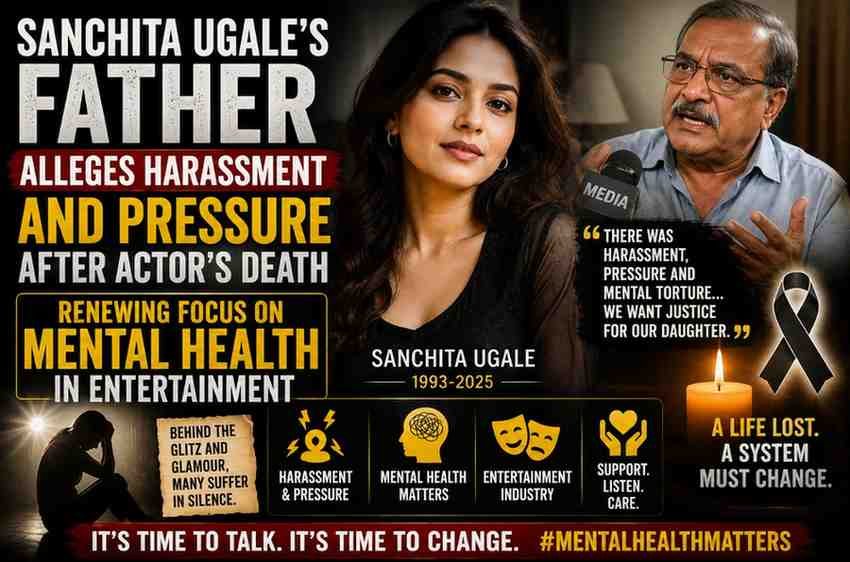
The death of television actor Sanchita Ugale has sent shockwaves through the Entertainment industry and among her admirers. In the days following the tragedy, her father publicly alleged that his daughter had been subjected to immense pressure and harassment, claiming that “she was being tortured.” He also revealed that she had been struggling with depression.
While investigations and facts surrounding individual allegations are matters for authorities to determine, the heartbreaking loss has reignited a wider conversation about Mental Health, emotional well-being, and the pressures faced by actors and creative professionals.
Behind the glamour and public visibility associated with television and cinema lies a demanding profession marked by uncertainty, long working hours, intense competition and emotional vulnerability.
What Has Sanchita Ugale’s Family Alleged?
According to statements made by her father, Sanchita had been experiencing depression and allegedly faced continuous pressure and harassment before her death.
Such claims are serious and underscore the importance of allowing authorities to investigate thoroughly and establish the facts.
At the same time, the family’s statements have brought attention to a reality often overlooked in conversations about fame—the emotional burden that many artists quietly carry.
The Hidden Pressures of the Entertainment Industry
For audiences, actors often appear surrounded by glamour, admiration and success. Yet industry insiders frequently describe a different reality.
Many performers face:
- Uncertain career opportunities.
- Financial instability between projects.
- Long and irregular working hours.
- Public scrutiny and social media criticism.
- Fear of losing relevance.
- Constant pressure to maintain appearances.
These challenges can create chronic stress, which, if left unaddressed, may affect emotional and psychological well-being.
Depression Is More Than Feeling Sad
Depression is a medical condition that affects how people think, feel and function in daily life. It can impact anyone, regardless of age, profession or social status.
Common symptoms may include:
- Persistent sadness.
- Loss of interest in previously enjoyable activities.
- Sleep disturbances.
- Fatigue and lack of energy.
- Difficulty concentrating.
- Feelings of hopelessness.
- Changes in appetite.
Experts emphasize that depression is treatable and seeking professional support is an important step toward recovery.
Why Creative Professionals Face Unique Challenges
Creative careers often involve emotional investment and irregular routines.
Actors, musicians and performers frequently deal with:
- Frequent rejection.
- Performance anxiety.
- Unpredictable schedules.
- Intense public expectations.
- Online trolling and criticism.
- Professional insecurity.
The emotional highs and lows associated with the profession can make mental health support particularly important.
Comparison: Public Perception vs Reality of Celebrity Life
| Public Perception | Behind the Scenes Reality |
|---|---|
| Fame and glamour | Career uncertainty |
| Constant success | Frequent rejection and competition |
| Financial security | Irregular income |
| Public admiration | Social media scrutiny and criticism |
| Exciting lifestyle | Long hours and emotional exhaustion |
An Insight Competitors Often Miss: Mental Health Is a Workplace Issue Too
Mental health discussions frequently focus on individuals, but experts increasingly point out that emotional well-being is also shaped by workplace culture.
Supportive environments, healthy communication, fair treatment and access to professional resources can significantly influence psychological health.
Whether in entertainment, healthcare, technology or education, toxic environments and excessive stress can affect anyone.
This means conversations around mental health should extend beyond personal resilience and include systemic factors.
The Role of Families and Support Networks
Family members, friends and colleagues often play a critical role in recognizing emotional distress.
Support systems can help by:
- Encouraging open conversations.
- Reducing stigma around therapy and treatment.
- Offering emotional reassurance.
- Helping individuals seek professional care.
- Promoting healthier work-life balance.
Experts stress that listening without judgment can make a meaningful difference.
Social Media: A Double-Edged Sword
Social media has transformed the entertainment industry, offering artists direct connections with audiences.
However, it has also intensified pressure.
Performers are constantly exposed to:
- Online trolling.
- Body image expectations.
- Comparison culture.
- Public criticism.
- Rumors and speculation.
The psychological impact of digital scrutiny is increasingly recognized by mental health professionals worldwide.
Prediction: Mental Health Support in Entertainment Will Become More Structured
The growing awareness around emotional well-being is likely to encourage stronger support mechanisms across the entertainment industry.
Future changes may include:
- Access to counseling services.
- Mental health awareness initiatives.
- Stronger workplace grievance mechanisms.
- Anti-harassment safeguards.
- Industry-wide wellness programs.
Such measures could help create healthier environments for artists and creative professionals.
Why Tragedies Like This Spark Wider Conversations
Every loss involving a public figure resonates deeply because it reminds society that fame does not provide immunity from emotional struggles.
Stories like these challenge assumptions about success and happiness, highlighting the importance of empathy, understanding and timely support.
They also encourage discussions that may help others facing similar challenges feel less isolated.
Conclusion
The allegations made by Sanchita Ugale’s father regarding pressure and harassment, along with his revelations about her struggle with depression, have added another layer of sadness to an already heartbreaking loss.
While investigations will determine the facts surrounding specific claims, the tragedy has once again underscored the urgent need for conversations around mental health, workplace culture and emotional support.
Behind every public personality is a human being navigating hopes, fears and vulnerabilities. Recognizing that reality—and creating environments where people feel heard and supported—may be one of the most meaningful ways to honor those we have lost.
If you or someone you know is experiencing emotional distress or thoughts of self-harm, reaching out to a mental health professional, trusted person or crisis helpline can be an important first step. Help is available, and seeking support is a sign of strength, not weakness.
For breaking news and live news updates, like us on Facebook or follow us on Twitter and Instagram. Read more on Latest Entertainment on thefoxdaily.com.






COMMENTS 0