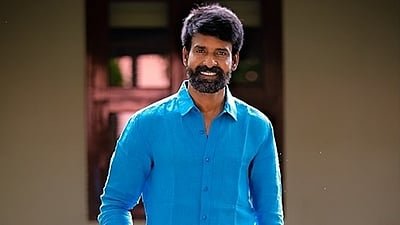
Soori has opened up about one of the most painful experiences of his early acting career, recalling an incident in which he was asked to give his shirt to another actor after a prominent Tamil star reportedly decided to replace him. The revelation has shed light on the difficult journey the actor experienced before establishing himself as one of Tamil cinema’s respected performers.
The Mandaadi actor, who has gradually moved from comedy and supporting roles into emotionally demanding lead performances, spoke about the incident while reflecting on the struggles he faced when he was trying to find a place in the film industry.
According to Soori’s recollection, he had been selected for a role and had arrived prepared to perform. However, circumstances changed when another actor was brought in for the part. What followed was particularly humiliating: Soori said he was asked to hand over the shirt he was wearing for the role to the replacement actor.
For an actor attempting to establish himself, the incident was more than simply losing a role. It represented a moment when his dignity and aspirations appeared to be treated as secondary to the decisions of more powerful figures in the industry.
Soori’s Painful Memory From His Struggling Years
Soori’s journey in Tamil cinema was not an overnight success story. Before becoming a familiar face on screen, he spent years working in smaller roles and attempting to secure opportunities in an industry where thousands of aspiring actors compete for limited parts.
His early career was shaped by persistence. Comedy roles eventually brought him widespread recognition, but the actor later demonstrated that he wanted to move beyond being identified exclusively as a comedian.
That transition has become one of the most significant aspects of his career. Films that offered him substantial dramatic material allowed audiences to see a different side of his acting abilities.
Looking back at his difficult beginnings, the shirt incident becomes a powerful reminder of how uncertain an aspiring actor’s position can be before achieving recognition.
“They Made Me Give My Shirt to Another Actor”
The most striking detail in Soori’s recollection is the seemingly small act of giving his shirt to another actor.
On the surface, a costume change might appear insignificant. For someone who had been selected for a role, however, the moment carried a much deeper emotional meaning. The shirt represented the character he believed he was about to play and the opportunity he had worked toward.
Being asked to hand it over after being removed from the part could understandably feel like a public dismissal of his contribution.
Soori’s recollection is particularly striking because it captures the emotional side of rejection in the film industry. Actors often talk about not getting opportunities, but the experience of being replaced after preparing for a role can be far more difficult.
The Power Imbalance Behind the Incident
Soori’s account also raises questions about the power structure within the film industry.
Established stars, producers and directors often have considerable influence over casting decisions, while newcomers have little ability to challenge those choices. An aspiring actor may have spent years trying to get a single opportunity, making the loss of even one role feel enormous.
That imbalance can make humiliating experiences particularly difficult to handle.
For newcomers, the practical choice is often to accept the situation and continue searching for another opportunity. Speaking openly about such experiences years later can therefore be significant, particularly when the actor has eventually built enough professional standing to tell his story.
Soori’s Transformation From Comedian to Leading Actor
The incident becomes even more meaningful when viewed against Soori’s later career.
For a considerable part of his career, Soori was primarily recognised for comedy and supporting performances. His timing and screen presence made him a popular choice for comic roles, and audiences became familiar with him through his work alongside leading stars.
But his career took a significant turn when filmmakers began giving him more substantial dramatic characters.
His performances in films such as Viduthalai Part 1 demonstrated that he could carry emotionally intense material rather than simply provide comic relief. The success of that transition changed the way audiences and the industry viewed him.
Instead of being known only as a comedian, Soori increasingly became recognised as an actor capable of handling serious and demanding roles.
Why Soori’s Story Resonates With Aspiring Actors
Rejection is an unavoidable part of the entertainment industry, but the way rejection happens can make a significant difference.
An actor can accept that a role has been recast for creative reasons. What can be much harder to process is feeling personally humiliated during the process.
Soori’s experience therefore has relevance beyond his own career. Thousands of aspiring actors enter the film industry hoping for opportunities, and many experience rejection repeatedly before receiving a meaningful break.
His journey demonstrates that an early setback does not necessarily determine an actor’s future.
From Small Roles to Mandaadi
Soori’s current position in Tamil cinema is dramatically different from the period he describes.
With Mandaadi, he continues to explore roles that place him at the centre of the story rather than on the sidelines. This progression reflects a broader shift in his career, where performance and character have become more important than simply delivering comic moments.
That evolution gives additional weight to stories about his early struggles. The actor who once had to fight for basic opportunities is now headlining projects that depend heavily on his ability to carry a narrative.
His career is therefore an example of how persistence can gradually change an actor’s position within an industry.
Soori’s Journey Shows Why Career Longevity Matters
The entertainment industry is often obsessed with overnight success. New actors are frequently judged by their first major release, opening numbers or immediate popularity.
Soori’s career offers a different model.
His rise took place over years rather than months. He built familiarity with audiences through supporting and comic roles before successfully changing his image.
That kind of gradual evolution can be difficult, but it can also create a strong foundation. By the time Soori began taking on more serious roles, audiences already recognised him, giving his dramatic performances an additional layer of interest.
The Psychological Impact of Being Replaced
Actors invest more than time when preparing for a role. They invest confidence, expectation and emotional energy.
When a role disappears unexpectedly, the disappointment can be substantial. For someone still struggling to establish a career, rejection can also create doubts about whether another opportunity will ever arrive.
Soori’s decision to recount the incident now illustrates how strongly such moments can remain in an actor’s memory.
The fact that he remembers the specific detail of giving his shirt to another actor shows how ordinary objects can become attached to difficult professional experiences.
A Different Perspective on Success in Cinema
Stories about successful actors often focus on their biggest films, awards and box-office achievements. But careers are also shaped by the opportunities that never happened.
Every established actor has likely experienced auditions, rejected scripts, replaced roles or projects that collapsed. The difference is that these failures become less visible once an actor becomes successful.
Soori’s story brings one of those forgotten moments back into view.
It also offers an important reminder that today’s successful performers may have experienced periods when their careers looked uncertain.
Why His Story Is More Than a Bollywood-Style Struggle Narrative
There is a tendency to romanticise the struggles of successful actors by presenting every setback as proof that perseverance automatically leads to success. Real careers are rarely that simple.
Soori’s experience does not mean that every struggling actor will eventually become a leading star. What it does demonstrate is that rejection does not necessarily define an individual’s ability.
His later career was shaped by continued work, changing opportunities and his willingness to take on different kinds of characters.
That makes his journey more valuable than a simple “struggle to success” story.
Soori’s Career Has Changed the Perception of Comedy Actors
One of the most notable developments in Soori’s career has been the shift in how audiences perceive him.
Comedy actors are sometimes placed into narrow professional categories, making it difficult for them to transition into serious dramatic roles. Soori has challenged that limitation by taking on characters requiring emotional restraint, vulnerability and physical intensity.
His dramatic work has consequently expanded his reputation within Tamil cinema.
That transformation makes the contrast with his early experience particularly striking. An actor who once struggled to retain a role eventually reached a stage where his performances became a central reason audiences wanted to watch a film.
The Bigger Lesson From Soori’s Revelation
Soori’s account is ultimately a story about dignity, rejection and persistence.
The film industry can create extraordinary opportunities, but it can also expose newcomers to uncertainty and unequal power dynamics. Losing a role is part of the profession, but being treated without consideration can leave a lasting emotional impact.
By sharing his experience, Soori has given audiences a glimpse into a side of cinema that is rarely visible in promotional interviews: the years of uncertainty that can exist before recognition arrives.
His journey also demonstrates why an actor’s career should not be judged solely by where it begins.
Conclusion: Soori’s Past Struggle Gives New Meaning to His Present Success
Soori’s recollection of being asked to give his shirt to another actor is a painful reminder of the uncertainty faced by newcomers in Tamil cinema. What may have been a brief incident for others became a lasting memory for an actor who was still fighting for recognition.
Years later, Soori has transformed his career, moving from supporting comic parts to demanding lead performances and becoming an actor capable of carrying serious films.
The story behind that transformation makes his present position all the more meaningful. The shirt may have been handed to another actor that day, but Soori’s career did not end with the rejection. His subsequent journey shows that one humiliating setback, however painful, does not have to become the final chapter of an artist’s story.
For breaking news and live news updates, like us on Facebook or follow us on Twitter and Instagram. Read more on Latest Entertainment on thefoxdaily.com.

COMMENTS 0