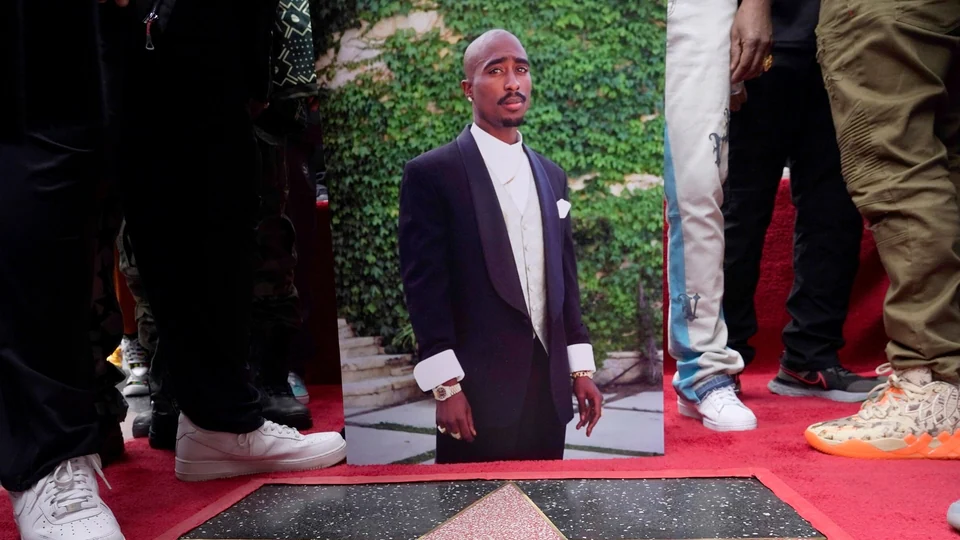
Nearly three decades after Tupac Shakur’s death, a previously unreleased interview with the legendary rapper is bringing some of hip-hop’s unresolved controversies back into public conversation. Netflix has released The Tupac Tapes With Angie Martinez, a four-part series built around a conversation the radio personality recorded with Tupac in 1996, months before his fatal shooting.
Among the subjects revisited in the interview is Tupac’s fallout with Randy Walker, popularly known as Stretch, a rapper and former close associate who was part of the Live Squad and the Thug Life circle. Their relationship deteriorated after the infamous Quad Recording Studios shooting in New York in November 1994, an incident that continued to shape Tupac’s public statements, personal relationships and perceptions of loyalty.
In the recordings, Tupac reflects on the breakdown of his friendship with Stretch, suggesting that fear played a central role in their separation. His comments, including a pointed remark about the relationship between fear and love, provide a glimpse into how he viewed loyalty during a period marked by violence, distrust and personal upheaval.
Ed Lover, who knew both Tupac and Stretch and was closely connected to the latter, also responds to the remarks in the Netflix project. His perspective offers another layer to a story that has often been discussed through allegations, conflicting accounts and the mythology surrounding Tupac’s life.
The release is significant not simply because it makes a long-held recording public, but because it allows a conversation from a particularly turbulent period in hip-hop history to be revisited with additional perspectives from people connected to the events.
Why Angie Martinez Kept the Tupac Interview Unreleased for Nearly 30 Years
Angie Martinez recorded her interview with Tupac Shakur in 1996, during a period when the rapper’s public life was closely associated with controversy, personal disputes and the escalating tensions surrounding the East Coast-West Coast hip-hop rivalry.
Martinez, who was an established radio personality, decided not to release the entire conversation at the time. The recording contained statements and discussions that she feared could intensify existing conflicts and potentially contribute to further violence.
The decision to keep the interview largely private became one of the most intriguing aspects of the recording’s history. Tupac’s interviews from the final months of his life have attracted considerable interest because they capture his views during a period of personal and professional upheaval.
However, Martinez’s decision was not simply about preserving an exclusive recording. It also reflected the difficult position journalists and radio hosts could find themselves in when covering a volatile entertainment industry environment in which public statements sometimes had consequences beyond the media.
With the release of The Tupac Tapes With Angie Martinez, the conversation is being presented alongside reflections from personalities who knew Tupac, were discussed in the recording or experienced the broader hip-hop culture of the era.
The four-part format provides an opportunity to examine the interview through multiple perspectives rather than presenting the recording as a standalone historical document. That context is particularly relevant when the conversation involves accusations, personal disagreements and relationships that have been interpreted differently over the years.
What Tupac Shakur Said About Stretch in the Angie Martinez Tapes
One of the central discussions in the interview concerns Tupac’s relationship with Stretch, whose real name was Randy Walker. The two were once associated closely through their musical connections and shared experiences in the hip-hop scene.
Stretch was present with Tupac during the November 30, 1994, shooting at Quad Recording Studios in Manhattan, New York. Tupac was shot multiple times during the incident, which also involved a robbery. The shooting became a major turning point in the rapper’s life and contributed to the tensions and suspicions that later surrounded several relationships.
In the Angie Martinez interview, Tupac discusses how Stretch became fearful following the shooting and how that fear, in his view, contributed to the deterioration of their friendship.
Reflecting on the relationship, Tupac says:
“I can’t understand him tryna protect his family because fear is not supposed to be stronger than Love…”
The statement reflects Tupac’s emphasis on loyalty and his complicated understanding of friendship during a period when he believed the people around him were being tested by dangerous circumstances.
His remarks suggest that he interpreted Stretch’s actions through the lens of loyalty and personal commitment. However, the comment also highlights the difficult choices people can face when violence threatens their safety and the security of their families.
The distinction matters because Tupac’s statement represents his perspective at the time. It does not independently establish Stretch’s motivations, nor does it resolve the broader questions surrounding their fallout.
The Quad Studios Shooting and the Breakdown of Their Friendship
The November 30, 1994, shooting at Quad Recording Studios in Manhattan remains one of the defining incidents in Tupac Shakur’s life. The rapper was shot five times and robbed while at the recording studio.
Stretch was reportedly with Tupac during the incident. The shooting had lasting consequences for Tupac’s personal relationships and his perception of people within the music industry.
In the years that followed, Tupac made statements suggesting that Stretch might have been connected to the circumstances surrounding the shooting. However, those allegations have never been substantiated, and they should not be treated as established fact.
The Angie Martinez recording revisits the tension between the two men without necessarily resolving the unanswered questions about what happened at Quad Studios.
Instead, the interview offers a window into Tupac’s thinking months after the incident and after his relationship with Stretch had deteriorated.
Why the Quad Studios Incident Remains Important in Tupac’s Story
The shooting is often discussed as a pivotal moment in Tupac’s life because it occurred during a period of significant personal and professional change. The incident also became part of the wider narrative surrounding mistrust, rivalries and violence in the hip-hop industry during the 1990s.
However, revisiting the incident through an interview recorded months later requires careful interpretation. Tupac’s statements reflect his personal experiences and beliefs at a specific point in time. They should not be treated as definitive evidence of the motives or actions of other individuals.
The newly released tapes allow listeners to hear how Tupac discussed the fallout directly, while the additional commentary in the Netflix series provides an opportunity to consider the broader circumstances.
Ed Lover Defends Stretch Against Tupac’s Remarks
Ed Lover, a longtime radio personality and MTV host, offers a perspective on Tupac’s comments about Stretch in the Netflix series. Lover had personal connections with both men and was closely associated with Stretch’s professional journey.
His relationship with Stretch extended beyond the music industry. Lover helped Stretch and the Live Squad secure a deal with Tommy Boy Records and was also the godfather of Stretch’s child.
Those connections give Lover a personal perspective on the relationship and the circumstances surrounding the fallout. His remarks appear to defend Stretch against the implications of Tupac’s comments, offering an alternative perspective on the disagreement.
The response is particularly relevant because the discussion involves a relationship that has been interpreted through different accounts over the years. Tupac’s words reflect his own views, while Lover’s perspective provides another account from someone who knew Stretch closely.
Rather than treating the interview as a definitive explanation of the dispute, the series allows the disagreement to be revisited through the recollections and reactions of people connected to the story.
Lover’s involvement also highlights the importance of personal relationships when examining hip-hop history. Artists, radio personalities, producers and managers often interacted within overlapping professional and social circles, meaning that disagreements could affect more than the individuals directly involved.
Stretch’s Death and the Timing of the Interview
Randy Walker, better known as Stretch, was fatally shot in New York City on November 30, 1995. His death occurred exactly one year after the Quad Recording Studios shooting involving Tupac, on November 30, 1994.
The coincidence of the dates adds another striking dimension to the history surrounding the two men, although the two incidents were separate events.
Stretch’s death came before the Angie Martinez interview was recorded. By the time Tupac spoke with Martinez in 1996, their relationship had already ended amid tensions and unresolved questions.
The interview therefore captures Tupac discussing a friendship that had deteriorated and a former associate who was no longer alive to respond directly to the remarks.
This is one reason the recording requires contextual treatment. Statements about deceased individuals cannot be balanced through their direct responses, making it particularly important to distinguish personal recollections and accusations from independently established facts.
The Netflix series attempts to provide additional perspectives through discussions with people connected to the personalities and events mentioned in the recording.
How The Tupac Tapes With Angie Martinez Reopens a Chapter of Hip-Hop History
The release of The Tupac Tapes With Angie Martinez is part of a broader continuing interest in the life, music and legacy of Tupac Shakur. Despite his death in 1996, his influence remains central to discussions about hip-hop, rap storytelling, artistic identity and the relationship between music and personal conflict.
Interviews recorded during his final months are particularly significant because they capture the rapper speaking in his own voice rather than through retrospective accounts alone. However, recordings from that period can also be emotionally charged and shaped by the circumstances in which they were made.
The East Coast-West Coast rivalry, which became closely associated with Tupac and other prominent rappers during the 1990s, was not simply a musical disagreement. It involved personal disputes, media narratives, competing affiliations and a wider atmosphere of hostility that became part of the era’s cultural history.
Within that context, Tupac’s discussion of Stretch reflects themes that repeatedly appeared in his public persona: loyalty, betrayal, friendship, fear and the consequences of violence.
The Netflix project also brings together individuals who can discuss the era from different perspectives. That approach may help viewers understand that hip-hop history is not shaped exclusively by the most famous artists, but also by radio personalities, collaborators, friends and people who were present during pivotal moments.
Why Tupac’s Comments Should Be Viewed With Context
Unreleased interviews can provide valuable insight into an artist’s personality and thinking. They can also create renewed debate when the recordings contain accusations or comments about people who are no longer alive to respond.
Tupac’s remarks about Stretch are an example of why historical context matters. The rapper was speaking months after a shooting that had profoundly affected his life and after his relationship with Stretch had deteriorated.
His statement about fear and love reflects his personal interpretation of the friendship. It does not establish that Stretch acted improperly, nor does it prove any alleged involvement in the Quad Studios incident.
Similarly, Ed Lover’s defence of Stretch provides an additional perspective but does not necessarily resolve every question surrounding the relationship.
Listening to the recording alongside the commentary in the Netflix series may help viewers understand the disagreement as part of a complicated history rather than as a simple story of loyalty or betrayal.
That distinction is particularly important when revisiting controversies involving artists whose public personas, personal experiences and historical circumstances have often become intertwined.
What The Tupac Tapes With Angie Martinez Offers Viewers
The four-part Netflix project gives audiences access to a conversation that Angie Martinez kept largely unreleased for nearly three decades. The interview revisits Tupac’s thoughts on personal relationships, disagreements and events that shaped his life during the final months before his death.
The discussion involving Stretch is among the most emotionally charged subjects because it combines a friendship that deteriorated, a violent incident, allegations that remain unsubstantiated and the death of one of the people involved.
Ed Lover’s response adds another perspective, reminding viewers that the people connected to Tupac’s life may have understood the events differently.
Ultimately, the significance of the tapes lies in their ability to reopen conversations about Tupac Shakur without reducing his life to a collection of controversies. The recording captures a young artist navigating anger, loyalty, fear and personal relationships in an exceptionally turbulent period.
The renewed discussion surrounding Stretch also underscores the importance of examining hip-hop history through multiple voices. Tupac’s perspective remains compelling, but it is only one part of a larger story involving people whose experiences and recollections may differ.
With the release of the interview, a conversation that remained largely out of public view for decades has become part of the ongoing examination of Tupac’s legacy, his relationships and the complicated history of hip-hop in the 1990s.
For breaking news and live news updates, like us on Facebook or follow us on Twitter and Instagram. Read more on Latest Entertainment on thefoxdaily.com.





COMMENTS 0