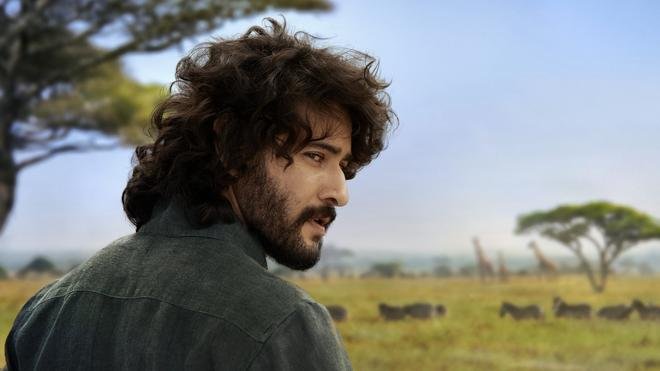
Varanasi Mahesh Babu Rudhra look
Related keywords: Varanasi movie 2027, Mahesh Babu Varanasi, SS Rajamouli Varanasi, Rudhra Mahesh Babu, Priyanka Chopra Varanasi, Prithviraj Sukumaran Varanasi, MM Keeravani Varanasi, Varanasi release date, SS Rajamouli next film, Indian global adventure film
Mahesh Babu has entered the next chapter of his collaboration with director SS Rajamouli, with the first look at his character Rudhra from the much-anticipated film Varanasi unveiled ahead of its worldwide release on April 7, 2027.
The reveal has immediately amplified interest in a project that already carries unusually high expectations. Billed as an action-packed, globe-trotting adventure, Varanasi brings together Mahesh Babu, Priyanka Chopra and Prithviraj Sukumaran, while Oscar-winning composer MM Keeravani is associated with the film’s music.
But the Rudhra reveal is about more than introducing a new hairstyle, costume or character name. It is the first substantial visual invitation into Rajamouli’s next cinematic world — a world expected to combine spectacle, mythology, adventure and international-scale storytelling.
Who is Rudhra in Varanasi?
Mahesh Babu plays Rudhra in Varanasi, the central character around whom the film’s adventure appears to revolve.
The first-look material establishes Rudhra as a physically commanding action-oriented protagonist, but the complete details of his character and motivations remain tightly guarded. That restraint is typical of a major Rajamouli production, where the filmmakers often use carefully selected glimpses rather than revealing the entire narrative before release.
What is already clear is that Rudhra is being positioned as a larger-than-life protagonist suitable for a story that moves across geographical and cinematic scales.
That makes Mahesh Babu’s casting particularly significant.
Why Mahesh Babu and SS Rajamouli is such a major combination
Mahesh Babu is one of Telugu cinema’s most recognisable stars, while Rajamouli has built a reputation for turning ambitious Indian stories into large-scale theatrical spectacles.
Their collaboration therefore combines two different forms of star power.
Mahesh Babu brings an established screen identity built through decades of Telugu cinema. Rajamouli brings a filmmaking style associated with carefully constructed worlds, heightened action and strong emotional stakes.
The question surrounding Varanasi is how those two identities will interact.
Will Rajamouli transform Mahesh Babu’s familiar image completely, or will Rudhra retain elements of the star’s established persona while placing him inside an unfamiliar cinematic universe?
The first look suggests that the latter possibility may be particularly interesting: a recognisable superstar presented in a role designed for a much larger adventure narrative.
Varanasi is not simply a film about one city
The title Varanasi immediately evokes one of India’s most culturally significant cities, but the film is described as a global adventure rather than a conventional city-based drama.
That distinction matters.
Varanasi is one of the world’s most recognisable Indian cultural locations, with its ghats, temples, religious traditions and connection to the Ganga forming a powerful visual identity. Using the name as the title creates expectations of mythology, spirituality and history.
Yet a globe-trotting adventure suggests that the narrative will extend far beyond a single location.
The combination could give Rajamouli an opportunity to use Varanasi not merely as a setting but as a conceptual starting point — connecting an Indian cultural centre to a much wider adventure.
The global adventure angle
One of the defining ambitions of Varanasi is its international scale.
A globe-trotting story naturally offers filmmakers a chance to move between contrasting environments, cultures and visual landscapes. But scale alone does not make a film international.
The real challenge is narrative coherence.
If the film moves between multiple countries or regions, those locations must serve the story rather than simply provide impressive backgrounds.
Rajamouli’s challenge, therefore, is to make the world feel connected to Rudhra’s journey.
This is where the title and the protagonist become important. If Varanasi functions as the emotional or thematic anchor, the international locations can expand the story without making it feel detached from its Indian foundation.
Priyanka Chopra adds another international dimension
The casting of Priyanka Chopra gives the project another layer of global visibility.
Chopra has worked extensively in both Indian and international entertainment, making her presence especially relevant for a film designed to reach audiences beyond the traditional Indian market.
Her casting also creates an interesting dynamic opposite Mahesh Babu.
Rather than being built entirely around a single regional star, Varanasi has assembled a cast whose professional histories cross different parts of the entertainment industry.
That can help the film communicate its scale even before the audience sees the finished product.
Prithviraj Sukumaran brings another major star presence
Prithviraj Sukumaran adds another prominent South Indian actor to the cast.
His inclusion is significant because the project is already positioned as a pan-Indian production, and his presence further broadens its regional appeal.
More importantly, Rajamouli’s films often depend heavily on the strength of their opposing characters. A protagonist becomes more compelling when the world around him contains equally memorable forces.
The exact nature of Prithviraj’s character and his relationship with Rudhra remains an important part of the film’s mystery.
MM Keeravani returns to Rajamouli’s cinematic universe
The music of MM Keeravani is another major component of the project’s expectations.
Keeravani and Rajamouli have a long creative association, and their collaborations have produced some of the most recognisable musical identities in contemporary Indian cinema.
His involvement in Varanasi is especially relevant because a globe-trotting adventure requires music capable of supporting multiple emotional registers.
The score may need to communicate scale during action sequences, intimacy during character moments and a sense of cultural identity when the story returns to its Indian roots.
For a Rajamouli film, the soundtrack is rarely background decoration. It is part of the emotional architecture.
Why the April 7, 2027 release date matters
Varanasi is scheduled for a worldwide release on April 7, 2027.
A release date that far ahead also indicates the scale of the production and the marketing runway available to the filmmakers.
Large event films require extensive work beyond principal photography. Visual effects, sound design, editing, music, dubbing, international distribution and promotional campaigns can all demand significant preparation.
The long lead time allows the makers to build anticipation gradually rather than relying entirely on a short promotional window.
The Rudhra first look is a marketing milestone
First-look reveals have become an important part of modern Indian film marketing.
A single image can generate discussions about costumes, character design, physical transformation, locations and story theories. For a film with the scale of Varanasi, the first look also functions as a declaration of tone.
It tells audiences what kind of cinematic experience the filmmakers are preparing.
In this case, the Rudhra reveal is designed to communicate adventure and scale without explaining the plot.
That balance is important.
Too little information can make audiences indifferent. Too much can destroy the mystery. The strongest first looks provide enough visual information to create questions without answering them.
What makes Rajamouli’s approach different?
Rajamouli’s filmmaking has become closely associated with a particular principle: spectacle works best when audiences care deeply about the characters producing it.
Action is rarely presented simply as physical movement. It is tied to emotion, ambition, loyalty, revenge or sacrifice.
That philosophy could be especially important in Varanasi.
A globe-trotting adventure offers opportunities for enormous set pieces, but the audience still needs a reason to care where Rudhra goes and what he is trying to accomplish.
If Rajamouli succeeds in creating that emotional foundation, the international scale can feel earned rather than ornamental.
Comparison: Varanasi versus a conventional pan-Indian action film
| Conventional pan-Indian action film | Varanasi’s stated positioning |
|---|---|
| Often moves between Indian regional markets | Designed as a globe-trotting adventure |
| May rely primarily on one major star | Combines Mahesh Babu, Priyanka Chopra and Prithviraj Sukumaran |
| Indian locations often dominate | International locations are part of the adventure concept |
| Music may support individual songs and scenes | MM Keeravani’s score has the potential to shape the film’s larger emotional world |
| Marketing often focuses on star power | Character, mythology, geography and spectacle can all become marketing hooks |
The challenge of making a truly global Indian film
Calling a movie “global” is easier than making one.
International appeal requires more than filming in different countries. A successful global adventure must remain emotionally accessible even when the characters move through unfamiliar environments.
For Varanasi, the opportunity lies in combining a distinctly Indian narrative foundation with the universal language of adventure.
Stories about exploration, danger, discovery and human relationships can travel across borders. The challenge is preserving cultural specificity while ensuring that viewers unfamiliar with Indian traditions can still follow the emotional stakes.
Rajamouli’s previous international success demonstrates that Indian storytelling can travel when the emotional core is strong.
A unique angle: Varanasi could be a test of the next phase of Indian cinema’s global ambitions
The biggest question surrounding the film may not be whether it becomes a box-office success. It is whether it can help redefine what an Indian blockbuster looks like internationally.
For years, “global Indian cinema” often meant exporting a successful domestic film to overseas audiences.
The more ambitious model is different: create the film from the beginning with a story, scale and cast capable of functioning across markets.
Varanasi appears positioned closer to that second model.
Its international adventure structure, multilingual potential, globally recognised talent and large-scale production all point toward an attempt to make a film whose geographic ambition matches its commercial ambition.
The mythology question
The title Varanasi inevitably brings mythology and spirituality into the conversation.
That does not necessarily mean the film is a mythological story in the conventional sense. However, the cultural associations of Varanasi create an enormous reservoir of imagery and ideas.
The city has been associated with death and rebirth, pilgrimage, ancient traditions and the Ganga for centuries.
For a filmmaker interested in larger-than-life storytelling, those associations provide fertile ground.
The challenge is using them thoughtfully rather than treating them as visual shorthand.
If the film connects its adventure narrative with deeper ideas about history, destiny or human civilisation, the title could become more than a geographical reference.
Mahesh Babu’s star image enters a new phase
For Mahesh Babu, Varanasi represents an important career moment.
He already has a strong identity within Telugu cinema, but a collaboration with Rajamouli provides an opportunity to introduce his screen persona to audiences who may know him less intimately.
The choice of Rudhra is therefore strategically significant.
The character needs to be distinctive enough to stand apart from Mahesh Babu’s previous roles while still benefiting from the qualities audiences associate with the actor.
If successful, the role could become a defining entry in his filmography.
Why the cast could be one of Varanasi’s biggest strengths
The combination of Mahesh Babu, Priyanka Chopra and Prithviraj Sukumaran gives the film a rare cross-industry casting profile.
Each actor brings a different audience and performance identity.
Mahesh Babu represents Telugu cinema’s enormous star system. Prithviraj brings a strong Malayalam and pan-Indian presence. Priyanka Chopra brings extensive international recognition.
That mixture can potentially help the film travel across linguistic and geographical boundaries without abandoning its Indian foundation.
What audiences should watch for next
As the release approaches, several elements are likely to become central to the film’s promotional campaign.
- More details about Rudhra’s character and motivations.
- The introduction and development of Priyanka Chopra’s character.
- The nature of Prithviraj Sukumaran’s role.
- Details about the international locations used in the story.
- The visual-effects scale of the action sequences.
- MM Keeravani’s musical themes and songs.
- The connection between the title Varanasi and the wider adventure.
Each new reveal will likely provide another piece of the film’s larger puzzle.
Prediction: the marketing will sell the journey as much as the destination
Because Varanasi is built around a globe-trotting adventure, its marketing has an unusually rich opportunity.
The campaign can move audiences from one world to another while gradually revealing Rudhra’s journey.
The strongest strategy would be to preserve the mystery surrounding the central conflict while showcasing the film’s visual diversity.
That could make the journey itself part of the audience experience before the film reaches theatres.
The April 2027 theatrical question
With its April 7, 2027 worldwide release, Varanasi has a significant amount of time to build anticipation.
That creates both an opportunity and a risk.
Long marketing campaigns can generate enormous excitement, but they can also lead to overexposure if too much material is released too early. For a filmmaker known for surprise and spectacle, carefully controlling what audiences see could be especially important.
The first-look reveal therefore establishes an interesting strategy: reveal the protagonist and visual identity while keeping the actual story largely under wraps.
Conclusion: Rudhra opens the door to Rajamouli’s next world
The unveiling of Mahesh Babu’s Rudhra look from Varanasi marks the beginning of what could become one of the most closely watched Indian film campaigns leading into 2027.
With SS Rajamouli directing, Mahesh Babu in the lead, Priyanka Chopra and Prithviraj Sukumaran among the principal cast, and MM Keeravani handling the music, the project has assembled an unusually powerful combination of talent.
But the film’s real ambition lies in its concept.
Varanasi is being positioned as a globe-trotting adventure with an Indian cultural centre of gravity. If Rajamouli can combine that scale with a compelling emotional journey, the film could become more than another large Indian action spectacle.
It could become a test of how far an Indian blockbuster can travel — geographically, culturally and commercially.
For now, Rudhra is the first piece of the puzzle.
The much bigger journey begins when Varanasi arrives worldwide on April 7, 2027.
For breaking news and live news updates, like us on Facebook or follow us on Twitter and Instagram. Read more on Latest Entertainment on thefoxdaily.com.

COMMENTS 0