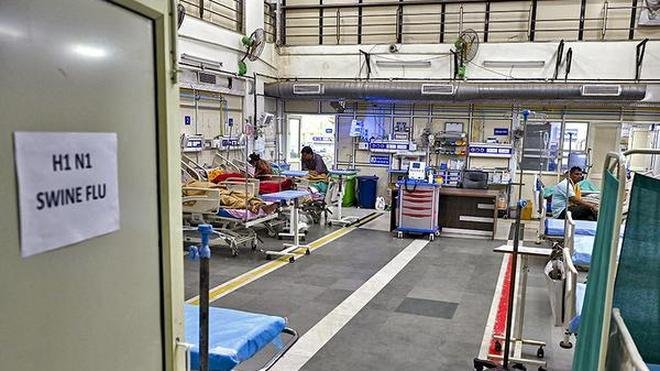
H1N1 in India is rising again, prompting concern among patients and families, but health authorities say the current increase should be understood as a seasonal influenza surge rather than the emergence of a new or unusually dangerous strain. The Indian Council of Medical Research (ICMR) has said that the virus currently circulating is A(H1N1)pdm09, a strain that has been part of seasonal influenza patterns for years.
The increase is being reported across several States. Delhi has recorded 1,777 H1N1 cases this year, while Karnataka had reported 4,212 laboratory-confirmed influenza cases across 32 districts by August 22. Maharashtra has also reported a rise in H1N1 infections.
Speaking on August 25, 2026, ICMR Director General Rajiv Bahl said there was no cause for alarm. Most infections are mild and resolve on their own, although influenza can become serious in people who are more vulnerable to complications.
The important distinction is therefore not simply whether H1N1 cases are increasing. It is who is at greater risk, how symptoms progress, when medical attention is needed and how people can reduce transmission.
What Is Causing the Current H1N1 Rise in India?
H1N1 is one of the influenza A viruses that circulate among humans. The A(H1N1)pdm09 virus became globally prominent during the 2009 influenza pandemic and subsequently settled into the pattern of a seasonal influenza virus.
That history matters because the term “swine flu” can create the impression that every H1N1 increase represents a new outbreak or a new virus. That is not what Indian health authorities are describing in the current situation.
According to the ICMR, the virus being detected now is the established A(H1N1)pdm09 strain.
In other words, the current concern is primarily about an increase in seasonal influenza activity, not evidence presented by the ICMR of a newly emerged H1N1 strain.
How Many H1N1 Cases Have Been Reported?
The available State-level numbers show that influenza activity is not confined to one city.
| Region | Reported information | What it indicates |
|---|---|---|
| Delhi | 1,777 H1N1 cases reported this year | Significant H1N1 activity in the national capital |
| Karnataka | 4,212 laboratory-confirmed influenza cases across 32 districts by August 22 | Influenza activity spread across multiple districts |
| Maharashtra | Rise in H1N1 infections reported | Increasing activity is also being observed in another major State |
These figures should not be interpreted as a direct measure of how many people across India have influenza. Testing practices, surveillance systems, healthcare access and reporting can vary between States.
They do, however, provide an important signal: influenza activity is being observed across multiple parts of the country.
Is H1N1 a New Strain in India?
No. This is perhaps the most important point for people worried by the recent headlines.
ICMR Director General Rajiv Bahl said the virus currently circulating is A(H1N1)pdm09, the established seasonal strain.
The word “new” can be particularly alarming in infectious-disease coverage. A new influenza strain can raise very different questions about immunity, transmission and disease severity. The current information from ICMR does not indicate that such a new H1N1 strain is responsible for the present increase.
That does not mean influenza should be ignored.
Seasonal viruses can still cause substantial illness, particularly among people whose underlying health conditions or age make them more vulnerable to complications.
Why Is H1N1 Still Called “Swine Flu”?
The term “swine flu” became widely used during the 2009 pandemic because the virus had genetic links to influenza viruses that had circulated in pigs.
But the A(H1N1)pdm09 virus is now established as a human seasonal influenza virus. Calling every current infection “swine flu” can therefore make the situation sound more unusual than it is.
For practical purposes, the more useful description is seasonal influenza caused by A(H1N1)pdm09.
This terminology also helps shift attention away from the name of the virus and towards the questions that actually matter: symptoms, risk factors, treatment and prevention.
What Are the Common Symptoms of H1N1?
H1N1 infection can resemble other forms of influenza. Symptoms may develop relatively suddenly and can include fever, cough, sore throat, tiredness, body aches and headache.
Some people may also experience symptoms such as chills or gastrointestinal complaints.
Because these symptoms overlap with other respiratory infections, symptoms alone cannot reliably establish that a person has H1N1.
Laboratory testing can be used when clinicians consider it necessary, particularly in situations where knowing the specific influenza virus would influence clinical management or public-health decisions.
When Does H1N1 Become More Serious?
Most influenza infections are mild and self-limiting, according to the ICMR’s assessment of the current situation. But “mostly mild” should never be confused with “never dangerous.”
Influenza can cause complications, including severe respiratory illness, particularly in people who are more vulnerable.
Higher-risk groups can include older adults, very young children, pregnant women and people living with certain chronic medical conditions or weakened immune systems.
For these individuals, influenza may progress beyond an uncomplicated respiratory infection.
The key lesson is that the risk is not evenly distributed. Two people infected with the same virus can have very different outcomes depending on age, underlying health and other circumstances.
Why Vulnerable People Need Closer Attention
Influenza places additional stress on the respiratory system and can worsen existing medical problems.
For someone with chronic respiratory disease, cardiovascular disease or another significant underlying condition, an infection that might be manageable in a healthy adult can become considerably more complicated.
This is why public-health advice during periods of increased influenza activity should not focus only on the total number of infections.
The more meaningful question is also whether infections are translating into severe disease and hospitalisation among vulnerable populations.
H1N1 Symptoms That Should Not Be Ignored
People with influenza should pay attention to how their condition evolves rather than focusing only on the initial fever or cough.
Difficulty breathing, persistent or worsening symptoms, unusual drowsiness, confusion, chest discomfort or signs of dehydration warrant medical assessment.
For children, parents should be particularly attentive to changes in breathing, alertness, hydration and general behaviour.
People in higher-risk groups should seek medical advice earlier rather than waiting for symptoms to become severe.
These warning signs are not proof that a person has H1N1 specifically. They are reasons to seek professional medical evaluation when a respiratory infection appears to be becoming more serious.
Why Antibiotics Do Not Treat H1N1
One of the most persistent misconceptions surrounding influenza is that antibiotics can treat the virus.
Antibiotics work against bacterial infections, not influenza viruses.
Using antibiotics unnecessarily can expose people to side effects and contributes to the broader problem of antimicrobial resistance.
Influenza treatment is a separate clinical question. Doctors may consider antiviral medicines for certain patients, particularly when they are at higher risk of complications or have severe disease. The decision depends on factors such as timing, symptoms and individual risk.
People should not self-medicate with prescription medicines simply because H1N1 is circulating. Treatment decisions are best made with a healthcare professional.
Why Early Medical Advice Can Matter for High-Risk Patients
Influenza antiviral treatment is generally most useful when started early in the course of illness, particularly for patients at increased risk of complications.
This makes recognising risk more important than trying to identify the exact influenza subtype at home.
A healthy young adult with mild symptoms may receive different advice from a doctor than an elderly person with an underlying lung condition and rapidly worsening symptoms.
The same virus can therefore produce very different clinical decisions.
How Does H1N1 Spread?
Like other seasonal influenza viruses, H1N1 can spread through respiratory particles released when infected people cough, sneeze or talk. Transmission can also occur through close contact and contaminated hands or surfaces followed by touching the face.
This makes influenza particularly difficult to eliminate completely.
People can interact with others before they realise they are ill, and crowded indoor environments can make respiratory transmission easier.
That is why basic precautions remain relevant even when there is no evidence of a new strain.
Simple Ways to Reduce H1N1 Transmission
People can reduce the likelihood of spreading influenza by taking several practical steps:
- Stay home and limit close contact with others when experiencing significant respiratory symptoms.
- Cover coughs and sneezes appropriately.
- Wash hands regularly, particularly after coughing, sneezing or touching shared surfaces.
- Avoid touching the eyes, nose and mouth with unwashed hands.
- Improve ventilation in crowded indoor spaces when possible.
- Follow medical advice if symptoms become severe or persistent.
- People at higher risk should discuss seasonal influenza vaccination with their healthcare provider.
None of these measures guarantees that someone will avoid influenza. Their value lies in reducing opportunities for transmission and lowering risk.
Does the Current Surge Mean India Is Facing Another Pandemic?
There is no indication in the information provided by ICMR that the present H1N1 increase represents a new pandemic.
The distinction between a seasonal rise and a pandemic is crucial.
A seasonal influenza increase involves viruses that are already circulating and can occur as transmission patterns change. A pandemic involves a novel influenza virus with sustained transmission in populations that have limited pre-existing immunity.
The current ICMR assessment specifically identifies the circulating virus as A(H1N1)pdm09, an established seasonal influenza strain.
Therefore, headlines suggesting that India has suddenly encountered an entirely new H1N1 virus would go beyond the evidence described by health authorities.
Why the Numbers Still Deserve Attention
Reassurance should not become complacency.
Even a familiar seasonal virus can put pressure on hospitals when infections rise sharply. Influenza also tends to affect different communities differently depending on age distribution, underlying health conditions and local transmission patterns.
The numbers from Delhi, Karnataka and Maharashtra therefore matter because they demonstrate active transmission and increased healthcare demand, even if the virus itself is not new.
The better response is neither panic nor dismissal.
It is surveillance, timely diagnosis when appropriate, sensible prevention and early treatment for people at elevated risk.
H1N1 Surge vs a New Influenza Strain: What Is the Difference?
| Seasonal H1N1 surge | New influenza strain |
|---|---|
| Involves an established circulating influenza virus | Involves a virus with significant novel characteristics |
| Population exposure and immunity already exist to varying degrees | Population immunity may be more limited |
| Seasonal increases can occur periodically | Novel viruses may create unusual epidemiological patterns |
| Current ICMR assessment identifies A(H1N1)pdm09 | Would require evidence of a substantially different virus and transmission pattern |
This comparison explains why the current situation should be taken seriously without being portrayed as something it is not.
The Bigger Lesson From India’s H1N1 Surge
The most important takeaway from the current H1N1 situation is that familiarity does not mean irrelevance.
A virus can become a routine seasonal pathogen and still cause serious illness in particular people.
The challenge for public health is therefore to maintain a proportionate response. Overstating the threat can create unnecessary anxiety. Underestimating it can cause people to delay care when they need it.
For the public, the practical approach is straightforward: understand the symptoms, know your risk level, reduce transmission when sick and seek medical attention when the illness becomes concerning.
What Could Happen Next?
The immediate outlook will depend on how influenza activity evolves across States and whether rising case numbers translate into more severe disease and hospitalisations.
Continued surveillance will be important for answering those questions.
The presence of A(H1N1)pdm09 itself is not new. What deserves monitoring is the scale of transmission, geographic spread, severity of infections and impact on vulnerable groups.
That is also why laboratory surveillance remains valuable. Influenza viruses continue to evolve, and public-health systems need to track circulating viruses even when they are familiar.
Conclusion: H1N1 Is Rising, but ICMR Says It Is a Seasonal Virus
India’s current H1N1 increase is a reason for awareness, not panic. ICMR says the virus circulating is the familiar A(H1N1)pdm09 strain, which has become part of seasonal influenza circulation.
Delhi has reported 1,777 H1N1 cases this year, Karnataka had recorded 4,212 laboratory-confirmed influenza cases across 32 districts by August 22, and Maharashtra has also seen an increase in H1N1 infections.
Most infections are expected to be mild and self-limiting, but vulnerable people remain more likely to develop serious disease.
The most useful response is therefore not to focus on the alarming phrase “swine flu” or assume that every increase signals a new strain. Instead, people should focus on what can actually reduce harm: recognising symptoms, limiting contact when sick, maintaining respiratory hygiene, considering appropriate vaccination and seeking timely medical care when warning signs appear.
The current message from ICMR is reassuring, but it is not a reason to ignore influenza. It is a reminder to respond to the virus that is actually circulating rather than the one people may fear is circulating.
For breaking news and live news updates, like us on Facebook or follow us on Twitter and Instagram. Read more on Latest Health on thefoxdaily.com.

COMMENTS 0