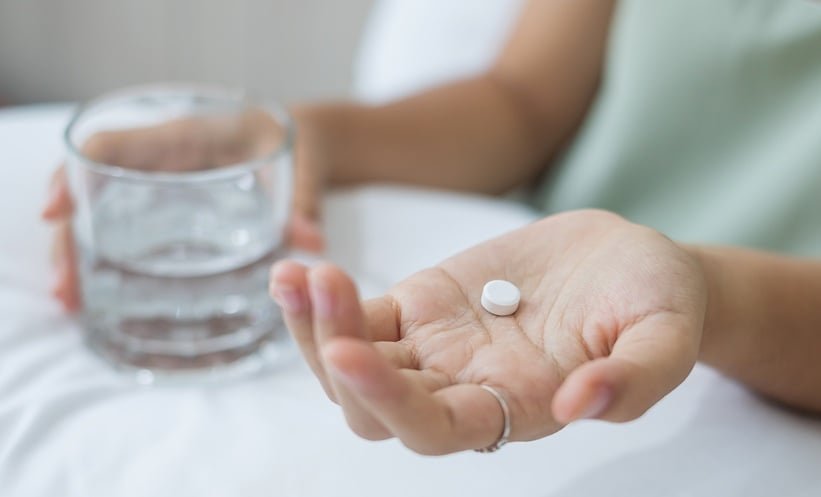
Low-dose hydrocortisone and cognition in women with HIV have emerged as an important research pairing after a new randomised clinical trial found improvements in attention, verbal learning and memory. The study, conducted at Johns Hopkins University between 2017 and 2023, tested whether temporarily altering the body’s stress-response system could influence cognitive performance in women whose HIV was already virologically suppressed.
The result is intriguing for a simple reason: the intervention did not target HIV replication directly. Instead, researchers tested whether changing signalling through the hypothalamic-pituitary-adrenal (HPA) axis could improve brain function in women experiencing cognitive impairment alongside elevated stress or mood and anxiety conditions.
The trial involved 81 women aged 18 to 65 years. A single 10 mg dose of hydrocortisone improved attention at 30 minutes and four hours, while four weeks of daily treatment was associated with improved memory. However, not every cognitive domain responded, and the longer-term treatment comparison did not establish a statistically significant treatment-by-time interaction.
That distinction matters. The findings are a promising signal for future research, not evidence that hydrocortisone should now be routinely prescribed as a cognitive treatment for people with HIV.
What did the hydrocortisone HIV cognition trial find?
The study tested whether a small dose of hydrocortisone could temporarily influence cognitive performance in women with HIV who had already achieved viral suppression.
- 81 women participated, with a mean age of 55.2 years.
- All participants had virologically suppressed HIV.
- Participants also had elevated self-reported stress, a mood or anxiety disorder, or both, plus objective impairment in at least one cognitive domain.
- A single 10 mg oral dose increased cortisol, with levels peaking about 75 minutes after administration.
- Attention improved at 30 minutes and four hours after the single dose.
- At four hours, the attention effect size was 0.42, with a 95% confidence interval of 0.08 to 0.76.
- Verbal learning also improved four hours after the single dose.
- After four weeks of daily treatment, memory improved in the hydrocortisone group.
- Working memory and visuospatial ability did not significantly improve.
- The treatment was reported to be well tolerated during the trial.
The most important takeaway is therefore not that hydrocortisone improves “memory” or “cognition” in a broad, universal sense. Rather, the results suggest that specific cognitive functions may be responsive to controlled modulation of stress-hormone signalling.
Why this matters even when HIV is fully suppressed
Modern antiretroviral therapy has fundamentally changed HIV care. For people who maintain viral suppression, treatment can prevent progression of HIV disease and substantially improve long-term health.
Yet viral suppression does not necessarily mean that every biological consequence associated with HIV disappears.
Research in virally suppressed women has identified substantial variation in cognitive performance. Studies have described patterns involving learning, memory, processing speed, attention and executive function rather than a single uniform form of impairment.
That is important because it changes the clinical question. Instead of asking whether HIV is “still damaging the brain,” researchers increasingly need to determine which biological, psychological and social pathways are contributing to cognitive symptoms in individual patients.
Possible contributors include persistent immune activation, inflammation, psychiatric conditions, vascular and metabolic factors, ageing, medication effects and HIV reservoirs. Chronic stress may interact with several of these pathways rather than operating independently.
The new trial adds the HPA axis to that increasingly complicated picture.
What is the HPA axis, and why would cortisol affect cognition?
The HPA axis is the body’s central stress-response network. When the brain detects a challenge, signals originating in the hypothalamus and pituitary ultimately stimulate the adrenal glands to release cortisol.
Cortisol is not simply a “stress hormone” that is either good or bad. It helps regulate metabolism, immune activity, cardiovascular responses and brain function. Its effects depend on factors including dose, timing, duration and the physiological state of the individual.
This produces an important concept for understanding the hydrocortisone findings: more cortisol is not automatically better.
The researchers were testing whether a controlled, low-dose cortisol signal could temporarily alter a potentially dysregulated stress-response system. Hydrocortisone is chemically identical to cortisol and can therefore act as a pharmacological probe of glucocorticoid signalling.
In other words, the trial was not simply testing a conventional “brain booster.” It was also testing a biological hypothesis.
The strongest signal was attention, not every aspect of cognition
One of the clearest findings came from attention.
Following a single 10 mg dose, attention improved at both measured time points. At four hours, the standardised effect size was 0.42, a statistically significant result.
Verbal learning also improved four hours after dosing, with an effect size of 0.35.
However, the response was not universal across the cognitive battery. The trial found no significant improvement in working memory or visuospatial abilities after the acute intervention.
This selective pattern is scientifically useful. If hydrocortisone had improved every test, it would be harder to determine whether the effect represented a broad improvement in performance, motivation or alertness. Domain-specific changes raise a more interesting possibility: stress-hormone signalling may influence some neural processes more strongly than others.
What happened after four weeks?
The second phase of the study moved beyond the immediate effects of a single dose. Participants received either 10 mg of hydrocortisone or placebo daily for four weeks.
The hydrocortisone group showed an improvement in memory, with an effect size of 0.71 and a 95% confidence interval of 0.22 to 1.20.
At first glance, that appears to be a stronger result than the acute attention finding. But there is an important statistical qualification: the treatment-by-time interaction was not significant.
That means the four-week result should be interpreted cautiously. An improvement within the hydrocortisone group does not by itself prove that hydrocortisone produced a greater change over time than placebo.
This is exactly the kind of detail that can disappear in simplified health headlines. The study provides evidence worth pursuing, but it does not establish a definitive long-term cognitive benefit.
A useful comparison: acute response versus sustained treatment
| Feature | Single-dose phase | Four-week phase |
|---|---|---|
| Hydrocortisone exposure | One 10 mg oral dose | 10 mg daily for four weeks |
| Main signal | Attention and verbal learning | Memory |
| Attention | Improved at 30 minutes and four hours | Not the primary focus of the reported longer-term finding |
| Memory | Verbal learning improved; delayed recall was not statistically significant at four hours | Memory improved in the hydrocortisone group |
| Working memory | No significant improvement | No established benefit |
| Visuospatial ability | No significant improvement | No established benefit |
| Key limitation | Short-lived experimental exposure | Treatment-by-time interaction was not significant |
This comparison highlights why the study should be viewed as a proof-of-concept investigation. It suggests that different cognitive effects may emerge at different times and under different exposure patterns, but it does not yet tell clinicians which patients would benefit, how long treatment should continue or whether improvements translate into meaningful changes in daily life.
The surprising part: cortisol alone did not explain the cognitive improvement
The researchers measured cortisol and several biological markers in an attempt to understand why cognition changed
For breaking news and live news updates, like us on Facebook or follow us on Twitter and Instagram. Read more on Latest Health on thefoxdaily.com.

COMMENTS 0