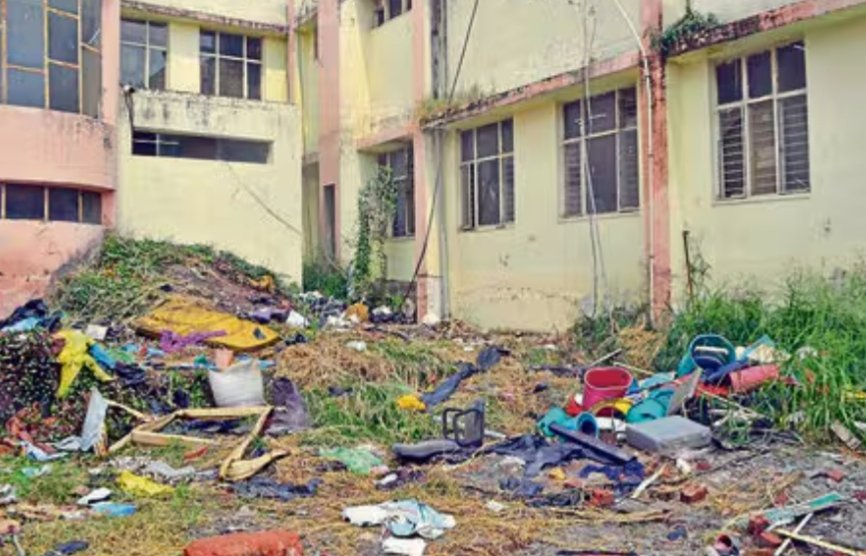
Sanitation concerns at Ludhiana Civil Hospital have drawn attention after patients and attendants reported garbage lying in open areas, persistent foul odours and poorly maintained washrooms on the hospital premises. The concerns have become particularly significant during the dengue and malaria season, when mosquito-borne illnesses are placing additional pressure on healthcare facilities.
Garbage was reportedly found scattered at several locations around the hospital instead of being cleared regularly. Patients and attendants also complained of an unpleasant smell in areas used by visitors, while the condition of washrooms was described as inadequate.
The issue is important not only because of the discomfort caused to patients and their families, but also because sanitation is an essential component of infection prevention in healthcare settings. A hospital treats people who may already have weakened immunity or serious underlying illnesses, making cleanliness, waste management, safe water and properly maintained toilets particularly important.
Ludhiana Civil Hospital Sees Heavy Patient Footfall
The Civil Hospital is a major public healthcare facility serving patients with a wide range of medical conditions. It caters to people seeking treatment for illnesses including tuberculosis, dengue and cancer, while departments such as general medicine and general physician services experience substantial daily footfall.
The facility receives approximately 1,000 to 1,500 visitors every day and around 35,000 patients a month, according to the report.
With such a large number of patients, attendants, healthcare workers and visitors moving through the premises, maintaining sanitation requires continuous waste collection, cleaning and monitoring rather than occasional cleanup.
High patient density can also increase the amount of solid waste generated each day. If waste collection systems are unable to keep pace with the volume, garbage can accumulate in visible areas and create additional hygiene concerns.
Why Garbage Around a Hospital Is a Public Health Concern
Garbage accumulation is more than an aesthetic problem in a healthcare environment.
Waste left in open areas can attract flies, insects and other pests. Depending on the type of waste and surrounding conditions, poorly managed garbage can also create unpleasant odours and potentially contribute to environmental contamination.
Healthcare facilities require particularly careful waste segregation and disposal because some waste generated within hospitals can carry biological or other hazards. Regular removal of waste therefore forms an important part of maintaining a safe clinical environment.
Even ordinary municipal waste can become problematic when it remains exposed for extended periods, particularly during warm and humid weather.
Dengue and Malaria Season Adds to the Concern
The sanitation complaints come at a time when mosquito-borne diseases such as dengue and malaria are a major seasonal concern.
Dengue is transmitted primarily through the bite of infected Aedes mosquitoes. These mosquitoes can breed in relatively small collections of stagnant water around homes, institutions and other urban environments.
Malaria, meanwhile, is transmitted by infected Anopheles mosquitoes. Its transmission is also influenced by environmental conditions that support mosquito breeding.
Garbage itself does not automatically cause dengue or malaria. However, poorly maintained areas can become part of a broader environmental problem if discarded containers, blocked drains or other objects collect stagnant water.
This is why sanitation and vector-control measures become especially important during periods when mosquito-borne diseases are circulating.
Stagnant Water Is a Bigger Mosquito-Control Issue
For dengue prevention in particular, eliminating stagnant water is one of the most important environmental measures.
Water can collect in discarded containers, tyres, buckets, broken equipment, construction material, drains and other objects. Even relatively small amounts of standing water can provide breeding opportunities for Aedes mosquitoes.
For hospitals, this means mosquito control cannot be limited to patient wards or indoor spaces. Outdoor areas, rooftops, drains, waste-storage locations, parking areas and unused equipment also require routine inspection.
A clean hospital campus should therefore involve more than sweeping visible garbage. Effective environmental management includes identifying and eliminating potential mosquito-breeding sites.
Foul Smell Can Signal Poor Waste Management
Patients and attendants also raised concerns about a persistent foul smell around parts of the hospital.
Unpleasant odours can result from several factors, including accumulated organic waste, overflowing bins, inadequate drainage, poorly cleaned toilets or insufficient ventilation. Identifying the exact cause requires inspection of the affected areas.
Regardless of the source, persistent odour in a healthcare facility can significantly affect the experience of patients and their families.
People visiting hospitals are often already dealing with anxiety, pain or uncertainty. An unclean environment can add to their discomfort and may undermine confidence in the facility.
Washroom Maintenance Is Especially Important in Hospitals
Public and patient toilets require frequent cleaning because of the number of people using them throughout the day.
In a busy hospital receiving thousands of patients and visitors each week, washrooms can quickly become unhygienic if cleaning schedules, water supply, drainage or maintenance are inadequate.
Essential sanitation measures include regular cleaning and disinfection, functioning toilets, adequate water availability, proper drainage, soap or hand-hygiene facilities and timely removal of waste.
Hand hygiene is particularly important in healthcare settings because hands can act as a route for transmission of microorganisms between people and surfaces.
Maintaining clean and functional washrooms therefore contributes to a broader infection-prevention strategy.
Hospitals Need Stronger Waste Management Systems
Healthcare waste management requires a systematic approach. Waste should be segregated according to its type, collected at appropriate intervals, stored safely and transported for suitable disposal.
Hospital administrators also need mechanisms for identifying sanitation failures quickly. A cleaning schedule on paper is not enough if overflowing bins, dirty toilets or exposed waste remain unnoticed for hours.
Regular inspections can help identify problem areas before they become persistent complaints.
For a facility with a large daily footfall, sanitation planning should also account for peak patient hours. Cleaning resources may need to be increased during periods when outpatient departments and emergency services experience the highest traffic.
Why Sanitation Matters More When Patients Are Vulnerable
A hospital population is not representative of a healthy community.
Patients may include older adults, children, people with chronic diseases, cancer patients, individuals receiving immune-suppressing treatments and people recovering from infections or surgery.
Some patients may therefore be more vulnerable to complications from infectious exposures.
This makes environmental hygiene a core part of healthcare quality rather than a cosmetic concern.
Clean surroundings also benefit healthcare workers, who spend long hours inside the facility and come into frequent contact with patients and medical environments.
Dengue Patients Need Particular Attention During Seasonal Surges
Dengue can produce high fever, headache, body aches, nausea and other symptoms. Some patients can develop severe dengue, which may involve bleeding, plasma leakage, shock or organ involvement.
Hospitals therefore need adequate capacity to evaluate suspected cases, monitor patients who require observation and manage severe disease when it occurs.
At the same time, preventing mosquito breeding around healthcare facilities is important because patients, attendants and healthcare workers should not be exposed to an environment that supports mosquito populations.
Environmental control is therefore complementary to clinical care.
Sanitation and Infection Prevention Are Connected
Modern infection prevention in hospitals involves multiple layers of protection.
- Regular environmental cleaning
- Proper healthcare waste segregation and disposal
- Hand hygiene facilities
- Clean and functional toilets
- Safe water and drainage systems
- Appropriate disinfection of high-touch surfaces
- Safe handling of potentially infectious materials
- Effective pest and mosquito control
- Routine monitoring of sanitation standards
No single measure can prevent every infection. However, weaknesses in basic environmental hygiene can make healthcare settings less safe and less comfortable for everyone who uses them.
What Can Be Done to Improve the Situation?
Addressing the concerns reported at the Civil Hospital would require both immediate cleaning and longer-term systems improvement.
First, accumulated garbage should be removed promptly. Waste-storage points should be inspected to ensure that bins are adequate for the volume generated and that waste is not allowed to spill into surrounding areas.
Second, washrooms should be placed on a frequent cleaning schedule. Supervisors can maintain inspection logs to verify that cleaning is actually taking place throughout the day.
Third, the hospital campus should be checked for stagnant water. Drains, discarded containers, tyres, construction materials and other potential mosquito-breeding locations should be inspected and addressed.
Fourth, sanitation complaints should have a clear response mechanism. Patients and attendants should be able to report overflowing bins, blocked drains, dirty toilets or other environmental problems and receive a timely response.
Finally, sanitation standards should be monitored continuously rather than only during inspections or after complaints become public.
Clean Hospitals Build Public Confidence
For many families, a government hospital is their primary source of affordable healthcare. The physical condition of the facility can influence how patients perceive the quality and safety of the services they receive.
A clean campus, functioning toilets and properly managed waste communicate that patient welfare is being taken seriously.
Conversely, visible garbage, foul odours and poorly maintained public areas can create the perception that basic standards are being neglected, even when doctors and nurses are providing quality clinical care.
Improving sanitation can therefore have benefits beyond infection prevention. It can improve patient experience, staff morale and public confidence in the healthcare system.
Why the Timing Makes the Issue More Urgent
The complaints have emerged during a period when dengue and malaria are already receiving heightened attention.
That does not establish that sanitation problems at the hospital have caused or increased local disease transmission. However, the seasonal context makes environmental hygiene and mosquito-control measures especially important.
Hospitals should ideally serve as examples of good infection prevention and environmental management. This is particularly relevant during outbreaks or seasonal increases in infectious diseases, when public awareness about hygiene and prevention is already high.
Key Takeaway
Sanitation concerns at Ludhiana Civil Hospital have highlighted the importance of maintaining clean hospital premises, particularly during the dengue and malaria season. Patients and attendants have reported garbage accumulation, foul smells and poorly maintained washrooms at a facility that handles around 1,000 to 1,500 visitors a day and nearly 35,000 patients a month.
Garbage does not itself cause dengue or malaria, but unmanaged waste and areas capable of collecting stagnant water can create environmental conditions that are undesirable during mosquito-borne disease season. Regular waste removal, proper drainage, mosquito-control measures and well-maintained toilets are therefore important components of a safe healthcare environment.
For a busy public hospital, sanitation should be treated as an essential part of patient safety and infection prevention—not simply as a matter of appearance.
SEO Keywords
Primary keyword: Ludhiana Civil Hospital sanitation
Secondary keywords: Ludhiana Civil Hospital garbage, Civil Hospital sanitation concerns, dengue season Ludhiana, malaria season Punjab, hospital hygiene India, hospital waste management, mosquito breeding prevention, dengue prevention, hospital sanitation, healthcare infection prevention, Civil Hospital Ludhiana news, stagnant water dengue risk
For breaking news and live news updates, like us on Facebook or follow us on Twitter and Instagram. Read more on Latest Health on thefoxdaily.com.

COMMENTS 0