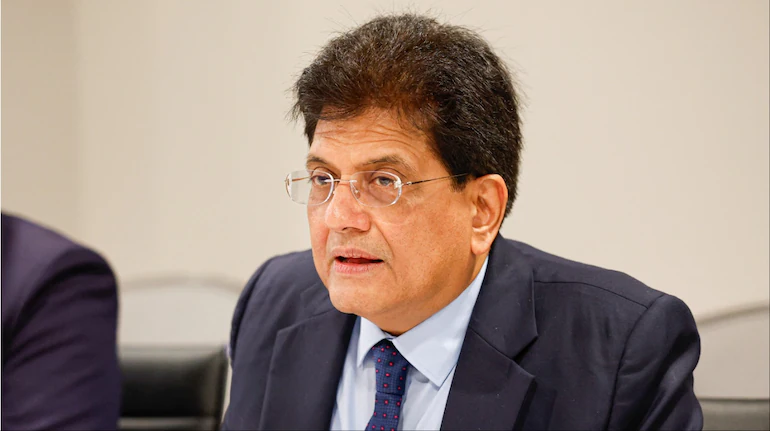
India’s Automobile Industry recorded strong sales during the festive season, with manufacturers selling around 1 million cars during Navratri and approximately 70,000 vehicles on Dhanteras, Commerce and Industry Minister Piyush Goyal said on November 10, 2026. Highlighting the country’s growing manufacturing potential, Goyal said India’s large domestic market, production capacity and competitive pricing could help attract global companies and strengthen its position as an international manufacturing hub.
Speaking at the curtain raiser of the Bharat Mobility Global Expo 2027, Goyal encouraged Indian manufacturers to look beyond domestic demand and pursue international markets. He said combining India’s domestic market with export opportunities would create the scale needed to make Indian products more competitive globally.
The minister also shared expectations for the upcoming mobility expo, saying India could attract at least 25,000 international visitors. He highlighted the growing interest of overseas companies in partnerships with Indian manufacturers and reiterated the government’s target of achieving $1 trillion in overall exports by financial year 2027-28.
Festive Season Boosts India’s Automobile Sales
The sale of approximately 1 million cars during Navratri reflects the scale of consumer demand in India’s automobile market. Manufacturers also sold around 70,000 cars on Dhanteras, one of the most significant vehicle-buying occasions during the festive season.
Festive periods are important for automobile manufacturers because many consumers consider purchasing vehicles during this time. Increased buying activity can support sales across different vehicle categories and create opportunities for manufacturers, dealerships and associated businesses.
Goyal cited these figures to underline the size of India’s domestic market. According to the minister, the country’s demand provides manufacturers with the scale required to expand production and improve their competitiveness.
A large domestic market can make India an attractive destination for global automobile companies considering manufacturing investments. Companies can use local demand to support production while also developing India-based facilities as potential export centres.
Piyush Goyal Says India’s Scale Can Attract Global Manufacturers
Goyal said India’s large consumer market gives international manufacturers an opportunity to establish production operations at a scale that may be difficult to achieve in smaller markets. He also highlighted competitive manufacturing costs as an advantage for companies seeking to serve customers in multiple countries.
“The market in India is so large, and that brings in scale for the world to bring manufacturing to India. Also, manufacturing at competitive prices helps them capture world markets,” Goyal said at the Bharat Mobility Global Expo 2027 curtain raiser.
His remarks underline the government’s emphasis on connecting domestic manufacturing with international demand. Instead of treating India only as a destination for selling products, the minister wants global companies to view the country as a base for producing goods for overseas markets.
Manufacturing at scale can help companies distribute fixed production costs across larger output volumes. Combined with efficient supply chains and competitive pricing, this can improve their ability to compete internationally. However, maintaining quality, productivity and reliable delivery remains essential for manufacturers seeking long-term export growth.
Bharat Mobility Global Expo 2027 Targets 25,000 International Visitors
Goyal expressed confidence that the Bharat Mobility Global Expo 2027 could become one of the world’s largest mobility exhibitions in terms of both size and visitor participation. He said the event could attract approximately 1 million visitors in total, including at least 25,000 international visitors if it receives sufficient global promotion.
The minister said the international visitor target would depend partly on how effectively the event is marketed across different countries. Attracting overseas participants could help Indian companies connect with foreign manufacturers, technology providers, investors and potential business partners.
International exhibitions provide a platform for businesses to showcase products, explore commercial partnerships and understand developments in global markets. For India’s mobility industry, such an event can also highlight domestic manufacturing capabilities and the country’s position in the changing automotive and transportation sectors.
The expo’s theme, “Beyond Boundaries”, reflects the ambition to expand India’s industrial presence beyond its domestic market. Goyal said the theme captured the future vision for Indian industry and its growing engagement with international markets.
Maruti Suzuki’s Electric Vehicle Exports Highlight India’s Manufacturing Reach
To demonstrate India’s expanding role in global manufacturing, Goyal pointed to Maruti Suzuki’s electric vehicle exports to 50 countries. The example highlights how Indian Manufacturing facilities can supply products to overseas markets rather than focusing exclusively on domestic customers.
Electric vehicles are becoming an increasingly important part of the global automobile industry’s development. As manufacturers expand their electric vehicle portfolios, production locations that can support competitive costs and international distribution may gain greater importance.
India’s ability to manufacture and export electric vehicles could create opportunities across the wider automotive supply chain. These include vehicle components, batteries, electronics, engineering services and related technologies.
However, expanding exports will require manufacturers to meet the technical, safety and regulatory requirements of individual markets. Building international distribution networks and maintaining consistent product quality will also be important as Indian-made vehicles compete with established global brands.
Goyal Urges Indian Manufacturers to Focus on Export Markets
Goyal asked businesses participating in Bharat Mobility to consider international opportunities across every segment of the industry. He said manufacturers should explore global markets for products across the entire range of their offerings rather than concentrating only on domestic sales.
The minister argued that combining India’s large home market with export demand could create the production scale needed to strengthen pricing competitiveness.
According to Goyal, manufacturers that expand their international reach can benefit from larger production volumes and broader commercial opportunities. A stronger export orientation could also encourage companies to improve manufacturing processes, develop products for different markets and invest in technology.
For India’s mobility sector, this approach could involve not only finished vehicles but also components, equipment, automotive technologies and supporting services. A broader export strategy would allow more segments of the manufacturing ecosystem to participate in international trade.
Nevertheless, competing globally requires more than low production costs. Indian manufacturers must also maintain product standards, meet delivery commitments and adapt to the requirements of different countries. These factors will influence how successfully domestic companies convert manufacturing capacity into sustained export growth.
Japan’s Interest in Indian Manufacturing Partnerships
Goyal also referred to his recent visit to Japan, saying he had observed interest among Japanese businesses in establishing partnerships with Indian manufacturers for global markets.
He said the discussions involved opportunities for large-scale collaboration, including investments potentially worth billions of dollars, rather than only small manufacturing commitments.
The minister’s comments point to the potential for deeper industrial cooperation between Indian and Japanese companies. Japan has an established presence in India’s automobile and manufacturing sectors, and further partnerships could support investment, technology collaboration and export-oriented production.
Large-scale partnerships could also help Indian manufacturers strengthen their access to international supply chains. However, the actual impact will depend on the investments that companies commit, the projects they establish and the extent to which production is directed towards overseas markets.
India’s $1 Trillion Export Target for FY28 Remains a Priority
Alongside the automobile industry’s growth, Goyal reiterated India’s target of achieving $1 trillion in overall exports by financial year 2027-28. He described the target as a firm priority and said the country remained on track to achieve it.
The target covers India’s overall exports rather than automobile exports alone. It therefore depends on performance across multiple sectors, including manufacturing, engineering goods, electronics, services and other export-oriented industries.
Goyal also indicated that the government expected October export figures to provide an encouraging picture of trade performance. He suggested that the numbers would demonstrate the momentum in India’s export activity, although he did not disclose the figures during the event.
Achieving the $1 trillion target would require sustained export growth, stronger manufacturing capacity and access to international markets. Businesses would also need to navigate changing global demand, trade conditions, logistics costs and competition from other manufacturing economies.
The minister urged industry leaders to move beyond expectations of small, incremental growth and pursue larger international opportunities. His message was that India’s domestic market could provide the foundation, but global markets would be essential for building greater manufacturing scale.
Why India’s Mobility Industry Matters for Global Manufacturing
India’s automobile and mobility sectors bring together vehicle manufacturers, component suppliers, technology companies and a wide network of supporting industries. Growth in this ecosystem can create opportunities for investment, employment, research and exports.
The shift towards electric mobility is also changing the industry’s manufacturing requirements. Vehicle makers increasingly need capabilities in electric powertrains, battery systems, electronic components and software-enabled technologies. Developing these capabilities can help India participate in emerging areas of the global automotive supply chain.
The festive sales figures cited by Goyal demonstrate the scale of domestic demand, while the example of electric vehicle exports to 50 countries highlights the international reach of Indian manufacturing. Together, these developments illustrate the two areas the government wants industry to build upon: a strong home market and a larger export presence.
The Bharat Mobility Global Expo 2027 is expected to provide a platform for showcasing these capabilities and connecting Indian businesses with international participants. Its potential to attract a large overseas audience will depend on global outreach and the participation of companies from different markets.
Key Takeaways from Piyush Goyal’s Bharat Mobility Address
- Festive automobile sales: Manufacturers sold around 1 million cars during Navratri and approximately 70,000 cars on Dhanteras.
- Manufacturing advantage: Goyal said India’s large domestic market and competitive production costs could attract global manufacturers.
- Expo visitor target: The government expects the Bharat Mobility Global Expo 2027 to attract around 1 million visitors, including at least 25,000 international visitors.
- EV exports: Goyal highlighted Maruti Suzuki’s supply of electric vehicles to 50 countries from India.
- Japanese investment interest: The minister said Japanese companies were exploring large-scale partnerships with Indian manufacturers.
- Export ambition: India is targeting $1 trillion in overall exports by FY28, with Goyal saying the country remains on track.
Can India Turn Domestic Demand into Global Manufacturing Leadership?
India’s large automobile market provides an important foundation for attracting manufacturing investment, but converting domestic demand into a stronger global manufacturing position will require continued improvements in production efficiency, technology, quality and export infrastructure.
The festive season sales figures highlighted by Goyal demonstrate the purchasing scale available to manufacturers. Meanwhile, international interest in Indian production and the country’s growing electric vehicle export activity point to opportunities beyond domestic consumption.
The next challenge will be to turn these opportunities into sustained manufacturing investment and long-term export growth. The Bharat Mobility Global Expo 2027 will offer Indian companies an opportunity to present their capabilities to international audiences and explore partnerships that could support this ambition.
With the government maintaining its $1 trillion export target for FY28, the mobility industry is expected to play a role in the broader effort to strengthen India’s position in global manufacturing and trade.
For breaking news and live news updates, like us on Facebook or follow us on Twitter and Instagram. Read more on Latest India on thefoxdaily.com.






COMMENTS 0