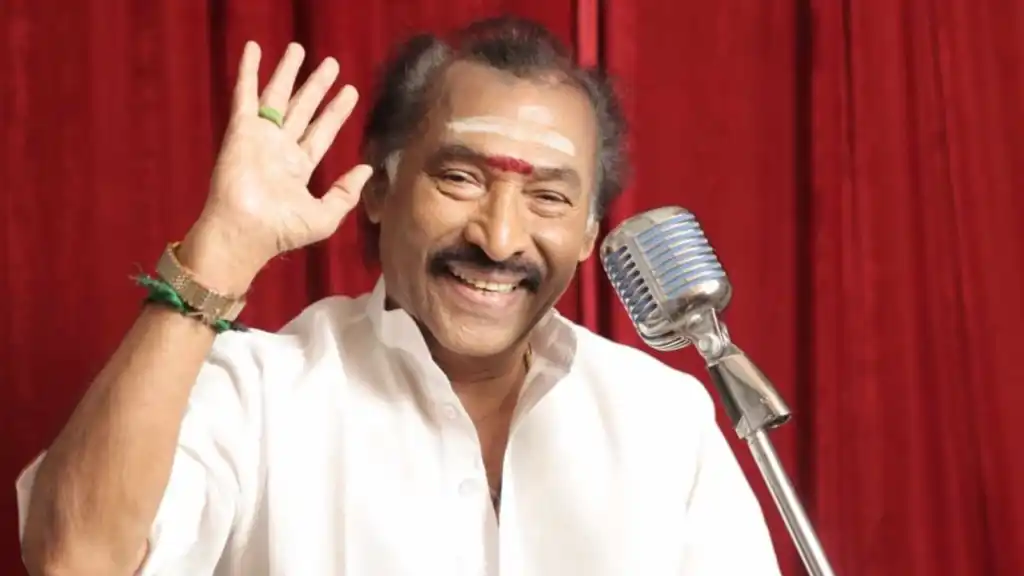
Tamil music composer and singer Deva, whose songs helped shape the screen personas of superstars Rajinikanth and Vijay, died in Chennai on Saturday at the age of 75. Known for his powerful hero-entry themes, memorable romantic melodies and popular gaana compositions, Deva spent more than three decades creating music that became part of Tamil Cinema’s cultural identity.
Hospital sources said Deva had no pulse when he was brought in and attempts to revive him were unsuccessful. His funeral will be held on Sunday in his native village of Mangadu, near Arcot in Ranipet district, with full state honours.
Tamil Nadu Chief Minister C Joseph Vijay described Deva’s death as an “irreplaceable loss” and said his music would remain part of film music history. Vijay also visited the composer’s family on Saturday. Former chief minister M K Stalin remembered how Deva established a distinctive place for himself during an era dominated by Ilaiyaraaja and A R Rahman.
Deva’s legacy extends beyond the number of films he composed or the songs that became popular. His music helped define how audiences experienced a hero’s arrival, a romantic confession, a moment of triumph or a scene of emotional vulnerability. In doing so, he became an essential part of the relationship between Tamil cinema and its audiences.
Deva’s Music Helped Define Rajinikanth’s Screen Persona
Few composers understood the dramatic power of a hero’s entrance as instinctively as Deva. His collaborations with Rajinikanth, particularly in Annamalai, Baashha and Arunachalam, helped establish a musical language closely associated with the superstar’s screen presence.
In Baashha, the music surrounding Rajinikanth’s character did more than accompany the action. It helped audiences experience the transformation of Manickam, a seemingly ordinary man whose concealed past changes the way others perceive him. Suspense, recognition and anticipation became part of the musical arrangement, allowing a few seconds of sound to intensify the impact of a scene.
Deva understood that commercial cinema often requires music to perform a precise dramatic function. A hero walking into a room, revealing his identity or preparing for a confrontation can become a defining cinematic moment when the soundtrack gives the scene its emotional scale.
His compositions did not depend on restraint in such moments. Instead, they embraced grandeur, rhythm and recognisable musical cues that audiences could associate with the star. The result was music that helped turn familiar gestures into events worthy of celebration.
That ability became particularly important in films built around Rajinikanth’s charisma. Deva’s music reinforced the actor’s larger-than-life image while giving audiences a way to participate in it. The songs and background music became part of the collective experience of watching a Rajinikanth film in theatres.
Yet describing Deva only as a composer of energetic hero-entry music would overlook the breadth of his work. The same musician who could make a superstar’s entrance feel monumental could also create melodies built around romance, longing and youthful affection.
From Annamalai to Kushi, Deva Created Songs That Lasted Beyond Films
Deva’s career gained wider recognition with Vaikasi Poranthachu in 1990, which brought him a Tamil Nadu State Film Award. His work on Annamalai in 1992 marked another important stage, helping establish his reputation as a composer capable of delivering music that connected strongly with mass audiences.
His collaborations subsequently extended across films such as Aasai, Kadhal Kottai, Nerukku Ner, Vaalee, Kushi and Panchathanthiram. These projects demonstrated that his musical identity was not limited to action-driven cinema or the sound of a superstar’s arrival.
In films associated with younger actors, including Vijay, Deva helped create a musical vocabulary for romance, mischief and youthful confidence. Songs from films such as Ninaithen Vandhai, Priyamudan and Kushi travelled beyond cinema halls, finding audiences through cassette players, college buses, tea shops, wedding celebrations and homes.
Among his memorable romantic compositions were “Konja Naal Poru Thalaiva”, “Meenamma” and “Pulveli Pulveli” from Aasai. Their appeal rested on qualities different from the dramatic force of his hero-entry music. Melody, emotional warmth and an accessible musical structure allowed the songs to become familiar to listeners who might not have been thinking about the films in which they appeared.
This ability to serve different cinematic moods was central to Deva’s success. His music could make a character appear invincible in one scene and vulnerable in another, without losing the directness that made his compositions popular.
How Deva Helped Vijay Become Familiar to Tamil Audiences
One of the more enduring aspects of Deva’s legacy lies in his work with Vijay, who would later become the Chief Minister of Tamil Nadu. Long before Vijay entered politics, his songs had already helped establish a place for him in the everyday lives of Tamil audiences.
Films such as Ninaithen Vandhai, Priyamudan and Kushi gave audiences melodies through which they encountered Vijay as a romantic lead and a youthful screen presence. The songs often outlived the films themselves, becoming part of listeners’ personal memories and everyday routines.
Music plays a distinctive role in building a film star’s public identity. An actor may be introduced through a character, but songs can make that character familiar long after the audience has left the theatre. A melody heard repeatedly on public transport, at a celebration or through a household radio can become associated with particular stages of a listener’s life.
Deva’s compositions helped create that familiarity for Vijay. His songs reached people through everyday listening habits, making the actor’s screen image recognisable across settings far removed from the cinema.
Vijay’s political career developed decades later, and Deva’s music alone cannot explain his public following. But the composer’s contribution to the actor’s early cultural familiarity illustrates how film music can help establish a star’s relationship with audiences well before that star takes on a different public role.
In this sense, Deva’s work with Vijay formed part of a larger story about how Tamil cinema creates and sustains celebrity. The composer supplied the melodies through which audiences laughed, fell in love, danced and grew older alongside the actor’s evolving screen career.
Deva Brought Chennai’s Gaana Music Into Mainstream Cinema
Another defining part of Deva’s legacy was his contribution to gaana, a popular musical tradition closely associated with Chennai’s working-class neighbourhoods, particularly North Chennai. The genre’s rhythms, colloquial language and direct emotional expression offered a different musical perspective from the polished conventions often associated with mainstream film songs.
Deva recognised the depth of the tradition without treating it as something that needed to be reshaped into a more respectable form before entering commercial cinema.
“I hail from Chennai, and gaana is inseparable from Chennaiites,” he once said. “It may sound raw, but the musicality of this genre is very deep.”
The observation reflected an important aspect of his approach to music. Gaana was not simply a source of catchy rhythms or comic relief. It carried stories about friendship, courtship, financial hardship, alcohol, bravado, disappointment and the everyday struggle to find humour in difficult circumstances.
By bringing elements of this musical culture into mainstream Tamil films, Deva helped introduce a wider audience to sounds rooted in the lived experiences of Chennai’s neighbourhoods. His work allowed the genre to retain much of its colloquial character rather than requiring it to conform entirely to conventional film-music expectations.
Songs such as “Kavalaipadathe Sagothara” reflected the ability of popular music to acknowledge hardship without surrendering to despair. The emotional directness of gaana made room for sorrow and celebration to exist together, often with an irreverent sense of humour.
Deva did not invent the tradition, but his influence helped bring its sounds and sensibilities to a broader commercial audience. That contribution remains an important part of his musical identity.
Deva’s Voice Became Part of His Musical Identity
Deva was also a singer, and his own voice added a distinctive quality to his compositions. Unlike playback performances that can sometimes seem deliberately polished or anonymous, his singing carried an identifiable personality. It sounded lived-in, direct and connected to the musical worlds from which many of his songs emerged.
One notable example was “Vaararu Vaararu Azhagar Vaararu” from Kallazhagar, which Deva sang with S A Rajkumar. The song eventually became closely associated with Madurai’s Chithirai festival, particularly the ritual in which Kallazhagar enters the Vaigai river before large crowds.
Its journey from a film soundtrack into a major public celebration illustrates how popular music can acquire a life independent of the cinema that first introduced it. In this case, the song became part of a wider cultural experience, connecting film music with a longstanding religious and community tradition.
That connection also reflected a broader feature of Deva’s career. His compositions did not remain confined to theatres or recordings. They moved through public spaces, family gatherings, local celebrations and religious events, becoming familiar in settings where cinema was only one part of the experience.
A Composer Who Worked Across Musical Traditions
Deva’s accessible musical style sometimes obscured the range of his training and influences. He studied Western and Indian music and had a grounding in classical forms, allowing him to move between different musical traditions without making those transitions the centre of attention.
His work could combine the direct rhythmic energy of gaana with romantic melody, devotional expression or Carnatic influences. The changes in style served the needs of the song and the film rather than functioning as demonstrations of technical sophistication.
That flexibility helped him work across a wide range of projects. Over the course of his career, he composed for more than 400 films across Tamil, Telugu, Kannada and Malayalam cinema.
His contribution was particularly distinctive because he established a recognisable identity during a period when Tamil film music was shaped by two influential composers with very different approaches.
Ilaiyaraaja had already built an extensive musical legacy through compositions that gave emotional depth to landscapes, everyday experiences and the inner lives of characters. A R Rahman subsequently transformed the sound of film music through new production techniques, layered arrangements and a style that connected local musical traditions with broader international influences.
Deva occupied a different space. His defining strength was an instinct for what a particular cinematic moment required from the audience. He could build anticipation around a star, create a melody that stayed with listeners or bring the sound of a local musical culture into a mainstream production.
Former Tamil Nadu chief minister M K Stalin acknowledged this achievement in his tribute, noting the space Deva created for himself in an era dominated by Ilaiyaraaja and Rahman.
Film Industry Pays Tribute to Deva
Tributes from prominent figures in Tamil cinema highlighted the depth of Deva’s relationships with the artists who worked alongside him.
Lyricist Vairamuthu recalled their collaborations on films including Annamalai, Baashha, Arunachalam, Aasai, Nerukku Ner, Vaalee, Kushi and Panchathanthiram. Describing the personal impact of the loss, he said it felt as though he had “lost one of my own fingers.”
Actor Kamal Haasan remembered Deva as a “vibrant soul”, reflecting the affection and respect he commanded among colleagues.
Chief Minister Vijay called his death an “irreplaceable loss” and said the composer’s music would remain part of film music history. His visit to Deva’s family on Saturday was a personal gesture that also underscored the long association between the composer and the actor.
The tributes reflected different dimensions of Deva’s influence: his prolific output, his relationships with lyricists and performers, and his ability to create music that remained closely connected to popular culture.
Deva’s Legacy: The Music That Made Heroes Feel Larger Than Life
Deva’s significance lies not only in the number of films he worked on or the songs that became popular. His music helped shape the emotional experience of Tamil cinema, giving audiences recognisable sounds through which to understand characters and remember stories.
For Rajinikanth, his compositions could transform an entrance into a defining moment, building anticipation and authority through carefully timed musical cues. For Vijay, his songs helped establish a youthful screen identity that became familiar to audiences across generations.
His romantic melodies reached listeners in quieter moments, while his gaana compositions brought the language and rhythms of Chennai’s working-class neighbourhoods into mainstream cinema. His singing voice added another layer of personality to a catalogue that crossed genres, languages and generations.
Deva rarely needed to place himself at the centre of the experience. His music often became inseparable from the stars, characters and memories associated with it. That is part of what made his work so widely recognisable: audiences could remember the song, the scene, the actor or the moment in their own lives without necessarily thinking about the composer behind it.
With his death at 75, Tamil cinema has lost a composer whose music helped define the sound of its heroes while remaining rooted in everyday listening culture. His songs will continue to accompany film scenes, public celebrations and personal memories, carrying forward the distinctive musical world he created over more than three decades.
For breaking news and live news updates, like us on Facebook or follow us on Twitter and Instagram. Read more on Latest India on thefoxdaily.com.






COMMENTS 0