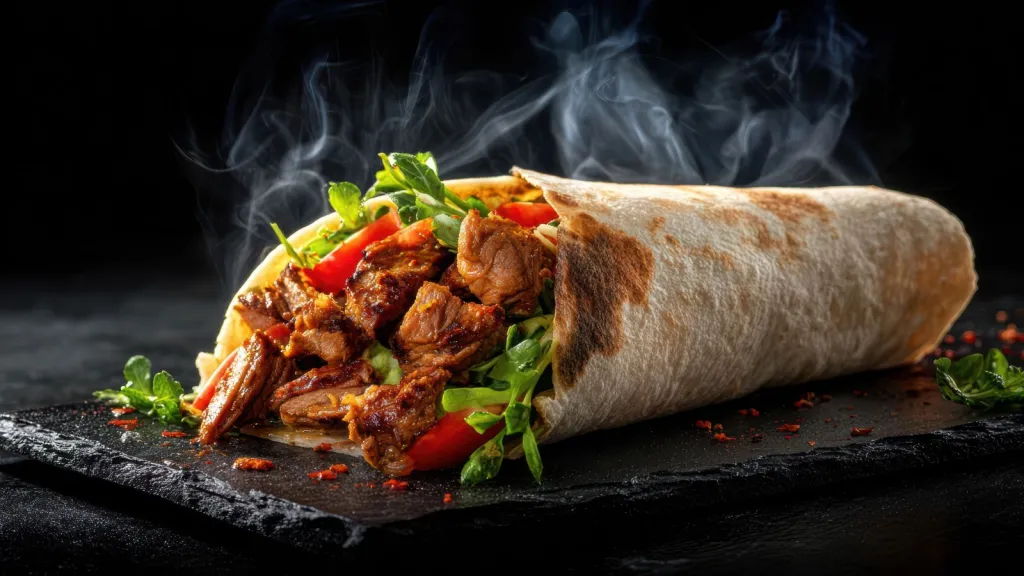
A visit to Kolkata is rarely complete without tasting a freshly prepared kathi roll. Around Park Street, Gariahat and New Market, the sight of vendors cooking parathas on hot griddles and wrapping them around kebabs is part of the city’s everyday food culture. The queues outside popular food stalls reflect how deeply this simple combination of bread, meat and sharp accompaniments has become embedded in Kolkata’s culinary identity.
Yet the kathi roll is no longer confined to the streets of the City of Joy. It has travelled across India and found a place on restaurant menus, food-court counters and home kitchens. Its appeal lies in a straightforward idea: combine the richness of a kebab with the crispness of a paratha, add fresh onions, green chillies and lime, and make the entire meal easy to eat without cutlery.
But what exactly makes a Kolkata kathi roll different from an ordinary kebab wrap? Its name offers an important clue to its origins, while its cooking technique explains why the texture and balance of ingredients matter so much.
Why is it called a kathi roll?
The word kathi means stick in Bengali. It refers to the wooden or bamboo skewers traditionally used to prepare kebabs. The name connects the popular street food to an older style of cooking in which pieces of meat were threaded onto skewers and grilled over heat.
The kathi roll is widely associated with Nizam’s restaurant in Kolkata. According to Chef Ishijyot Surri, Executive Chef and Founder of Mulk and SJI Hospitality, the restaurant is credited with popularising the idea of wrapping kebabs in egg-coated parathas so customers could eat them conveniently while on the move.
Chef Surri explains that the transition from metal skewers to bamboo sticks is believed to have influenced the name’s evolution. The wooden or bamboo kathi became closely associated with the kebabs used in the roll, giving the street-food preparation its distinctive identity.
The story also reflects a practical problem that food businesses have long needed to solve: how to make a delicious meal easier to carry and eat. Traditional kebabs served on skewers can be inconvenient for someone walking through a busy market or travelling between appointments. Wrapping them inside a paratha offered a simple solution.
Instead of changing the essential character of the kebab, the roll adapted how it was served. The bread held the filling together, while the egg coating added flavour and helped create a crisp outer layer. What began as a convenient way to enjoy kebabs became a recognisable food in its own right.
How Kolkata turned a kebab into a street-food classic
Kolkata has a long association with rich, layered food traditions, including dishes influenced by Mughlai cooking. The kathi roll reflects how these culinary influences can adapt to the pace and practical needs of city life.
Kebabs and parathas are satisfying foods on their own, but combining them changed the eating experience. The paratha provided a portable base, the kebab supplied the main filling, and fresh accompaniments brought contrast to the richness of the meat.
This combination made the roll suitable for a quick meal without sacrificing the flavours associated with a more elaborate kebab preparation. It could be eaten while standing at a street stall or carried away for later, making it particularly suited to busy urban surroundings.
Over time, the kathi roll became more than a convenient way to serve kebabs. It developed its own identity through the particular combination of paratha, egg, grilled filling and fresh ingredients. The name became associated with a recognisable style of street food rather than simply any food wrapped in flatbread.
Its popularity beyond Kolkata shows how a local food can travel while retaining the features that make it distinctive. Restaurants elsewhere may offer different fillings and variations, but the traditional Kolkata version remains associated with its crisp paratha, kebab filling and sharp accompaniments.
What makes Kolkata’s kathi roll different from other wraps?
The defining feature of a traditional Kolkata kathi roll is not just the filling. It is the relationship between the paratha, egg and kebab, supported by ingredients that provide freshness and acidity.
Chef Surri describes the traditional preparation as an egg-coated, crisp paratha containing kebabs, sharp onions and green chillies, finished with a squeeze of lime. The combination brings together warmth, richness, acidity and crunch in a single bite.
1. The paratha provides the foundation
The paratha is central to the character of the roll. It is not merely a neutral covering for the filling. Its crisp, flaky layers contribute texture and a buttery richness that complement the grilled kebab.
A well-cooked paratha should have golden patches and distinct layers rather than a soft, doughy centre. It needs enough structure to hold the filling without breaking, but should remain flexible enough to wrap around the ingredients.
This is one reason a kathi roll can feel different from a wrap made with a soft tortilla or other flatbread. The paratha is an active part of the flavour and texture rather than simply a container.
2. Egg adds richness and helps create a crisp coating
Egg is another characteristic element of the traditional preparation described by Chef Surri. It is cooked against the paratha, adding flavour and helping form the familiar golden exterior.
The egg layer needs to cook properly rather than remain wet or slippery. When prepared correctly, it becomes part of the outer texture and works with the crisp paratha to create a satisfying contrast with the softer kebab filling.
3. Kebabs bring smoky, savoury flavour
The kebab is the main source of savoury depth in the roll. Grilling gives the filling its characteristic cooked flavour, while the spices and marinade contribute aroma and warmth.
The filling should remain juicy, but it should not carry excessive liquid into the bread. A roll containing too much marinade or gravy can quickly lose its crispness. Keeping the kebab relatively dry on the outside while retaining moisture inside helps preserve the balance.
4. Onions and green chillies provide contrast
Sliced onions bring sharpness and crunch, cutting through the richness of the paratha and kebab. Green chillies add a fresh, direct heat that gives the roll another layer of flavour.
These ingredients are not simply decorative toppings. Their role is to balance the heavier elements and keep every bite from feeling too rich. The amount of chilli can be adjusted according to taste, but the freshness of the accompaniments is an important part of the experience.
5. Lime brings the flavours together
A squeeze of lime adds acidity, which helps balance the richness of the egg, paratha and kebab. It also gives the filling a fresher finish.
Timing matters. Chef Surri recommends adding lime just before serving. Adding it too early can affect the texture of the ingredients and make the roll less enjoyable by the time it reaches the plate.
Why texture is the secret to a good kathi roll
The most memorable kathi rolls are built around contrast. The outside should be crisp and flaky, the kebab should be juicy, the onions should retain some crunch, and the lime should provide a sharp finish.
When one element overwhelms the others, the balance disappears. A paratha that is too soft can make the roll feel heavy. Excessive gravy can turn the bread soggy, while too much raw onion or chilli may overpower the kebab.
This is why the cooking process matters as much as the choice of ingredients. Temperature, moisture and timing determine whether the finished roll has the texture associated with the Kolkata street-food version.
For home cooks, the most useful principle is to prepare the individual components carefully and bring them together only when the paratha is ready. The filling should not sit inside the bread for too long before serving.
How to make a Kolkata-style kathi roll at home without a soggy paratha
Recreating the street-style kathi roll at home does not require an elaborate kitchen setup, but it does require attention to a few details. Chef Surri emphasises controlling moisture and cooking the paratha until it develops crisp, golden layers.
Step 1: Cook the paratha until golden and crisp
Begin by cooking the paratha on a hot griddle or tawa. It should develop golden patches and crisp layers while remaining flexible enough to wrap around the filling.
A paratha that is removed too early may remain soft and doughy. Give it enough time to cook properly on both sides, adjusting the heat so that the outside does not burn before the inside is cooked.
Step 2: Cook the egg fully
For the traditional egg-coated version, spread the beaten egg over the paratha during cooking and allow it to set against the bread. The egg should be fully cooked before the paratha is removed from the heat.
This creates the characteristic egg layer and adds another dimension to the texture. Avoid folding or filling the paratha while the egg is still wet.
Step 3: Keep the kebab filling relatively dry
Prepare the kebabs separately and avoid carrying excessive marinade or gravy into the roll. The kebab can remain juicy inside without leaving a pool of liquid that soaks into the paratha.
If the filling has too much moisture, allow excess liquid to drain before assembling the roll. This small step can make a significant difference to the final texture.
Step 4: Prepare the onions and accompaniments carefully
Slice the onions and green chillies according to preference. If the onions have been washed, Chef Surri recommends patting them dry before adding them to the filling.
Excess water from washed onions can transfer to the paratha, particularly if the roll is left standing. Drying the ingredients helps preserve the crispness of the bread.
Chutneys should also be used judiciously. While they can add flavour, applying too much can introduce unnecessary moisture and overpower the other ingredients.
Step 5: Assemble just before serving
Place the kebabs and prepared accompaniments on the cooked paratha. Add the lime juice at the last moment, as recommended by Chef Surri, rather than allowing the citrus to sit in the filling for an extended period.
Fold or roll the paratha around the filling and return it briefly to the hot griddle for a final toast. This last step helps restore the crispness of the outside and brings the ingredients together.
Common mistakes that can ruin a homemade kathi roll
Even when the ingredients are good, a few preparation mistakes can affect the result. The most common problem is excess moisture, but cooking temperature and timing also matter.
- Using a soft, undercooked paratha: A doughy base lacks the crisp layers that give the roll its character.
- Adding too much kebab marinade: Excess liquid can soak into the bread and make it difficult to hold.
- Using wet onions: Water left on washed onions can soften the paratha.
- Adding too much chutney: Heavy use of sauces can overwhelm the filling and affect texture.
- Adding lime too early: Citrus is best added just before serving to preserve the intended freshness.
- Skipping the final toast: A brief return to the griddle helps give the assembled roll its crisp, street-style finish.
Why Kolkata’s kathi roll continues to win over food lovers
The kathi roll’s appeal comes from its ability to deliver several contrasting flavours and textures in a convenient format. It has the richness of a kebab, the crispness of a paratha and the freshness of onions, chillies and lime. Each ingredient has a purpose, and the result is more balanced than a simple combination of meat and bread might suggest.
Its history also offers a glimpse into how street food evolves. A practical adaptation associated with Nizam’s restaurant became a defining part of Kolkata’s food culture. The idea was simple, but the execution gave it a distinctive identity that people could recognise and enjoy.
Today, the kathi roll is enjoyed well beyond the streets where it became popular. Its variations may differ from one kitchen to another, but the traditional Kolkata preparation continues to stand out for its egg-coated paratha, kebab filling and carefully balanced accompaniments.
For anyone making it at home, the lesson is equally simple: focus on the quality of the paratha, keep the filling from becoming too wet, use fresh accompaniments and serve the roll while it is still hot. The difference between an ordinary wrap and a satisfying Kolkata-style kathi roll often comes down to those details.
For breaking news and live news updates, like us on Facebook or follow us on Twitter and Instagram. Read more on Latest Lifestyle on thefoxdaily.com.

COMMENTS 0