I Tried a 10-Course Meghalayan Feast in Bengaluru and Discovered the Culinary Soul of the Northeast
What does it take to transport diners from a bustling Bengaluru hotel to the mist-covered hills of Meghalaya? At a special 10-course dining experience organised by Meghalaya Tourism in collaboration with Seeti Movement, the answer lay in indigenous ingredients, thoughtful storytelling, traditional cooking techniques and a generous helping of hospitality.
Hosted at Tijouri, Radisson Blu Atria, Bengaluru, the pop-up was designed to showcase the culinary traditions of Meghalaya through a contemporary tasting menu. From banana blossom cooked using techniques inspired by Garo traditions to Khasi mandarin, wild fruit, black sesame and Lakadong turmeric, every course offered a glimpse into the region’s distinctive food culture.
The evening was memorable for another reason, too. I found myself sharing a table with Priyadarshini Raje Scindia, co-founder of Seeti Movement, whose warmth and enthusiasm for regional Indian culture made the gathering feel less like a formal culinary event and more like a dinner among people united by their love for food.
By the time I left after midnight, I had discovered unfamiliar ingredients, challenged my assumptions about Northeastern cuisine and found myself wanting to travel to Meghalaya to experience its food, textiles and landscapes firsthand.
A Dining Room That Brought Meghalaya to Bengaluru
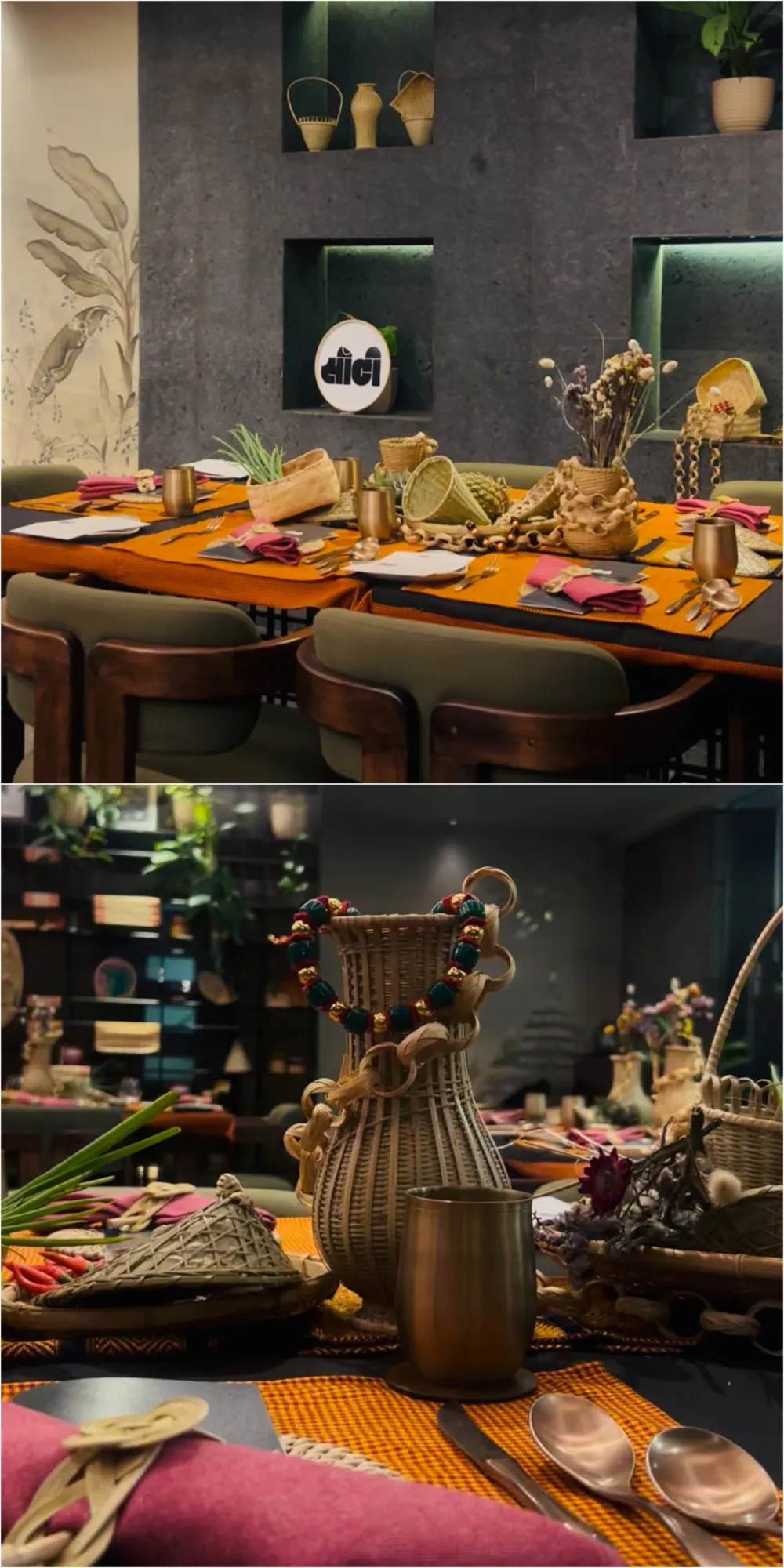
Walking into Tijouri, the hotel’s dining space, felt like stepping into a carefully assembled tribute to Meghalaya’s cultural heritage.
Wooden shelves displayed local crafts and greenery, while woven cane baskets, brassware, indigenous bamboo and native beaded necklaces added texture to the room. Bold mustard-and-maroon checked placemats brought colour to the tables, complemented by handwoven textiles and thoughtfully arranged centrepieces.
The result was an atmosphere that felt intimate and rooted in place rather than like a conventional hotel pop-up. The decor brought craft, material culture and hospitality together, creating a setting that complemented the evening’s culinary focus.
The room buzzed with conversations among food bloggers, chefs, entrepreneurs and journalists. Despite the presence of familiar names from Bengaluru’s food and hospitality circles, the atmosphere remained relaxed and welcoming.
At my table was Priyadarshini Raje Scindia, who co-founded Seeti Movement with Sid Mewara. Mewara is a professionally trained chef associated with The Big Forkers and has co-hosted Warner Bros. Discovery’s I Should Have Stayed Home. His work spans professional kitchens, food media and restaurant development.
Scindia brought an easy warmth to the evening. Although she was busy hosting guests and moving between tables, she made time for a brief conversation about her work and the ideas behind the initiative.
What stood out was her enthusiasm for bringing people together through regional food and culture. Conversations flowed naturally around the table, moving between restaurant recommendations, culinary discoveries and the search for authentic Northeastern food in Bengaluru.
When Mewara joined us between courses, the discussion continued with stories, laughter and shared memories. The evening was as much about the people around the table as it was about the food arriving on it.
The Idea Behind the 10-Course Meghalayan Feast
One of the most thoughtful aspects of the dinner was the involvement of the chefs. Reuben Sooting, Tanisha Phanbuh and Adonijah Lyngdoh, who travelled from Meghalaya for the pop-up, visited the tables as the courses were served.
They explained the ingredients, cooking techniques and regional influences behind the dishes, making the experience feel like a conversation about Meghalaya’s food traditions rather than simply a sequence of restaurant plates.
Their explanations also answered a question I had carried into the dinner: what exactly was fish mint, an ingredient that appeared in several dishes?
Despite its name, fish mint is an herb rather than a fish. Its distinctive, tangy and pungent flavour made it an intriguing component of the vegetarian menu.
As a vegetarian, I had arrived with the assumption that Northeastern cuisine would be overwhelmingly centred on meat and fish. The evening challenged that perception completely.
Each of the 10 courses offered a vegetarian interpretation that felt deliberate and carefully developed. The dishes showcased mushrooms, banana blossom, citrus, indigenous herbs, rice and local fruit without treating vegetables as secondary ingredients.
Some courses were so flavourful that my non-vegetarian companions were happy to finish what remained on my plate. That was particularly welcome as the meal progressed through its 10 courses.
The menu drew inspiration from the Khasi, Garo and Jaintia hills, highlighting seasonality, preservation, wild forage and regional cooking traditions.
The 10 Courses: A Journey Through Meghalaya’s Ingredients
1. Black Sesame and Tree Tomato Tart
The meal opened with a tart that combined local mushrooms, earthy black sesame and indigenous spices.
The filling delivered a rich, savoury flavour, while a vibrant tree tomato salsa added acidity and freshness. The contrast between the delicate pastry and the deeper mushroom-and-sesame notes made it a satisfying introduction to the menu.
It established the evening’s approach: familiar formats reimagined through ingredients associated with Meghalaya.
2. Garo Wetepa-Inspired Banana Blossom
The second course drew inspiration from wetepa, a traditional Garo cooking technique associated with preparing food in banana leaves over open embers.
Tender banana blossom was infused with local herbs and steamed in a banana-leaf parcel. The result was subtle and aromatic, with a comforting quality that allowed the ingredients to speak without excessive seasoning.
The dish also demonstrated how traditional techniques can shape flavour and texture while connecting a modern dining experience to regional culinary practices.
3. Pomelo, Mustard Leaf and Khasi Mandarin Salad
Freshness took centre stage with a colourful salad combining juicy pink pomelo, peppery mustard greens and sweet Khasi mandarin.
The citrus provided a lively combination of sweet and tart flavours, while the mustard leaves introduced a sharper, slightly spicy edge.
Compared with the richer opening courses, this dish felt bright and refreshing. It also showcased the character of regional produce, with the fruit and greens creating a balance of contrasting flavours.
4. Forest After Rain: Mushroom Dumplings With Chilli Oil and Crispy Ginger
The mushroom dumplings brought an earthy warmth to the tasting menu.
Inspired by smoky flavours associated with Dawki, the delicate dumplings were served on a banana leaf and finished with fragrant chilli oil and crisp ginger threads.
The mushroom filling offered a deep, savoury character, while the ginger added texture and a sharp aromatic note. The dish felt comforting without becoming heavy, and its combination of smoke, spice and earthiness made it one of the evening’s more memorable savoury courses.
5. Fish Mint, Tomato and Pumpkin
This plate demonstrated how an unfamiliar herb could transform a relatively simple combination of ingredients.
Charred tomato and silky pumpkin purée provided a sweet, rounded base, while an emulsion made with fish mint introduced a fresh, tangy and pungent character.
The herb tied the components together, giving the dish a distinctive identity without overpowering the vegetables.
It was also a useful introduction to fish mint’s culinary potential. Rather than functioning as a garnish, the herb played a central role in shaping the flavour of the plate.
6. Pear, Roselle and Khasi Wild Apple Granita
After several savoury courses, a refreshing palate cleanser offered a change of pace.
The dish paired warm poached pear with bright ruby-red roselle, a plant related to hibiscus, and a frozen granita made from Khasi wild apples.
The combination moved between sweetness, tartness and the crisp, icy texture of the granita. It was playful and refreshing, clearing the palate before the more substantial courses that followed.
The use of regional fruit also reinforced the menu’s emphasis on ingredients that are less familiar to many diners outside the Northeast.
7. Ja Stem and Tit Nei Ïong: Yellow Rice and Mushrooms
The seventh course brought together turmeric-coloured rice and deeply spiced mushrooms, served in a rustic wooden bowl with traditional condiments.
Known as Ja stem, the yellow rice offered fragrance and warmth, while Tit nei Ïong provided an earthy, savoury accompaniment.
The presentation was simple compared with some of the earlier plates, but that simplicity suited the dish. Rice, mushrooms and condiments created a comforting combination that felt connected to the region’s food traditions.
It was a reminder that culinary exploration does not always require elaborate presentation. Sometimes, the appeal lies in the character of the ingredients and how they work together.
8. A Twist of the Hills: Spaghetti With Fish Mint Pesto
The eighth course was among my favourites, partly because it demonstrated how a regional ingredient could work in an unexpected format.
Thick strands of spaghetti were coated in a vivid green pesto made with indigenous fish mint.
The herb’s distinctive flavour gave the pasta a fresh, tangy and aromatic profile. Although spaghetti was a familiar format, the use of fish mint made the dish feel different from a conventional pesto preparation.
The result was so appealing that my non-vegetarian dining companions happily helped finish my portion. By this stage of a 10-course meal, that was a particularly generous gesture.
More importantly, the dish illustrated how regional ingredients can travel across culinary boundaries without losing their distinctive identity.
9. Whispers of Lakadong: Turmeric Sponge, Infused Milk and Black Sesame Tuile
Dessert is not usually the part of a meal I anticipate most, but this course became my personal favourite.
Inspired by Meghalaya’s famed Lakadong turmeric, the dish featured a light golden sponge soaked in turmeric-infused milk and topped with an intricate black sesame tuile.
It was barely sweet, with an earthy warmth from the turmeric and a creamy texture from the infused milk. The sesame tuile introduced a contrasting crunch and a deeper, nutty flavour.
Rather than relying on excessive sweetness, the dessert allowed the ingredient’s distinctive character to take centre stage.
It was a thoughtful interpretation of turmeric, showing how a spice commonly associated with savoury cooking could also bring complexity to a dessert.
10. Autumn Song: Soh Ïong, Ginger Flower and Black Rice
The final course brought the evening to a close with a combination of silky panna cotta, a preserve made from soh ïong a wild purple cherry ginger flower and toasted black rice crumble.
The panna cotta provided a smooth, delicate base, while the fruit preserve contributed depth and colour. Ginger flower added a floral note, and the black rice crumble supplied a satisfying crunch.
The dessert balanced creamy, fruity and toasted flavours without feeling excessively heavy after the long tasting menu.
It was an elegant ending to a meal built around indigenous ingredients, thoughtful technique and the diversity of Meghalaya’s culinary landscape.
Seeti Movement: More Than a Dining Experience
Between courses, Priyadarshini Raje Scindia explained the thinking behind Seeti Movement and its Seeti In Your City series.
The name itself carries a playful association with the pressure cooker, a familiar fixture in many Indian kitchens. But the idea also extends to the whistle as a signal to gather attention and encourage people to look at food differently.
Speaking to Hindustan Times, Scindia explained the concept:
“By the name Seeti, it’s the cooker. Seeti is a call to arms you know when you blow a whistle, it means you are getting everyone’s attention.”
She described the initiative as an effort to create an environment in which people could think beyond familiar assumptions about Indian food.
For Seeti Movement, that means exploring ingredients at their source and understanding food within a wider cultural context.
Scindia explained that the project involved visiting smaller places to discover ingredients that might otherwise remain unfamiliar to diners in major cities.
“It’s not just what’s at your table. It’s food. It’s culture. It’s craft. It’s music. It’s history,” she told Hindustan Times.
That philosophy was evident throughout the dinner. The menu was not simply an attempt to present regional ingredients in a contemporary setting; it also offered opportunities to discuss the people, traditions and techniques connected to them.
Scindia also highlighted how Indian cuisine is often represented through a narrow selection of familiar dishes when presented internationally. Her ambition, she explained, is to encourage diners to explore states and culinary traditions they may not have encountered before.
The Meghalaya pop-up made that ambition tangible by bringing regional ingredients and chefs into direct conversation with diners.
Why Regional Indian Cuisine Deserves More Attention
The evening left me thinking about how many regional food traditions remain underrepresented in mainstream restaurant culture.
Meghalaya’s cuisine offered an expansive vocabulary of flavours: earthy mushrooms, pungent herbs, tart citrus, wild fruit, banana blossom, turmeric, rice and ingredients shaped by local landscapes and traditions.
The vegetarian menu was particularly revealing. It challenged the assumption that a cuisine must be meat-heavy to be distinctive, showing instead how plants, herbs, grains and indigenous produce can form the foundation of a layered dining experience.
The chefs’ presence also made a difference. Learning about an ingredient directly from the people working with it added context that a printed menu alone could not provide.
The evening demonstrated that regional culinary storytelling can be as much about preserving knowledge and celebrating local produce as it is about creating an enjoyable restaurant experience.
A Taste of Meghalaya That Stayed With Me
It was past midnight when I finally left Tijouri. I carried away memories of a remarkable meal, new connections and a notebook full of details about ingredients I wanted to learn more about.
The experience also changed how I thought about Northeastern Indian food. What had begun as a 10-course tasting menu became an introduction to the culinary traditions of the Khasi, Garo and Jaintia hills and to the possibilities of presenting regional food in a contemporary setting without losing sight of its roots.
For anyone curious about India’s diverse food cultures, the dinner offered a compelling reason to look beyond familiar restaurant menus and explore the Northeast.
Seeti Movement’s Seeti In Your City series was scheduled to travel through November and December, with pop-ups planned in Hyderabad, Bengaluru, Gurugram and Mumbai. Readers interested in future events can check the initiative’s official social media channels for announcements.
I left with one particularly strong thought: Meghalaya deserved more than a place on my list of destinations to visit. After this meal, its food, crafts and hills had become reasons in their own right to make the journey.
Disclosure: The author attended the dinner at the invitation of Seeti Movement.
For breaking news and live news updates, like us on Facebook or follow us on Twitter and Instagram. Read more on Latest Lifestyle on thefoxdaily.com.

COMMENTS 0