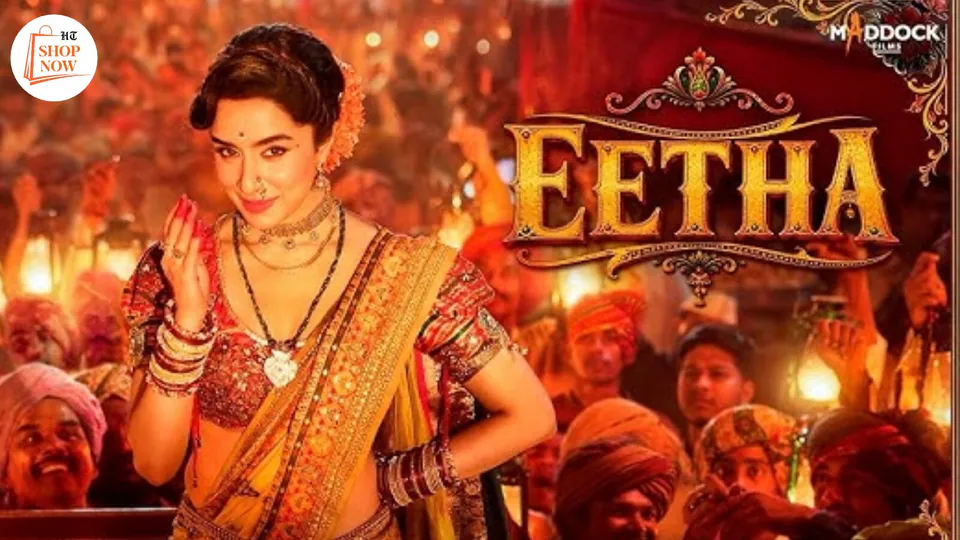
The saree is often recognised by its familiar silhouette: pleats tucked neatly at the waist, fabric falling around the legs and a pallu arranged over the shoulder. Maharashtra’s traditional Nauvari saree, however, follows a different approach. Made from nine yards of fabric, it is draped between the legs and tucked at the back, creating a distinctive dhoti-like appearance.
The traditional garment is receiving renewed attention through Eetha, the upcoming film starring Shraddha Kapoor as Vithabai Bhau Mang Narayangaonkar, a celebrated performer associated with Maharashtra’s Lavani and Tamasha traditions. Scheduled for release on December 4, the film brings the Nauvari into focus not simply as a costume but as an important part of the cultural setting it seeks to recreate.
Its construction, practical design and regional variations make the Nauvari different from the conventional saree. Understanding how it is draped also explains why it has remained closely associated with traditional Maharashtrian dressing and folk performance.
What Is a Nauvari Saree?
The name Nauvari comes from two Marathi words: ‘nau’, meaning nine, and ‘vari’, meaning yards. As the name suggests, the traditional saree measures nine yards, approximately 8.2 metres.
It is also known as a Lugade or Kashta saree. Unlike the conventional saree, which generally has pleats tucked around the waist and a pallu falling over the shoulder, the Nauvari is arranged in a dhoti-style drape.
A section of the fabric passes between the legs and is secured at the back. This creates a divided lower silhouette that resembles traditional trousers while retaining the appearance and versatility of a saree.
The additional fabric is essential to achieving this shape. Rather than falling continuously around the ankles, the material is arranged to allow greater freedom of movement. The wearer can walk, bend and dance without being restricted in the same way as a conventional saree drape might be.
The Nauvari is not limited to one standard arrangement. Different regional and community-specific styles influence how the pleats, pallu and fabric are positioned, giving the garment variations while preserving its defining nine-yard construction.
Nauvari Saree vs Regular Saree: Four Key Differences
Both the Nauvari and conventional saree are made from a single length of fabric. Their draping methods, however, produce noticeably different silhouettes. The most important differences lie in the length, pleating technique and the way the fabric is arranged around the legs.
1. The Length of the Fabric
A conventional saree is commonly around five-and-a-half to six metres long, although the exact measurement can vary depending on the weave and style. A traditional Nauvari uses nine yards, or approximately 8.2 metres, of fabric.
The additional length provides the material needed to create its distinctive drape. It allows the fabric to pass between the legs, form the required pleats and remain secured at the back.
2. The Dhoti-Style Pleating
The most recognisable feature of a Nauvari is the way its lower portion is draped. In a conventional saree, pleats are usually tucked at the waist, while the remaining fabric is arranged as a pallu over the shoulder.
In the Nauvari, a section of the fabric is drawn between the legs and tucked at the back. This creates a trouser-like appearance and gives the garment its characteristic divided silhouette.
3. Greater Freedom of Movement
The dhoti-style construction is not merely a visual distinction. It also affects how the garment functions when worn.
By arranging the fabric between the legs, the drape allows the wearer to walk, bend and move more freely. This practical quality has contributed to its association with working women, everyday traditional dressing and folk performers.
For performers, the ability to move comfortably is particularly relevant. The Nauvari’s construction allows the garment to retain its traditional appearance while accommodating the physical demands of dancing and stage performances.
4. A Distinctive Overall Silhouette
A conventional saree generally creates a continuous, skirt-like appearance around the lower body. The Nauvari, in contrast, has a more structured and divided silhouette because of the fabric passing between the legs.
The way the material falls around the legs is central to its identity. Even when different textiles, colours or blouse designs are used, the dhoti-style arrangement remains the defining feature of the traditional drape.
Why Shraddha Kapoor’s Eetha Is Bringing Attention to the Nauvari
In Eetha, Shraddha Kapoor portrays Vithabai Bhau Mang Narayangaonkar, a celebrated figure associated with Maharashtra’s Lavani and Tamasha performance traditions. Recreating this cultural world requires attention to the clothing, jewellery and styling associated with performers of that period.
The Nauvari therefore plays an important role in establishing the character’s visual identity. Its significance goes beyond the appearance of a traditional Maharashtrian outfit. The way it is worn is closely connected to the movement and performance style of Lavani artistes.
Costume designer Sheetal Sharma has spoken about the research involved in developing the film’s wardrobe. The team referred to archival material and studied traditional Tamasha performers, regional textiles and the ways Lavani artistes wore their Nauvari sarees.
One notable decision was to avoid pre-stitched Nauvari sarees. Sharma explained that the team wanted Shraddha to wear traditionally draped sarees, including during rehearsals.
The distinction matters because a pre-stitched version can fall differently around the hips and sides. Traditional draping allows the fabric to be arranged in a way that more closely reflects the original construction and appearance of the garment.
For a film centred on a performer, these details can influence how convincingly the character’s movements and appearance are recreated. The costume is not simply an element of visual styling; its construction forms part of the physical language of the performance.
From Paithani to Ilkal: The Textiles Behind Eetha’s Costumes
The fabric used in a traditional outfit can change its appearance, texture and overall character. For Eetha, the costume team worked with a range of Indian textiles to create a wardrobe that reflected the richness and variety of traditional dressing.
The fabrics included Paithani, Ilkal, Banarasi brocade, Jamdani, Kanchipuram, Dharmavaram and Chanderi. Each textile brings its own visual character, allowing the costumes to move beyond a single colour or fabric treatment.
The blouse designs were also given careful consideration. Variations in necklines, sleeves and back details helped create individuality across the character’s wardrobe.
This approach highlights an important aspect of traditional Indian dressing: the saree itself is only one part of the overall ensemble. The textile, blouse construction and method of draping work together to create the final look.
The Traditional Jewellery That Completes the Nauvari Look
Jewellery is another important element of Maharashtrian traditional dressing. In Eetha, the accessories were selected to support the cultural identity of the character and complement the sarees.
The costume team incorporated traditional Maharashtrian jewellery, including:
- Kolhapuri saaj: A traditional Maharashtrian necklace that adds a distinctive regional element to the ensemble.
- Thushi: A traditional necklace that contributes to the layered jewellery appearance.
- Tode: Traditional bangles that complete the jewellery styling.
- Nath: A traditional nose ornament closely associated with Maharashtrian attire.
These accessories help establish the character’s visual identity while complementing the different fabrics and blouse designs. Together, the saree, jewellery and styling create an ensemble rooted in regional dressing traditions.
How to Style a Nauvari Saree While Keeping Its Traditional Character
The Nauvari’s appeal comes from the relationship between its construction, fabric and accessories. While its nine-yard length creates the distinctive silhouette, the blouse, jewellery and textile determine the overall appearance of the outfit.
For anyone interested in traditional Maharashtrian dressing, a few elements are worth considering:
- Choose the right blouse: Different blouse constructions can change the overall look. Fitted short sleeves, puffed sleeves and varied necklines can complement the traditional drape.
- Pay attention to jewellery: A nath, thushi, Kolhapuri saaj and traditional bangles can help establish the regional character of the ensemble.
- Explore different textiles: Paithani silk, brocade and other Indian weaves offer different textures and visual effects, making the Nauvari suitable for varied traditional occasions.
- Keep the draping technique authentic: The way the fabric passes between the legs and is secured at the back is central to the Nauvari’s identity. Simply using a nine-yard saree in a conventional drape does not recreate its traditional silhouette.
Why the Nauvari Is More Than a Traditional Costume
The attention surrounding Eetha offers an opportunity to look beyond the visual appeal of the Nauvari saree. Its nine-yard construction, dhoti-style pleating and practical design reflect a form of dressing in which appearance and movement are closely connected.
Its association with Lavani and Tamasha performers also shows why the drape is relevant to the cultural setting of Shraddha Kapoor’s upcoming film. The way the garment is worn contributes to the physical presentation of a performer, making traditional draping an important part of an authentic costume recreation.
From the choice of Paithani and Ilkal textiles to the use of Maharashtrian jewellery, the costume details in Eetha highlight the variety within traditional Indian dressing. They also demonstrate that regional clothing cannot always be understood through its appearance alone.
The Nauvari is defined as much by its construction as by its fabric and styling. Its nine-yard length creates a distinctive silhouette, while its dhoti-style arrangement allows greater freedom of movement. As the film brings the garment into the spotlight, it also draws attention to the craftsmanship and cultural traditions that make this Maharashtrian drape distinctive.
For breaking news and live news updates, like us on Facebook or follow us on Twitter and Instagram. Read more on Latest Lifestyle on thefoxdaily.com.





COMMENTS 0