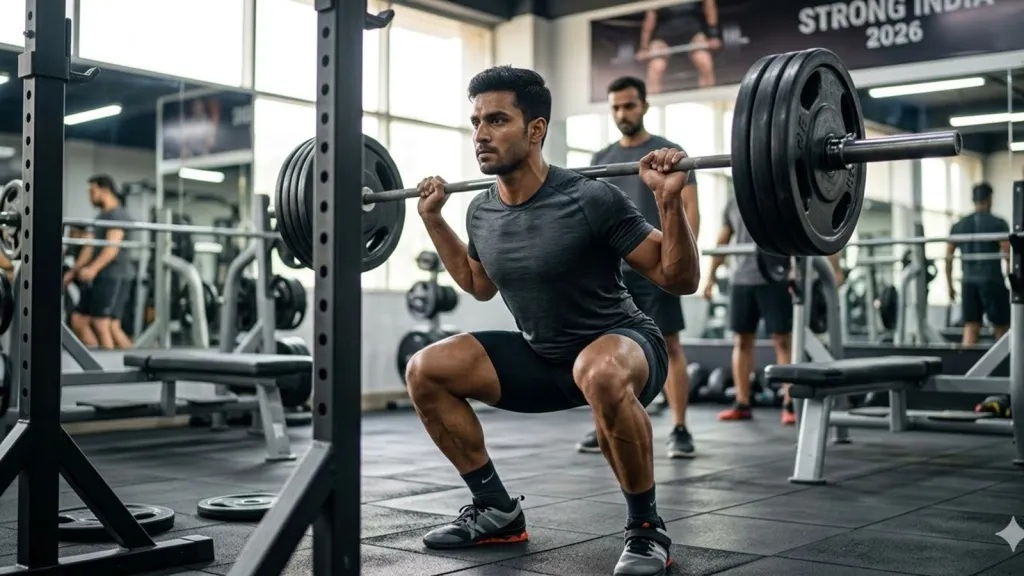
Orthopaedic Surgeon Reveals 5 Gym Exercises He No Longer Does and Why
Going to the gym can help build strength, improve mobility and support long-term health. However, the way an exercise is performed, the amount of weight used and a person’s mobility can all influence the risk of injury. For some movements, pushing for heavier loads or greater intensity without proper technique may place unnecessary stress on the joints.
Orthopaedic surgeon Dr Ankur Singh recently shared five gym exercises he stopped doing after specialising in Orthopaedics. His list includes behind-the-neck shoulder presses, heavy deadlifts performed with poor form, deep knee extensions on machines, behind-the-neck lat pulldowns and box jumps performed primarily to achieve maximum height.
His message was not that these exercises are universally dangerous. Instead, he highlighted the importance of choosing movements that suit individual mobility, strength and technique while protecting long-term joint health.
To examine the concerns, Dr Swapnil Zambare, consultant arthroscopy at KIMS Hospitals, Thane, explained that these exercises are not necessarily harmful when performed correctly. The risk can increase when people use poor form, lift beyond their capacity or attempt advanced movements without adequate preparation.
Here is what to know about the five exercises, why they may pose challenges and how to approach strength training more safely.
1. Behind-the-Neck Shoulder Presses
The behind-the-neck shoulder press involves lowering a barbell behind the head towards the upper shoulders before pressing it overhead. Although the movement targets the shoulder muscles, it also requires considerable shoulder mobility and control.
Dr Ankur Singh cautioned against the exercise because of the position it places the shoulders in, particularly when a person lacks the mobility to perform it comfortably.
According to Dr Swapnil Zambare, movements that require substantial shoulder external rotation can place the joint in a compromised position when the necessary range of motion is lacking.
Over time, repeatedly loading the shoulder in an uncomfortable or poorly controlled position may irritate the rotator cuff or contribute to shoulder impingement symptoms.
The rotator cuff is a group of muscles and tendons that helps stabilise the shoulder and control arm movement. It plays an important role in lifting, reaching and overhead activities.
What can you do instead?
For many gym-goers, a front-loaded shoulder press or a dumbbell shoulder press may be a more comfortable alternative. These variations allow the arms to move in a position that better suits an individual’s shoulder mobility.
However, no exercise is automatically safe for everyone. The appropriate variation depends on existing injuries, strength, mobility and technique.
The key takeaway: You do not need to force your shoulders into an uncomfortable position to build shoulder strength. Choose a movement that allows controlled motion without pain, and seek professional guidance if overhead exercises consistently cause discomfort.
2. Maximum-Weight Deadlifts With Poor Form
Deadlifts are widely used to develop strength in the hips, legs, back and other muscles involved in lifting. When performed with appropriate technique and a suitable load, they can be an effective part of a resistance-training programme.
The concern raised by Dr Singh is not deadlifting itself, but attempting maximum weights while allowing technique to deteriorate.
When a person lifts more weight than they can control, the movement may become less stable. This can include excessive or poorly controlled spinal movement, jerking the load off the floor or losing the ability to maintain a consistent lifting position.
Dr Zambare emphasised that deadlifts can be beneficial when performed with proper mechanics. Problems arise when people prioritise lifting heavier weights over maintaining technique.
He explained that rounding the spine under load can increase the risk of back-related problems, particularly when combined with excessive loading and poor control.
How can you make deadlifts safer?
Start with a weight that allows you to maintain a controlled movement throughout the lift. Increase the load gradually as your strength and technique improve.
Useful precautions include:
-
Learn the movement first: Practise the lifting pattern with a manageable weight before progressing.
-
Maintain controlled technique: Avoid jerking the weight or allowing fatigue to compromise your movement.
-
Increase loads gradually: Do not treat every workout as an opportunity to lift your maximum.
-
Choose suitable variations: Romanian deadlifts, trap-bar deadlifts or other modifications may be appropriate depending on your training goals and physical limitations.
-
Pay attention to symptoms: Stop if you experience sharp or unusual pain, and seek medical advice when symptoms persist.
A neutral spinal position is generally a useful technique goal, but individual anatomy and lifting styles vary. A qualified trainer can help assess your form and select an appropriate progression.
The key takeaway: Deadlifts are not inherently bad for the back. Appropriate loading, sound technique and gradual progression matter more than lifting the heaviest weight possible.
3. Deep or Heavy Knee Extensions on Machines
Knee-extension machines isolate the quadriceps, the muscles at the front of the thighs. The exercise can be useful for strengthening these muscles, including in some rehabilitation programmes when appropriately prescribed.
However, Dr Singh cautioned against deep or heavily loaded knee extensions, particularly when they place excessive stress on the knee.
Dr Zambare agreed that knee extensions are not inherently unsafe but explained that heavy loading and certain movement ranges may increase stress on the knee joint and patellar tendon.
The patellar tendon connects the kneecap to the shinbone and helps transmit force during movements such as walking, climbing stairs and straightening the knee.
The amount of stress placed on the knee depends on factors including the load, the range of motion, the individual’s condition and how the exercise is performed. People with existing knee pain may need to adjust the movement or seek professional advice.
What are the alternatives?
Dr Zambare suggested that functional, compound movements such as squats and step-ups may be suitable alternatives for many people because they develop strength through movements used in everyday activities.
Other options may include sit-to-stand exercises, supported squats or appropriately prescribed rehabilitation exercises.
However, knee extensions may still be useful for certain people, including those following a structured rehabilitation programme. Avoiding them entirely is not necessary for everyone.
The key takeaway: Knee-extension machines can be part of an effective workout. The important considerations are suitable resistance, a comfortable range of motion and individual joint health.
If you have persistent knee pain, swelling or difficulty bearing weight, seek medical assessment before continuing exercises that aggravate the symptoms.
4. Behind-the-Neck Lat Pulldowns
Behind-the-neck lat pulldowns involve pulling a bar down behind the head towards the upper back. The exercise targets the latissimus dorsi, or lats, along with other muscles involved in shoulder and upper-back movement.
Like behind-the-neck shoulder presses, this variation requires considerable shoulder mobility. It can also demand coordinated movement of the shoulders, neck and upper back.
Dr Singh warned that many people do not have the mobility required to perform the exercise comfortably. When they force the movement, the shoulder joint may experience unnecessary stress.
Dr Zambare similarly noted that limited shoulder external rotation can make behind-the-neck movements more challenging and may contribute to irritation or impingement symptoms in susceptible individuals.
Which lat pulldown variation is better?
A front lat pulldown, in which the bar is brought towards the upper chest rather than behind the head, may be a more practical choice for many gym-goers.
This variation can train the back muscles without requiring the same behind-the-head position. It also allows people to adjust their grip, posture and range of motion according to their comfort and training goals.
For effective lat pulldowns:
-
Use a manageable weight that allows you to control the movement.
-
Avoid swinging your torso to move the load.
-
Keep the movement smooth rather than pulling abruptly.
-
Do not force your shoulders or neck into an uncomfortable position.
-
Ask a qualified trainer to check your technique if you are unsure.
People with a history of shoulder injuries or persistent discomfort should consult a healthcare professional before attempting movements that aggravate their symptoms.
The key takeaway: You can strengthen your back without forcing the bar behind your head. A front lat pulldown may provide a suitable alternative for many people.
5. Box Jumps Focused on Maximum Height
Box jumps are a form of plyometric training, which uses rapid muscle actions to develop explosive power. They can improve athletic performance when programmed appropriately and performed with good technique.
However, Dr Singh cautioned against making maximum height the primary goal of every box jump.
When people attempt to jump higher than their current ability allows, they may lose control during take-off or landing. Landing awkwardly can increase the risk of ankle sprains, knee strain or falls.
Dr Zambare explained that the main concern is often poor landing mechanics rather than explosive training itself.
A successful jump requires more than generating upward force. The person must also land in a stable position and maintain control throughout the movement.
How can you train explosive power more safely?
Start with a height that allows you to land confidently. Focus on a controlled landing before progressing to more challenging variations.
Safer training principles include:
-
Prioritise landing technique: Aim for a stable landing with controlled movement rather than simply reaching a greater height.
-
Start with manageable challenges: Choose a box height suited to your current ability.
-
Allow adequate recovery: Fatigue can affect coordination and landing control.
-
Progress gradually: Increase difficulty only when you can perform the movement consistently.
-
Consider alternatives: Lower box jumps, step-ups or other appropriately selected drills may help develop strength and power with different demands.
People with a history of ankle or knee injuries, balance difficulties or limited jumping experience may benefit from professional guidance before starting plyometric exercises.
The key takeaway: Explosive training can be valuable, but chasing maximum height is not necessary for everyone. Controlled movement and stable landings should come first.
Are These Five Gym Exercises Actually Dangerous?
Not necessarily. Dr Singh’s list reflects his approach to managing injury risk, but it should not be interpreted as a universal ban on these exercises.
Dr Zambare explained that the movements are not entirely harmful by design. The risk often increases when people use poor form, overload their joints or attempt advanced exercises without sufficient preparation.
For example, a behind-the-neck movement may be manageable for someone with the required mobility and appropriate coaching, while the same exercise may be unsuitable for someone who cannot achieve the position comfortably.
Similarly, deadlifts can be an effective strength exercise when the load and technique are appropriate. Knee extensions can be useful in some training and rehabilitation programmes, while box jumps can develop power when progression and landing technique are carefully managed.
Individual factors also matter. A person’s training experience, previous injuries, joint mobility, strength, balance and recovery can all influence which exercises are suitable.
The aim should not be to fear particular movements, but to understand their demands and choose exercises that fit your needs.
Five Principles for Safer Strength Training
Whether you train at a gym for general Fitness or athletic performance, a few basic principles can help you build strength while managing injury risk.
1. Prioritise technique over heavy weights
Increasing resistance before mastering a movement can make it harder to maintain control. Start with a manageable load and focus on performing each repetition correctly.
2. Understand your mobility limitations
Some exercises require greater shoulder, hip, ankle or spinal mobility than others. Do not force a joint into a position that causes pain or discomfort.
If limited mobility repeatedly affects your technique, consider consulting a qualified trainer or healthcare professional.
3. Progress gradually
Muscles, tendons and other tissues need time to adapt to increasing demands. Sudden increases in weight, volume or exercise difficulty can make training harder to tolerate.
Increase one aspect of your programme at a time when possible, and allow adequate recovery between demanding sessions.
4. Choose exercises that suit your goals
You do not need to perform every popular gym exercise to become stronger. Alternative movements can often train similar muscle groups while better matching your mobility, experience and preferences.
A well-designed routine should balance training goals with individual needs.
5. Do not ignore persistent pain
Muscle fatigue after exercise is not the same as sharp joint pain or pain that continues to worsen.
Stop an exercise if it causes unusual or sharp pain. Seek medical advice if symptoms persist, recur or are accompanied by swelling, instability or difficulty moving the joint.
The Bottom Line
Orthopaedic surgeon Dr Ankur Singh has highlighted five exercises he avoids: behind-the-neck shoulder presses, maximum-weight deadlifts performed with poor form, deep or heavy knee extensions, behind-the-neck lat pulldowns and box jumps focused on maximum height.
His concerns centre on excessive joint stress, insufficient mobility, poor lifting technique and uncontrolled landings.
However, Dr Swapnil Zambare stressed that these movements are not inherently harmful for everyone. Their suitability depends on technique, loading, mobility, training experience and individual health.
For most gym-goers, the broader lesson is straightforward: prioritise form, control and consistency over intensity. Choose movements you can perform safely, increase difficulty gradually and seek professional guidance when pain or mobility limitations affect your training.
Disclaimer: This article is for informational purposes only and is not a substitute for professional medical advice. Consult a qualified healthcare professional before starting a new exercise routine, particularly if you have an existing injury or medical condition.
For breaking news and live news updates, like us on Facebook or follow us on Twitter and Instagram. Read more on Latest Lifestyle on thefoxdaily.com.





COMMENTS 0