Why Are We So Obsessed With the ’90s? Fashion, Music and Nostalgia
From cargo pants and slip dresses to minimalist fashion and the return of iconic bands, the 1990s are influencing popular culture once again. In 2026, the decade’s fashion, music, photography and underground creative movements are attracting renewed attention, even among young people who were not alive or old enough to remember the era.
The fascination extends beyond clothing and entertainment. The 1990s represent a period before smartphones, social media and algorithm-driven feeds became central to everyday life. For many people today, that era offers an appealing vision of a world where social interactions were more spontaneous, creative communities developed offline and people could enjoy experiences without constantly documenting them.
An exhibition at London’s Tate Britain, titled The 90s: Art and Fashion, explores this cultural revival through more than 100 photographs, sculptures and fashion pieces. Curated by former British Vogue editor-in-chief Edward Enninful, the exhibition examines the decade’s distinctive creative energy and its continuing influence on contemporary culture.
But why are we so fascinated by the 1990s? The answer lies in a combination of nostalgia, changing technology, fashion’s commercial cycles and a growing desire for more meaningful real-world experiences.
How the 1990s Became a Symbol of Creative Rebellion
The 1980s were often associated with extravagant fashion and conspicuous excess. By contrast, Britain’s 1990s creative scene embraced a more stripped-back, experimental and rebellious aesthetic.
The decade’s cultural movements challenged conventional ideas about fashion, music and consumerism. Independent magazines, hip-hop, underground rave culture and the work of the Young British Artists helped create an atmosphere in which experimentation mattered more than polished perfection.
The 1996 film Trainspotting, with its rejection of conventional middle-class aspirations through the phrase “Choose Life”, became one example of the era’s rebellious spirit.
Young creatives explored different ways of expressing themselves, often working outside established institutions. Independent publications provided platforms for emerging photographers and stylists, while warehouse parties and underground music scenes created spaces where new communities could develop.
This do-it-yourself approach remains a major part of the decade’s appeal. In an era when much content is carefully curated for online audiences, the rawness and unpredictability of 1990s culture can feel refreshingly different.
Tate Britain’s Exhibition Revisits the Spirit of the ’90s
The exhibition The 90s: Art and Fashion brings together images, objects and creative work that capture the energy of the decade.
Curator Edward Enninful, who became the youngest fashion director of the British style magazine i-D in 1991 at the age of 18, remembers a time when nightlife and work often blended together.
He described how people would leave clubs and head straight to work, sometimes freshening up quickly or catching a few hours of sleep wherever they could.
For Enninful, the attraction of the period is closely connected to the freedom of experiencing life before smartphones became ubiquitous.
He suggested that many young people relate to the decade because they imagine it as a time when people could go out, explore and enjoy themselves without constantly being recorded.
That sense of freedom is central to the current revival. The 1990s are remembered not only for what people wore or listened to, but also for how they experienced the world around them.
Vinca Petersen’s Photographs Capture Underground Rave Culture
Artist Vinca Petersen’s work is among the material featured in the exhibition. Her extensive collage of photographs, flyers and diary entries documents underground rave scenes across Britain and Europe.
The images capture friends gathering around homemade sound systems, dancing at warehouse parties and resting after long nights of music.
Her diary entries offer a personal record of the period’s atmosphere. One describes a party in a bomb crater, followed by a Sunday spent dancing until the sun encouraged everyone to slow down.
These photographs and written memories provide a glimpse into a culture built around shared experiences rather than online visibility.
For many participants, underground parties were not simply entertainment. They were places to build friendships, experiment with identity and participate in a creative community away from mainstream expectations.
How 1990s Fashion Photography Changed the Industry
The decade also transformed fashion photography by challenging the polished conventions that had long dominated the industry.
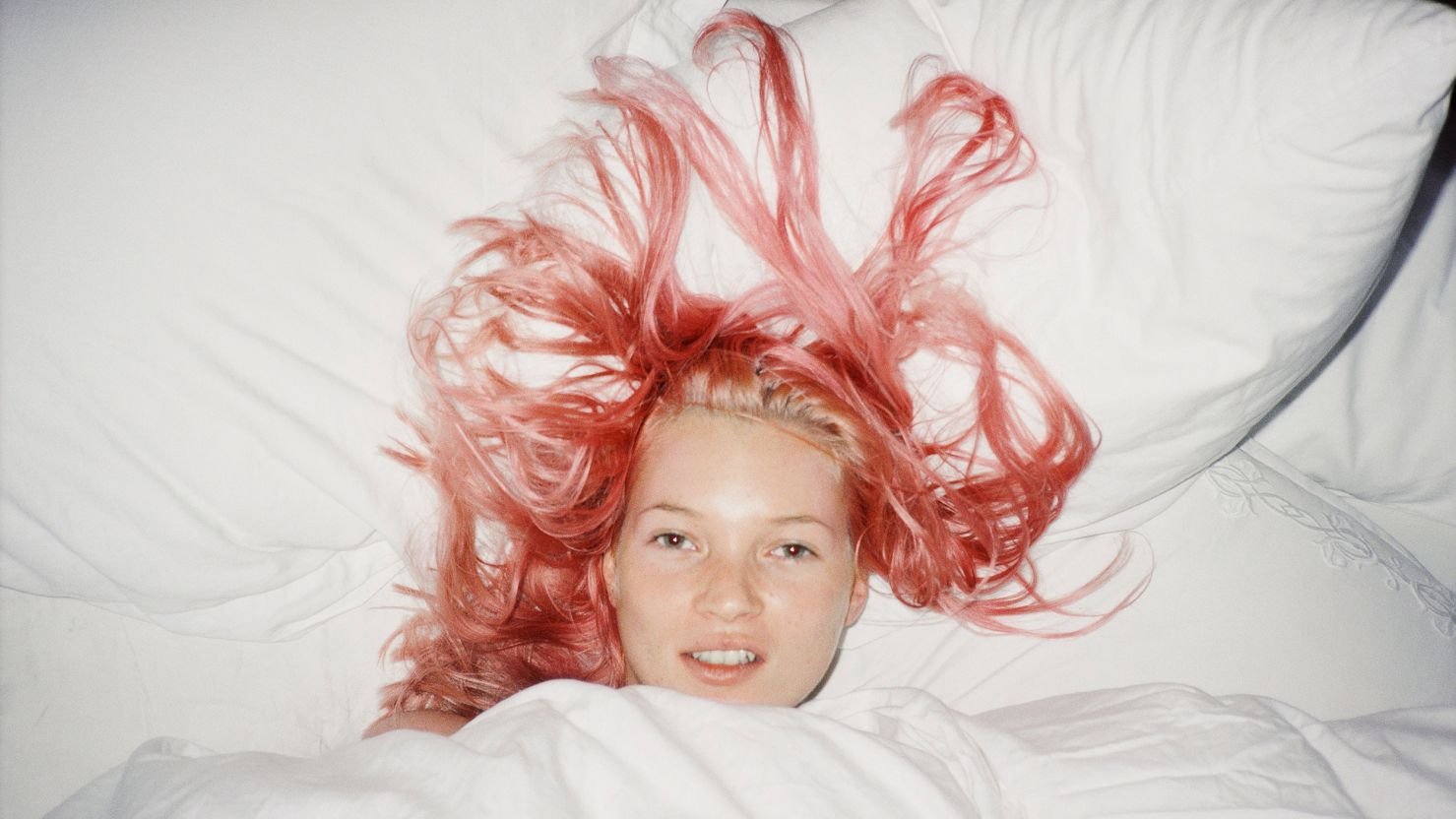
Photographer Juergen Teller became known for his unpolished images, including photographs of a young Kate Moss. His work helped establish a visual style that felt more immediate and less carefully staged than traditional fashion imagery.
Teller also photographed aspiring models who visited his London studio for casting meetings known as “go-sees”. Hundreds of these encounters were documented, with dozens of images included in the Tate Britain exhibition.
The photographs capture young people arriving with different personalities and approaches. Some appear accompanied by their mothers, while others try to stand out through unusual poses or an intentionally casual attitude.
Teller explained that he wanted to photograph a diverse range of people and make the process of discovering new faces more democratic. He said he gave everyone the same amount of attention and time rather than concentrating only on people who immediately inspired him.
His approach reflected a broader shift in 1990s fashion culture: imperfection, individuality and authenticity could be as compelling as traditional glamour.
Today, that aesthetic continues to influence fashion campaigns, editorial photography and social media imagery.
Normski’s Photographs Preserve the Energy of UK Hip-Hop
Photographer, DJ and broadcaster Normski documented London’s dance floors during a period when British hip-hop was developing its own distinctive identity.
His photographs capture crowded rooms, movement and the collective energy of people participating in the music scene. They also reflect the influence of American hip-hop acts, including Public Enemy and Wu-Tang Clan, whose appearances in Britain helped energise local audiences.
Normski believes that being part of a cultural scene is different from simply observing it.
He has criticised the way contemporary underground culture can become immediately visible online, arguing that constant transparency makes it difficult for scenes to remain independent of mainstream attention.
In the 1990s, underground communities often developed away from large audiences and commercial pressure. Artists and music fans could experiment without feeling that every moment needed to be shared publicly.
That distinction helps explain why the decade feels attractive in the age of content creation. The appeal is not necessarily that people want to abandon technology altogether, but that they want spaces where creativity can develop without constant scrutiny.
Why Gen Z Wants a World Before Smartphones
Nostalgia is often associated with memories of one’s own childhood. Yet the current fascination with the 1990s is particularly interesting because many members of Generation Z have little or no personal memory of the decade.
For them, the era is less about revisiting a lived experience and more about imagining an alternative to contemporary life.
Psychologist Clay Routledge, who specialises in nostalgia, suggests that young people are interested in developing more intentional relationships with technology.
This does not necessarily mean rejecting smartphones, the internet or digital communication. Instead, it reflects a desire to find a healthier balance between online and offline experiences.
The 1990s occupy an interesting position in technological history. Home computers and early internet connections were becoming increasingly accessible, but digital technology had not yet become a constant presence in people’s pockets.
A household might have had one computer connected to the internet, which people used at particular times rather than throughout the day.
For today’s young people, that arrangement can seem appealing because it suggests a world in which technology was available without demanding constant attention.
The decade therefore represents a kind of digital-analog sweet spot: modern technology was beginning to expand opportunities, while much of everyday social life remained rooted in physical spaces.
How Limited Technology Encouraged Creativity
The technology of the 1990s also helped a new generation of musicians and artists create work independently.
Home computers and early laptops gave aspiring musicians access to tools that could be used to produce music without expensive professional studios.
Normski recalled that people could make music in their own homes without needing extensive equipment.
This accessibility helped encourage experimentation. Artists could develop ideas, record sounds and share their work through local networks and independent communities.
The same spirit extended beyond music. Independent magazines, small creative collectives and alternative art spaces provided opportunities for people who might otherwise have struggled to enter established industries.
The lesson is not that technology was better in the 1990s. Rather, the period demonstrates how relatively accessible tools, combined with time and creative freedom, can help new ideas emerge.
Today, digital platforms make publishing and distributing creative work easier than ever. However, the pressure to produce content consistently and attract immediate attention can also make experimentation feel commercialised.
The renewed interest in the 1990s may therefore reflect a desire to recover the freedom to create without constantly measuring success through online engagement.
Why London Became a Global Creative Centre
The 1990s were also a period of greater cultural exchange between Britain, Europe and the United States.
Fashion and culture journalist Dana Thomas recalled how London began to feel more connected to the wider world as travel and communication improved.
The opening of the Eurostar high-speed rail service between London and continental Europe in 1994 made travel easier and encouraged the exchange of cultural ideas.
By 1996, London had attracted international attention for its music, fashion and creative communities. Thomas and her colleagues at Newsweek described the city as “the coolest city on the planet” in an international cover story.
The city’s abandoned industrial buildings also played an important role. Warehouses and other unconventional spaces provided room for artists, musicians and party organisers to experiment outside traditional commercial venues.
Similar creative environments developed in Manchester and New York, where artists and musicians could build communities without relying entirely on established institutions.
These spaces helped nurture underground culture, but the availability of affordable places to live and create was equally important.
Petersen recalled that living in squats, or occupying empty buildings without the owner’s permission, sometimes gave artists more time to pursue creative work.
Her point was straightforward: when people spend less time worrying about paying rent, they may have more time to experiment, collaborate and develop ideas.
In today’s expensive urban environments, that kind of freedom can be difficult to find. The nostalgia for 1990s creative culture may therefore reflect not only a desire for a different social atmosphere but also a longing for the material conditions that allowed independent scenes to flourish.
Is the Revival of ’90s Fashion a Sign of Originality Running Out?
The return of 1990s fashion raises a broader question: are designers revisiting the decade because its ideas remain compelling, or because the industry is struggling to produce something genuinely new?
Fashion and culture journalist Dana Thomas argues that the industry has become caught in a cycle of rapid production and constant novelty.
Fast fashion has accelerated the pace at which clothing is designed, manufactured and sold. As trends change quickly, brands face pressure to keep releasing new products and maintaining consumer interest.
Under these conditions, looking to the past offers a convenient source of inspiration.
The minimalist style associated with Carolyn Bessette-Kennedy, for example, has returned to the fashion conversation because its simple silhouettes and understated appearance are relatively easy to adapt for contemporary wardrobes.
Thomas has suggested that the commercial appeal of such looks makes them attractive to marketing teams. Familiar styles can be reproduced and sold without requiring an entirely new design language.
However, the revival is not necessarily proof that originality has disappeared. Designers can reinterpret older ideas, combine influences from different periods and use historical references to create something new.
The challenge is distinguishing meaningful creative reinvention from repetitive trend cycles driven primarily by commercial demand.
The Darker Side of ’90s Nostalgia
Although the decade’s cultural energy remains appealing, not every aspect of the 1990s deserves a comeback.
Thomas highlighted the damaging influence of “heroin chic”, a fashion aesthetic associated with extremely thin models and an intentionally gaunt appearance.
The trend raised serious concerns about the way the fashion industry represented bodies and normalised potentially harmful beauty ideals.
The decade also had significant limitations in representation. Enninful recalled being one of the few Black people working in his industry during the 1990s.
When he tried to feature a Black model on the cover of his first issue at i-D, he was told it would not be allowed.
Although representation has improved in some areas, Enninful argued that progress has not been consistent. He has witnessed Black models gain visibility and then disappear from parts of the industry for years before returning.
His experience highlights an important distinction between nostalgia for a decade’s creative freedom and an uncritical celebration of everything it represented.
The 1990s opened doors for some people while leaving others excluded. Revisiting the era offers an opportunity to appreciate its artistic achievements while recognising the barriers that existed.
Has the Internet Made Fashion More Democratic?
One major difference between the 1990s and today is who gets to influence fashion and decide which trends receive attention.
In the past, magazine editors, photographers, designers and established publications held considerable power over the industry’s direction.
The internet has changed that relationship by allowing people from a wider range of backgrounds to publish their work, build audiences and influence style.
Michael Grynbaum, author of Empire of the Elite: Inside Condé Nast, the Media Dynasty That Reshaped America, said the internet has democratised fashion by giving previously overlooked perspectives a platform.
However, he also argued that the expertise and discernment associated with established publications such as Vogue continue to have value.
The change is therefore not simply a move from traditional gatekeepers to complete freedom. Instead, fashion now operates through a mixture of professional institutions, independent creators, influencers and online communities.
That wider access has created new opportunities, but the sheer volume of content can make it harder for distinctive ideas to stand out.
The renewed interest in 1990s magazines and photography may reflect a desire for the kind of editorial perspective that helped define an era, even as audiences benefit from the broader range of voices available today.
What the ’90s Can Teach Us About the Future
Psychologist Clay Routledge believes nostalgia can do more than encourage people to romanticise the past. It can also inspire them to imagine different ways of living.
For young people exploring the 1990s, the decade offers ideas that can be adapted to contemporary life rather than copied exactly.
That might mean spending more time with friends without phones, supporting independent creative communities, making music at home or participating in local cultural events.
It could also mean questioning the assumption that every experience must be documented and shared online to have value.
The goal is not to recreate the 1990s in their entirety. Technology, social expectations and cultural opportunities have changed, and many aspects of the past should remain in the past.
Instead, the decade can serve as a reminder that creativity often flourishes when people have time, space and the freedom to experiment.
The Real Reason We Are Obsessed With the ’90s
The renewed fascination with the 1990s is about much more than cargo pants, slip dresses, minimalist fashion or the return of familiar bands.
The decade has become a symbol of a different relationship with technology, creativity and community. Its appeal lies partly in the idea that people could explore their interests, build friendships and develop underground cultural movements without being constantly watched by a digital audience.
For Generation Z, the era offers a way to imagine life beyond the pressures of algorithmic feeds and perpetual online visibility. For the fashion industry, it provides a rich archive of styles that can be reinterpreted, although commercial repetition remains a concern.
The most useful lesson from the 1990s may be that originality cannot be manufactured simply by recycling old trends. It needs time, experimentation, diverse perspectives and spaces where people can create without constant pressure to perform.
The past cannot provide a perfect blueprint for the future. But by examining what made the 1990s culturally distinctive, today’s generation may find new ways to make creativity and real-world connection meaningful again.
For breaking news and live news updates, like us on Facebook or follow us on Twitter and Instagram. Read more on Latest Lifestyle on thefoxdaily.com.






COMMENTS 0