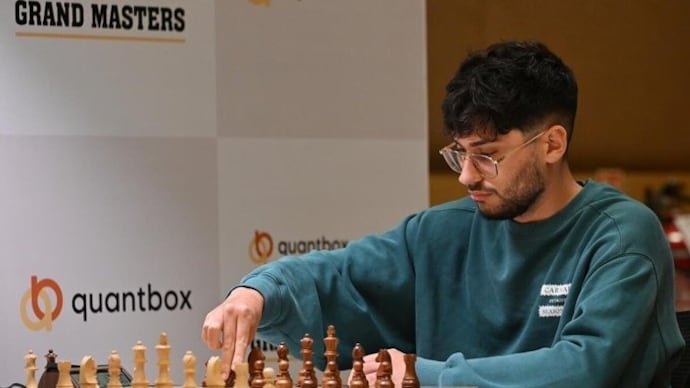
The fourth edition of the Chennai Grand Masters delivered exactly what elite chess fans hoped for: world-class competition, dramatic title implications and a final-round showdown involving some of the game’s biggest names. When the dust settled, it was French Grandmaster Alireza Firouzja who emerged as champion, showcasing a blend of tactical sharpness, strategic maturity and tournament management that separated him from the rest of the field.
Firouzja’s draw against Indian star Arjun Erigaisi in the final round was enough to secure the title, capping an unbeaten campaign that highlighted why he remains one of the most respected players in modern chess. While many tournaments are won through spectacular victories in the closing stages, this title was built on something equally important: consistency.
His triumph in Chennai is another significant milestone in a career that continues to place him among the strongest contenders in global chess, while also reinforcing the growing status of the Chennai Grand Masters as one of the most competitive invitational tournaments in the chess calendar.
Alireza Firouzja’s Road to the Chennai Grand Masters Title
Tournament victories are often decided long before the final round arrives. In Firouzja’s case, the foundation for success was laid during the opening stages of the competition.
His strong start allowed him to build an early lead over the field, reducing pressure in later rounds and giving him greater flexibility in managing difficult positions.
Rather than chasing unnecessary risks, Firouzja demonstrated the qualities that define elite tournament winners: knowing when to attack, when to defend and when a draw represents the smartest result.
By the time the final round began, the French Grandmaster held a narrow advantage over his closest challengers. That position meant he controlled his own destiny and only needed to avoid defeat to secure the championship.
Against a player of Arjun Erigaisi’s caliber, that was never going to be straightforward, but Firouzja handled the challenge with impressive composure.
Why the Draw Against Arjun Erigaisi Was Enough
To casual observers, a final-round draw may appear uneventful. In elite chess, however, such results often involve immense strategic depth.
Firouzja entered the final game knowing that a draw would secure the title. Consequently, his primary objective was not to create maximum complications but to maintain control and limit opportunities for his opponent.
Arjun Erigaisi, one of India’s leading Grandmasters and among the most dangerous attacking players in world chess, needed a victory to dramatically improve his title chances.
The challenge for Erigaisi was finding a way to create winning opportunities without overextending.
Firouzja’s precise handling of the middlegame and transition into an endgame ensured that the Indian star never gained the dynamic positions required to force decisive action.
The result ultimately reflected the Frenchman’s ability to manage tournament situations rather than merely individual games.
The Turning Point: Abdusattorov’s Defeat Changed Everything
While much attention focused on Firouzja and Erigaisi, another critical storyline unfolded elsewhere.
Uzbek Grandmaster Nodirbek Abdusattorov entered the final round as one of the few players capable of overtaking Firouzja. To keep his title hopes alive, he needed a victory with the black pieces against experienced Russian Grandmaster Dmitry Andreikin.
That task proved too difficult.
Andreikin produced one of the most important performances of the tournament, defeating Abdusattorov and effectively removing him from the championship race.
The result dramatically reduced pressure on Firouzja and allowed him to focus entirely on securing the draw required for victory.
In elite chess tournaments, championships are often decided not only by direct rivals but also by performances on neighboring boards. Chennai Grand Masters 2026 provided another example of how interconnected tournament standings can become.
What Makes Alireza Firouzja One of Chess’s Most Dangerous Players?
Firouzja has long been viewed as one of the brightest talents in world chess.
His rise through the international rankings was driven by an aggressive style that combined tactical creativity with exceptional calculation skills.
Over the past few years, however, another dimension has emerged in his game: maturity.
Earlier in his career, Firouzja often relied heavily on dynamic positions and sharp complications. Today, he appears increasingly comfortable navigating quieter strategic battles and technical endgames.
This evolution has made him a far more complete player.
The Chennai Grand Masters title illustrated that development perfectly. Rather than chasing spectacular victories in every round, he demonstrated patience and discipline when circumstances required.
Final Standings Overview
| Position | Player | Points |
|---|---|---|
| 1 | Alireza Firouzja | 4.5 |
| Joint 2nd | Arjun Erigaisi | 4.0 |
| Joint 2nd | Dmitry Andreikin | 4.0 |
| Joint 4th | Nodirbek Abdusattorov | 3.5 |
| Joint 4th | Nihal Sarin | 3.5 |
| Joint 4th | M Pranesh | 3.5 |
The standings underline just how competitive the tournament was. Small margins separated several players, making every half-point significant throughout the event.
Arjun Erigaisi Continues to Strengthen His Elite Reputation
Although he narrowly missed out on the title, Arjun Erigaisi once again demonstrated why he is considered one of India’s strongest chess players.
Competing against an elite international field, he remained in contention until the final round and consistently challenged some of the world’s highest-rated opponents.
Erigaisi’s performance is particularly encouraging because it highlights his growing consistency in top-level tournaments.
For several years, Indian chess has been searching for players capable of regularly competing with the world’s elite. Erigaisi has increasingly established himself as one of those figures.
His ability to remain in championship contention until the final day reinforces his status as a genuine contender in future major events.
Dmitry Andreikin’s Quietly Impressive Tournament
One of the most underrated stories of the tournament was Dmitry Andreikin’s performance.
While much of the spotlight focused on Firouzja, Erigaisi and Abdusattorov, Andreikin quietly assembled an unbeaten campaign of his own.
His final-round victory over Abdusattorov not only improved his own standing but also influenced the outcome of the title race.
Consistency remains one of the most valuable qualities in elite chess, and Andreikin demonstrated exactly that throughout the competition.
World Champion D Gukesh Faces a Valuable Learning Experience
One of the biggest surprises of the tournament was the performance of reigning world champion D Gukesh.
Despite entering the event with high expectations, the Indian Grandmaster endured a difficult campaign and finished at the bottom of the standings.
While disappointing, such tournaments are not unusual even for elite players.
Chess history is filled with examples of world champions experiencing temporary struggles before returning stronger. The depth of modern chess means even the very best players can encounter challenging events.
For Gukesh, the Chennai Grand Masters may ultimately serve as a valuable learning experience rather than a defining setback.
Why Chennai Is Becoming an Important Chess Destination
India’s relationship with chess has transformed dramatically over the last two decades.
The success of Viswanathan Anand inspired a generation of young players, and the country now produces elite Grandmasters at an unprecedented rate.
Chennai occupies a particularly important place in that story.
The city has become synonymous with Indian chess excellence, producing champions, hosting major events and nurturing future stars.
Tournaments such as the Chennai Grand Masters strengthen India’s position as one of the most influential nations in global chess.
By attracting elite international players, these events create valuable opportunities for Indian competitors to gain experience against world-class opposition.
The Growing Strength of Global Chess
The Chennai Grand Masters also highlighted another important trend: the extraordinary depth of modern chess.
Unlike previous eras dominated by a small group of elite players, today’s competitive landscape features strong contenders from multiple countries.
France, India, Uzbekistan, Russia and the United States are all producing world-class Grandmasters capable of winning major tournaments.
This growing competitiveness has increased the difficulty of winning elite events and elevated overall playing standards.
Firouzja’s victory becomes even more impressive when viewed through this lens.
What This Title Means for Firouzja’s Future
Every major tournament victory strengthens a player’s confidence and reputation, but this success may carry additional significance for Firouzja.
The French Grandmaster remains firmly positioned among the world’s elite and continues to pursue even bigger achievements, including major international titles and future world championship opportunities.
Winning against a strong field in Chennai reinforces his credentials as one of the most complete players of his generation.
More importantly, the manner of the victory demonstrated a level of maturity that could prove invaluable in future high-pressure events.
Future Outlook for Indian Chess
Despite Gukesh’s difficult tournament, Indian chess has plenty of reasons for optimism.
Arjun Erigaisi remained in the title race until the final round, while Nihal Sarin and M Pranesh continued gaining valuable experience against elite opposition.
The country’s remarkable production line of young talent shows no signs of slowing down.
As more Indian players gain exposure to high-level tournaments, the likelihood of future international success continues to grow.
Events like the Chennai Grand Masters play a crucial role in that development process.
Conclusion
Alireza Firouzja’s victory at the Chennai Grand Masters 2026 was a triumph built on consistency, discipline and intelligent tournament management. Remaining unbeaten throughout the competition, the French Grandmaster combined strong early performances with composed decision-making in critical moments to secure the title.
While Arjun Erigaisi pushed him until the final round and Dmitry Andreikin delivered one of the tournament’s most important victories, Firouzja ultimately proved the most complete performer across the seven rounds.
The tournament also highlighted the growing strength of Indian chess, the increasing competitiveness of elite events and Chennai’s rising importance as a global chess destination. As the chess world looks ahead to future major tournaments, Firouzja’s latest success serves as another reminder that he remains one of the sport’s most formidable competitors.
For breaking news and live news updates, like us on Facebook or follow us on Twitter and Instagram. Read more on Latest Sports on thefoxdaily.com.

COMMENTS 0