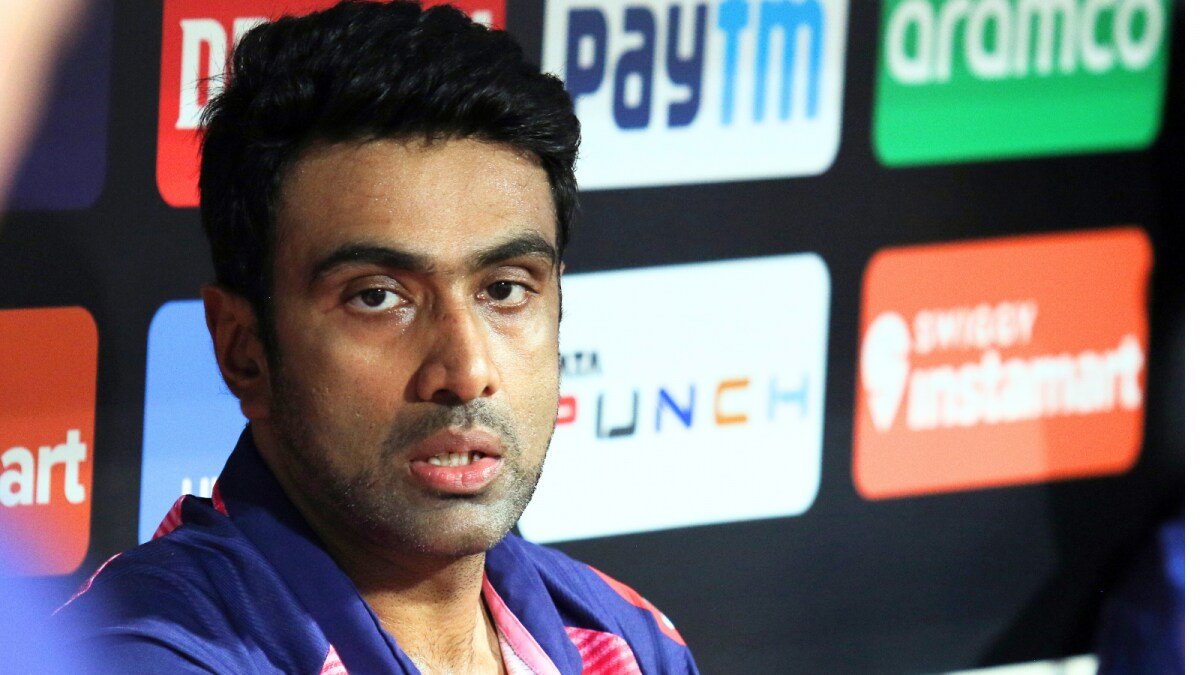
Ravichandran Ashwin has fired a pointed public challenge at India’s reported decision to hand Shreyas Iyer the T20I captaincy, asking what any of us should be asking: on what basis, exactly, has this call been made?
A World Cup Winner Shown the Door
India won the 2026 T20 World Cup. Suryakumar Yadav was the captain. His record across 52 T20I matches at the helm reads 40 wins. By any rational measure, that is among the finest captaincy records in the history of the format.
And yet, ahead of the upcoming T20I series against Ireland and England, the reports that emerged on June 6 suggested that Surya was not only being stripped of the captaincy but dropped from the squad entirely. In his place, Shreyas Iyer, who has never captained India in any international format, was being lined up to lead the side.
Ravichandran Ashwin, one of Indian Cricket‘s sharpest and most outspoken minds, has not taken this quietly. Speaking on his YouTube channel, the former all-rounder raised a series of challenges that go beyond the usual post-squad-announcement commentary. What he said was blunt, analytically sound, and arguably the most important public pushback on an Indian selection decision in recent memory.
Ashwin’s Central Challenge: The Credentials Question
The core of Ashwin’s argument is deceptively simple but cuts straight to the heart of the issue.
“Shreyas Iyer should have been in the T20 squad last time. But when you do return, do you have to return straight as the hero? On what basis did you suddenly judge his captaincy credentials? Shreyas definitely warrants a discussion for a place in the Indian T20 team. But is there any hole in the Indian T20 team? Except for spin-bowling, there are no holes. So why make this change?”
Ravichandran Ashwin, YouTube
Break this down and there are actually three distinct arguments embedded in one statement. First, Ashwin is not disputing that Iyer deserves to be in the squad. He explicitly says Iyer warrants a discussion for a place. His objection is to the leap from “deserves a squad place” to “deserves the captaincy” without any international evidence to support that jump.
Second, he is questioning the squad logic. If the Indian T20I side has no genuine weaknesses except in the spin-bowling department, then what problem is this captaincy change actually solving? A leadership overhaul without a clear structural problem to fix is not bold team management. It is disruption for disruption’s sake.
Third, and perhaps most pointedly, he is highlighting the inconsistency in the process. Iyer’s IPL captaincy credentials are real. He led KKR to the title in 2024 and guided PBKS to the final in 2025. But the IPL and international T20 cricket are different environments, with different pressures, different resources, and different opposition quality. Translating franchise success into national team leadership is not automatic, and the selectors appear to have made that leap without a public rationale.
The Suryakumar Yadav Question: What Does Form Have to Do With It?
The second dimension of Ashwin’s argument concerns Suryakumar Yadav’s position in the squad as a batter, separate from his captaincy role. Surya’s individual batting form has been a concern, and the reports suggest that dip in form is contributing to both the captaincy change and the squad exclusion. Ashwin pushed back on this with a pointed historical comparison.
“MS Dhoni won the 2011 IPL as captain. If he doesn’t perform in the 2012 IPL, will you drop him in the 2013 IPL? Then how can you drop Suryakumar Yadav? Yes, he is not in form as a batter. But give him clarity that he’ll play only as a batter, as he’s not an automatic selection in the side.”
Ravichandran Ashwin, YouTube
The Dhoni parallel is not a perfect one, but its logic is sound. World Cup-winning captains are rarely discarded mid-cycle on the basis of a poor run of form. They are managed, rotated, or given a clearer role definition. The idea that Suryakumar Yadav, who just led India to a World Cup title with a 40-win record over 52 matches, should be dropped entirely from the T20I setup because his batting form has dipped is a position that requires a far more substantial public explanation than has been offered.
Ashwin’s suggestion is actually constructive: retain Surya, but separate his batting role from his captaincy responsibilities. Let him play purely as a batter while he works through his form, and handle the captaincy transition in a more measured, structured way. That is not a controversial proposal. It is basic squad management.
| Metric | Suryakumar Yadav | Shreyas Iyer |
|---|---|---|
| India T20I Captaincy Matches | 52 | 0 |
| India T20I Captaincy Wins | 40 | 0 |
| Win Percentage as India T20I Captain | ~77% | N/A |
| ICC T20 World Cup Won as Captain | Yes (2026) | No |
| IPL Captaincy Titles | N/A | KKR 2024, PBKS finalist 2025 |
| International Captaincy Experience | Extensive | None |
The Stability Argument: What Jasprit Bumrah Teaches Us
Ashwin broadened his argument further by invoking the concept of structural stability in a winning team, specifically through the lens of Jasprit Bumrah’s irreplaceability.
“Instead, if you straightaway drop a captain from the squad and pick a different one, will you keep doing the same every year if the team doesn’t perform well? India didn’t win an ICC event for a long time until 2024. It was an experienced team that won the trophy in the 2024 T20 World Cup. Jasprit Bumrah is a huge factor for Indian cricket. If he isn’t there tomorrow, you’ll lose four X-factor overs. It’s then you’ll realize the missable asset through instability.”
Ravichandran Ashwin, YouTube
This is the most layered part of Ashwin’s commentary. He is making two interconnected points simultaneously. The first is about the danger of building a culture of reactive leadership changes. If India replace their captain after every dip in individual form, regardless of team results, the message being sent to the dressing room is deeply damaging: no player, not even a World Cup-winning captain, has genuine security in their position. That kind of instability erodes the confidence and cohesion that winning teams are built on.
The second point uses Bumrah as a metaphor for what irreplaceable contributions actually look like. India’s recent ICC success has been built on a combination of elite individual performances and strong structural foundations. Disrupting that structure without clear cause risks exactly the kind of drift that kept India without ICC silverware for years before 2024. Ashwin is not being sentimental. He is being strategic.
The Rajat Patidar Situation: Another Selection Puzzle
Ashwin extended his squad analysis to address the position of RCB skipper Rajat Patidar, whose IPL 2026 credentials were genuinely outstanding. Patidar scored over 500 runs at an average of 41.75 and a strike rate of 192.69, and led RCB to a second consecutive IPL title, becoming only the third captain after MS Dhoni and Rohit Sharma to achieve that feat.
Despite those numbers, Ashwin argued that Patidar must wait, and his reasoning was clear-eyed rather than dismissive.
“Even Rajat Patidar must wait despite being an incredible spin hitter because Shivam Dube is already fulfilling that role. So there is no seat in the school for admission for Patidar also at the moment.”
Ravichandran Ashwin, YouTube
This is actually a more defensible selection position than the Iyer captaincy decision, because the logic is at least coherent. If Shivam Dube is already occupying the role that Patidar would fill in the T20I setup, there is no positional vacancy to justify the change. That is rational squad management. The irony is that the Patidar exclusion, which might seem harsher given his IPL numbers, is easier to justify than the Iyer elevation, which comes with no comparable structural argument.
The Wider Concern: India’s Selection Consistency Under Scrutiny
Taken together, Ashwin’s various observations paint a picture of a selection environment that is struggling to maintain a coherent philosophy. On one hand, experienced senior players like Bhuvneshwar Kumar are being passed over for uncapped youngsters in the name of long-term planning. On the other hand, a proven World Cup-winning captain is apparently being replaced by someone with zero international captaincy experience after a short-term batting dip.
These two positions are not impossible to hold simultaneously, but they require a level of consistent, clearly articulated logic that has not yet been publicly demonstrated. The selectors may have very good internal reasons for every decision they are making. But cricket is a public sport with a vast, engaged, and knowledgeable fan base, and in the absence of transparent communication, the perception of inconsistency and short-termism takes hold quickly.
Ashwin’s public commentary is performing a useful function here. By asking hard questions in an open forum, he is holding the decision-making process to account in a way that benefits the sport and the team in the long run, even if it makes for uncomfortable reading in the corridors of Indian cricket administration.
Conclusion: Hard Questions Deserve Proper Answers
Suryakumar Yadav has a win rate of approximately 77 percent as India’s T20I captain. He just led the country to a World Cup. His batting form has dipped, but form is cyclical for every cricketer in history. Shreyas Iyer is a talented batter and a proven IPL leader who, by Ashwin’s own admission, deserves a spot in the squad. But captaincy at international level is a different proposition entirely, and awarding it without evidence of the credentials to justify it raises legitimate questions about process.
Ashwin’s core question, “On what basis did you suddenly judge his captaincy credentials?”, is not a rhetorical flourish. It is the question that Indian cricket needs its selectors to answer publicly and convincingly. World Cup-winning squads are not rebuilt casually. The stability that produces sustained success is fragile and hard-won. Disrupting it demands justification proportional to the scale of the change.
The Ireland and England T20I series will now serve as far more than a bilateral assignment. It has become a referendum on India’s selection philosophy, with the results on the pitch likely to determine whether history judges these decisions as visionary or reckless.
For breaking news and live news updates, like us on Facebook or follow us on Twitter and Instagram. Read more on Latest Sports on thefoxdaily.com.






COMMENTS 0