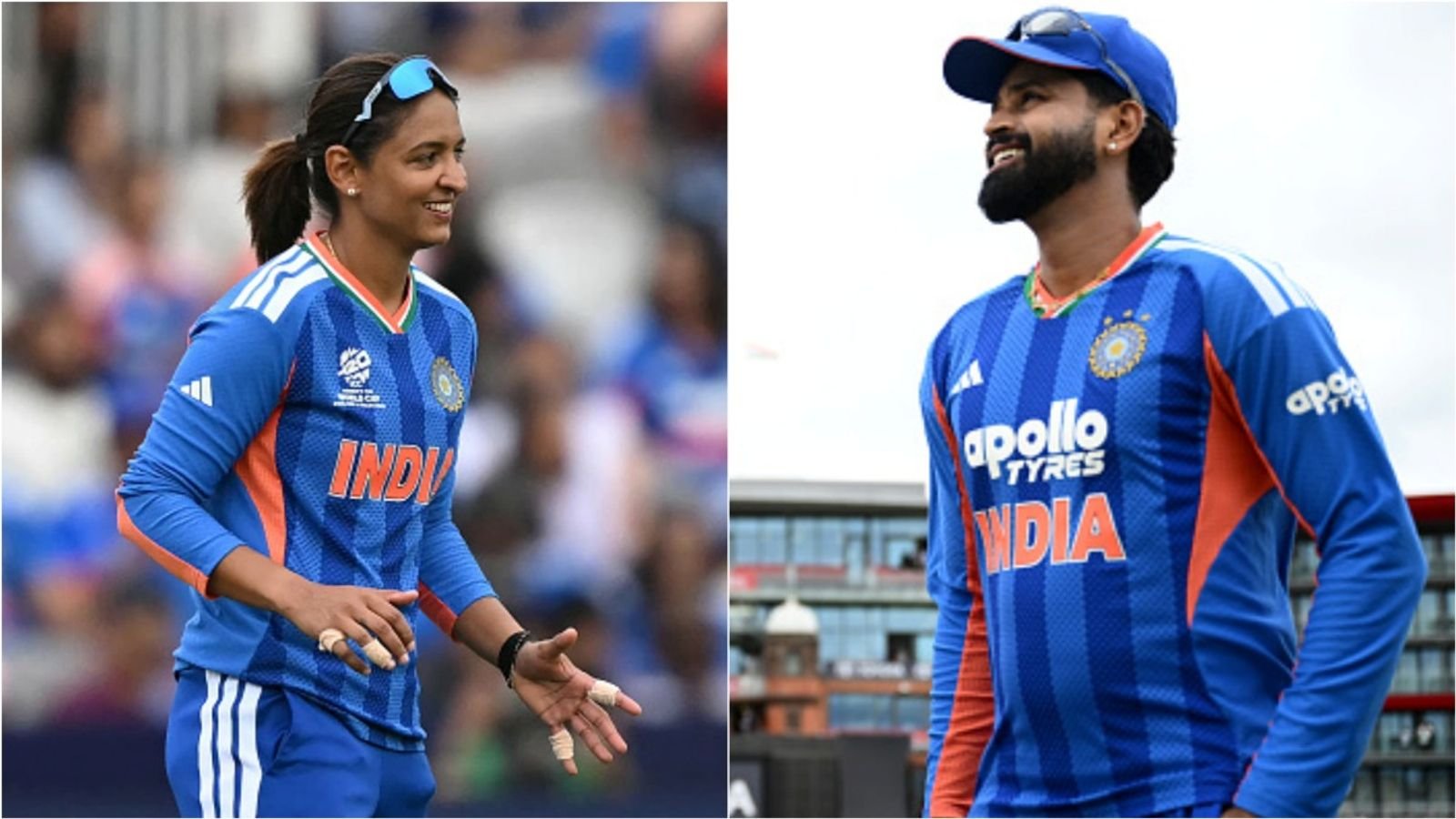
Asian Games 2026 cricket schedule has been announced, setting the dates for India’s men’s and women’s campaigns at the Aichi-Nagoya Asian Games in Japan. The India women’s team, led by Harmanpreet Kaur, will begin its campaign against hosts Japan in the quarter-finals on September 17, while Shreyas Iyer’s India men will enter the competition on September 28.
The announcement gives Indian Cricket fans a clear roadmap for the tournament, with the women’s competition taking place first and the men’s knockout stage following later in the month. India will be aiming to add another Asian Games gold medal after cricket’s return to the continental event in recent editions.
The schedule also creates an interesting test for both Indian squads. The women’s team has a mixture of established international stars and emerging players, while the men’s squad combines experienced international names with younger talents. With knockout cricket involved from the beginning of India’s women’s campaign, there will be very little room for an off day.
Asian Games 2026 cricket schedule: India women start on September 17
India Women will open their Asian Games campaign against Japan Women in the quarter-final stage on September 17. The match is scheduled to begin at 5:30 AM according to the announced schedule.
The quarter-final format means India do not have the luxury of a lengthy group-stage adjustment period. Their opening game is immediately a knockout contest, making preparation and early momentum particularly important.
| Date | Stage | Match | Time |
|---|---|---|---|
| September 17 | Quarter-final | India Women vs Japan Women | 5:30 AM |
| September 17 | Quarter-final | Malaysia Women vs Sri Lanka Women | 5:30 AM |
| September 17 | Quarter-final | Bangladesh Women vs China Women | 10:30 AM |
| September 17 | Quarter-final | Pakistan Women vs Thailand Women | 10:30 AM |
| September 20 | Semifinals | 1st semifinal and 2nd semifinal | 5:30 AM and 10:30 AM |
| September 22 | Play-off/Final | 3rd-place playoff and final | 5:30 AM and 10:30 AM |
The other women’s quarter-finals will see Malaysia face Sri Lanka, Bangladesh take on China and Pakistan meet Thailand. The winners will advance to the semifinals on September 20.
The medal matches are scheduled for September 22, when the third-place playoff and final will take place.
Harmanpreet Kaur leads a strong India women’s squad
The Indian women’s squad features a blend of experience and youth, with Harmanpreet Kaur leading the side and Smriti Mandhana named vice-captain.
The squad includes several players who have already established themselves in international cricket. Deepti Sharma provides all-round ability, while Richa Ghosh and G Kamalini give India wicketkeeping options.
Shafali Verma adds explosive batting at the top, while Renuka Thakur provides an important pace option. Radha Yadav and Shreyanka Patil add further variety to the bowling department, subject to Patil’s fitness.
| Player | Role/Status |
|---|---|
| Harmanpreet Kaur | Captain |
| Smriti Mandhana | Vice-captain |
| Shafali Verma | Batter |
| Deepti Sharma | All-rounder |
| Richa Ghosh | Wicketkeeper |
| G Kamalini | Wicketkeeper |
| Bharti Fulmali | Batter |
| Sree Charani | Bowling option |
| Renuka Thakur | Fast bowler |
| Kranti Gaud | Bowling option |
| Arundhati Reddy | All-round option |
| Shreyanka Patil | All-rounder, subject to fitness |
| Radha Yadav | Spinner |
| Nandni Sharma | Squad member |
| Pratika Rawal | Batter |
Why India Women’s opening match could be crucial
India’s quarter-final against Japan gives the team an immediate opportunity to establish itself as a medal contender. On paper, India enter the contest with considerable international experience, but knockout cricket always carries an element of unpredictability.
The most important factor will be how quickly India adapt to the tournament environment. Unlike a bilateral series, there is no guarantee of another match after a poor performance. A defeat immediately ends the gold-medal dream.
That makes the leadership of Harmanpreet Kaur especially important. India will need to balance attacking cricket with sensible game management, particularly if conditions create challenges for batting.
India men’s Asian Games campaign begins on September 28
The men’s competition will begin with preliminary group matches on September 24 and 25, followed by another set of games on September 26. India enter the tournament directly at the quarter-final stage.
Shreyas Iyer’s team will play its first match on September 28 against an opponent yet to be announced. India’s quarter-final is scheduled as the second quarter-final and will begin at 10:30 AM.
| Date | Stage | Match | Time |
|---|---|---|---|
| September 24 | Group A | Japan vs Afghanistan | 5:30 AM |
| September 24 | Group B | Hong Kong vs Malaysia | 10:30 AM |
| September 25 | Group B | Hong Kong vs Oman | 5:30 AM |
| September 25 | Group A | Afghanistan vs Nepal | 10:30 AM |
| September 26 | Group A | Japan vs Nepal | 5:30 AM |
| September 26 | Group B | Malaysia vs Oman | 10:30 AM |
| September 28 | Quarter-final | Pakistan vs To be announced | 5:30 AM |
| September 28 | Quarter-final | India vs To be announced | 10:30 AM |
| September 29 | Quarter-final | Sri Lanka vs To be announced | 5:30 AM |
| September 29 | Quarter-final | Bangladesh vs To be announced | 10:30 AM |
| October 1 | Semifinals | 1st semifinal and 2nd semifinal | 5:30 AM and 10:30 AM |
| October 3 | Medal matches | 3rd-place playoff and final | 5:30 AM and 10:30 AM |
Shreyas Iyer gets a balanced India men’s squad
The India men’s squad combines established international players with younger cricketers who have significant potential. Shreyas Iyer will captain the side, with Tilak Varma serving as vice-captain.
The squad includes wicketkeeper-batters Sanju Samson and Ishan Kishan, giving India multiple options behind the stumps. Abhishek Sharma, Shivam Dube and Nitish Kumar Reddy provide all-round depth, while Axar Patel and Washington Sundar add further balance.
The bowling group includes Jasprit Bumrah, Arshdeep Singh, Harshit Rana, Varun Chakaravarthy and Ravi Bishnoi. The presence of Vaibhav Sooryavanshi also adds an emerging young talent to the squad.
| Player | Role/Status |
|---|---|
| Shreyas Iyer | Captain |
| Abhishek Sharma | All-round batting option |
| Sanju Samson | Wicketkeeper |
| Ishan Kishan | Wicketkeeper |
| Shivam Dube | All-rounder |
| Tilak Varma | Vice-captain |
| Nitish Kumar Reddy | All-rounder |
| Axar Patel | All-rounder |
| Washington Sundar | All-rounder |
| Varun Chakaravarthy | Spinner |
| Ravi Bishnoi | Spinner |
| Jasprit Bumrah | Fast bowler |
| Harshit Rana | Fast bowler |
| Arshdeep Singh | Fast bowler |
| Vaibhav Sooryavanshi | Young squad member |
India men have a different challenge from the women
The structure of the men’s tournament gives India a different preparation challenge. While several teams must negotiate the group stage, India enter directly in the quarter-finals.
That can be an advantage because the team plays fewer matches before the medal rounds, potentially reducing workload. But it can also create a disadvantage because India will have less opportunity to adjust to the tournament environment before playing a knockout game.
The opposition will also be unknown until the earlier matches determine the quarter-final pairings. That means the Indian management will have to prepare for multiple possible opponents rather than build its entire strategy around one confirmed team.
Jasprit Bumrah, Ishan Kishan and other key names add experience
The presence of players such as Jasprit Bumrah, Ishan Kishan, Sanju Samson and Axar Patel gives India significant experience in pressure situations.
Bumrah’s inclusion is particularly notable because his ability to strike with the new ball and deliver at the death can change a T20 match within a few overs. Arshdeep Singh provides another left-arm pace option, while the spin combination gives the captain flexibility depending on conditions.
At the other end, India’s batting depth means the team is not dependent on one or two players. That could prove important in a knockout tournament where an unexpected early collapse can put enormous pressure on the middle order.
India’s biggest strength: depth across both squads
One of the clearest themes from the announced squads is depth. Both the men’s and women’s teams have players capable of contributing in more than one discipline.
This matters greatly in short-format cricket. A balanced XI can provide additional bowling options without weakening the batting order, while all-rounders can give captains greater tactical flexibility.
India’s women have players such as Deepti Sharma and Shreyanka Patil who can contribute in multiple areas, while the men have several all-round options including Axar Patel, Washington Sundar, Shivam Dube and Nitish Kumar Reddy.
The ability to adapt the playing XI according to conditions could become one of India’s biggest advantages during the knockout rounds.
Why the Asian Games matter for Indian cricket
Cricket’s presence at the Asian Games gives the sport an opportunity to expand its reach across Asia. While cricket is already deeply established in countries such as India, Pakistan, Sri Lanka and Bangladesh, the continental event also creates a platform for emerging cricket nations.
For India, the tournament provides another opportunity to compete for a major international multi-sport title. A gold medal is different from winning a bilateral series because athletes represent their country within a much larger sporting event.
That broader context adds significance to the competition and makes the tournament more than another short-format cricket assignment.
The unique challenge of knockout cricket
Both Indian teams will need to approach the Asian Games with a knockout mindset. There is little value in looking too far ahead when one poor performance can eliminate a team.
The women’s team faces this challenge immediately on September 17. The men will have a slightly longer preparation window before their quarter-final on September 28.
For both sides, the key will be avoiding unnecessary risk while maintaining enough aggression to control the match. T20 cricket rewards decisive decision-making, but reckless cricket can be punished quickly.
What could decide India’s Asian Games campaign?
Powerplay performance, middle-over control, death bowling and fielding are likely to play major roles in determining how far India progress. In a short-format tournament, even a small advantage in one phase can decide a close knockout match.
India’s depth should give both captains several tactical options. The bigger challenge will be selecting the right combination for the conditions and using those resources efficiently.
Another important factor will be handling expectations. India are likely to enter both competitions among the teams expected to challenge for medals. That status brings pressure, especially when every knockout match carries elimination consequences.
India’s road to another Asian Games gold
The path is straightforward but demanding. India Women must first defeat Japan on September 17 to reach the semifinals. If they progress, the semifinal will take place on September 20, followed by the medal match on September 22.
India Men begin later, with their quarter-final scheduled for September 28. A semifinal victory on October 1 would send them into the final on October 3.
| India Team | First Match | First Opponent | Potential Final |
|---|---|---|---|
| India Women | September 17 | Japan Women | September 22 |
| India Men | September 28 | To be announced | October 3 |
Final outlook
The Asian Games 2026 cricket schedule has set up two separate but equally important campaigns for India. Harmanpreet Kaur’s women’s team will be first into action, facing Japan in the quarter-final on September 17. Shreyas Iyer’s men will begin their knockout journey on September 28.
Both squads contain a mixture of experienced international performers and promising talent, giving India considerable depth across batting, bowling and all-round options.
The biggest challenge will be converting that talent into consistent knockout performances. The women cannot afford a slow start against Japan, while the men must be ready to enter the competition at full intensity despite having no group-stage game beforehand.
If India manage those challenges, the squads have enough quality and balance to mount serious gold-medal challenges. But Asian Games cricket will ultimately reward the teams that handle pressure best when the margins become smallest.
For breaking news and live news updates, like us on Facebook or follow us on Twitter and Instagram. Read more on Latest Cricket on thefoxdaily.com.






COMMENTS 0