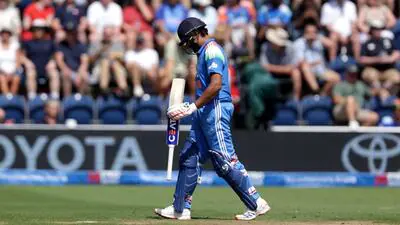
Few cricketers have shaped modern Indian Cricket as profoundly as Rohit Sharma. A World Cup winner, record-breaking opener, and one of the most successful captains in Indian cricket history, Rohit has spent nearly two decades at the highest level. Yet as he approaches the age of 40, discussions surrounding his future have become impossible to ignore.
The debate is no longer centered solely on form. Instead, it revolves around a broader question: how long can elite athletes remain indispensable in an era increasingly focused on youth, athleticism, and long-term planning? With another ICC event on the horizon and a new generation of batters pushing for opportunities, Rohit Sharma finds himself at the center of one of Indian cricket’s most significant transition periods.
The situation represents more than an individual career decision. It highlights the difficult balance selectors must strike between respecting legendary players and preparing for the future.
Why Rohit Sharma’s Future Has Become a Major Talking Point
Retirement conversations around elite athletes often begin long before actual retirement occurs. In Rohit’s case, multiple factors have combined to fuel speculation.
- His age compared to other international players.
- India’s focus on preparing for future ICC tournaments.
- The emergence of young opening batters.
- Increased workload management.
- The natural decline that comes with prolonged international careers.
Unlike many players who fade away gradually, Rohit remains capable of producing match-winning innings. This makes the discussion far more complicated. The challenge for selectors is determining whether occasional brilliance is enough to justify continued investment when younger options are available.
For fans, the emotional aspect is equally important. Rohit is not merely another senior player; he represents an era that delivered memorable victories and transformed India’s white-ball approach.
The Legacy Rohit Sharma Built for Indian Cricket
Before evaluating his future, it is essential to understand the scale of his achievements.
Rohit Sharma’s career has been defined by reinvention. Early in his international journey, he was viewed as an immensely talented batter struggling to maximize his potential. His transformation into an opening batter changed everything.
From that point onward, Rohit became one of the most destructive limited-overs players in cricket history. His ability to combine timing, elegance, and power allowed him to dominate attacks across conditions.
His contributions include:
- Multiple ICC tournament campaigns.
- Record-breaking ODI performances.
- Leadership success in franchise and international cricket.
- Evolution of India’s aggressive batting philosophy.
- Mentorship of younger players entering the national setup.
Perhaps his greatest achievement was proving that calculated aggression could coexist with consistency. He showed that an opener could attack relentlessly while still producing massive scores.
The Statistical Debate: Form Versus Perception
One of the most fascinating aspects of the Rohit Sharma discussion is the gap between statistics and perception.
On paper, his recent numbers may not indicate a dramatic collapse. However, modern cricket increasingly evaluates players beyond averages and aggregate runs.
Selectors now consider:
- Strike-rate impact.
- Fielding contribution.
- Fitness levels.
- Running between wickets.
- Availability across tournaments.
- Future planning cycles.
A batter can maintain respectable statistics while still raising concerns regarding long-term sustainability. This appears to be where much of the current debate exists.
The modern game demands complete athletes. Batting alone is rarely enough to secure selection indefinitely.
The Challenge of Playing Only One Format
An underrated aspect of Rohit’s situation is the impact of specializing in a single format.
Historically, many great batters benefited from continuous cricket across formats. Regular exposure helped maintain rhythm, confidence, and match sharpness.
When players reduce their workload and focus primarily on one format, they often face longer gaps between matches. This can affect:
- Timing.
- Decision-making speed.
- Match fitness.
- Mental momentum.
For a batter whose game relies heavily on timing and reaction, maintaining peak performance becomes increasingly difficult without consistent competitive exposure.
This challenge is not unique to Rohit. Several modern veterans have faced similar issues while extending their careers.
The Rise of India’s Next Generation
The strongest argument for change may not be Rohit’s form at all. It may simply be the quality of players waiting behind him.
Indian cricket currently enjoys one of the deepest batting talent pools in its history.
Young players are arriving with:
- Fearless approaches.
- Superior athleticism.
- Modern white-ball skillsets.
- Experience in high-pressure franchise leagues.
- Long-term availability.
For selectors planning future World Cups, giving opportunities to younger players today can create a more experienced squad tomorrow.
This creates an uncomfortable reality for established stars. Sometimes a player is not replaced because he is failing. He is replaced because the next cycle has already begun.
The Fitness Factor Modern Cricket Cannot Ignore
Fitness has become one of the defining selection criteria in international cricket.
Modern ODI cricket demands far more than it did a decade ago. Players cover greater distances in the field, maintain higher intensity levels, and face packed schedules.
Even small physical declines can have significant effects.
| Area | Impact on Modern ODI Cricket |
|---|---|
| Fielding Mobility | Essential for saving runs and creating wicket opportunities |
| Running Between Wickets | Critical for rotating strike consistently |
| Recovery Time | Important during packed international schedules |
| Injury Risk | Higher concerns for veteran players |
| Athletic Standards | Increasingly important in team selection |
This does not mean experienced players cannot succeed. Rather, it means they must continue outperforming younger competitors in other areas to justify their place.
What Makes Rohit Different From Most Aging Players?
Many great players decline gradually before retirement. Rohit’s case is unique because he remains capable of producing elite performances.
Even today, few batters possess his ability to:
- Dominate fast bowling.
- Control Powerplay overs.
- Shift momentum rapidly.
- Punish loose deliveries.
- Play long innings under pressure.
Opposition teams still prepare extensively for him. Bowlers still view his wicket as a major breakthrough.
That lingering threat complicates selection decisions.
If a player can still win matches almost single-handedly, determining the right time to move on becomes significantly harder.
Lessons From Previous Indian Cricket Transitions
Indian cricket has faced similar moments before.
Transitions involving legendary players are rarely smooth. The departures of icons such as Sachin Tendulkar, Rahul Dravid, VVS Laxman, and MS Dhoni all generated uncertainty.
Each transition followed a familiar pattern:
- Questions about declining performance.
- Debate between sentiment and strategy.
- Pressure from emerging talent.
- Concern about timing the exit correctly.
The biggest challenge is avoiding both extremes.
Move on too early and the team loses valuable experience. Move on too late and the next generation misses crucial development opportunities.
The Rohit Sharma debate exists precisely within that delicate space.
The 2027 ODI World Cup Question
Every major discussion surrounding Rohit’s future ultimately points toward one event: the next ODI World Cup.
The central question is simple:
Can Rohit Sharma remain an elite international opener through another World Cup cycle?
Answering that question requires evaluating far more than current form.
Selectors must project:
- Future fitness.
- Performance sustainability.
- Squad balance.
- Leadership structure.
- Development of younger players.
World Cups are won through long-term planning rather than short-term sentiment. Every selection decision today influences tournament readiness years later.
The Mental Side of Elite Longevity
One factor often overlooked in retirement discussions is psychology.
Elite athletes rarely reach the top without extraordinary self-belief. That same mindset often drives them to continue competing even when outsiders believe their time is ending.
Rohit has repeatedly reinvented himself throughout his career.
He transformed from middle-order prospect to world-class opener. He evolved from stroke-maker to match-winner. He grew from senior player into captain and leader.
Players with that history often believe another reinvention remains possible.
That confidence is not arrogance. It is often the reason they became great in the first place.
A Unique Angle: Is Indian Cricket Becoming Less Dependent on Superstars?
One overlooked aspect of this debate is how Indian cricket itself has changed.
Previous generations often depended heavily on a handful of iconic players. Today’s Indian team operates differently.
Depth has become the defining strength.
The domestic structure, IPL ecosystem, and developmental pathways now produce international-ready talent at unprecedented rates.
As a result, selectors can make difficult decisions more confidently than ever before.
The conversation may therefore be less about Rohit Sharma specifically and more about the evolution of Indian cricket into a system-driven powerhouse.
In many ways, this shift represents a success story rather than a crisis.
Prediction: What Happens Next?
Predicting retirement decisions is always dangerous, especially when dealing with legendary athletes.
However, several possibilities appear realistic:
- Rohit continues if he believes he can contribute meaningfully to another ICC campaign.
- Selectors gradually prioritize younger opening combinations.
- A major tournament becomes the natural endpoint.
- Performance over the next several months ultimately determines the outcome.
Regardless of the decision, Indian cricket appears firmly committed to balancing immediate competitiveness with long-term planning.
The coming months could therefore prove among the most important of Rohit’s career.
Conclusion: A Career at the Crossroads, A Legacy Already Secure
Whether Rohit Sharma retires soon or extends his career further, one reality remains unchanged: his place among India’s greatest white-ball cricketers is secure.
The current debate is not about whether he has been great enough. It is about whether he can continue delivering at the level required by a team already looking toward its next World Cup cycle.
Indian cricket now stands at a fascinating intersection between legacy and renewal. Rohit Sharma embodies the achievements of the recent past, while emerging stars represent the promise of the future.
How this transition unfolds will shape India’s ODI journey for years to come.
For now, the retirement speculation continues. But regardless of when the final chapter arrives, Rohit Sharma’s impact on Indian cricket has already ensured that his story will be remembered as one of transformation, resilience, leadership, and extraordinary batting brilliance.
For breaking news and live news updates, like us on Facebook or follow us on Twitter and Instagram. Read more on Latest Sports on thefoxdaily.com.






COMMENTS 0