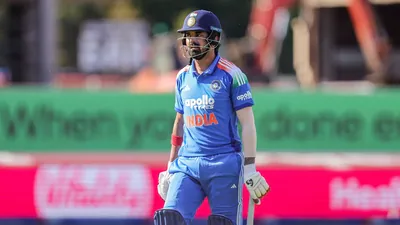
Few topics generate as much debate in Indian Cricket as team selection and batting-order decisions. The latest controversy revolves around KL Rahul, one of India’s most accomplished white-ball batters, after former India captain Krishnamachari Srikkanth openly criticized the team management for what he believes is the mishandling of Rahul’s role in the ODI setup.
The discussion gained momentum following India’s defeat to England in the second ODI at Cardiff. With Rahul unavailable due to illness, Ishan Kishan was promoted into the middle order and batted at No. 4. The move immediately reignited questions about why Rahul, when available, has frequently been pushed down to No. 6 or No. 7 despite possessing the technical qualities and experience typically associated with a top-order batter.
As India prepares for the series-deciding third ODI at Lord’s, the debate extends beyond one player. It touches on a much larger issue: Does India have a clearly defined ODI blueprint, or are frequent tactical experiments creating uncertainty within the squad?
Why KL Rahul’s Batting Position Has Become a Major Talking Point
KL Rahul has spent much of his international career adapting to different roles. He has opened the batting, played in the middle order, kept wickets, and even acted as a finisher when required.
While versatility is often considered a strength, it can also become a challenge when a player is never given a permanent position to settle into. Many cricket analysts argue that Rahul’s greatest ODI value comes when he bats in the top four, where he has enough overs available to build an innings and control the tempo of a chase.
The controversy emerged because India appeared to follow two different approaches within the same series. In the opening ODI, Rahul was pushed lower down the order, while Washington Sundar was promoted. In the second match, Kishan walked straight into the No. 4 position.
This inconsistency prompted Srikkanth to question the logic behind the team’s decision-making.
The Numbers Behind Rahul’s ODI Importance
Modern ODI Cricket demands flexibility, but it also rewards stability. Players who understand their role tend to produce more consistent performances over long periods.
Rahul has repeatedly demonstrated his ability to anchor innings, accelerate when required, and perform under pressure. Unlike many aggressive stroke-makers, he possesses a complete range of gears that allows him to adapt to varying match situations.
His batting style makes him particularly valuable in conditions where wickets fall regularly and partnerships become essential.
| Role | Key Strength | Impact on Team |
|---|---|---|
| Top-order batter | Builds innings | Provides stability |
| No. 4 batter | Controls middle overs | Balances aggression and caution |
| Wicketkeeper-batter | Additional squad flexibility | Improves team combination |
| Finisher | Can accelerate late | Adds batting depth |
The challenge for India is deciding which of these roles maximizes Rahul’s overall contribution.
Why No. 4 Remains the Most Crucial Position in ODI Cricket
The No. 4 position has historically been one of the most demanding roles in ODI cricket. The batter may arrive during a collapse, after a strong start, or during a tense chase. The role requires technical skill, temperament, and tactical awareness.
Some of cricket’s greatest ODI players built their reputations in this position because it often determines whether a team can convert good starts into match-winning totals.
For India, finding a dependable No. 4 has been a recurring challenge for several years. Numerous players have been tested, yet few have managed to establish long-term ownership of the position.
That is why Srikkanth’s comments resonate with many observers. His argument is not merely about Rahul. It is about whether India is overlooking an obvious solution to a long-standing problem.
India’s Search for the Ideal ODI Combination
Team managements constantly face difficult balancing acts. Modern cricket demands batting depth, bowling variety, fielding excellence, and tactical flexibility.
Promoting all-rounders like Washington Sundar can strengthen batting depth while offering additional bowling options. However, every tactical move comes with trade-offs.
When specialist batters are pushed down the order, they often face fewer deliveries and less time to influence the game. This can reduce the impact of players who are naturally suited to constructing longer innings.
India’s recent selections suggest the management is trying to create a more flexible middle order capable of adapting to different match situations. While the strategy has potential benefits, critics argue that excessive experimentation may create uncertainty among players.
The Cardiff Defeat Increased the Pressure
India’s loss in Cardiff intensified scrutiny because the batting lineup failed to capitalize on several promising moments. England successfully chased the target after recovering from an early setback, with Joe Root producing another masterclass in ODI batting.
The defeat leveled the series at 1-1 and shifted attention toward India’s middle-order structure.
Whenever a team loses, tactical decisions naturally come under greater examination. Questions that might otherwise remain minor suddenly become major discussion points.
Rahul’s absence highlighted how dependent India can be on experienced middle-order players during difficult situations.
What Srikkanth’s Comments Reveal About Selection Philosophy
Srikkanth’s criticism reflects a broader debate within Indian cricket regarding player roles and team identity.
One school of thought believes that modern teams should prioritize flexibility above all else. Players should be capable of batting anywhere and adapting to multiple situations.
The opposing view argues that elite performers need clearly defined responsibilities. Constant role changes can affect confidence, decision-making, and long-term consistency.
Neither philosophy is entirely right or wrong. The challenge lies in finding the correct balance.
Successful teams often combine both approaches: maintaining core roles while retaining enough flexibility to respond to changing match situations.
The Ravindra Jadeja Question Adds Another Layer
Srikkanth also raised concerns about Ravindra Jadeja’s absence from India’s ODI plans.
Jadeja has been one of India’s most dependable all-rounders across formats for more than a decade. His experience, fielding standards, and ability to contribute in multiple disciplines have made him a valuable asset.
The discussion surrounding Jadeja reflects another key issue facing Indian cricket: the transition between established veterans and emerging players.
Every team must eventually refresh its squad, but deciding when and how to make that transition is rarely straightforward.
Selecting younger players provides long-term benefits, but moving on from experienced performers too early can create gaps that are difficult to fill.
How ODI Cricket Is Changing Globally
The debate over Rahul’s batting position also reflects broader changes in ODI cricket.
Modern teams increasingly prioritize aggressive scoring rates throughout the innings. Traditional anchor roles have evolved, requiring players to combine stability with attacking intent.
However, major tournaments continue to prove that technically sound middle-order batters remain invaluable.
When pitches become challenging or pressure situations arise, teams still rely heavily on players capable of managing risk and building partnerships.
This is one reason why Rahul remains such an important figure in India’s ODI plans despite ongoing debates about his ideal position.
What Could India Do Before the Lord’s Decider?
The series decider at Lord’s presents India with an opportunity to reset and clarify its approach.
If Rahul returns to full fitness, the management faces a crucial decision regarding batting order structure.
- Restore Rahul to the No. 4 position and prioritize stability.
- Continue experimenting with flexible batting roles.
- Use a hybrid approach depending on match conditions.
- Build a long-term blueprint for future ICC tournaments.
The decision could provide important clues about India’s strategic direction over the next few years.
Why This Debate Matters Beyond One Match
Selection controversies often appear temporary, but they frequently reveal deeper questions about team planning.
India possesses enormous talent, yet maximizing that talent requires clarity of purpose. Players perform best when they understand exactly what is expected of them.
Whether Rahul bats at No. 4, No. 5, or lower down the order, the most important factor is consistency in decision-making.
Great teams are rarely built solely on talent. They are built on clearly defined roles, trust between players and management, and a shared understanding of strategy.
Future Outlook: A Defining Moment for India’s ODI Team
The KL Rahul debate arrives at a crucial time for Indian cricket. The team is balancing the experience of senior players with the emergence of a new generation, while simultaneously preparing for future global tournaments.
Washington Sundar’s injury, Rahul’s illness, and the ongoing discussions around team selection have combined to create a significant moment of reflection for the management.
The Lord’s ODI may determine more than a series winner. It could offer valuable insight into how India plans to structure its batting lineup moving forward.
If Rahul returns and is entrusted with a prominent role, it may signal a shift toward greater batting stability. If experimentation continues, it would suggest the management remains committed to flexibility and tactical evolution.
Either way, the conversation sparked by Srikkanth has highlighted one undeniable reality: KL Rahul remains one of India’s most important ODI cricketers, and how the team chooses to utilize him could significantly influence its success in the years ahead.
Conclusion
The controversy surrounding KL Rahul’s batting position is about far more than one player’s placement in the lineup. It reflects broader questions about India’s ODI philosophy, squad balance, and long-term planning.
As the series heads to a decisive finale at Lord’s, the spotlight will remain firmly on the team management’s decisions. Whether Rahul returns at No. 4 or continues to move around the order, the outcome could shape perceptions of India’s strategy moving forward.
For now, one thing is clear: stability, clarity, and role definition remain as important in modern ODI cricket as ever. And in a format where margins are often razor-thin, those factors can be the difference between winning major tournaments and falling just short.
For breaking news and live news updates, like us on Facebook or follow us on Twitter and Instagram. Read more on Latest Sports on thefoxdaily.com.






COMMENTS 0