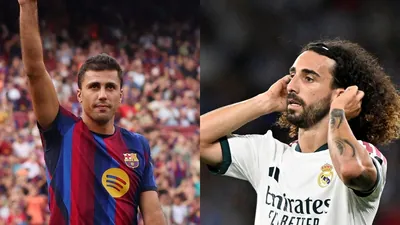
Barcelona and Real Madrid transfer window 2026 activity dominated much of the summer, with both La Liga giants making ambitious moves to reshape their squads. However, despite bringing in several high-profile names, neither club managed to completely solve the problems that could define their seasons.
Both clubs entered the summer knowing that improvements were required. Real Madrid wanted greater control and stability in midfield after two difficult trophyless campaigns, while Barcelona needed additional attacking firepower following changes to their forward line.
The final outcome was a familiar contradiction of elite transfer windows: the squads became stronger in several areas, but the most obvious weaknesses were not necessarily the areas where the biggest investments were made.
That could become particularly important once the season reaches its most demanding stage. Injuries, fixture congestion, Champions League pressure and tactical adjustments will test whether the summer recruitment actually solved the problems managers face on the pitch.
Real Madrid’s summer strategy: more options, but midfield control remains the question
Real Madrid entered the transfer window after two successive trophyless seasons and a period of significant change around the club.
The managerial situation had already been turbulent, while the arrival of Jose Mourinho created another major chapter in the club’s attempt to return to the top.
The transfer strategy under Mourinho focused heavily on strengthening the squad and adding experience alongside younger attacking talent.
Madrid made several notable additions, including Marc Cucurella, Ibrahima Konate, Denzel Dumfries, Bernardo Silva and highly rated winger Yan Diomande.
Carlos Espí was also brought in after Madrid activated his reported €25 million release clause at Levante, with the move intended to compensate for Gonzalo García’s departure.
On paper, that is an impressive collection of additions. But squad building is not simply about collecting talented players. The more important question is whether the new arrivals directly solve the team’s biggest tactical problems.
Why Real Madrid still needed a controlling midfielder
The clearest unresolved issue for Madrid was central midfield.
The club had been searching for a player capable of controlling the tempo of matches, protecting the defence and helping the team dictate possession from deep.
That role becomes particularly important for a side expected to dominate possession against opponents who defend deep. Without a reliable central controller, Madrid can have enormous individual quality while still struggling to control the rhythm of a match.
Vitinha and Joao Neves were linked with the club during the summer, but neither deal materialised.
Madrid later turned their attention toward Rodri, whose profile appeared to match exactly what the team needed. His ability to dictate tempo, recycle possession and provide defensive protection made him a logical solution.
But the situation changed dramatically when Barcelona entered the race and eventually secured his signature.
Rodri’s Barcelona move could have consequences for both rivals
The Rodri transfer is arguably the most significant storyline connecting the two clubs’ summer business.
Real Madrid identified the midfielder as a potential solution to a problem that had affected the team for multiple seasons. Barcelona, meanwhile, also saw an opportunity to strengthen an area where control and experience could transform their midfield.
Barcelona ultimately won the race, leaving Madrid without the player who could have been their most natural answer to the midfield-control problem.
That gives the transfer an importance beyond the normal rivalry between two clubs.
Barcelona gained a proven midfielder, while Madrid were forced to continue with an existing midfield structure and attempt to find another solution internally.
Bernardo Silva could become the key to Madrid’s midfield
Madrid did sign Bernardo Silva as a free agent, giving Mourinho another technically gifted player capable of operating in midfield and advanced areas.
However, his arrival does not automatically solve the same problem Rodri would have addressed.
Silva is renowned for his technical ability, movement and creativity, but asking him to become the team’s primary deep controller would represent a different tactical responsibility.
Much could therefore depend on how Mourinho structures the midfield around him.
If Silva rediscovers his best form and the players around him provide sufficient defensive balance, Madrid may still find a workable solution. If not, the absence of a specialist controlling midfielder could become increasingly visible against elite opposition.
Real Madrid’s defensive additions provide a different kind of strength
While midfield remains a concern, Madrid did make meaningful improvements elsewhere.
Ibrahima Konate arrived from Liverpool on a free transfer, adding another physically imposing defensive option.
Denzel Dumfries also arrived from Inter for a reported €20 million, giving Madrid additional power and athleticism on the flank.
Marc Cucurella was another major addition, with the club reportedly paying €55 million.
These moves should give Mourinho greater flexibility when managing different opponents and tactical systems.
The problem is that defensive depth cannot completely compensate for a lack of midfield control. A team can strengthen its back line while still being vulnerable if opponents consistently win the battle for possession and territory in the centre.
Barcelona’s summer: attacking depth was the priority
Barcelona also entered the transfer window with clear objectives under Hansi Flick.
The Catalan club were more aggressive than in several previous transfer windows, making a series of significant moves across the squad.
Anthony Gordon arrived from Newcastle United for a reported £69 million, immediately becoming one of the defining transfers of Barcelona’s summer.
Karim Adeyemi followed from Borussia Dortmund for a reported £18 million, while Belgian youngster Jesse Bisiwu joined from Club Brugge for approximately £7.3 million.
Barcelona also brought back Joao Cancelo from Al Hilal on a free transfer and signed Croatia goalkeeper Dominik Livakovic from Fenerbahce for a reported £3 million.
The club eventually completed the signing of Gabriel Jesus from Arsenal as well.
These additions increased the depth and variety available to Flick, particularly in attack and wide areas.
Barcelona’s biggest unresolved issue: replacing Lewandowski
Despite their aggressive recruitment, Barcelona still ended the window with a significant question in the centre-forward position.
Robert Lewandowski’s departure created a major void. Replacing a striker who has been the focal point of the attack is not simply a matter of signing another forward.
The replacement must provide goals, occupy defenders, connect with attacking midfielders and offer a reliable target when Barcelona need to change the rhythm of a game.
Barcelona spent much of the window exploring a move for Julian Alvarez.
The Argentine forward was reportedly interested in leaving Atletico Madrid, but Atletico refused to sell him to a direct domestic rival.
That effectively ended Barcelona’s preferred solution.
Gabriel Jesus gives Barcelona an option, but also creates uncertainty
Barcelona eventually turned to Gabriel Jesus, signing the Brazilian forward from Arsenal.
His technical qualities make him an attractive option for Flick’s system. He can link play, move across the attacking line and contribute creatively rather than functioning only as a traditional penalty-box striker.
However, his injury history creates an obvious question over availability.
For Barcelona, the issue is not whether Jesus has the ability to contribute. The bigger question is whether he can remain available consistently enough to carry the responsibility created by Lewandowski’s departure.
That makes Barcelona’s forward planning one of the most intriguing aspects of their season.
Ferran Torres’ departure makes the striker issue more important
The situation becomes more complicated because Ferran Torres also left Barcelona.
That departure reduces the number of established attacking alternatives available to Flick.
With multiple competitions ahead, squad depth is essential. A striker can miss matches through injury, suspension or rotation, and the demands of European Football mean managers cannot rely on the same XI every few days.
Barcelona have added attacking talent, but whether those players collectively replace the goals and reliability lost through their departures remains one of the central questions of the season.
Barcelona vs Real Madrid: which club fixed more problems?
| Area | Barcelona | Real Madrid |
|---|---|---|
| Midfield | Strengthened significantly with Rodri | Still lacks an obvious central controller |
| Attack | Added Gordon, Adeyemi and Jesus | Added Silva and Diomande among other options |
| Centre-forward | Lewandowski replacement remains a concern | Greater attacking flexibility |
| Defence | Added Cancelo and goalkeeper depth | Major additions including Konate and Dumfries |
| Biggest unresolved issue | Reliable long-term striker replacement | Midfield control and tempo management |
The transfer-window winner may depend on which weakness hurts less
It would be easy to judge the two clubs purely by the number of big-name arrivals. That would miss the more important tactical story.
Barcelona appear to have improved their midfield significantly, particularly with Rodri, but their centre-forward situation remains uncertain.
Real Madrid have increased their defensive depth and attacking options, yet their biggest need was arguably a midfielder capable of controlling matches from the centre.
That creates an interesting contrast.
Barcelona may have addressed a structural weakness while leaving a goalscoring question unanswered. Madrid may have improved the overall quality of their squad without solving the structural issue that previously prevented them from controlling certain matches.
Why transfer spending does not always equal squad improvement
The summer activity of both clubs demonstrates an important truth about modern football: the most expensive transfer is not necessarily the most important one.
A club can spend heavily on several positions and still have a weakness that influences its entire tactical structure.
For example, a world-class winger cannot completely compensate for the absence of a midfielder who controls possession. Similarly, adding several attacking players does not automatically replace a centre-forward who has consistently provided goals over multiple seasons.
Successful recruitment is therefore about solving specific problems rather than simply adding famous names.
Hansi Flick’s challenge at Barcelona
Flick now has a deeper squad, but that also creates tactical decisions.
With Gordon, Adeyemi, Jesus and other attacking options available, the manager must decide how to balance width, creativity and central presence.
Rodri’s arrival could provide Barcelona with greater control, allowing attacking players to operate with more freedom while reducing the amount of defensive responsibility placed on creative midfielders.
The challenge will be maintaining that balance when injuries or fixture congestion force changes.
Jose Mourinho’s challenge at Real Madrid
Mourinho faces a different problem.
His squad contains enormous individual quality, but he must construct a midfield system capable of controlling games without the player Madrid appeared to identify as the ideal solution.
Bernardo Silva could become central to that plan, but the Portuguese midfielder may need support from players capable of winning the ball, covering spaces and progressing possession.
The defensive additions give Mourinho more options behind them, while the attacking reinforcements could make Madrid dangerous in transition.
The key question is whether that combination will be enough against opponents who can dominate possession themselves.
Champions League football could expose the remaining weaknesses
Domestic league matches can sometimes hide structural problems because elite clubs have enough individual quality to win games even when the performance is not perfect.
The Champions League is different.
Against Europe’s strongest teams, small weaknesses can become decisive. A midfield that struggles to control possession can spend long periods defending, while a team without a reliable central striker may struggle to convert limited chances.
That is why the unresolved problems at Barcelona and Real Madrid could become more visible during the biggest matches of the season.
Prediction: Barcelona may have the more balanced midfield, while Madrid’s depth could decide their season
Barcelona appear to have made the more direct improvement in midfield after securing Rodri, particularly because controlling possession was an area where additional experience could make a significant difference.
However, Madrid have built considerable depth across defence and attack. If Mourinho successfully creates a functional midfield structure from the players already available, the club could still turn its summer business into a very strong squad.
For Barcelona, the biggest variable will be the centre-forward position. If Jesus remains available and the wider attacking additions produce consistent goals, the club’s decision not to secure Alvarez may become less important.
For Madrid, the opposite is true: if the midfield functions without a specialist controller, their failure to sign Rodri could quickly become a footnote rather than a defining mistake.
The real test begins after the transfer window closes
Transfer windows are ultimately judged by what happens on the pitch.
Barcelona and Real Madrid both produced impressive headlines during the summer, but neither squad is perfect. That is not necessarily a sign of poor recruitment; it is a reminder that elite squads are almost impossible to make completely flawless.
Every major signing changes tactical possibilities, but every departure creates another question.
Barcelona now have to prove that their attacking additions can compensate for the loss of established centre-forward production. Real Madrid must demonstrate that their midfield can control matches despite failing to land the player who appeared to fit that role most naturally.
Conclusion
The Barcelona and Real Madrid transfer window 2026 will be remembered for major moves, fierce competition and the dramatic battle for Rodri.
Barcelona strengthened their midfield and added significant attacking options, but the departure of Lewandowski and the failure to land Julian Alvarez leave questions around the No. 9 position.
Real Madrid improved their defensive depth and added more attacking and creative talent, yet the absence of a proven central midfielder capable of controlling games remains their most obvious concern.
In the end, the success of both transfer strategies will depend less on the size of their spending and more on whether their managers can solve the tactical problems that remained when the window closed.
That is where the real battle between Barcelona and Real Madrid begins. The transfer window may be over, but the answers to their biggest questions will only emerge once the season reaches its toughest moments.
For breaking news and live news updates, like us on Facebook or follow us on Twitter and Instagram. Read more on Latest Football on thefoxdaily.com.





COMMENTS 0