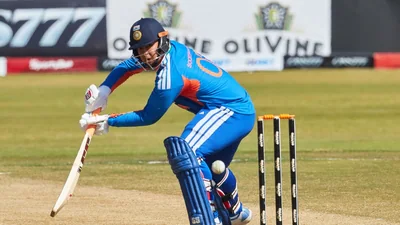
BCCI Asian Games 2026 plans could change significantly after concerns emerged over the facilities being prepared for cricket in Japan. India were initially set to field a strong men’s T20I squad at the Aichi-Nagoya Asian Games, but the Board of Control for Cricket in India is reportedly considering sending a second-string team if the arrangements are not improved.
The Asian Games are scheduled to begin on September 19, with the women’s cricket competition planned from September 17 to 22 and the men’s T20 tournament from September 24 to October 3. Before deciding whether its leading players should travel, the BCCI is expected to send an observer to Japan to inspect the facilities and report back to the board.
The concerns reportedly centre on the cricket venue and player accommodation. A BCCI source cited in reports said dressing rooms had been created in tents, while washroom facilities were located around 500 metres away. The size of hotel rooms has also reportedly raised concerns.
For India, this is not simply a question of comfort. The decision could affect the composition of a squad that includes several established international players, including Jasprit Bumrah, Shreyas Iyer, Arshdeep Singh and Axar Patel. It could also change the competitive landscape of the men’s cricket tournament, where India enter as defending champions.
Why the BCCI is reconsidering India’s Asian Games squad
The immediate issue is the reported standard of facilities available to participating teams in Japan.
According to the reported BCCI position, the board and the Asian Cricket Council are unhappy with aspects of the current arrangements. The reported use of tents as dressing rooms and the distance to washrooms have become particular points of concern.
The BCCI is therefore not expected to make an immediate decision based solely on reports. An observer will assess the facilities on the ground before the board determines whether its first-choice squad should participate.
This creates two possible outcomes. If the facilities are improved sufficiently, India could retain the originally selected squad. If the concerns remain unresolved, the BCCI could opt for a second-string team.
That approach would allow India to participate in the tournament while reducing the exposure of its leading players to conditions the board considers inadequate.
What exactly are the reported facility concerns?
The concerns reportedly involve several areas of the tournament setup rather than one isolated problem.
- Dressing rooms: Reports say team dressing rooms have been established in tents.
- Washrooms: The washroom facilities are reportedly around 500 metres from the dressing areas.
- Hotel accommodation: The size of hotel rooms has also reportedly become a concern.
- Overall arrangements: The BCCI and ACC are reportedly seeking a higher standard of facilities for participating teams.
The distinction between a temporary setup and an unacceptable setup will ultimately depend on the inspection. Sporting events frequently use temporary structures, particularly when infrastructure is being assembled specifically for a tournament.
The key issue for India is whether those arrangements provide appropriate functionality, hygiene, privacy and recovery conditions for professional athletes.
BCCI to send observer before making final call
The BCCI’s decision-making process is particularly important because the board has not reportedly abandoned participation altogether.
Instead, the observer’s assessment will provide the evidence required to determine whether India’s strongest players should travel.
This is a more measured approach than immediately withdrawing the first-choice squad. It also leaves room for organizers to address the reported shortcomings before the tournament begins.
The final squad decision could therefore become a practical assessment of whether the venue and accommodation meet the expectations of an international cricket team.
India had initially selected a strong squad
The possibility of a second-string team is notable because India’s announced men’s squad is considerably stronger than what might normally be expected for a developmental tournament.
Shreyas Iyer was named captain, with Tilak Varma as vice-captain. The squad also contains Jasprit Bumrah, Arshdeep Singh and Axar Patel, giving India substantial experience across batting, bowling and all-round options.
Several younger players were also included, meaning the original selection combined established international names with emerging talent.
India’s original Asian Games squad
| Player | Role |
|---|---|
| Shreyas Iyer | Captain |
| Sanju Samson | Wicketkeeper |
| Abhishek Sharma | All-round/batting option |
| Ishan Kishan | Wicketkeeper |
| Shivam Dube | All-rounder |
| Tilak Varma | Vice-captain |
| Axar Patel | All-rounder |
| Washington Sundar | All-rounder |
| Nitish Kumar Reddy | All-rounder |
| Varun Chakravarthy | Spinner |
| Ravi Bishnoi | Spinner |
| Harshit Rana | Fast bowler |
| Arshdeep Singh | Fast bowler |
| Vaibhav Sooryavanshi | Young batting option |
| Jasprit Bumrah | Fast bowler |
Why Jasprit Bumrah’s inclusion makes the situation unusual
Jasprit Bumrah’s presence makes the original squad particularly noteworthy.
India’s premier fast bowler is not simply another squad member. His workload and availability are normally managed carefully because of the physical demands associated with international fast bowling.
If the BCCI ultimately sends a second-string team, leaving Bumrah out would therefore have two potential benefits. India could reduce the workload placed on a key player while simultaneously giving another cricketer an international opportunity.
The same logic could apply to other established players in the original squad.
From a long-term planning perspective, a second-string Asian Games side could function as a development opportunity rather than simply being viewed as a weakened team.
India are defending their Asian Games cricket title
The stakes are also significant because India are the defending men’s cricket champions at the Asian Games.
At the 2023 Asian Games in Hangzhou, India won the gold medal after the final against Afghanistan was abandoned because of rain. India were awarded the title based on their superior seeding.
That means India arrive in Japan with an existing reputation to protect.
A second-string team would inevitably create questions about India’s ability to defend the gold medal. However, it could also provide valuable international experience to players who are not regular members of the senior first-choice side.
The Asian Games schedule adds another layer
The men’s cricket tournament is scheduled from September 24 to October 3, while the overall Asian Games begin on September 19.
The timing means the cricket competition sits within a larger multi-sport event rather than operating as a standalone bilateral series.
For cricket boards, that creates additional logistical considerations. Teams have to adapt not only to the playing conditions but also to the broader arrangements of a multi-sport competition.
That makes the BCCI’s inspection particularly relevant. Accommodation, training facilities, transportation and match-day infrastructure all contribute to whether an international squad can operate effectively.
Why the decision matters beyond India
The reported concerns could have implications for the tournament as a whole.
India are one of the biggest names in Asian cricket, and their strongest squad can significantly increase attention around the competition. If India instead send a second-string team, the tournament will still provide opportunities for other sides, but the profile of the Indian challenge will change.
For developing players, however, this could be a positive development.
A second-string Indian team would likely create space for players seeking international experience. Such a squad could include emerging batters, specialist bowlers and younger all-rounders who are close to the senior setup but have not yet established themselves as regular internationals.
That could turn an infrastructure controversy into an unexpected talent-development opportunity.
Second-string does not necessarily mean weak
The phrase “second-string team” can be misleading.
India’s cricket system has considerable depth, particularly in T20 cricket. Players outside the first-choice XI often have extensive domestic experience and may already have played in major professional competitions.
A reserve-heavy squad could therefore remain highly competitive.
It could also give the BCCI a chance to test players in leadership roles. A younger captain, for example, could gain experience managing an international squad in unfamiliar conditions.
The Asian Games would then serve two purposes: defending India’s title and expanding the pool of players ready for senior international cricket.
The biggest question: facilities or team selection?
At the heart of the situation is a simple question: will the facilities be improved enough for India to send the squad originally selected?
The answer will depend on the observer’s assessment and the response from tournament organizers.
If the reported issues are addressed, the BCCI may have little reason to make a drastic change. If they are not, protecting players and maintaining acceptable working conditions could take priority over sending a star-studded squad.
This also explains why a final decision cannot be based solely on the current reports. Conditions at major sporting venues can change significantly in the weeks leading up to an event.
What could a second-string India team look like?
The exact alternative squad cannot be predicted from the available information because the BCCI has not announced a replacement team.
However, the likely selection philosophy would be clear: retain enough experience to remain competitive while giving opportunities to players outside the original first-choice group.
That could potentially create opportunities for young domestic performers and fringe international players, although individual names should not be treated as confirmed selections until officially announced.
Such a squad could also allow India’s senior players to focus on their other international commitments and long-term workload management.
Unique insight: the controversy could benefit India’s next generation
There is an interesting possibility hidden within the BCCI’s dilemma.
If India eventually send a second-string squad, the move could become more than a response to facility concerns. It could become a deliberate investment in squad depth.
International T20 cricket offers young players a different learning environment from domestic tournaments. They experience unfamiliar opponents, travel demands and match pressure while working within a national setup.
India’s enormous talent pool means that opportunities at this level can be valuable even when established stars are absent.
In other words, a weaker-looking team on paper could produce stronger options for India in the future.
What the BCCI must balance
The board faces three competing priorities.
- Player welfare: Facilities must be suitable for professional athletes.
- Competitive ambition: India are defending Asian Games champions and would want a competitive squad.
- Future development: The tournament can provide valuable experience to emerging players.
A strong first-choice squad maximizes India’s immediate competitive strength, but a second-string team could create greater developmental value while reducing the workload on established players.
The inspection will therefore determine more than whether India likes the facilities. It could shape the entire purpose of India’s participation in the tournament.
What happens next?
The next major step is the BCCI’s assessment of the arrangements in Japan.
Once the observer submits a report, the board can determine whether the existing facilities are satisfactory or whether changes are necessary.
If the concerns remain unresolved, India could proceed with a second-string squad. If the organizers address the problems, the originally selected group could remain intact.
Until that assessment is completed, neither scenario should be treated as final.
Conclusion: India’s Asian Games plans remain in focus
BCCI Asian Games 2026 plans have been thrown into uncertainty by reported concerns over player facilities in Aichi-Nagoya. The board is considering sending a second-string team if the arrangements do not meet expectations, but an observer will first assess the situation in Japan.
The decision is particularly significant because India’s original squad includes major names such as Shreyas Iyer, Tilak Varma, Axar Patel, Arshdeep Singh and Jasprit Bumrah. India are also defending the men’s Asian Games cricket title after winning gold in Hangzhou in 2023.
A change to a second-string squad would therefore represent a notable shift in India’s approach. Yet it would not necessarily weaken India’s long-term cricket program. A reserve-heavy team could provide valuable international experience to emerging players while allowing established stars to manage their workloads.
For now, the facilities remain the decisive factor. The BCCI’s observer report should determine whether India travel to Japan with their strongest available squad or hand the Asian Games opportunity to the next generation.
For breaking news and live news updates, like us on Facebook or follow us on Twitter and Instagram. Read more on Latest Cricket on thefoxdaily.com.






COMMENTS 0