A Franchise Legend Makes a Bold Call on Pittsburgh’s Future
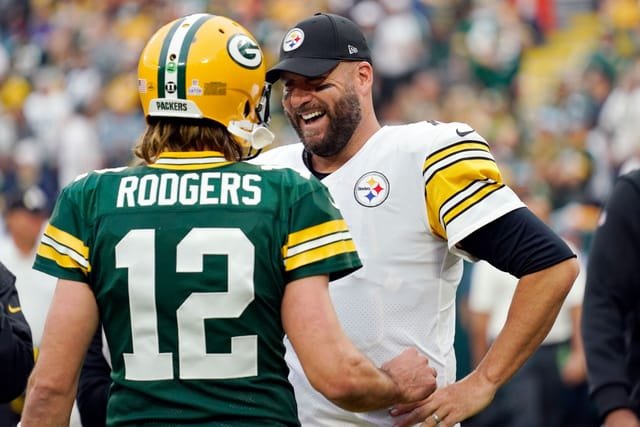
The Pittsburgh Steelers are once again at the center of NFL offseason attention after franchise icon Ben Roethlisberger delivered a confident prediction about the team’s 2026 season outlook. Speaking on his podcast appearance, Roethlisberger projected a strong 12–5 record for the Steelers, citing improved chemistry, system familiarity, and the presence of veteran quarterback Aaron Rodgers.
This prediction carries weight not just because of Big Ben’s legendary status, but because it reflects growing optimism around a roster that is attempting to blend veteran leadership with a retooled offensive identity. With offensive adjustments under a familiar coaching philosophy and key additions at skill positions, Pittsburgh is positioning itself for a serious playoff push.
But the question remains: is this optimism grounded in reality—or is it another case of franchise loyalty shaping expectations more than on-field evidence?
Background: Why the Steelers Are in a New Era of Expectations
The Steelers are one of the NFL’s most historic franchises, built on defensive dominance and disciplined offensive systems. However, the modern NFL demands more explosive passing attacks and adaptive quarterback play.
After years of transition following Roethlisberger’s retirement, Pittsburgh has been searching for stability at the most important position in football. The arrival of Aaron Rodgers represents a clear win-now strategy—an attempt to maximize a closing championship window rather than rebuild for the future.
Roethlisberger’s comments reflect this shift. His confidence in a 12–5 season is not just nostalgia—it is rooted in the belief that veteran leadership and offensive familiarity can elevate a team that has struggled with consistency in recent seasons.
The Aaron Rodgers Factor: Why Everything Depends on One Veteran Arm
Much of Pittsburgh’s 2026 outlook hinges on the performance of Aaron Rodgers, one of the most talented quarterbacks of his generation. Known for his elite arm talent, pre-snap reads, and improvisational brilliance, Rodgers brings a level of offensive creativity the Steelers have lacked in recent years.
However, success is not guaranteed. Rodgers’ effectiveness depends heavily on offensive line protection, receiver chemistry, and system adaptation. While his experience allows him to adjust quickly, modern defenses in the NFL are faster, more complex, and more physically demanding than ever before.
For Pittsburgh, the challenge is not just acquiring a Hall of Fame quarterback—it is building an environment where that quarterback can consistently perform at a high level.
Coaching Influence: The System That Could Define the Season
A major reason for optimism comes from the offensive system familiarity within the organization. The Steelers are reportedly operating under a scheme influenced by coordinator principles that emphasize timing, structured reads, and efficient ball movement.
This is particularly important for Rodgers, who thrives in systems that allow him to control pre-snap decisions and exploit defensive mismatches.
Roethlisberger’s belief in the system is clear: continuity and familiarity often lead to improved offensive output in Year 2 of implementation. That belief forms the foundation of his 12–5 projection.
Roster Evolution: Why Supporting Cast Matters More Than Ever
Even elite quarterbacks cannot succeed alone. Pittsburgh’s offseason moves have focused on strengthening the supporting cast around Rodgers, particularly at wide receiver and offensive line positions.
The additions of emerging talent and established playmakers are designed to reduce pressure on the quarterback while creating more vertical and intermediate passing options.
Key supporting players such as Michael Pittman Jr. and emerging young talents are expected to play critical roles in stabilizing the passing game and expanding offensive versatility.
This shift represents a philosophical change for Pittsburgh—moving from a defense-first identity to a more balanced, modern offensive structure.
Comparing Eras: Roethlisberger vs Rodgers Leadership Impact
One of the most interesting aspects of this transition is the comparison between two Hall of Fame-caliber quarterbacks—Ben Roethlisberger in his prime and Aaron Rodgers in the later stage of his career.
| Category | Ben Roethlisberger Era | Aaron Rodgers Era (2026 Steelers) |
|---|---|---|
| Playing Style | Physical, extended plays, deep-field resilience | Precision passing, elite pre-snap reads, efficiency-based offense |
| Team Identity | Defense-first championship model | Balanced offense with veteran quarterback control |
| Leadership Impact | Emotional locker room anchor | Strategic, experience-driven leadership |
| Offensive Scheme Fit | Vertical and physical passing game | Timing-based, structured offensive system |
| Championship Outlook | Multiple Super Bowl appearances | Win-now window dependent on health and chemistry |
Why Roethlisberger’s Prediction Matters
When a franchise legend speaks, it carries psychological and cultural influence. Roethlisberger is not just analyzing the team—he is reflecting the identity of a franchise that still measures success through championships.
His prediction of a 12–5 season is significant because it sets expectations at a high level. In the NFL, where parity dominates, double-digit wins often separate contenders from mid-tier teams.
However, predictions do not guarantee performance. The NFL is shaped by injuries, turnover margins, and situational execution—areas where even the most talented teams can falter unexpectedly.
The Reality Check: Why 12–5 May Be Optimistic
While optimism is justified, several variables could challenge Pittsburgh’s projected success.
- Quarterback adaptation speed within a new system
- Offensive line consistency against elite pass rushes
- Defensive regression or injury concerns
- Strong competition within the AFC playoff race
In a conference loaded with elite quarterbacks, even a strong roster can struggle to secure top seeding. Small margins often determine playoff positioning, and Pittsburgh will need near-perfect execution to meet Roethlisberger’s projection.
Big Picture: What This Means for the Steelers’ Super Bowl Window
The Steelers are clearly operating in a win-now mindset. Signing a veteran quarterback like Aaron Rodgers signals urgency rather than long-term rebuilding.
This approach has both upside and risk. If successful, Pittsburgh could return to Super Bowl contention for the first time in over a decade. If not, the franchise may face another transitional phase in the near future.
The pressure is particularly high given the AFC landscape, where multiple teams are built around younger, faster, and more dynamic quarterbacks.
Future Outlook: Can Pittsburgh Actually Deliver on the Prediction?
The success of the Steelers’ 2026 season will likely depend on three core factors: quarterback health, offensive line stability, and chemistry development between Rodgers and his receiving corps.
If those elements align, a 12–5 season is within reach. If even one breaks down, the margin for error becomes significantly smaller.
Roethlisberger’s prediction, while optimistic, reflects belief in structure, leadership, and experience—three traits that have historically defined championship teams in Pittsburgh.
Conclusion: A Season Defined by Expectations and Legacy
The Ben Roethlisberger Steelers prediction Aaron Rodgers 2026 season narrative is more than just offseason commentary—it represents a franchise standing at a crossroads between legacy and reinvention.
With Aaron Rodgers leading the offense and a revamped supporting cast around him, the Steelers are positioning themselves for one final push toward championship relevance.
Whether they achieve a 12–5 record or fall short, the 2026 season will be a defining chapter in Pittsburgh’s modern football identity—one shaped by ambition, experience, and the enduring pursuit of Super Bowl glory.
For breaking news and live news updates, like us on Facebook or follow us on Twitter and Instagram. Read more on Latest Sports on thefoxdaily.com.






COMMENTS 0