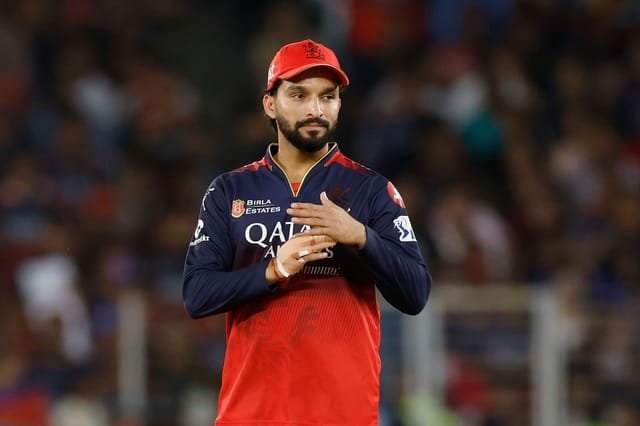
Rajat Patidar’s captaincy received strong praise from Royal Challengers Bengaluru pacer Bhuvneshwar Kumar after the franchise completed a remarkable run of success in the IPL. According to the experienced fast bowler, Patidar remained remarkably consistent from the moment he was appointed captain until RCB lifted the trophy for the second consecutive season.
RCB defeated Gujarat Titans in the IPL 2026 final to retain the title they had first won in 2025. The achievement placed Patidar in an exclusive group of IPL captains, as he became only the third skipper after MS Dhoni and Rohit Sharma to lead his team to back-to-back championships.
For Bhuvneshwar, however, Patidar’s success was not simply about winning trophies. The veteran pacer highlighted the captain’s ability to listen to advice while still having the confidence to make his own decisions when required.
One example came during Jacob Duffy’s first match of the 2026 season. Bhuvneshwar recalled that some players suggested Patidar should hold one of Duffy’s overs back for later. Instead, the captain trusted the original plan and gave the pacer his complete spell.
That decision, according to Bhuvneshwar, showed an important part of Patidar’s leadership style: he was open to suggestions but did not hesitate when he believed his tactical plan was correct.
Rajat Patidar stayed the same captain throughout RCB’s title defense
One of the strongest points in Bhuvneshwar Kumar’s assessment was Patidar’s consistency. The pacer suggested that the captain did not become a different person after experiencing success.
Patidar was appointed RCB captain in 2025, and he eventually guided the franchise to consecutive IPL titles. That kind of success can change the way a young captain approaches pressure, but Bhuvneshwar believes Patidar maintained the same personality and leadership approach throughout the two campaigns.
The ability to remain consistent can be particularly valuable in a tournament as demanding as the IPL. Captains face pressure from players, coaches, supporters and the media, while every tactical decision can be analyzed immediately.
According to Bhuvneshwar, Patidar handled that environment without allowing the captaincy to change his personality. He remained willing to hear opinions from teammates and members of the coaching staff while retaining responsibility for the final call.
Jacob Duffy decision showed Patidar’s confidence
The example involving Jacob Duffy provides a useful insight into how Patidar approached tactical decisions. Duffy was playing his first match of the 2026 campaign, and some members of the team reportedly suggested keeping an over of his spell for a later stage.
Patidar chose another approach and used Duffy for four consecutive overs.
For a captain, using a bowler’s entire spell at once can be a significant tactical decision. Saving an over may provide flexibility later, particularly during the closing stages of an innings. On the other hand, completing the spell immediately can allow a captain to exploit a favorable matchup or maximize a bowler’s rhythm.
Bhuvneshwar viewed Patidar’s choice as an example of the captain trusting his assessment rather than changing the plan simply because teammates offered an alternative.
Importantly, the story does not suggest that Patidar ignored his teammates. In fact, Bhuvneshwar specifically praised his willingness to listen. The distinction was that Patidar could consider advice without automatically following it.
Patidar’s leadership balance helped RCB
A captain does not have to make every decision alone. Successful teams often rely on communication between the skipper, coaching staff and experienced players. Bhuvneshwar’s comments suggest that Patidar understood this balance.
RCB had experienced figures around the squad, including Bhuvneshwar, while the coaching setup featured Director of Cricket Mo Bobat and head coach Andy Flower. Rather than treating captaincy as complete authority over every decision, Patidar appears to have worked within that structure.
That approach can help a captain avoid two common extremes. A skipper who refuses all advice can isolate himself from valuable experience, while one who constantly changes decisions based on outside opinions can appear uncertain.
Bhuvneshwar’s description portrays Patidar as someone who listened first and then trusted his own judgment.
Rajat Patidar joins an elite IPL captaincy club
Winning consecutive IPL titles has put Patidar alongside two of the competition’s most successful captains, MS Dhoni and Rohit Sharma.
RCB’s first championship arrived in 2025, ending a long wait for the franchise. Defending that title in 2026 made the achievement even more significant because repeating as champions requires a team to handle the pressure that comes with being the side everyone wants to defeat.
Patidar therefore had to lead RCB through the expectations created by their first title. The fact that the team successfully defended the championship suggests that the captain and coaching staff were able to maintain the standards established during their breakthrough campaign.
For Patidar personally, consecutive titles also represent a rapid rise in leadership credentials. His captaincy is now attached to one of the most successful periods in RCB’s history.
Bhuvneshwar Kumar was central to RCB’s back-to-back titles
While Bhuvneshwar was discussing Patidar’s leadership, his own contribution to RCB’s success should not be overlooked.
The veteran fast bowler was acquired by RCB at the 2025 IPL auction for ₹10.75 crore. Across the 2025 and 2026 seasons, he played 30 matches and claimed 45 wickets at an average of 21.87, with an economy rate of 8.56.
Those numbers underline his importance to the bowling attack during the two title campaigns. His experience also gave Patidar access to a senior player who had already spent years handling the tactical demands of high-level cricket.
For a captain, having an experienced fast bowler who can contribute in different phases of an innings is a major advantage. Bhuvneshwar’s ability to deliver with the new ball and provide control made him a valuable option throughout RCB’s successful campaigns.
How Bhuvneshwar helped from an experienced player’s role
Bhuvneshwar also revealed that his relationship with RCB’s management began soon after the 2025 auction. His first conversations were with Mo Bobat and Andy Flower during a period when the team was preparing in Bengaluru around the Syed Mushtaq Ali Trophy.
The discussions were reportedly informal, with the coaching and management staff asking about his preparation and approach to the upcoming season.
That initial interaction became the beginning of a successful period for Bhuvneshwar and RCB. His experience complemented a team that was able to build enough consistency to win consecutive championships.
His comments about Patidar also show how senior players can influence a captain without taking away his authority. Offering advice is part of a team’s internal communication, but the captain ultimately has to decide which option best suits the situation.
Bhuvneshwar Kumar explains why Chinnaswamy feels different
The pacer also spoke about another major part of his RCB experience: playing at the M Chinnaswamy Stadium in Bengaluru.
Before joining RCB, Bhuvneshwar had experienced the Bengaluru crowd as an opposition player while representing Sunrisers Hyderabad. He recalled the enormous support the home side received and described the atmosphere as noticeably different.
That perspective changed after he became an RCB player. Instead of arriving at Chinnaswamy as an opponent, he experienced the crowd’s expectations from inside the home dressing room.
According to Bhuvneshwar, the connection between the supporters and the team became particularly clear during an event held before the tournament. It showed him how strongly RCB fans wanted the IPL trophy.
For players joining the franchise, that atmosphere can create additional pressure, but it can also provide motivation. RCB’s successful title defenses gave those supporters the achievement they had been waiting for.
Bhuvneshwar has performed well at the M Chinnaswamy Stadium
The Chinnaswamy Stadium has traditionally presented challenging conditions for fast bowlers because of its reputation as a high-scoring venue. The relatively small boundaries can make every bowling error costly.
Despite that, Bhuvneshwar has produced impressive numbers at the ground. He has taken 26 wickets in 19 matches at an average of 23.35 and an economy rate of 8.45.
Those figures demonstrate that the veteran has been able to adapt his bowling to a venue where pacers often have limited margin for error.
His experience at Chinnaswamy also makes his comments about the crowd particularly interesting. He had already seen the atmosphere from the opposition side, giving him a clear comparison after becoming part of the home team.
What makes Patidar’s captaincy stand out?
Bhuvneshwar’s comments point toward three important characteristics in Rajat Patidar’s captaincy.
1. He listens to experienced players
Patidar did not reportedly treat advice from senior teammates as interference. Instead, he listened to suggestions before deciding whether they fit his tactical plan.
2. He trusts his own decisions
The Jacob Duffy example shows that Patidar was prepared to stick with his original plan even when teammates suggested another approach.
3. He remained consistent under pressure
Perhaps the most important quality was his ability to remain the same captain after RCB’s first title. Bhuvneshwar believes the skipper’s approach did not change from his appointment through the second championship.
These qualities can help explain why RCB managed to defend its title. Captaincy in the IPL is not only about tactical calls; it is also about maintaining confidence and stability across a long tournament.
RCB’s success could define Patidar’s leadership legacy
Patidar now has a significant opportunity to build on his early captaincy success. Two consecutive IPL titles provide an exceptional starting point, but future seasons will determine whether this becomes a sustained era of leadership.
The challenge will be maintaining the same standards after the initial success. Opposing teams will study RCB’s tactics, players will face greater expectations, and Patidar’s decisions will receive even more attention.
Bhuvneshwar’s assessment suggests that staying true to his existing leadership style could be important. Rather than trying to become a different captain because of success, Patidar may benefit from continuing to listen, evaluate and trust his decisions.
Final Verdict
Rajat Patidar’s captaincy has earned another strong endorsement from Bhuvneshwar Kumar after RCB’s second consecutive IPL title. The veteran pacer’s account of the Jacob Duffy decision highlights the confidence Patidar showed while still remaining open to advice from senior teammates.
Patidar’s achievement is already significant. By leading RCB to IPL titles in 2025 and 2026, he joined the exclusive list of captains who have won consecutive championships, alongside MS Dhoni and Rohit Sharma.
Bhuvneshwar’s own contribution was equally important, with 45 wickets across the two successful seasons. His experience, combined with Patidar’s leadership and the team’s broader support structure, helped RCB maintain its level across consecutive campaigns.
The next challenge for Patidar will be sustaining that success. If he continues to combine confidence with the willingness to listen, the early signs suggest RCB may have found a captain capable of leading the franchise for a significant period.
For breaking news and live news updates, like us on Facebook or follow us on Twitter and Instagram. Read more on Latest Cricket on thefoxdaily.com.






COMMENTS 0