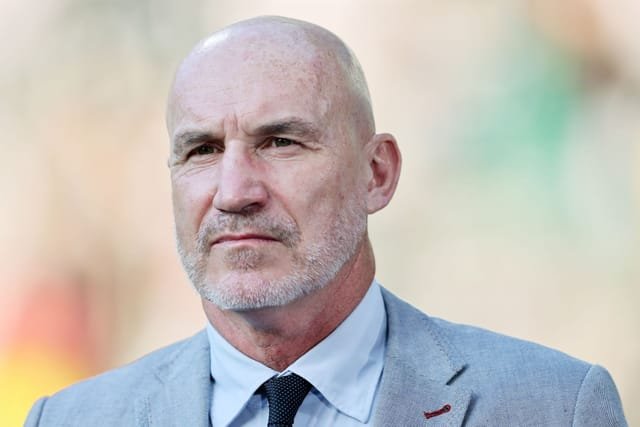
Brazil entered the 2026 FIFA World Cup as one of the tournament favorites, boasting a squad packed with elite talent and guided by one of football’s most decorated managers, Carlo ancelotti. However, their opening 1-1 draw against Morocco has triggered intense scrutiny, particularly surrounding the performance of striker Igor Thiago.
The Brentford forward was handed a major opportunity to lead Brazil’s attack in the absence of Neymar, but his performance failed to convince many observers. Among the critics was former Arsenal midfielder and football analyst Stewart Robson, who delivered a blunt assessment of Thiago’s display and questioned whether he would retain his place for Brazil’s next Group C fixture against Haiti.
As Brazil prepares for a crucial match that could shape the remainder of its World Cup campaign, the debate over the team’s center-forward position has become one of the biggest storylines surrounding the Selecao.
Stewart Robson Delivers Harsh Verdict on Igor Thiago
Few positions in world football attract more scrutiny than Brazil’s number nine role.
Throughout history, the nation has produced legendary forwards capable of deciding the biggest matches on football’s grandest stage. Expectations remain incredibly high, regardless of who occupies that position.
Following Brazil’s draw against Morocco, Stewart Robson did not hold back when evaluating Thiago’s contribution.
“I don’t think the centre-forward will start again in the next game. He was really poor. He looked out of his depth.”
The criticism reflects growing concern over Brazil’s attacking efficiency after a performance that lacked creativity, movement, and consistent goal threat.
While one match rarely defines a player’s tournament, World Cups are often unforgiving environments where opportunities must be seized immediately.
Why Brazil Started Igor Thiago Against Morocco
Carlo Ancelotti’s decision to start Thiago was not without justification.
The striker arrived at the World Cup after enjoying the most productive season of his career. His performances in England established him as one of the Premier League’s most effective forwards and earned him increased responsibility with the national team.
| Igor Thiago 2025-26 Season | Statistics |
|---|---|
| Club | Brentford |
| Goals | 25 |
| Competitive Form | Career-best season |
| Brazil Appearances Before World Cup | 4 |
| International Goals | 2 |
With Neymar unavailable and Brazil seeking a reliable focal point in attack, Ancelotti viewed Thiago as the logical option.
His physical presence, movement inside the penalty area, and recent goalscoring record suggested he could thrive on the international stage.
Unfortunately for both player and coach, the reality proved far more challenging.
What Went Wrong for Thiago Against Morocco?
World Cup football often exposes weaknesses that may not be visible during domestic competition.
Against Morocco, Thiago struggled to influence proceedings from the opening whistle.
He found limited space, received little service in dangerous areas, and appeared disconnected from Brazil’s creative players.
The striker managed just one shot on target and failed to establish the physical dominance that had become a hallmark of his club performances.
More concerning was his overall involvement in attacking sequences. Brazil frequently advanced into promising positions but lacked a consistent presence in central areas.
As a result, the attack became increasingly dependent on individual moments rather than coordinated movement.
Morocco’s Defensive Structure Deserves Credit
While criticism of Thiago has dominated headlines, it is important to recognize the quality of Morocco’s defensive display.
The African giants entered the tournament with a reputation for tactical discipline and once again demonstrated why they are considered one of the most difficult teams to break down.
Morocco effectively restricted passing lanes, compressed central spaces, and forced Brazil into uncomfortable positions.
This organization limited Thiago’s opportunities and prevented him from establishing any rhythm.
Elite defenders understand how to isolate center-forwards, and Morocco executed that strategy exceptionally well.
Brazil’s Attack Relied Too Heavily on Vinicius Junior
One of the most revealing aspects of Brazil’s performance was their dependence on Vinicius Junior.
When the team struggled to create chances through collective play, the Real Madrid winger once again became the primary source of inspiration.
His brilliant equalizer rescued a valuable point and prevented a disappointing defeat.
However, relying exclusively on moments of individual brilliance is not a sustainable strategy for winning a World Cup.
The best tournament teams combine star power with a clear attacking structure.
Brazil currently possesses the first ingredient but is still searching for the second.
Could Endrick Be the Solution?
One consequence of Thiago’s struggles has been renewed discussion surrounding Endrick.
The highly rated young forward remained on the bench throughout the Morocco match despite Brazil’s attacking difficulties.
Many supporters believe his pace, energy, and unpredictability could provide qualities currently missing from the frontline.
While Ancelotti has refused to discuss individual selection decisions publicly, pressure is mounting for the teenager to receive an opportunity.
| Attacking Options | Potential Strengths |
|---|---|
| Igor Thiago | Physical presence and finishing |
| Endrick | Pace and unpredictability |
| Matheus Cunha | Link-up play and movement |
| Luiz Henrique | Direct attacking threat |
The Haiti match could provide Ancelotti with an opportunity to experiment and evaluate alternative solutions.
Carlo Ancelotti Admits Brazil Were Nervous
Following the draw, Ancelotti offered an honest assessment of his team’s performance.
The veteran coach acknowledged that Brazil failed to begin the match effectively and struggled with composure during key phases.
His comments highlighted several issues:
- Frequent loss of possession.
- Poor decision-making under pressure.
- Ineffective pressing structure.
- Defensive vulnerability during transitions.
- Lack of attacking fluidity.
These problems extended beyond the performance of any single player and suggest broader tactical adjustments may be necessary.
Why the Haiti Match Is More Important Than Many Realize
On paper, Brazil will enter the match against Haiti as overwhelming favorites.
However, World Cup history repeatedly demonstrates that underestimating opponents can be dangerous.
Haiti may be participating in its first World Cup in more than five decades, but the pressure will fall entirely on Brazil.
Anything less than victory would dramatically increase scrutiny of Ancelotti’s project and potentially complicate qualification hopes.
For that reason, team selection decisions become even more significant.
The Bigger Question: Who Leads Brazil’s Attack Without Neymar?
The challenges facing Brazil extend beyond a single match or individual player.
Neymar’s absence has created a leadership and creativity gap that remains difficult to replace.
While Vinicius Junior has embraced greater responsibility, the team still requires a reliable central figure capable of converting chances and linking attacking moves.
Identifying that player could ultimately determine how far Brazil progresses in the tournament.
Whether that responsibility belongs to Thiago, Endrick, or another forward remains one of the most important decisions facing Ancelotti.
What the Numbers Reveal About Brazil’s Current Situation
| Key Concern | Impact on Brazil |
|---|---|
| Striker Form | Lack of goals from central areas |
| Neymar Absence | Reduced creativity and leadership |
| Slow Start vs Morocco | Cost valuable momentum |
| Dependence on Vinicius | Predictable attacking patterns |
| Group Stage Pressure | Limited margin for further mistakes |
Prediction: Will Ancelotti Make Changes Against Haiti?
Tournament football often rewards managers willing to adapt quickly.
Given the criticism surrounding Brazil’s opening performance, changes appear likely.
Whether that involves dropping Thiago entirely or adjusting the attacking structure around him remains uncertain. However, competition for places is intensifying, and Brazil cannot afford another sluggish display.
The Haiti match could become a defining moment for several players competing for long-term roles within the squad.
Conclusion
Stewart Robson’s criticism of Igor Thiago has amplified an already growing debate about Brazil’s attacking direction at the 2026 FIFA World Cup. After a disappointing display against Morocco, questions surrounding the striker position have become impossible to ignore.
While Thiago’s club form justified his selection, World Cup football demands immediate impact, and his opening performance failed to meet expectations. With Haiti up next and pressure mounting, Carlo Ancelotti faces one of his first major selection decisions of the tournament.
Brazil remains one of the strongest teams in the competition, but unlocking the full potential of its attack will be essential if the Selecao hopes to transform World Cup expectations into World Cup success.
For breaking news and live news updates, like us on Facebook or follow us on Twitter and Instagram. Read more on Latest Sports on thefoxdaily.com.



COMMENTS 0