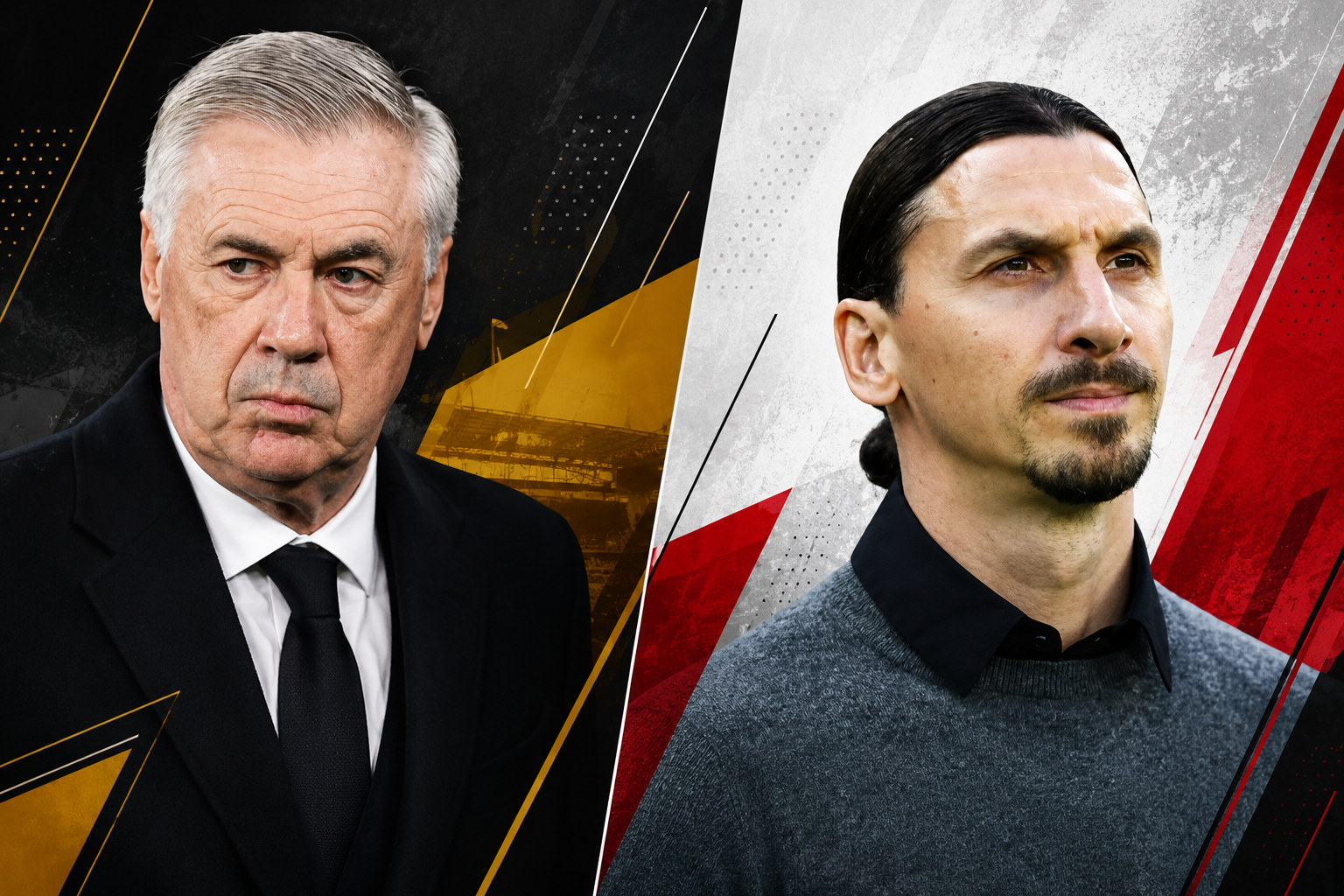
Carlo Ancelotti has spent decades building a reputation as one of football’s calmest and most respected coaches. Known for his composed demeanor, exceptional man-management skills, and ability to unite star-studded dressing rooms, the Italian has often been described as the ultimate players’ manager.
However, according to Zlatan Ibrahimovic, there is another side to Ancelotti that football fans rarely get to see.
Following Brazil’s 1-1 draw against Morocco in their opening match of the 2026 FIFA World Cup, a fascinating story from Ibrahimovic resurfaced, shedding light on the competitive intensity that has helped Ancelotti become one of the most successful coaches in football history.
The anecdote offers more than just entertainment—it provides valuable insight into the leadership style of the man tasked with guiding Brazil toward a record-extending sixth World Cup title.
Zlatan’s Surprising Story About Carlo Ancelotti
Zlatan Ibrahimovic has played under some of football’s most influential managers, including Pep Guardiola, Jose Mourinho, Fabio Capello, Massimiliano Allegri, and Carlo Ancelotti.
Given his strong personality and outspoken nature, it takes a lot to surprise Zlatan.
Yet one moment during their time together at Paris Saint-Germain left a lasting impression.
Speaking during a television appearance, Ibrahimovic recalled an incident after a disappointing performance when Ancelotti’s frustration became visible inside the dressing room.
“I remember after a game, he was not happy with the team. I was sitting and he kicked a box that hit my forehead. I was surprised because nobody does that to me, but Carlo did it. So yes, he has a dark side also, which I like because that is my trigger.”
The story immediately attracted attention because it contrasts sharply with the public image Ancelotti has cultivated throughout his coaching career.
Why This Story Matters Beyond the Humor
At first glance, Zlatan’s anecdote appears to be little more than a funny dressing-room memory.
However, it highlights an important reality about elite coaching.
Managing world-class players often requires a balance between calm leadership and competitive intensity. Coaches must know when to support players and when to challenge them.
Ancelotti’s success over the years suggests he has mastered that balance better than almost anyone else.
The incident described by Ibrahimovic demonstrates that even the most composed managers possess moments of frustration when standards are not being met.
For players like Zlatan, that intensity can actually serve as motivation.
The Carlo Ancelotti Leadership Formula
One reason Ancelotti has enjoyed unprecedented success is his ability to adapt his management style to different situations.
Unlike coaches who rely exclusively on strict discipline or emotional motivation, Ancelotti combines several leadership qualities.
| Leadership Trait | How Ancelotti Uses It |
|---|---|
| Calm Communication | Builds trust with players |
| Tactical Flexibility | Adapts to different opponents |
| Emotional Intelligence | Manages dressing-room dynamics |
| Authority | Maintains standards and discipline |
| Experience | Handles pressure effectively |
This combination has allowed him to succeed in multiple leagues, cultures, and footballing environments.
Very few managers have maintained elite-level success across such a wide range of challenges.
Zlatan and Ancelotti: A Successful Partnership at PSG
The story becomes even more interesting when viewed within the broader context of their relationship.
Despite the occasional confrontation, Zlatan enjoyed one of the most productive periods of his career under Ancelotti’s guidance.
During the 2012-13 campaign at Paris Saint-Germain, the Swedish striker produced extraordinary numbers while helping the club establish itself as a dominant force in French football.
| Zlatan Under Ancelotti (2012-13) | Record |
|---|---|
| Appearances | 46 |
| Goals | 35 |
| Assists | 17 |
| Major Trophy | Ligue 1 Title |
The numbers demonstrate that the relationship between player and coach was highly effective despite occasional moments of tension.
In elite sport, mutual respect often matters more than constant agreement.
Brazil’s World Cup Opener Raises Immediate Challenges
The timing of Zlatan’s comments is particularly interesting because they arrive as Ancelotti faces one of the biggest challenges of his managerial career.
Brazil entered the 2026 FIFA World Cup among the favorites to lift the trophy, yet their opening performance against Morocco left many supporters concerned.
While a draw is far from disastrous in tournament football, the overall display exposed several issues that will need attention before the knockout stages.
Morocco matched Brazil physically and tactically for long periods, creating opportunities and limiting the Selecao’s attacking rhythm.
The result immediately increased pressure on Ancelotti and his coaching staff.
Vinicius Jr Saves Brazil From a Difficult Start
One positive takeaway for Brazil was the performance of Vinicius Junior.
The Real Madrid star once again demonstrated his ability to deliver in crucial moments.
After Morocco took the lead through Ismael Saibari, Brazil looked vulnerable and struggled to establish control.
However, Vinicius produced a moment of individual brilliance to level the score and rescue a valuable point.
His goal highlighted an important reality about Brazil’s current squad: while collective improvements are necessary, the team possesses players capable of changing matches instantly.
Can Ancelotti Unlock Brazil’s Full Potential?
The biggest question surrounding Brazil is not talent but consistency.
Few nations can match the depth available to Ancelotti.
- Vinicius Junior.
- Raphinha.
- Marquinhos.
- Alisson Becker.
- Gabriel Magalhaes.
- Matheus Cunha.
- Igor Thiago.
On paper, the squad possesses enough quality to challenge any team in the tournament.
The challenge lies in transforming individual excellence into collective dominance.
That process often defines whether talented teams become champions or merely contenders.
What Neymar’s Absence Means for Brazil
Another major storyline affecting Brazil’s campaign is the absence of Neymar during the group stage.
As Brazil’s all-time leading goalscorer, Neymar has long served as the team’s creative focal point.
Without him, additional responsibility falls on the current generation of attackers.
| Brazil Attackers Under Pressure | Expected Role |
|---|---|
| Vinicius Junior | Primary attacking threat |
| Raphinha | Creativity and width |
| Matheus Cunha | Link-up play |
| Igor Thiago | Goalscoring responsibility |
The opening match demonstrated that replacing Neymar’s influence is easier said than done.
Brazil created moments of danger but lacked the consistent attacking flow often associated with previous generations.
The Hidden Side of Great Managers
Zlatan’s story also highlights a broader truth about elite coaching.
History’s greatest managers often possess contrasting personalities.
They can be calm one moment and demanding the next. Supportive when players need confidence, yet uncompromising when standards drop.
These dual qualities are often necessary because managing elite athletes requires flexibility.
Different situations demand different responses.
Ancelotti’s ability to switch between those approaches may be one of the reasons he remains successful after decades at the highest level.
Why Brazil Fans Should Not Panic Yet
Opening matches rarely tell the complete story of a World Cup campaign.
Several previous champions began tournaments with disappointing performances before improving dramatically as the competition progressed.
Brazil still has ample opportunity to correct mistakes and build momentum.
The upcoming fixtures against Haiti and Scotland provide valuable opportunities to refine tactics, improve chemistry, and strengthen confidence.
If Ancelotti can address the issues exposed against Morocco, the Selecao remain among the strongest contenders in the competition.
Key Takeaways From Zlatan’s Ancelotti Story
| Topic | Insight |
|---|---|
| Zlatan’s Story | Revealed Ancelotti’s competitive side |
| Ancelotti’s Leadership | Combines calmness with authority |
| Brazil’s World Cup Start | Raised tactical questions |
| Vinicius Jr | Remains Brazil’s key player |
| Neymar’s Absence | Increases pressure on current attackers |
Conclusion
Zlatan Ibrahimovic’s amusing recollection of Carlo Ancelotti’s “dark side” offered football fans a rare glimpse behind the scenes of one of the sport’s most respected managers. While the story generated laughs, it also revealed an important aspect of Ancelotti’s success—the ability to combine calm leadership with fierce competitiveness when necessary.
As Brazil navigates the challenges of the 2026 FIFA World Cup, those qualities may prove more important than ever. Following an underwhelming draw against Morocco, Ancelotti faces pressure to unlock the full potential of a talented squad and guide the Selecao toward another deep tournament run.
If history is any indication, the Italian’s experience, adaptability, and occasionally hidden intensity could become decisive factors in Brazil’s pursuit of World Cup glory.
For breaking news and live news updates, like us on Facebook or follow us on Twitter and Instagram. Read more on Latest Sports on thefoxdaily.com.




COMMENTS 0