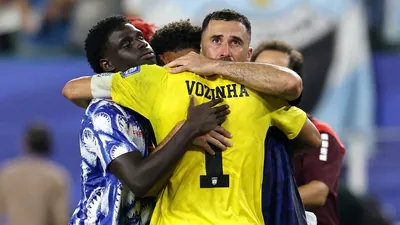
The Cabo Verde World Cup 2026 story is far more than a tale of a small nation exceeding expectations. It is a powerful reminder that modern football is no longer defined solely by population size, financial resources, or historical success. In a tournament dominated by global superpowers, the island nation of just over 500,000 people emerged as one of the most captivating stories of FIFA World Cup 2026.
Making their first-ever World Cup appearance, Cabo Verde entered the tournament with little international attention. By the time their campaign ended in a dramatic extra-time defeat against defending champions Argentina, they had earned something far more valuable than a quarter-final place: the admiration of football fans across the world.
From frustrating elite teams in the group stage to pushing Lionel Messi’s Argentina to the absolute limit, Cabo Verde demonstrated that football’s greatest strength remains its unpredictability. Their journey has already become one of the defining narratives of the expanded 48-team World Cup era.
Why Cabo Verde’s World Cup Run Matters Beyond Football
Every World Cup produces surprise packages, but few stories compare to Cabo Verde’s achievement in 2026.
For decades, international football has been dominated by nations with large populations, established leagues, extensive infrastructure, and deep talent pools. Conventional wisdom suggests that success on the biggest stage requires decades of investment and millions of potential players.
Cabo Verde challenged that assumption.
Despite having a population smaller than many cities around the world, the nation not only qualified for the World Cup but also competed fearlessly against some of football’s most decorated teams. Their performances highlighted an important truth: intelligent planning, strong team culture, and tactical discipline can often compensate for limitations in size and resources.
Their success also validated FIFA’s decision to expand the World Cup. Critics argued that additional spots would reduce competitiveness, but Cabo Verde’s campaign provided evidence that emerging football nations can enrich the tournament with fresh stories and genuine quality.
Cabo Verde’s Path to Global Recognition
The team’s journey did not begin in North America during the World Cup. It was the result of years of strategic development, careful planning, and patience.
Unlike many smaller football nations that struggle to maintain continuity, Cabo Verde committed to a long-term vision. Rather than chasing quick fixes, the federation focused on creating a sustainable model capable of competing internationally.
That approach eventually transformed the national team from an occasional underdog into one of Africa’s fastest-rising football programs.
Key Milestones in Cabo Verde’s Rise
| Year | Development | Impact |
|---|---|---|
| 2020 | Bubista appointed head coach | Provided tactical stability and long-term direction |
| 2023 | Strong Africa Cup of Nations campaign | Established credibility against major African nations |
| 2024-2025 | Continued squad integration | Improved chemistry and depth |
| 2026 | Qualified for first World Cup | Historic achievement for the nation |
| 2026 | Reached knockout stage | Earned global recognition |
The Diaspora Model That Changed Everything
One of the most fascinating aspects of Cabo Verde’s success is the way it embraced its global diaspora.
Like many island nations, Cabo Verde has a large overseas community spread across Europe and other regions. Rather than viewing this as a challenge, football officials turned it into a competitive advantage.
The national team successfully united players developed in different football cultures while maintaining a strong national identity. Many squad members were born and trained outside Cabo Verde, bringing valuable experience from competitive European systems.
This blend of backgrounds created a unique footballing identity. Players combined technical education from European academies with a deep emotional connection to representing their ancestral homeland.
The result was a squad capable of competing against nations with far greater resources.
The Bubista Effect: Why Stability Matters
In modern international football, coaching changes often occur after every disappointing result. Cabo Verde chose a different path.
Head coach Bubista was given time to implement his ideas and build a culture within the squad. That patience paid significant dividends.
Under his leadership, the team developed several defining characteristics:
- Strong defensive organization.
- Collective discipline.
- Efficient transitions.
- Mental resilience.
- Confidence against stronger opponents.
Perhaps most importantly, players fully understood their roles. While many larger nations rely heavily on individual brilliance, Cabo Verde succeeded through collective execution.
The team’s performances demonstrated how coaching continuity can become a competitive advantage in international tournaments.
The Group Stage That Shocked the Football World
Cabo Verde’s arrival on football’s biggest stage immediately attracted attention.
Their opening performances suggested they were not merely participating—they were competing.
Holding Spain to a draw represented the first major statement. Against one of the world’s most technically gifted teams, Cabo Verde displayed remarkable defensive discipline and tactical awareness.
They followed that performance by continuing to frustrate highly regarded opponents throughout the group stage.
What impressed observers most was not simply the results but the manner in which they were achieved. Cabo Verde looked comfortable, organized, and fearless.
At no point did they appear overwhelmed by the occasion.
Vozinha: From Working-Class Roots to World Cup Hero
Every great football story needs a hero, and for Cabo Verde that figure was goalkeeper Vozinha.
Before the tournament, many football fans were unfamiliar with his journey. By the end of the World Cup, he had become one of its most celebrated personalities.
His story resonates because it reflects perseverance rather than privilege.
Long before becoming a World Cup goalkeeper, Vozinha worked as a bus driver and electrician while pursuing his football ambitions. Unlike many modern stars who emerge through elite academy systems, his path required balancing professional responsibilities with sporting dreams.
That background made his performances on the world stage even more remarkable.
Against Argentina, he delivered one of the tournament’s defining goalkeeping displays, repeatedly denying elite attackers and keeping his nation’s hopes alive.
Why Vozinha Became a Global Fan Favorite
- Inspiring personal journey.
- Outstanding performances under pressure.
- Leadership and composure.
- Resilience against elite opposition.
- Representation of football’s underdog spirit.
How Cabo Verde Nearly Produced One of the Greatest World Cup Upsets Ever
Facing Argentina in the knockout stage appeared to be an impossible challenge.
The defending champions possessed greater depth, experience, and individual talent. Most predictions favored a comfortable Argentine victory.
Cabo Verde had other ideas.
From the opening minutes, they demonstrated extraordinary belief. They disrupted Argentina’s rhythm, limited space in key areas, and refused to be intimidated by the occasion.
Although Lionel Messi opened the scoring, Cabo Verde remained composed. Rather than retreating defensively, they continued competing aggressively and gradually grew into the contest.
The equalizer transformed the atmosphere. Suddenly, the underdogs began believing that one of the greatest shocks in World Cup history might actually be possible.
The Match That Defined Their Legacy
The knockout clash evolved into far more than a football match. It became a symbol of what sport can achieve.
Every time Argentina appeared ready to pull away, Cabo Verde responded.
Every setback was met with renewed determination.
When Argentina regained the lead in extra time, many teams would have accepted defeat. Instead, Cabo Verde produced one of the most memorable moments of the tournament with a stunning equalizer that reignited their dream.
Even after eventually conceding the decisive goal, they continued attacking until the final whistle.
That refusal to surrender ultimately defined their World Cup campaign.
The Hidden Lesson Competitors Are Missing
Much of the discussion surrounding Cabo Verde has focused on emotion and inspiration. While those elements matter, there is a deeper lesson hidden beneath the headlines.
Their success was not a miracle.
It was the product of strategy.
Many football observers continue to describe smaller nations’ achievements as surprises, but Cabo Verde’s rise demonstrates that intelligent planning can narrow the gap between football’s elite and emerging nations.
The combination of coaching stability, diaspora integration, player development, and organizational patience created a foundation capable of competing internationally.
In many ways, Cabo Verde offers a blueprint for other developing football nations seeking sustainable progress.
What Their Success Means for African Football
Cabo Verde’s World Cup campaign also represents a significant moment for African football.
For years, discussions about African success at major tournaments have focused primarily on traditional powers. Cabo Verde’s emergence expands that conversation.
Their performances illustrate the growing depth of talent across the continent and highlight the increasing competitiveness of African football programs.
As investment, coaching education, and international exposure continue to improve, more nations may follow similar paths in future tournaments.
The long-term impact of Cabo Verde’s achievement could extend far beyond a single World Cup.
The Future Looks Brighter Than Ever
The most encouraging aspect of Cabo Verde’s story is that it may only be the beginning.
Unlike teams built around a single generation, their success appears rooted in structures capable of producing long-term growth.
The increased visibility generated by the World Cup is likely to inspire greater participation among young players, attract additional investment, and strengthen football development initiatives throughout the country.
Future generations will grow up believing that competing with football’s biggest nations is possible because they have already witnessed it happen.
Conclusion: More Than an Underdog Story
The Cabo Verde World Cup 2026 journey will be remembered as one of the tournament’s defining stories. A nation of just over 500,000 people not only qualified for its first FIFA World Cup but also challenged some of the sport’s most powerful teams and pushed defending champions Argentina to the limit.
Beyond the results, Cabo Verde demonstrated the values that make football the world’s most beloved sport: belief, resilience, teamwork, and hope. Their campaign proved that success is not determined solely by population size, financial power, or historical pedigree.
Although their World Cup dream ended in heartbreak, they left with something equally significant. They earned global respect, inspired countless fans, and provided a blueprint for smaller nations around the world.
Years from now, when football fans look back at FIFA World Cup 2026, they may remember the champions. But they will also remember Cabo Verde—the tiny nation with a mighty heart that refused to stop dreaming.
For breaking news and live news updates, like us on Facebook or follow us on Twitter and Instagram. Read more on Latest Sports on thefoxdaily.com.






COMMENTS 0