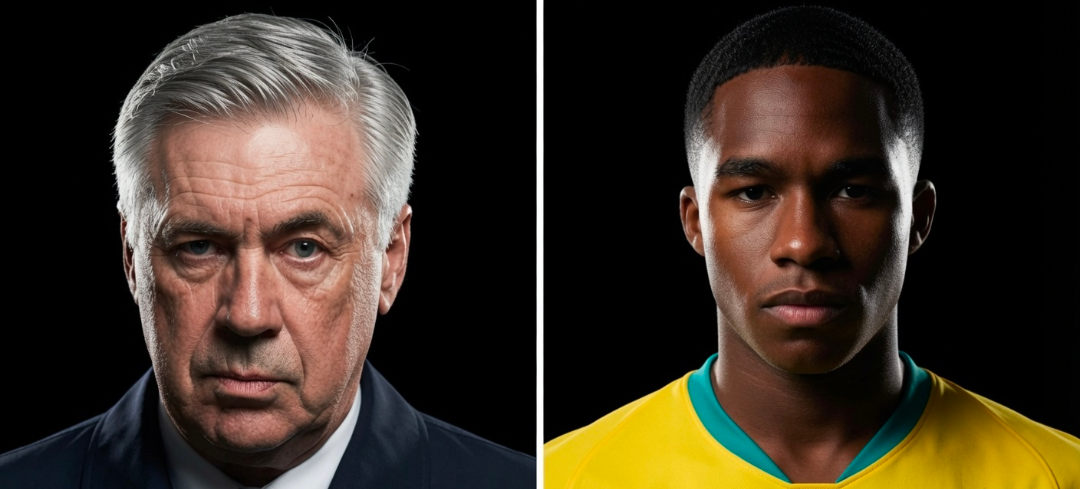
The debate surrounding Endrick’s role in Brazil’s 2026 FIFA World Cup campaign has intensified after head coach Carlo Ancelotti addressed growing calls from supporters demanding the teenage striker’s inclusion in the starting lineup. Following Brazil’s underwhelming opening match against Morocco, many fans expected the highly-rated youngster to play a more prominent role. However, Ancelotti has made it clear that he will not allow public opinion to dictate his team selection.
As Brazil prepares for its crucial group-stage encounter against Haiti, the conversation surrounding Endrick highlights a broader challenge facing elite national teams: balancing immediate tournament success with the development of extraordinary young talents.
Primary Keyword: Endrick Brazil FIFA World Cup 2026
Related Keywords: Carlo Ancelotti Brazil, Endrick World Cup squad, Brazil vs Haiti, Neymar injury update, Brazil FIFA World Cup 2026, Matheus Cunha Brazil, Igor Thiago Brazil, Brazil starting lineup, Endrick future, Brazil World Cup analysis
The Growing Calls for Endrick’s Inclusion
Few young footballers have generated as much excitement in recent years as Endrick. The 19-year-old forward entered the World Cup carrying immense expectations after an impressive second half of the club season and a match-winning performance in Brazil’s pre-tournament friendly against Egypt.
His decisive goal in that friendly further fueled belief among supporters that he could provide the attacking spark Brazil needs during the tournament.
When Endrick remained on the bench throughout Brazil’s opening 1-1 draw against Morocco, criticism quickly emerged across social media and football discussions. Many supporters argued that his pace, unpredictability, and finishing ability could help unlock stubborn defenses.
Yet Ancelotti’s response suggests that the situation is far more complex than simply selecting the most exciting young player available.
Carlo Ancelotti’s Philosophy: Development Over Hype
One of the defining characteristics of Carlo Ancelotti’s coaching career has been his ability to manage elite talent patiently. Across decades of success at club and international level, the Italian manager has consistently prioritized player readiness over external pressure.
His comments regarding Endrick reflect that philosophy.
Rather than rushing the teenager into a starting role because of public demand, Ancelotti appears focused on introducing him at moments that maximize both his effectiveness and confidence.
This approach has become increasingly important in modern football, where young players often face enormous expectations before they have fully developed physically, tactically, and mentally.
History offers numerous examples of highly talented prospects whose careers suffered because they were pushed into the spotlight too quickly. Ancelotti’s cautious management suggests he is determined to avoid that scenario.
Why Endrick Is Different from Brazil’s Other Strikers
During his media interaction, Ancelotti outlined the distinct qualities of Brazil’s three primary attacking options.
According to the coach, Matheus Cunha provides greater versatility and contributes significantly to overall team play. His movement allows him to operate almost as an attacking midfielder while still offering a goal threat.
Igor Thiago brings a different profile altogether. His physical strength, aggressive pressing, and ability to compete in aerial duels make him particularly valuable against physically demanding opponents.
Endrick, however, represents something unique.
Unlike traditional strikers, his game revolves around explosive acceleration, instinctive finishing, and the ability to create opportunities from seemingly impossible situations. These qualities make him difficult to categorize and potentially devastating against tiring defenses.
That uniqueness may explain why Ancelotti is carefully considering when and how to use him.
Brazil’s World Cup Start Raises Questions
Brazil entered the 2026 FIFA World Cup as one of the favorites to lift the trophy. However, their opening performance against Morocco failed to meet expectations.
The 1-1 draw exposed several issues, including a lack of attacking sharpness and difficulties breaking down organized defensive structures.
While a single group-stage result rarely defines a tournament, it has increased scrutiny on team selection decisions and tactical adjustments.
As a result, Endrick’s absence from the opening match has become one of the most discussed topics surrounding Brazil’s campaign.
Brazil’s Current Attacking Situation
The situation is further complicated by uncertainty surrounding Neymar’s fitness.
The veteran forward was included in the squad despite suffering a calf injury shortly before the tournament. Reports indicate that he remains unavailable for Brazil’s upcoming match against Haiti and has only recently begun individual recovery work.
Neymar’s absence removes one of Brazil’s most creative attacking players, increasing pressure on the remaining forwards to deliver.
Without their experienced playmaker, Brazil may need greater unpredictability in the final third—an area where Endrick’s skill set could become increasingly valuable.
What Makes Endrick Such a Special Prospect?
Football scouts and analysts have long regarded Endrick as one of the most promising talents of his generation.
Several attributes separate him from many young forwards:
- Exceptional acceleration over short distances.
- Natural goal-scoring instincts.
- Strong decision-making in attacking situations.
- Confidence under pressure.
- Ability to create chances independently.
- Technical quality in tight spaces.
These characteristics explain why supporters are eager to see him feature on football’s biggest stage.
However, elite tournaments often require tactical discipline and emotional maturity in addition to raw talent, factors that Ancelotti is likely considering when making selection decisions.
Could Haiti Be the Perfect Opportunity?
Brazil’s next group-stage match against Haiti presents an intriguing possibility.
On paper, Brazil enter the contest as overwhelming favorites. Haiti suffered defeat in their opening fixture and will likely adopt a defensive approach aimed at frustrating the five-time world champions.
Such a scenario could create an ideal environment for Endrick to gain valuable World Cup experience.
Whether he starts or appears as a substitute, the match offers an opportunity to evaluate how the teenager handles tournament football under pressure.
It would also allow Ancelotti to gradually integrate him into the squad without placing excessive expectations on his shoulders.
The Bigger Picture: Building for the Entire Tournament
One reason managers sometimes resist public pressure is that supporters often focus on the next match, while coaches must think about the entire tournament.
The FIFA World Cup is a marathon rather than a sprint. Teams that progress deep into the competition frequently play seven matches within a relatively short period.
Managing player fitness, confidence, tactical flexibility, and squad depth becomes crucial.
Ancelotti may believe that preserving Endrick’s freshness and introducing him strategically later in the tournament could yield greater benefits than starting him immediately.
Comparison: How Previous Brazilian Talents Were Introduced
Brazil has a long history of producing extraordinary young footballers, but not all of them became instant starters at major tournaments.
| Player | Early Tournament Role | Long-Term Impact |
|---|---|---|
| Ronaldo | Limited involvement initially | Became one of football’s greatest strikers |
| Ronaldinho | Gradual integration | World Cup winner and global icon |
| Neymar | Developed progressively | Brazil’s modern attacking leader |
| Endrick | Currently being managed carefully | Potential future cornerstone of Brazil |
This historical perspective suggests patience is often part of Brazil’s approach to nurturing elite talent.
Expert Insight: Fan Expectations vs Managerial Responsibility
Supporters naturally want to see exciting players on the field, especially when results fall short of expectations. However, managers operate with access to training data, fitness information, tactical planning, and psychological assessments that are not visible to the public.
What may appear to fans as an obvious selection decision can be significantly more complicated behind the scenes.
Ancelotti’s track record suggests that his decisions are typically driven by long-term strategy rather than short-term popularity.
Prediction: Endrick’s Role Will Grow as the Tournament Progresses
While Endrick may not immediately become a regular starter, there are strong reasons to believe his involvement will increase as the tournament advances.
Several factors support this possibility:
- Neymar’s ongoing injury concerns.
- Brazil’s need for attacking unpredictability.
- Endrick’s strong recent form.
- His ability to change games as a substitute.
- Potential rotation during the group stage.
If he performs well during his opportunities, the teenager could emerge as one of the breakout stars of the 2026 FIFA World Cup.
Conclusion
Carlo Ancelotti’s refusal to bow to public pressure over Endrick’s selection demonstrates the careful balancing act required in modern international football. While supporters are eager to see one of Brazil’s brightest young talents take center stage, the experienced coach remains focused on managing the teenager’s development within the broader context of a World Cup campaign.
With Neymar sidelined, Brazil searching for greater attacking fluency, and crucial matches still ahead, Endrick’s moment will likely come sooner rather than later. The real question is not whether he will play, but whether his eventual introduction could become one of the defining stories of Brazil’s quest for a sixth World Cup title.
For breaking news and live news updates, like us on Facebook or follow us on Twitter and Instagram. Read more on Latest Sports on thefoxdaily.com.






COMMENTS 0