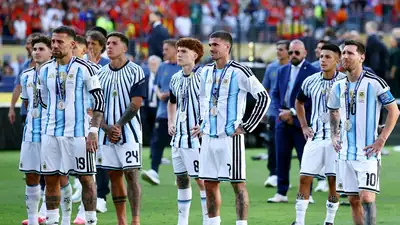
The FIFA World Cup 2026 final delivered a dramatic conclusion to one of the most watched sporting events on the planet. Spain defeated Argentina 1-0 after extra time, reclaiming football’s greatest prize and securing their second World Cup title. However, while Spain celebrated a historic triumph, much of the conversation after the final shifted away from tactics and performances toward the conduct of Argentina during the trophy presentation ceremony.
Criticism emerged after reports suggested that several Argentine players did not acknowledge Spain’s celebrations in the traditional manner expected after major international finals. The incident quickly became one of the most discussed talking points of the tournament, generating intense reactions from broadcasters, football analysts, former players, and supporters worldwide.
Beyond the immediate controversy, the episode highlights a larger issue in modern sport: where should the line be drawn between emotional disappointment and sportsmanship after a crushing defeat?
What Happened After the FIFA World Cup 2026 Final?
Spain’s victory came courtesy of a decisive extra-time goal from Ferran Torres, ending Argentina’s hopes of retaining football’s most prestigious trophy.
The final whistle produced contrasting emotions. Spanish players celebrated one of the greatest achievements of their careers, while Argentine players struggled to process the heartbreak of losing a World Cup final.
Attention quickly shifted to the medal and trophy presentation ceremony. According to multiple reports and broadcast observations, Spain formed a guard of honour as Argentina’s players collected their silver medals. However, criticism followed when Argentina reportedly did not return a similar gesture during Spain’s trophy celebrations.
Television footage and social media clips rapidly spread across the internet, turning what might have been a minor moment into a global discussion.
Why Sportsmanship Matters in Major Finals
One reason the controversy gained so much attention is that major sporting events often serve as showcases not only of athletic excellence but also of character.
Throughout football history, some of the most memorable moments have occurred after matches rather than during them.
- Players consoling opponents after heartbreaking defeats.
- Teams applauding champions despite disappointment.
- Captains congratulating rivals moments after losing titles.
- Mutual respect displayed during trophy ceremonies.
These gestures resonate because they demonstrate respect for competition itself. Fans often remember such moments long after the final score is forgotten.
As a result, any perceived deviation from those traditions tends to attract significant scrutiny.
The Emotional Reality of Losing a World Cup Final
While criticism has been widespread, understanding the emotional context is equally important.
Losing a World Cup final is arguably one of the most painful experiences in professional sport. Players spend years preparing for the opportunity, often sacrificing personal time, enduring injuries, and carrying the expectations of millions of supporters.
When defeat arrives after such a journey, emotional reactions can be unpredictable.
Some athletes immediately congratulate opponents. Others require time to process disappointment before engaging in celebrations around them.
This reality explains why post-match behavior should be evaluated with an understanding of the immense psychological pressure involved.
Lionel Messi’s Emotional Moment Symbolized Argentina’s Heartbreak
Much of the attention after the final focused on Lionel Messi.
Images of an emotional Messi quickly circulated worldwide, symbolizing the devastation felt by Argentina’s squad and supporters. Whether or not this was his final World Cup appearance, the defeat represented another significant chapter in one of football’s most celebrated careers.
For many fans, Messi’s visible disappointment highlighted why emotions may have overwhelmed protocol during the trophy presentation.
The scenes reinforced a fundamental truth about elite sport: even legendary players are not immune to heartbreak.
Spain’s Triumph Risks Being Overshadowed
One of the unfortunate consequences of the controversy is that it threatens to distract from Spain’s achievement.
The Spanish team produced a disciplined tournament campaign built on tactical organization, defensive stability, midfield control, and crucial contributions from key players.
Instead of focusing entirely on Spain’s footballing success, much of the post-final discussion shifted toward the behavior of the defeated side.
This is a recurring phenomenon in modern sport, where off-field narratives can sometimes dominate headlines more than the match itself.
How Social Media Amplified the Debate
In previous World Cups, such incidents might have generated limited discussion. In today’s digital environment, every gesture is analyzed frame by frame.
Within minutes of the final, clips from the trophy ceremony spread across multiple platforms, generating millions of views and reactions.
Social media tends to intensify sporting controversies because:
- Short clips often remove broader context.
- Emotional reactions spread faster than nuanced analysis.
- Supporters interpret incidents through team loyalties.
- Algorithms amplify controversial content.
- Global audiences participate instantly.
As a result, debates that once lasted hours can now dominate international discussions for days.
Comparing Historic World Cup Final Reactions
Football history offers numerous examples of how teams have reacted after losing major finals.
| Situation | Typical Reaction | Public Response |
|---|---|---|
| Immediate congratulations | Players acknowledge champions | Generally praised |
| Visible emotional distress | Tears and disappointment | Usually understood |
| Limited interaction | Players keep distance | Mixed reactions |
| Unsporting incidents | Arguments or confrontations | Often criticized |
| Guard of honour gestures | Public acknowledgment of winners | Highly respected |
The challenge is that public expectations often vary depending on the context, emotions involved, and the visibility of the incident.
The Criticism Directed at Argentina
Several broadcasters and commentators strongly criticized Argentina’s behavior after the final.
The criticism centered on the perception that the team failed to fully acknowledge Spain’s achievement despite receiving respectful treatment during the medal ceremony.
Some analysts argued that elite athletes should demonstrate grace regardless of disappointment, particularly during globally televised events watched by millions of young supporters.
Others viewed the incident as a reflection of frustration rather than intentional disrespect.
This division of opinion illustrates why the controversy remains a topic of debate rather than a universally accepted judgment.
Did Argentina Benefit From Decisions During the Tournament?
Another aspect of the debate involves claims regarding Argentina’s path to the final.
Critics argued that favorable moments, controversial decisions, and circumstances during earlier knockout rounds contributed to the team’s progress.
However, such arguments are common in major tournaments and often emerge whenever a high-profile team reaches the latter stages of competition.
The reality is that every World Cup campaign includes moments of fortune, adversity, refereeing debates, and narrow margins. Successful teams typically benefit from some favorable moments while overcoming significant challenges of their own.
Ultimately, tournament history tends to remember results far more than individual controversies.
What This Means for Argentina Moving Forward
For Argentina, the immediate priority will be recovering from the disappointment and evaluating the future direction of the national team.
Several important questions now emerge:
- How will the squad evolve after this World Cup cycle?
- What role will experienced players continue to play?
- How quickly can emerging talents step into leadership positions?
- What lessons can be learned from the final defeat?
History shows that some of football’s strongest teams have emerged from painful defeats. The response to adversity often defines a generation more than the defeat itself.
A Bigger Lesson About Modern Football Culture
The controversy also highlights a broader challenge facing modern football.
Players today operate under unprecedented scrutiny. Every reaction, facial expression, and gesture is analyzed by cameras, social media users, broadcasters, and fans worldwide.
This environment creates enormous pressure not only to perform but also to behave according to constantly evolving public expectations.
While professionalism remains essential, it is equally important to remember that athletes are human beings experiencing intense emotions in real time.
Conclusion: A Final That Will Be Remembered for More Than Football
Spain deservedly celebrated a historic FIFA World Cup 2026 triumph after defeating Argentina in a hard-fought final. Yet the discussion surrounding the trophy presentation demonstrates how quickly sporting narratives can evolve beyond the match itself.
The criticism directed at Argentina has sparked a global conversation about sportsmanship, emotional resilience, and the expectations placed upon athletes after devastating defeats.
Whether one views the incident as poor sportsmanship or an understandable emotional reaction, the debate underscores football’s unique ability to generate passionate discussion long after the final whistle.
As attention gradually shifts toward the next chapter for both nations, Spain will be remembered as world champions. Argentina, meanwhile, faces the challenge that every great football nation eventually encounters: transforming heartbreak into motivation for future success.
For breaking news and live news updates, like us on Facebook or follow us on Twitter and Instagram. Read more on Latest Sports on thefoxdaily.com.






COMMENTS 0