For nearly two decades, Cristiano Ronaldo has shattered records, collected trophies, and produced unforgettable moments on football’s biggest stages. Yet one statistic continued to follow him throughout his legendary international career: he had never scored in a FIFA World Cup knockout match.
That narrative finally changed at FIFA World Cup 2026.
In Portugal’s dramatic Round of 32 encounter against Croatia, Ronaldo converted a crucial second-half penalty to score his first-ever World Cup knockout goal, ending one of the most discussed anomalies in modern football. The strike not only helped Portugal recover from a difficult position but also added another historic milestone to a career already overflowing with achievements.
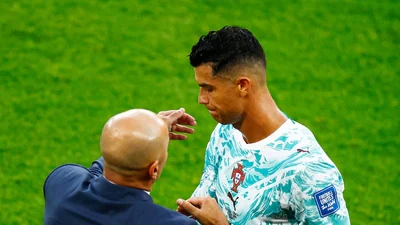
However, the story did not end there. Just minutes after scoring, Ronaldo was substituted by Portugal manager Roberto Martinez, creating another talking point that immediately dominated post-match discussions.
As Portugal progressed to the Round of 16, Ronaldo’s historic goal may prove to be one of the defining moments of the tournament.
Why Ronaldo’s World Cup Knockout Goal Matters So Much
Few players have faced scrutiny quite like Cristiano Ronaldo. Despite winning multiple Ballon d’Or awards, Champions League titles, European Championships, and setting international scoring records, critics often pointed to one missing achievement: a decisive goal in the knockout stages of the FIFA World Cup.
Before facing Croatia, Ronaldo had played eight World Cup knockout matches without registering either a goal or an assist.
For most players, such a statistic would be irrelevant. For Ronaldo, whose career standards are measured against football immortality, it became a recurring topic whenever World Cup performances were analyzed.
The penalty against Croatia finally erased that conversation.
More importantly, it arrived in a high-pressure situation when Portugal desperately needed a response after falling behind early in the second half.
How the Match Unfolded
Portugal entered the knockout clash as favorites but found themselves frustrated despite controlling possession for large periods of the contest.
The Portuguese side dominated the ball and created pressure, yet Croatia remained disciplined defensively and looked increasingly dangerous on the counterattack.
The breakthrough came after halftime when veteran Croatian star Ivan Perisic capitalized on a dangerous attacking move to give Croatia the lead.
Suddenly, Portugal faced the possibility of an early exit.
With tension building, the turning point arrived when defender Renato Veiga was brought down inside the penalty area during a set-piece situation.
The referee pointed immediately to the spot.
There was little doubt about who would take responsibility.
Ronaldo stepped forward and calmly converted the penalty, sending the goalkeeper the wrong way and leveling the score.
The finish was vintage Ronaldo—composed, clinical, and delivered under immense pressure.
A Record-Breaking Goal in More Ways Than One
The significance of the goal extended far beyond simply helping Portugal stay alive in the tournament.
It added several historic achievements to Ronaldo’s remarkable résumé.
- First FIFA World Cup knockout-stage goal.
- 11th World Cup goal overall.
- Third goal of FIFA World Cup 2026.
- Oldest goalscorer in World Cup history.
- 146th international goal for Portugal.
- First player to score 25 combined goals across FIFA World Cups and UEFA European Championships.
These records further strengthen Ronaldo’s case as one of the most accomplished international footballers ever.
While debates about the greatest player in football history will always continue, statistics of this magnitude ensure Ronaldo remains central to those conversations.
The Curious Decision to Substitute Ronaldo
One of the most intriguing moments came after the goal.
In the 81st minute, Portugal manager Roberto Martinez made a decision that surprised many observers by substituting Ronaldo before full time.
It marked the first occasion during the 2026 World Cup that Ronaldo failed to complete the entire match.
The forward appeared visibly disappointed, a reaction that reflected both his competitive nature and desire to remain involved in crucial moments.
Yet from a tactical perspective, the decision may have made sense.
At 41 years old, managing Ronaldo’s workload has become increasingly important, particularly in a tournament environment where recovery time between matches is limited.
Portugal were also preparing for a potentially exhausting Round of 16 encounter against Spain, making squad management a critical consideration.
Martinez’s decision may ultimately be viewed as pragmatic rather than controversial.
The Bigger Question: Is Ronaldo Still Portugal’s Best Option?
Despite his historic goal, the debate surrounding Ronaldo’s role within Portugal’s starting lineup continues.
His supporters point to the numbers.
Three goals at the tournament, a decisive knockout strike, and an unmatched record of international scoring suggest he remains capable of influencing games at the highest level.
Critics, however, focus on his overall involvement.
Against Croatia, Ronaldo’s penalty represented his only touch inside the opposition penalty area during his 81 minutes on the field.
That statistic highlights an ongoing challenge.
While Ronaldo remains an elite finisher, Portugal must determine whether maximizing his goalscoring threat outweighs potential limitations in pressing intensity, movement, and overall contribution outside the box.
This is not an unusual dilemma.
Many legendary athletes reach a stage where teams must adapt systems around their strengths.
Portugal appears to be navigating exactly that situation.
From Group Stage Struggles to Knockout Redemption
Ronaldo’s tournament journey has been far from straightforward.
The campaign began with criticism following a disappointing performance against DR Congo.
Questions quickly emerged regarding whether Portugal should continue building its attack around a player in his forties.
Ronaldo responded emphatically.
He scored twice against Uzbekistan and reminded the football world why writing him off has historically been a dangerous mistake.
His memorable declaration—”I’m back”—quickly became one of the tournament’s most discussed quotes.
Yet inconsistency remained.
He failed to score against Colombia and again struggled to influence portions of the Croatia match.
The penalty, however, transformed perceptions.
In knockout football, decisive moments often matter more than sustained dominance.
Ronaldo delivered one when Portugal needed it most.
How Portugal Benefits from Ronaldo’s Presence Beyond Goals
Evaluating Ronaldo purely through statistics can sometimes overlook his broader impact.
Even when not directly involved, defenders devote enormous attention to tracking his movement.
His presence creates psychological pressure and alters defensive structures.
Teammates often benefit from the additional space generated by opponents focusing on Ronaldo.
His leadership experience also remains valuable.
Few active players have participated in as many major international tournaments.
That experience becomes increasingly important during knockout football, where emotions and pressure can overwhelm younger players.
Portugal’s squad contains significant talent, but Ronaldo continues to provide a unique combination of leadership, confidence, and winning mentality.
The Spain Challenge Looms Large
Portugal’s reward for defeating Croatia is a highly anticipated Round of 16 showdown against Spain.
The matchup immediately becomes one of the most attractive fixtures of the tournament.
Historically, encounters between the Iberian rivals have produced memorable moments, tactical battles, and enormous pressure.
Spain enters the match as one of the strongest teams remaining in the competition, boasting technical quality, midfield control, and impressive squad depth.
Portugal, meanwhile, possesses a blend of experience and attacking firepower capable of troubling any opponent.
For Ronaldo, the game presents another opportunity to strengthen his World Cup legacy.
A decisive contribution against Spain would elevate his knockout-stage breakthrough into something even more significant.
What This Goal Means for Ronaldo’s Legacy
Legacies are rarely defined by a single moment, especially for players who have already achieved extraordinary success.
Yet certain milestones carry symbolic importance.
Ronaldo’s first World Cup knockout goal belongs in that category.
For years, critics used the absence of such a goal to question aspects of his international record.
That argument no longer exists.
The goal against Croatia may not rank alongside his greatest achievements, but it closes one of the final statistical gaps in an unparalleled career.
It also serves as a reminder of something football fans have witnessed repeatedly over the past two decades: Ronaldo’s ability to respond when his relevance is questioned.
Conclusion
The Cristiano Ronaldo World Cup knockout goal against Croatia was far more than a routine penalty conversion. It ended a long-standing narrative, delivered another historic record, and helped Portugal continue its pursuit of World Cup glory.
While questions remain about his role, fitness, and long-term influence, Ronaldo once again demonstrated why he remains one of football’s most compelling figures. Even at 41 years old, he continues to produce moments capable of shaping tournaments and rewriting history.
Now, with Portugal preparing for a blockbuster Round of 16 clash against Spain, Ronaldo has an opportunity to build on his breakthrough and perhaps add another unforgettable chapter to one of the greatest careers the sport has ever seen.
For breaking news and live news updates, like us on Facebook or follow us on Twitter and Instagram. Read more on Latest Sports on thefoxdaily.com.




COMMENTS 0