The rapid expansion of legalized sports betting has transformed the landscape of American athletics, creating new revenue streams, sponsorship opportunities, and fan engagement tools. However, the growing influence of gambling has also introduced a challenge that college sports leaders can no longer ignore.
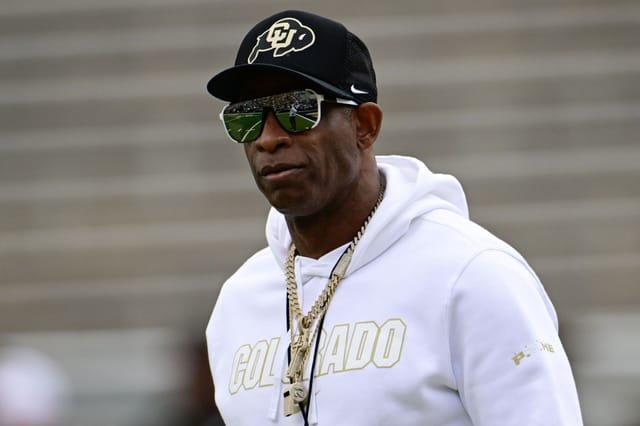
That challenge moved back into the spotlight after Colorado Buffaloes head coach Deion Sanders publicly addressed the ongoing controversy involving Texas Tech quarterback Brendan Sorsby.
Speaking to The Associated Press, Sanders made his position clear: while college athletics continue to evolve through name, image, and likeness (NIL) deals, transfer portal changes, and increased commercialization, betting on the sport in which an athlete competes crosses a line that should remain non-negotiable.
“Somebody’s gambling on a sport they’re playing? You don’t think something’s wrong with that? Just say that to yourself: This guy on my team is gambling on the sport, in the competition, that we’re about to go out there and have. Something’s wrong with that.”
His comments reflect growing concern across college athletics about whether existing rules and enforcement mechanisms can keep pace with a rapidly changing sports environment.
What Is the Brendan Sorsby Gambling Controversy?
The case centers on allegations that Sorsby placed bets involving the Indiana Hoosiers football program while he was a member of the team.
According to court filings, Sorsby allegedly made at least 40 wagers connected to Indiana athletics over a four-year period and reportedly used sportsbook accounts belonging to friends and family members.
The filings also claim that the total amount wagered approached $90,000.
After transferring from Cincinnati to Texas Tech, Sorsby reportedly continued gambling activity before later entering and completing a treatment program for gambling addiction.
The NCAA initially ruled him ineligible for the 2026 season. However, a preliminary injunction recently restored his eligibility while legal proceedings continue.
The NCAA has since filed an accelerated appeal, setting the stage for a legal battle that could extend well beyond the upcoming season.
Why Deion Sanders’ Comments Matter
Sanders has often positioned himself as one of college football’s most influential voices on reform.
He has advocated for major structural changes, including:
- Creating a commissioner system for college football
- Expanding the College Football Playoff
- Implementing a salary cap framework for NIL spending
- Increasing athlete protections and support systems
Despite his willingness to embrace change, Sanders views gambling involving active participants as fundamentally different.
“The game is still the game. The game is just positioned differently. Money’s involved, and any time money’s involved, people tend to migrate to what they think they can get out of it, instead of what they could put into it, and that’s unfortunate.”
His remarks underscore a growing concern that the commercialization of college sports could blur ethical boundaries if clear standards are not maintained.
The Collision Between Sports Betting and College Athletics
Over the past decade, legalized sports betting has expanded rapidly across the United States.
Professional leagues and collegiate conferences now partner with sportsbooks, while betting advertisements have become a routine part of sports broadcasts.
This shift has created a complicated reality for college athletes.
They compete in an environment where gambling promotions are everywhere, yet they remain prohibited from betting on their own sports.
Critics argue that this contradiction creates confusion, particularly for younger athletes navigating increased financial opportunities through NIL agreements.
Supporters of strict enforcement counter that the distinction is simple: preserving competitive integrity must remain the top priority.
| Issue | Current Reality | Potential Risk |
|---|---|---|
| Sports Betting Expansion | Legal in many U.S. states | Greater athlete exposure to gambling |
| NIL Compensation | Athletes earn significant income | Increased financial pressure and opportunity |
| Sportsbook Advertising | Common during broadcasts | Normalization of betting behavior |
| NCAA Restrictions | Athletes cannot bet on their sport | Enforcement challenges and legal disputes |
Why Betting on Your Own Sport Is Different
Sports governing bodies have long maintained strict rules regarding athlete gambling for one primary reason: preserving trust.
Fans, sponsors, broadcasters, and competitors must believe that every contest is conducted fairly.
Even if an athlete never attempts to influence an outcome, betting on games within their own sport creates the appearance of a conflict of interest.
That perception alone can damage public confidence.
Concerns extend beyond point-shaving or match-fixing.
College athletes often have access to sensitive information regarding injuries, team strategies, lineup changes, and locker room dynamics.
Any misuse of that information could undermine competitive balance.
This is why many sports organizations treat gambling violations as integrity issues rather than simple rule infractions.
The Legal Questions Surrounding Sorsby’s Eligibility
Sorsby’s temporary reinstatement has intensified debate over the NCAA’s authority and disciplinary processes.
Supporters of the injunction argue that athletes deserve due process and that penalties should account for factors such as addiction treatment and rehabilitation efforts.
Others believe restoring eligibility sends the wrong message at a time when college sports face growing scrutiny over gambling-related risks.
Colorado athletic director Fernando Lovo publicly criticized the ruling, arguing that the alleged actions represent a clear violation of long-standing standards.
Meanwhile, NCAA president Charlie Baker reportedly described the decision as a concerning precedent.
The outcome of the appeal could influence how future gambling cases are handled across college athletics.
Could This Case Reshape NCAA Gambling Policies?
The Sorsby controversy arrives at a pivotal moment for college sports governance.
As NIL rules evolve and legal challenges continue to reshape the NCAA’s authority, gambling policies may face increased scrutiny.
Future reforms could include:
- Enhanced education programs for athletes
- Mandatory gambling awareness training
- Expanded mental health resources
- Clearer guidelines for disciplinary action
- Stronger partnerships with integrity monitoring services
Experts increasingly believe prevention and education must play a larger role alongside enforcement.
Simply prohibiting gambling may not be enough in an environment where betting opportunities are more accessible than ever.
What the Brendan Sorsby Case Means for College Football
The controversy extends far beyond one player or one program.
It highlights a broader challenge facing college athletics: how to balance commercial growth with ethical responsibility.
College football has embraced major changes in recent years, including expanded player compensation, transfer freedom, and increased media revenues.
However, those developments have also introduced new complexities.
Deion Sanders’ comments resonate because they address a concern shared by many coaches and administrators: if athletes begin viewing competition primarily through a financial lens, the foundational principles of college sports could be compromised.
The sport’s credibility depends on maintaining boundaries that protect fair competition.
Conclusion
Deion Sanders has never shied away from difficult conversations, and his stance on the Brendan Sorsby gambling controversy leaves little room for ambiguity.
While he supports innovation and reform across college athletics, he believes betting on one’s own sport threatens the integrity that makes competition meaningful.
As the NCAA’s appeal moves forward, the case is likely to become a defining moment in the ongoing debate over gambling in college sports.
The central question extends beyond Brendan Sorsby’s future eligibility: can college football adapt to a new era of commercialization without compromising the trust that underpins every game?
For Sanders and many others across the sport, the answer must begin with protecting the integrity of competition above all else.
For breaking news and live news updates, like us on Facebook or follow us on Twitter and Instagram. Read more on Latest Sports on thefoxdaily.com.





COMMENTS 0