Few topics generate more discussion in Major League Baseball than the relationship between spending and winning. Every season, franchises invest hundreds of millions of dollars in player salaries with the expectation that financial muscle will translate into championships. Yet baseball’s history repeatedly shows that building a sustainable contender requires far more than writing large checks.
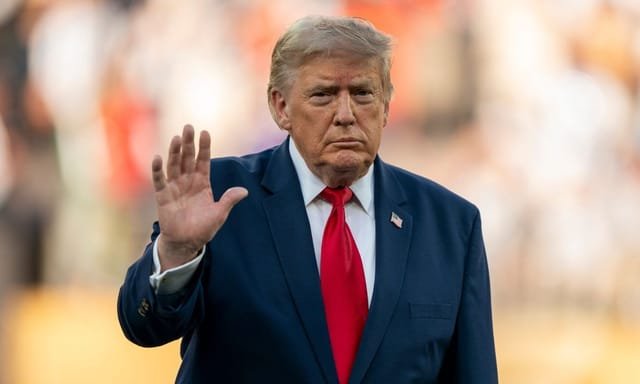
That debate resurfaced when US President Donald Trump publicly praised the Atlanta Braves organization while making comments that appeared to criticize the New York Mets’ high-spending approach. Speaking at an event in Cobb County, Trump highlighted the Braves’ ability to remain competitive year after year despite losing star players and facing challenges that might force other franchises into lengthy rebuilding phases.
His remarks quickly attracted attention across the baseball world because they touched on one of the sport’s most important questions: Is organizational excellence more valuable than financial power?
Donald Trump’s Comments Spark MLB Conversation
During his appearance, Trump pointed to the contrast between the Braves’ consistent success and the struggles experienced by teams with significantly larger payrolls.
While discussing Atlanta’s achievements, he specifically referenced the Mets’ expensive roster and questioned why massive spending does not always lead to sustained winning.
The comments were not simply about two rival National League organizations. Instead, they reflected a broader reality within modern baseball, where some of the most successful franchises have built winning cultures through strong scouting, player development, leadership, and long-term planning rather than relying exclusively on free-agent spending.
Whether fans agree with Trump’s assessment or not, his comments have reignited a conversation that has defined baseball strategy for decades.
Why the Atlanta Braves Continue to Be a Model Franchise
The Atlanta Braves have established themselves as one of baseball’s most respected organizations because of their ability to remain competitive across multiple eras.
Unlike franchises that cycle between championship windows and rebuilding periods, Atlanta has repeatedly found ways to refresh its roster while maintaining playoff ambitions.
Several factors contribute to that success:
- Strong player development systems.
- Effective scouting networks.
- Long-term roster planning.
- Financial discipline.
- Stable front-office leadership.
- Consistent organizational culture.
These elements allow the Braves to replace departing stars without completely resetting their competitive timeline.
Freddie Freeman’s Departure Tested Atlanta’s Philosophy
One of the most significant moments in recent Braves history came when franchise icon Freddie Freeman left for the Los Angeles Dodgers.
Freeman was not just a star player; he represented the identity of the organization for more than a decade. Losing a player of that caliber could have created long-term problems for many teams.
Instead, Atlanta adapted and continued competing at a high level.
This ability to recover from major roster changes is one reason many executives across professional sports view the Braves as an example of organizational resilience.
| Organizational Strength | Atlanta Braves Approach |
|---|---|
| Player Development | Continuous investment in prospects |
| Roster Management | Long-term planning and flexibility |
| Leadership | Stable executive structure |
| Competitive Strategy | Avoid prolonged rebuilding periods |
| Culture | Focus on sustainable success |
The New York Mets and the Payroll Debate
The Mets have frequently been at the center of baseball’s spending discussions.
With one of the sport’s largest payrolls, expectations naturally rise whenever the team enters a season.
However, baseball differs from many other professional sports because financial investment alone cannot guarantee results.
A 162-game season tests roster depth, player health, organizational decision-making and consistency over several months.
Even the most talented rosters can struggle if those factors do not align.
This reality explains why payroll rankings and standings often fail to mirror each other perfectly.
Can Money Buy Championships in Baseball?
The answer is more complicated than many fans assume.
Financial resources certainly provide advantages. Wealthier organizations can acquire elite talent, absorb expensive contracts and build deeper rosters.
However, history shows that championships typically require a combination of:
- Elite player development.
- Effective coaching.
- Strong clubhouse culture.
- Health and durability.
- Strategic roster construction.
- Postseason execution.
Several World Series champions have emerged from organizations that balanced spending with strong internal development systems.
The most successful teams rarely rely on only one strategy.
Mike Plant’s Role in Atlanta’s Success
A major focus of Trump’s comments was Braves CEO Mike Plant, whom he credited for helping maintain the organization’s stability.
Executives often operate behind the scenes and receive far less attention than players or managers. Yet leadership at the executive level can significantly influence a franchise’s long-term direction.
Strong executives help establish organizational priorities, oversee financial planning and create environments where baseball operations can thrive.
The praise directed toward Plant reflects the importance of leadership continuity in modern professional sports.
Brian Snitker and the Value of Consistent Leadership
Manager Brian Snitker has become synonymous with the Braves’ recent success.
His leadership style emphasizes accountability, player trust and clubhouse stability.
In an era where managerial changes occur frequently, Snitker’s longevity provides an important competitive advantage.
Players often perform better when expectations remain clear and organizational philosophy remains consistent.
The relationship between the front office and coaching staff is one of the key reasons Atlanta has remained among the National League’s most respected teams.
Why Sustained Success Is Harder Than Winning Once
Many franchises eventually experience a breakthrough season. Far fewer manage to remain contenders year after year.
Sustained success requires organizations to solve multiple challenges simultaneously:
- Replacing departing stars.
- Managing payroll efficiently.
- Developing young talent.
- Avoiding culture erosion.
- Adapting to league trends.
- Maintaining fan engagement.
The Braves have demonstrated an ability to navigate these challenges more effectively than many competitors.
This explains why they are frequently cited as a benchmark organization across professional sports.
The Dodgers Comparison: Another Blueprint for Success
Interestingly, Trump’s comments referenced Freddie Freeman’s move to the Dodgers, another organization widely praised for balancing spending and player development.
The Dodgers offer a useful comparison because they combine significant financial resources with one of baseball’s strongest talent pipelines.
Rather than choosing between spending and development, Los Angeles has successfully embraced both approaches.
| Team Model | Primary Strength |
|---|---|
| Atlanta Braves | Sustainable roster management |
| Los Angeles Dodgers | Spending plus elite development |
| High-Spending Teams | Financial flexibility |
| Small-Market Contenders | Efficiency and scouting |
This hybrid strategy increasingly represents the gold standard in modern baseball operations.
What the Braves’ Current Position Says About Their Future
Atlanta’s strong position near the top of the National League standings reinforces the idea that the organization remains firmly in its competitive window.
The ability to remain relevant despite roster turnover demonstrates that success is embedded within the franchise rather than dependent on a single player or season.
That distinction is crucial.
Championship organizations create systems capable of surviving change. Teams that rely too heavily on individual stars often face greater instability when those players depart or decline.
The Bigger Lesson for MLB Franchises
Perhaps the most important takeaway from the discussion surrounding Trump’s comments is that baseball success rarely comes from a single formula.
Financial investment matters.
Star players matter.
But organizational culture, leadership and development systems matter just as much.
The teams that consistently compete for championships are usually those that excel across multiple areas simultaneously.
The Braves have built a reputation for doing exactly that.
Conclusion
Donald Trump’s remarks about the Atlanta Braves and New York Mets have reignited one of baseball’s most enduring debates: whether spending or organizational excellence plays the bigger role in achieving success. While the Mets continue to demonstrate the power of financial investment, the Braves remain a compelling example of how leadership, culture and strategic planning can produce sustainable results.
Atlanta’s ability to remain competitive despite losing stars such as Freddie Freeman highlights the strength of its organizational foundation. Meanwhile, executives like Mike Plant and leaders like Brian Snitker continue to receive praise for helping maintain that stability.
As the 2026 MLB season progresses, the Braves once again find themselves among baseball’s strongest contenders. Their success serves as a reminder that while money can acquire talent, building a winning culture often determines whether that talent ultimately translates into championships.
For breaking news and live news updates, like us on Facebook or follow us on Twitter and Instagram. Read more on Latest Sports on thefoxdaily.com.





COMMENTS 0