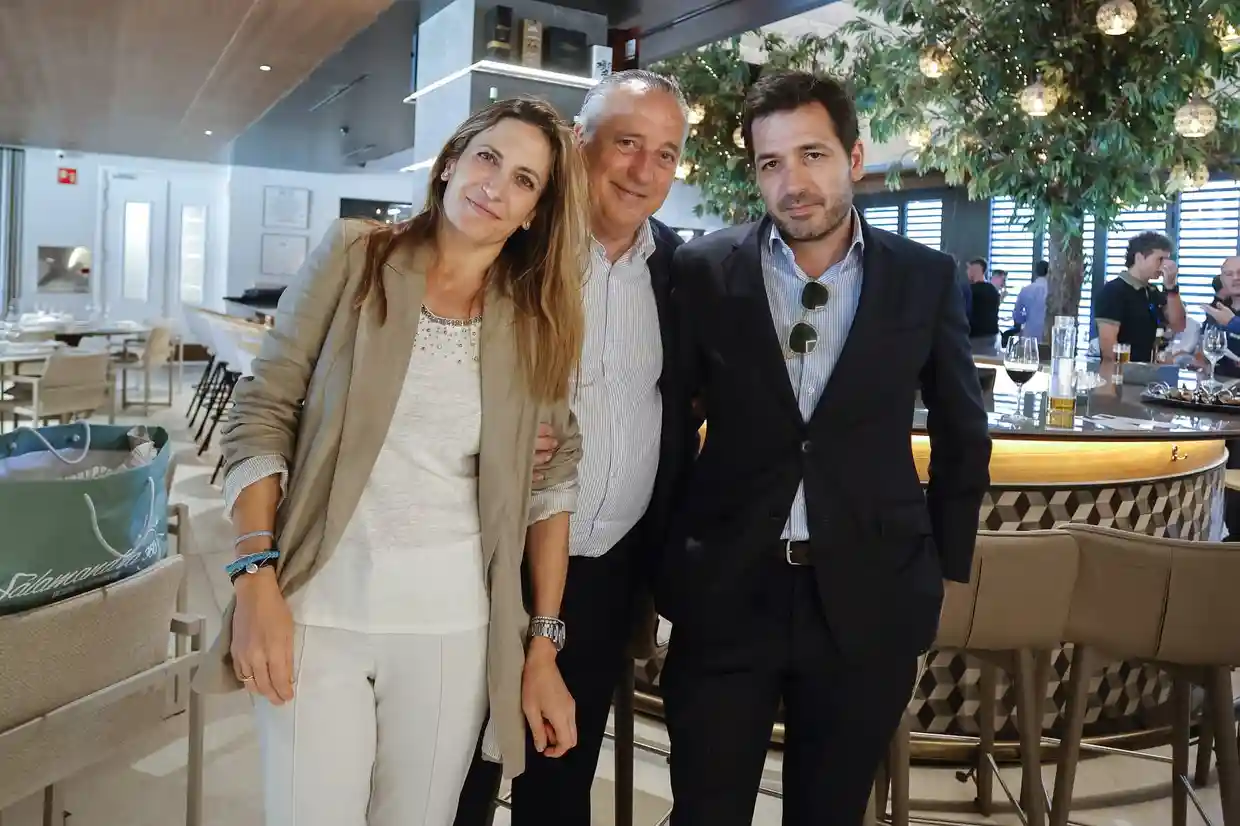
Villarreal president Fernando Roig has spent almost three decades transforming a modest Spanish football club into a respected force in European competition. Yet despite the remarkable journey, major victories, and unforgettable nights against some of the continent’s biggest teams, the 79-year-old has never learned to enjoy watching his side play. As Villarreal prepare to face Liverpool at Anfield in the Champions League, Roig admits that the anticipation brings more anxiety than excitement.
Now approaching his 30th year as president, Roig has overseen a transformation that once seemed almost impossible. Villarreal have progressed from a financially troubled second-division club with a small stadium and limited resources to a regular presence in European Football, winning the Europa League in 2021 and reaching the Champions League semi-finals on multiple occasions.
The upcoming meeting with Liverpool represents another milestone in that journey. For Roig, however, the occasion is also a reminder of the emotional cost of running a football club. More than 1,000 matches into his presidency, he remains unable to watch a game without worrying about the outcome.
Fernando Roig Admits He Still Suffers During Villarreal Matches
Roig’s relationship with matchday anxiety began long before Villarreal became a familiar name in European football. The first time he watched the team as president, they were playing in Spain’s second division at a small, partly empty ground. Villarreal lost 3-0 to Badajoz on a Sunday evening, offering little indication of the success that would follow.
Looking back, Roig remembers the experience as an early lesson in the pressures of football ownership. Although the club has changed dramatically since that night, his feelings during matches have remained remarkably consistent.
“I don’t get nervous. It’s worse: I get worried, very anxious,” Roig explains. “I suffer a lot.”
That anxiety will return when Villarreal travel to Anfield to face Liverpool. The fixture carries considerable emotional significance because of the clubs’ previous European meetings, including their Champions League semi-final encounters. For Roig, the match represents both the prestige Villarreal have achieved and the pressure that comes with competing against elite opposition.
His preparations will follow a familiar routine. He plans to attend the team’s morning training session, travel with the squad, share a meal with the group and experience the hospitality surrounding the fixture. He also intends to watch Villarreal’s under-19 team before the senior side takes to the pitch.
It is the senior match itself that he finds difficult to endure.
“I’ll watch the under-19s in the morning, that I do like. And then the game, which I don’t,” he says, describing the schedule surrounding the Liverpool trip. “Then we’ll fly back here very, very late. It’s very stressful.”
Roig says he finds it easier to appreciate football after a match has finished. A victory allows him to enjoy the achievement, reflect on the team’s performance and recognise what the result means to supporters. The tension returns quickly, however, with the next fixture bringing another round of uncertainty.
Following Villarreal’s victory over Napoli in the Champions League, he was able to enjoy the result the next morning. That win was particularly important because the club had gone through a difficult period in the competition since their previous meeting with Liverpool in the 2022 semi-finals.
Yet the relief would not last indefinitely. With another domestic fixture against Elche approaching before the trip to England, Roig knew that the next period of anxiety was already on the horizon.
Why Roig Continues Despite the Pressure
Given the stress that accompanies every match, Roig could be forgiven for wondering whether football ownership remains worth the emotional burden. His answer, however, reveals the philosophy that has guided his leadership at Villarreal.
For him, the reward comes from seeing the club bring enjoyment and pride to the surrounding community. Football is not simply a business or a collection of results. It is a shared experience for a town and province whose residents invest their time, money and emotions in supporting their team.
“Because when the game ends, there’s that satisfaction, that feeling the town, the province, have enjoyed it, that they admire their team. It’s about community,” Roig says.
He understands that supporters pay to attend matches and expect something meaningful in return. His ambition is to give them a team they can enjoy watching, one capable of competing against prominent opponents while representing the identity of the region.
That commitment has shaped Villarreal’s development over almost 30 years. The club’s progress has required substantial financial investment, difficult decisions and the ability to recover from serious setbacks. For Roig, the satisfaction of helping the community achieve something extraordinary outweighs the discomfort he experiences during matches.
His approach also explains why Villarreal’s identity extends beyond their results. The club has attempted to create an environment in which players can develop, supporters can feel connected to the team and staff can work without the excessive pressure often associated with larger institutions.
That environment has helped Villarreal establish themselves among Spain’s leading clubs despite operating in a town far smaller than Madrid, Barcelona or Valencia.
From a Struggling Second-Division Club to European Contenders
When Roig took charge in May 1997, Villarreal were in a very different position. They had spent much of their history in Spain’s lower divisions, had only recently reached the second tier and had never played in the top flight.
The club had approximately 1,500 members and was facing serious financial difficulties. Its president at the time was gravely ill, and the family was searching for someone willing to take responsibility for the organisation and its substantial debts.
The club’s financial position was especially concerning, with liabilities approaching €80 million. The immediate objective was not to build a European powerhouse but to secure Villarreal’s survival and establish the foundations for a more stable future.
José Manuel Llaneza, the executive entrusted with finding a buyer, approached Roig because of his business background and experience in sport. Roig already had a connection to professional basketball through Pamesa Valencia, which he had helped guide from Spain’s second tier into the country’s top division.
He also had strong business ties to the area. His ceramics operations were concentrated in and around Villarreal, including nearby Almassora, Onda and L’Alcora. The region is central to Spain’s ceramics industry, making the football club a natural extension of his relationship with the local community.
“This was our place, where we could give something back,” Roig explains, describing the reasons for taking on Villarreal.
He saw the opportunity to support a club in a region where his family already had deep economic and social connections. What followed was a long-term project built around infrastructure, financial stability, player recruitment and the development of young talent.
Initially, the priorities were straightforward. Villarreal needed a squad capable of winning promotion, suitable training facilities, a proper dressing room and an academy that could help supply players for the future.
The club’s stadium held fewer than 4,000 spectators, and the team sometimes had to train wherever a suitable patch of grass was available. The contrast with the modern Villarreal is striking, particularly as the club now competes regularly in European tournaments and has expanded its stadium beyond 23,000 seats.
Roig acknowledges that Villarreal’s rise has not followed a perfectly smooth path. The club earned promotion to the top division before they were fully prepared, suffered relegation, returned and gradually established themselves in the Spanish game.
Their first major European breakthrough came in 2006, when Villarreal reached the Champions League semi-finals. That achievement demonstrated that the club could compete with some of the strongest teams in Europe, even if maintaining that level would require continued investment and careful management.
The Painful Relegation That Changed Villarreal’s Model
One of the most difficult periods of Roig’s presidency came in 2012, when Villarreal suffered relegation despite beginning the season in the Champions League.
The campaign was particularly painful because the club’s fate was decided in the final moments of the final league match. Villarreal spent almost the entire season fighting to remain in the top flight, only to fall into the second division at the last possible moment.
Roig describes the experience as terrible, remembering how quickly the club had to confront the consequences. Players needed to be sold, the squad had to be rebuilt and the financial structure required urgent attention.
The relegation forced him to reconsider how Villarreal operated. He sold part of his personal shareholding in supermarket company Mercadona to help balance the club’s finances. Villarreal also moved away from being effectively integrated into the wider Pamesa business group, with the relationship restructured and sponsorship retained.
The experience helped reinforce the principle that now guides the club: financial sustainability must come before ambition.
“The first thing every year is survival,” Roig says, explaining that reaching 42 points remains an important benchmark before the club can celebrate securing its league status.
Although Villarreal aspire to compete in Europe, their ambitions must be supported by the resources they generate. The club cannot simply match the spending power of the wealthiest European teams, particularly those backed by enormous state-linked or private fortunes.
Roig estimates that he has invested approximately €180 million to €200 million in Villarreal over the years, although he admits that he has never calculated the complete figure precisely. The money has helped finance training facilities, stadium improvements and the broader infrastructure needed to sustain the club’s development.
He believes Villarreal’s value now exceeds the total investment made in the project. Nevertheless, he remains clear about the financial limits the club must respect.
“We can’t compete economically with the biggest clubs, the state clubs,” he explains. “We can’t have salaries of €10m, €12m, €15m, €20m. Our policy is clear: be sustainable, spend what we can generate.”
That strategy does not mean Villarreal will automatically reject offers for their best players. Roig says the club may sell when the financial terms are right, while also recognising that players deserve the opportunity to advance their careers.
The challenge is to remain competitive without building the club around financial commitments that could threaten its long-term stability.
Villarreal’s Family-Club Identity and the Importance of Community
Roig’s approach to ownership is closely connected to his belief that Villarreal should operate as a family club. He accepts the description and sees it as an important part of the organisation’s identity.
Rather than attempting to imitate the media attention and commercial scale of Spain’s biggest teams, Villarreal have focused on creating an environment in which players and staff can work effectively. The club aims to generate its own sporting demands without allowing outside noise to overwhelm its internal culture.
“If you want, you can call us a family club; we admit it,” Roig says. “It’s a club with no pressure, not much media attention, none of the toxic surroundings other clubs have. We have to create the pressure ourselves, the demands. Above all, we create an ecosystem.”
That ecosystem has become central to Villarreal’s recruitment and development strategy. The club have brought in established footballers, particularly from South America, while also investing in younger players who can grow within the organisation.
The academy has played a significant role in that process. Built on land that was once an orange grove, it has become a source of talent capable of strengthening Villarreal’s first team and, in some cases, progressing to the highest levels of international football.
For a club operating in a relatively small town, producing and developing elite players is particularly important. It provides a sporting advantage while helping Villarreal compete in a market where they cannot routinely outbid Europe’s wealthiest teams.
The strategy also reinforces the relationship between the club and its supporters. Young players who arrive early in their careers can become closely connected to the community, while successful graduates provide visible evidence of what the club’s development system can achieve.
Santi Cazorla, Rodri and the Players Who Define Villarreal’s Success
Among the players who illustrate Villarreal’s development philosophy is Santi Cazorla, who joined the club as a teenager. Roig remembers him with particular affection, describing him as an outstanding footballer and an excellent person.
Villarreal faced competition for Cazorla’s signature, including interest from Real Madrid, but persuaded him to remain with the club. His subsequent career was marked by remarkable ability and serious injury problems, which threatened his ability to continue playing.
When Cazorla eventually returned to Villarreal near the end of his career, the club welcomed him back. Roig says the midfielder was uncertain whether he would ever be able to play again, but he went on to deliver three more excellent years.
For the Villarreal president, the story reflects the kind of relationship the club wants to maintain with its players. Success is measured not only by trophies or transfer fees but also by loyalty, support and the opportunities provided throughout a footballer’s career.
Rodri is another important example. The midfielder spent five years at Villarreal before moving to Atlético Madrid and then Manchester City, where his career reached the highest level. He subsequently won the Ballon d’Or, becoming one of the most celebrated players to have developed through the club’s environment.
Roig says Villarreal never intended to stand in the way of Rodri’s progress. The club maintained a positive relationship with him and took pride in watching his achievements, including his success on the international stage.
Other examples include Álex Baena, who joined Villarreal at the age of 11, and Yeremy Pino, who arrived at a young age. Roig also points to Borja Iglesias among the players connected to the club’s development pathway.
These careers demonstrate how Villarreal can contribute to the development of leading footballers even when retaining them indefinitely is unrealistic. The club’s model allows players to progress, while their achievements strengthen Villarreal’s reputation and help attract the next generation of talent.
Roig also recalls figures such as Juan Román Riquelme, Robert Pires, Marcos Senna, Bruno Soriano and Gerard Moreno when reflecting on the club’s history. Yet one player stands out particularly strongly in his memories: Pau Torres, a Villarreal-born defender who rose through the club and went on to achieve major success.
The Europa League Triumph Roig Could Not Witness in Person
Villarreal’s greatest achievement under Roig came in 2021, when they won the Europa League. The victory delivered the club’s first major European trophy and represented the culmination of a journey that had begun with a small stadium, limited facilities and the urgent need for financial stability.
However, Roig could not attend the final, played in Poland, because of the restrictions surrounding COVID-19.
He explains that he had tested negative in the week before the match and obtained certificates from laboratories in Villarreal. But because he had been part of the team bubble, UEFA required additional documentation, and there was insufficient time to resolve the issue.
Attempts to challenge the decision failed, leaving Roig to watch the final at home with his wife, Elena Negueroles, rather than alongside the team.
The absence was particularly frustrating because the match represented a historic moment for the club and the wider community. After years of investment, setbacks and gradual progress, Villarreal had finally secured a major European trophy.
Despite missing the occasion in person, Roig felt immense pride in the team’s achievement. Pau Torres dedicated the victory to him and later returned from Poland to present him with his winner’s medal.
The medal remains among the memorabilia displayed in Roig’s office, a simple gold disc attached to a black ribbon. It is a reminder of the achievement that brought Villarreal’s long-term project to its most successful conclusion.
Even watching from home, however, did not spare Roig the usual anxiety.
He recalls attempting to watch the final calmly with his wife, only to discover that the tension remained just as intense as it would have been inside the stadium. The experience reinforced his admission that football matches are rarely relaxing, regardless of their importance or location.
Why Liverpool and Anfield Represent Villarreal’s Remarkable Journey
The prospect of facing Liverpool at Anfield carries special significance because it highlights how far Villarreal have progressed since Roig first took charge. A club that once struggled to find adequate training facilities now prepares to compete against one of European football’s most recognisable institutions.
Roig remembers an earlier moment that illustrated how dramatically perceptions of Villarreal have changed. When the club signed Diego Forlán from Manchester United, he asked José Manuel Llaneza to negotiate a friendly match against the English side as part of the deal.
The suggestion was initially met with surprise. Villarreal were not yet regarded as a major European destination, and the idea of Manchester United travelling to the small Spanish town seemed improbable.
Roig remained confident that the opportunity would eventually arise. Villarreal’s progress in Europe later helped turn that confidence into reality, with Manchester United eventually visiting in connection with the club’s Champions League journey.
Forlán became an important player at Villarreal, where he was treated with care and given the affection Roig believes footballers need to thrive. The striker won the European Golden Shoe during his time at the club, although Roig feels that achievement received less attention than his subsequent success at Atlético Madrid.
The episode reflects a broader point about Villarreal’s place in football. The club may not command the same international attention as the biggest teams, but it has consistently provided players with opportunities to succeed and demonstrated that a smaller organisation can compete at the highest level.
Facing Liverpool offers another opportunity to underline that progress. Anfield is one of European football’s most famous stadiums, and competing there is a significant experience for a club whose modern history began in the lower divisions of Spanish football.
For Roig, the match is not simply about the result. It represents the achievement of a community, the success of a sustainable sporting model and the work of the people who helped build Villarreal over almost three decades.
Fernando Roig Steps Back as Villarreal Look to the Future
Although Roig remains president, he says the club’s day-to-day leadership has increasingly passed to his son, Fernando, who serves as Villarreal’s chief executive. His daughter, Elena, also works within the family business structure, reflecting the close connection between the club and the wider Roig family.
Roig is keen to emphasise that his son now leads the organisation’s decisions and operations. He believes the club is in good hands and that its future should be shaped by the people responsible for managing its daily affairs.
“The consejero delegado does everything now: he’s the one that decides, leads and executes,” Roig says. “He has us on a good path. I don’t do anything any more. All I do is suffer during games.”
The comment is delivered with humour, but it also signals a transition in the club’s leadership. After years of building Villarreal into a European competitor, Roig appears comfortable allowing the next generation to take responsibility for its continued development.
His broader assessment of the club’s progress is measured. Villarreal have spent 27 of the past 30 seasons in Spain’s top division and have competed in European football for 19 seasons. Those figures reflect a level of consistency that would have been difficult to imagine when Roig first watched them lose to Badajoz in the second tier.
The club has experienced promotion, relegation, financial pressure, European disappointment and historic success. Its achievements have depended on investment, but also on a willingness to restructure when circumstances demanded it and to build a sustainable organisation rather than pursue success at any cost.
The expanded stadium, improved training facilities and productive academy all form part of that legacy. Villarreal’s future ambitions will depend on maintaining those foundations while continuing to identify players capable of competing with more expensive squads.
A European Dream That Still Comes With Anxiety
As Villarreal prepare for another Champions League occasion, Roig’s story offers an unusual perspective on football ownership. He has helped deliver European success, watched players develop into international stars and transformed a financially vulnerable club into a respected institution. Yet the emotional experience of watching his team remains as difficult as ever.
His inability to enjoy matches may seem surprising given everything Villarreal have achieved. But it reflects the personal investment behind the club’s development and the responsibility he feels towards supporters who have followed the team through every stage of its journey.
Roig’s motivation has always extended beyond personal recognition. He wants the people of Villarreal and the surrounding province to take pride in their club, enjoy their football and feel connected to an organisation that represents their community.
The 2021 Europa League triumph provided the ultimate reward for that ambition, even though he was forced to watch it from home. The medal presented by Pau Torres remains a tangible reminder of what the club has accomplished.
Now, the challenge is to build on that legacy. Liverpool and Anfield represent another opportunity for Villarreal to demonstrate that their place among Europe’s leading clubs has been earned through years of careful planning, investment and development.
For Roig, the journey will once again involve the familiar routine of travelling with the team, watching the preparations and waiting anxiously for the final whistle. He may not enjoy the match itself, but he knows why it matters.
After nearly 30 years, the president who helped turn Villarreal into a European force remains driven by the same belief: the club’s greatest achievement is not simply reaching the biggest stages in football, but giving its community something to celebrate.
And even as the prospect of Liverpool brings another stressful evening, Roig can take satisfaction in how far Villarreal have come. The club that once struggled to survive in Spain’s second division now has the opportunity to measure itself against one of Europe’s most famous teams. For its president, that progress is worth every moment of suffering.
For breaking news and live news updates, like us on Facebook or follow us on Twitter and Instagram. Read more on Latest Football on thefoxdaily.com.






COMMENTS 0