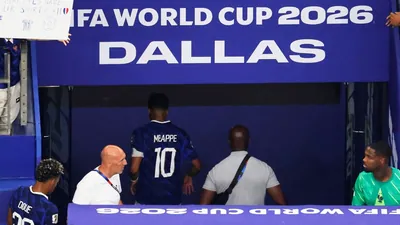
The Spain vs France FIFA World Cup 2026 semifinal was billed as a battle between two footballing superpowers. On one side stood France, arguably the tournament’s most explosive attacking team, led by Kylian Mbappe and supported by a collection of elite forwards capable of changing matches in seconds. On the other stood Spain, a side that had quietly evolved into the most tactically balanced team at the World Cup.
What unfolded in Dallas was one of the most fascinating tactical displays of the tournament.
Spain’s 2-0 victory was about far more than reaching another World Cup final. It was a demonstration of how modern football is increasingly won through structure, intelligent pressing, midfield control, and collective discipline rather than pure attacking firepower.
For France, the defeat ended dreams of another World Cup title. For Spain, it reinforced their growing reputation as the most complete side in the competition. More importantly, it provided a tactical masterclass that coaches around the world will study for years.
Spain vs France: A Clash Between Two Different Football Philosophies
Heading into the semifinal, both teams possessed legitimate claims to being the strongest side in the tournament.
France relied heavily on devastating transitions, individual brilliance, and vertical attacking football. Their approach emphasized speed, directness, and creating space for world-class attackers such as Kylian Mbappe, Ousmane Dembele, Michael Olise, and Bradley Barcola.
Spain, meanwhile, represented a different football philosophy.
Rather than depending on moments of individual magic, Spain built their success around controlling matches through possession, intelligent positioning, relentless pressing, and tactical flexibility.
The semifinal ultimately became a test of which philosophy would prevail.
| France | Spain |
|---|---|
| Vertical Attacking Football | Possession-Based Control |
| Individual Brilliance | Collective Structure |
| Fast Transitions | Controlled Build-Up |
| Explosive Attackers | Midfield Dominance |
| Direct Play | Pressing and Positional Discipline |
By the final whistle, Spain’s approach had clearly won the battle.
The Key to Spain’s Victory: Winning the Midfield War
Every major football match has a battleground where the game is truly decided. In this semifinal, that battleground was midfield.
While much of the attention before kickoff centered on Mbappe and France’s dangerous front line, Spain understood that stopping the supply chain was more effective than simply trying to stop the attackers themselves.
Rodri, Fabian Ruiz, and Dani Olmo controlled the center of the pitch from start to finish.
Instead of allowing France to launch rapid attacks, Spain constantly disrupted passing sequences before they could develop. Every time France attempted to move the ball forward, Spanish midfielders appeared ready to intercept, pressure, or force mistakes.
The result was devastatingly effective.
France’s attackers were repeatedly isolated from the rest of the team, leaving some of the world’s most dangerous forwards with little opportunity to influence the match.
Rodri’s Masterclass Showed Why Elite Midfielders Win Championships
If there was one player who embodied Spain’s superiority, it was Rodri.
The Spanish midfielder delivered the type of performance that often goes unnoticed by casual fans but is deeply appreciated by coaches and analysts.
Rodri’s influence extended beyond tackles and interceptions.
- He controlled the pace of the game.
- He positioned himself perfectly to block passing lanes.
- He provided defensive protection.
- He initiated attacking sequences.
- He ensured Spain never lost their tactical shape.
Modern football increasingly values midfielders who can influence every phase of play. Rodri’s semifinal performance demonstrated exactly why he remains one of the most important players in world football.
Whenever France looked capable of building momentum, Rodri found a way to slow the game, recover possession, or redirect Spain’s structure.
How Spain Completely Neutralized Kylian Mbappe
Perhaps the most impressive aspect of Spain’s performance was their handling of Kylian Mbappe.
The French captain entered the semifinal leading the Golden Boot race and carrying the hopes of an entire nation. Throughout the tournament, Mbappe had repeatedly demonstrated his ability to punish even the smallest defensive mistake.
Spain’s approach was simple but brilliant.
Rather than assigning one defender to mark Mbappe throughout the match, Spain focused on denying him favorable situations.
Whenever Mbappe attempted to receive possession in dangerous areas:
- Passing lanes were restricted.
- Supporting runners were tracked.
- Space behind the defense disappeared.
- Midfield pressure arrived immediately.
The result was striking.
One of the world’s most feared attackers spent much of the evening chasing difficult passes, dropping deep to find possession, or operating in areas where he posed minimal danger.
Spain did not stop Mbappe by focusing solely on him. They stopped him by controlling everything around him.
Why France’s Attack Looked Ordinary for the First Time
Throughout the World Cup, France had terrorized opponents through speed and unpredictability.
However, those strengths depend heavily on access to space.
Spain’s defensive structure ensured that space rarely existed.
Every French attacker encountered the same problem. By the time they received the ball, Spain had already organized defensively.
Michael Olise, who had been among France’s most creative players during the tournament, struggled to find pockets of space between the lines.
Dembele frequently received possession under immediate pressure.
Barcola’s pace became ineffective because Spain refused to leave open spaces behind their defensive line.
Collectively, France’s attack never established rhythm.
Without rhythm, even elite attackers can appear ordinary.
The Tactical Importance of Spain’s Counter-Press
One aspect of Spain’s performance that deserves greater attention is their exceptional counter-pressing.
Counter-pressing refers to the immediate attempt to regain possession after losing the ball.
Rather than retreating into a defensive shape whenever possession changed hands, Spain aggressively challenged France the moment they recovered the ball.
This strategy produced several important benefits:
- France could not launch quick counterattacks.
- Spain regained possession rapidly.
- French players became mentally fatigued.
- Midfield control remained with Spain.
By consistently winning the seconds immediately after turnovers, Spain effectively removed one of France’s biggest strengths.
Lamine Yamal’s Influence Extended Beyond the Score Sheet
Statistics rarely tell the full story of a football match.
Lamine Yamal may not have dominated the score sheet, but his influence was enormous.
The teenager repeatedly forced France’s defenders into uncomfortable situations through intelligent movement, positioning, and decision-making.
His role in winning the penalty that opened the scoring demonstrated a maturity beyond his years.
Young stars are often judged by goals and assists. However, elite footballers influence matches through much more subtle contributions.
Yamal’s understanding of timing and spatial awareness proved decisive.
Spain’s Defensive Structure Was Just as Important as Their Attack
Much of the praise will naturally go to Spain’s midfield, but their defensive organization deserves equal recognition.
Championship-winning teams are rarely defined solely by attacking quality.
Instead, they combine offensive creativity with defensive discipline.
Spain achieved exactly that balance.
| Defensive Strength | Impact Against France |
|---|---|
| Compact Shape | Reduced Passing Options |
| Strong Positioning | Limited Space Behind Defense |
| Winning Duels | Prevented Second-Chance Attacks |
| Defensive Communication | Maintained Organization Under Pressure |
The defensive line consistently remained connected to the midfield, preventing France from exploiting gaps between units.
This collective discipline transformed Spain into an incredibly difficult team to break down.
Where Didier Deschamps Lost the Tactical Battle
France manager Didier Deschamps attempted multiple tactical adjustments throughout the match.
Substitutions were made. Player positions changed. Different attacking combinations were tested.
Yet none of those adjustments altered the fundamental issue.
France never solved Spain’s midfield superiority.
Without controlling the center of the pitch, tactical changes elsewhere had limited impact.
The semifinal illustrated one of football’s oldest lessons: dominance in midfield often determines everything else.
By the time France attempted significant changes, Spain had already established complete control of the game’s rhythm.
The Bigger Story Competitors Are Missing
Most coverage of Spain’s victory has focused on the result, the goals, or Mbappe’s disappointing performance.
However, the deeper story may be what this match reveals about the future direction of elite football.
Over the past decade, football has increasingly shifted toward collective systems rather than individual dependency.
While superstar players remain essential, the world’s best teams now prioritize structure, pressing systems, positional discipline, and tactical adaptability.
Spain’s victory was not simply a win over France.
It was a victory for a footballing model built around collective intelligence.
That trend is likely to shape major international tournaments for years to come.
Can Spain Now Win the FIFA World Cup 2026?
Based on their semifinal performance, Spain have every reason to believe they can lift the trophy.
World Cup champions typically share several characteristics:
- Defensive reliability.
- Midfield control.
- Tactical flexibility.
- Mental resilience.
- Match-winning talent.
Spain have consistently demonstrated all five qualities throughout the tournament.
Their ability to completely dismantle France’s attack suggests they possess the tools required to defeat any opponent.
Whether facing Argentina or England, Spain will enter the final with significant confidence and momentum.
Conclusion
The Spain vs France FIFA World Cup 2026 semifinal will be remembered as one of the tournament’s defining tactical performances. Spain’s 2-0 victory was not built on moments of luck or isolated brilliance. It was the product of superior planning, flawless execution, midfield dominance, and collective discipline.
Rodri delivered a masterclass in controlling a football match. Lamine Yamal once again demonstrated why he is considered one of the brightest talents in the sport. Spain’s defensive structure neutralized Kylian Mbappe and transformed France’s feared attack into a largely ineffective force.
Most importantly, the semifinal revealed why Spain have emerged as genuine favorites to become world champions. In a tournament often defined by individual stars, Spain proved that the most powerful weapon in football remains a perfectly functioning team.
If they reproduce this level of performance in the final, the 2026 FIFA World Cup trophy may already have its destination.
For breaking news and live news updates, like us on Facebook or follow us on Twitter and Instagram. Read more on Latest Sports on thefoxdaily.com.





COMMENTS 0