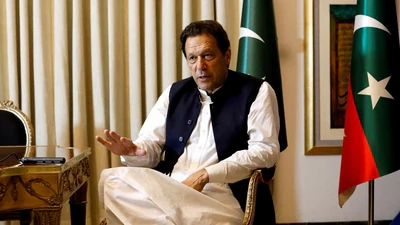
Imran Khan’s sons’ Sky Sports interview became an unexpected talking point during the opening day of the second Test between England and Pakistan at Lord’s, shifting attention away from cricket and toward the former Pakistan captain’s health and prison conditions.
Sky Sports had scheduled a pre-recorded conversation between former England captain Michael Atherton and Imran’s sons, Kasim Khan and Sulaiman Khan, for the lunch interval. The interview focused on their concerns about their father’s health and their efforts to secure appropriate medical treatment for him while he remains in custody.
The broadcast reportedly triggered strong objections from the Pakistan Cricket Board. Reports said Pakistan’s players had considered refusing to return to the field if Sky went ahead with the interview. After discussions between the relevant parties, the interview was ultimately broadcast.
However, viewers watching the Pakistani television feed saw another unusual development. PTV Sports reportedly switched to commercials when the interview appeared on the Sky feed, preventing viewers in Pakistan from seeing the segment.
The incident created an extraordinary situation around a major Test match: a cricket broadcast became the setting for a dispute involving media rights, political sensitivity and concerns about a former national captain’s health.
What happened during the Lord’s Test broadcast?
The controversy centred on an interview recorded before the Test. Michael Atherton spoke with Kasim and Sulaiman about their father and the situation surrounding his imprisonment.
Sky Sports planned to show the conversation during the lunch interval on the first day of the Test.
The Pakistan Cricket Board reportedly objected to the broadcast before it went live. According to reports, the board raised concerns with Sky Sports and the Pakistani team even considered not returning to the field for the start of the second session as a form of protest.
The threatened boycott did not ultimately take place. After discussions, Sky proceeded with the broadcast.
The situation then took another turn for viewers in Pakistan. PTV Sports, which was carrying the match using the Sky feed, reportedly showed advertisements rather than the interview.
This meant that audiences watching the Pakistani television coverage did not receive the same content as viewers watching the international Sky Sports broadcast.
Why was the interview considered sensitive?
The interview was not primarily about cricket. It dealt with the health and treatment of Imran Khan, one of the most prominent figures in Pakistan’s cricket and political history.
Imran has remained in prison for more than three years, and concerns about his health have become increasingly prominent among his family and supporters.
The interview therefore touched on an issue that has attracted significant political attention in Pakistan.
Kasim and Sulaiman used the conversation to describe their concerns about their father’s medical condition and the treatment they believe he should receive.
The timing was also significant because the interview appeared during one of the most visible cricket events involving Pakistan: a Test match at Lord’s.
That combination of cricket, broadcasting and politics made the segment unusually sensitive for the Pakistani cricket establishment.
What did Kasim Khan say about his father?
Kasim Khan spoke about his concerns over his father’s health and the conditions in which he is being held.
He described what he said was increasing isolation and referred to concerns about his father’s ability to access appropriate medical care.
Kasim also discussed the reported eye problem that has previously raised concern among Imran’s family and supporters. He said his father had been seen wearing an eye patch and appeared stressed, which he described as particularly concerning given Imran’s normally calm personality.
He also spoke about his fears regarding the prison environment, saying the family believed conditions had deteriorated.
These were allegations and concerns expressed by Imran Khan’s son during the interview, rather than independently established findings presented in the broadcast itself.
Sulaiman Khan questioned his father’s medical treatment
Sulaiman also focused on the medical treatment his father has received while in custody.
He said the family’s fears were reinforced when Imran was taken to a government medical facility rather than the private hospital they expected him to visit.
According to Sulaiman, Imran was subsequently returned to prison after spending several hours at the government facility.
The comments highlighted the central concern raised by both brothers: whether their father is receiving the medical attention they believe is necessary.
Their statements also demonstrate why the interview became politically sensitive. Rather than discussing historical cricket achievements, the conversation addressed an ongoing dispute surrounding a former prime minister and Pakistan’s most famous cricketing figures.
Why did Pakistan reportedly object to the Sky Sports interview?
The PCB’s reported objection appears to have been connected to the timing and nature of the interview.
Broadcasting a politically sensitive conversation during a live international cricket match can create complications for a national board, particularly when the subject is a former captain and former prime minister.
Pakistan’s cricket authorities reportedly contacted Sky before the lunch break and expressed their opposition to the segment being shown.
The reported threat of players refusing to return to the field would have raised the stakes considerably. A Test match boycott, even temporarily, would have been an extraordinary development and could have overshadowed the sporting contest completely.
Ultimately, the team returned to the field and the match continued.
PTV’s advertisements added another layer to the controversy
The most unusual broadcasting element came from Pakistan’s television coverage.
PTV Sports was carrying the match using the Sky feed, but when Kasim and Sulaiman appeared on screen, advertisements reportedly replaced the interview for viewers in Pakistan.
This created a visible difference between international and domestic coverage.
| Broadcast | Reported coverage |
|---|---|
| Sky Sports | Broadcast the pre-recorded interview during the lunch interval |
| PTV Sports | Reportedly showed advertisements during the interview segment |
| Pakistan cricket team | Reportedly considered refusing to return after lunch before the dispute was resolved |
The incident illustrates how international sports broadcasts can become complicated when different broadcasters have different editorial and regulatory considerations.
Sky Sports controlled its international broadcast, while the Pakistani television audience received a localized feed. That made it possible for viewers in different countries to experience the same cricket match differently.
Michael Atherton’s involvement is significant
Michael Atherton’s role added another dimension because the former England captain has previously joined other prominent former international players in expressing concern about Imran Khan’s situation.
Atherton has a long association with Pakistan cricket through his playing career and his work as a cricket commentator and journalist.
His interview with Imran’s sons therefore carried both sporting credibility and journalistic significance.
The conversation was not an official statement from the England and Wales Cricket Board or the Pakistan Cricket Board. It was a media interview conducted by a broadcaster as part of its Test coverage.
That distinction matters because it explains why the interview could become part of the cricket broadcast while simultaneously generating objections from Pakistan’s cricket authorities.
Former cricketers have also raised concerns
The interview came against a broader background of former international cricketers expressing concern about Imran Khan’s welfare.
Reports have stated that a group of former international captains, including Atherton, signed a letter addressed to Pakistan Prime Minister Shehbaz Sharif calling for appropriate medical attention for Imran.
The reported appeal followed earlier concerns raised about his health and access to treatment.
That wider context helps explain why the Sky interview attracted attention. It was not an isolated conversation appearing without background; it came at a time when questions about Imran’s health were already receiving international attention.
Imran Khan’s cricket legacy makes the story unusual
Long before entering politics, Imran Khan was one of Pakistan’s greatest cricketers.
He captained Pakistan to the 1992 World Cup title, a landmark achievement that remains central to the country’s cricketing history.
His career also gave him an unusually strong connection with Pakistan’s sporting identity. As a result, developments involving his health or imprisonment naturally attract considerable attention among cricket followers.
That connection is one reason the interview could not be viewed simply as another lunch-break feature.
It brought the personal concerns of his sons into an international sporting broadcast watched by audiences following Pakistan’s Test series against England.
The bigger issue: where does cricket end and politics begin?
The Lord’s incident raises a broader question about the role of sports broadcasters when political issues involve prominent former athletes.
Cricket coverage regularly includes interviews about players’ careers, tactics and personal experiences. But when a former player becomes a major political figure, separating sporting identity from political significance becomes much harder.
In Imran’s case, his two identities are deeply connected. He remains a legendary Pakistan cricketer while also being a former prime minister whose imprisonment has generated continuing debate.
For broadcasters, that creates a difficult editorial environment. An interview can be relevant because of a former player’s sporting identity while simultaneously addressing highly sensitive political circumstances.
The Lord’s controversy demonstrates how quickly those two worlds can collide.
Why the reported boycott threat would have been unprecedented
International cricket depends heavily on cooperation between players, boards, broadcasters, venues and tournament organizers.
A decision by a team not to return to the field because of a broadcast dispute would therefore be highly unusual.
It could affect the match itself, create contractual questions and turn a sporting event into a much larger media story.
In this case, the reported threat was ultimately withdrawn and play continued.
That outcome was important because it prevented the disagreement from directly disrupting the Test match.
What happened with the interview afterwards?
Despite the reported objection from the PCB, Sky Sports ultimately aired the pre-recorded conversation during the lunch interval.
The Pakistani television audience, however, reportedly did not receive the same segment because PTV Sports switched to advertisements.
This produced an unusual split-screen reality in terms of media consumption: international viewers could hear the statements made by Imran’s sons, while viewers in Pakistan were reportedly shown commercial programming instead.
The incident consequently became a story about broadcasting as much as cricket.
Why this matters for cricket broadcasting
Sports broadcasting has increasingly become more than a simple transmission of a match. Broadcasters produce interviews, analysis, features and documentaries alongside live action.
That creates editorial choices that can occasionally intersect with sensitive political or social issues.
The Lord’s incident demonstrates the importance of understanding the difference between a host broadcaster’s editorial decisions and the choices made by local broadcasters carrying the same event.
Different audiences can therefore receive different versions of the same sporting occasion.
For cricket, which has a massive international audience, such differences can quickly become part of the story themselves.
The controversy did not stop the cricket
Despite the off-field tension, the England-Pakistan Test continued after the lunch interval.
That is perhaps the most important immediate outcome. The reported disagreement did not ultimately result in Pakistan abandoning the match.
However, the episode ensured that the first day at Lord’s would be remembered for events outside the boundary as well as those occurring on the field.
The interview placed Imran Khan’s health concerns before an international audience, while the reaction from the PCB and the reported PTV coverage highlighted the sensitivity surrounding the subject.
Conclusion: Lord’s Test becomes backdrop to a wider dispute
Imran Khan’s sons’ Sky Sports interview created an unusual controversy during the England-Pakistan Test at Lord’s. The pre-recorded conversation between Michael Atherton, Kasim Khan and Sulaiman Khan focused on concerns about Imran’s health, medical treatment and prison conditions.
Reports said the PCB objected to the interview and that Pakistan’s players considered refusing to return to the field if the segment was broadcast. The dispute was ultimately resolved without a boycott, and Sky Sports aired the interview.
For viewers in Pakistan, however, PTV Sports reportedly replaced the interview with advertisements while carrying the Sky feed.
The episode illustrates the complicated relationship between cricket, broadcasting and public affairs. Imran’s unique status as both a World Cup-winning former Pakistan captain and former prime minister makes developments involving him especially significant to cricket audiences.
For now, the Test continued without a disruption to play, but the Lord’s incident has added another remarkable chapter to the long and increasingly complicated story surrounding Imran Khan and Pakistan cricket.
For breaking news and live news updates, like us on Facebook or follow us on Twitter and Instagram. Read more on Latest Cricket on thefoxdaily.com.






COMMENTS 0