Pakistan Test Cricket has reached an unwanted statistical milestone after the team’s latest defeat pushed its all-time win-loss ratio below 1.00 for the first time in 40 years.
The decline has been building for several seasons, but the latest numbers provide a striking illustration of how dramatically Pakistan’s fortunes have changed. Once regarded as one of the most unpredictable and dangerous Test teams in world cricket, Pakistan now find themselves struggling to maintain consistency across batting, bowling and team management.
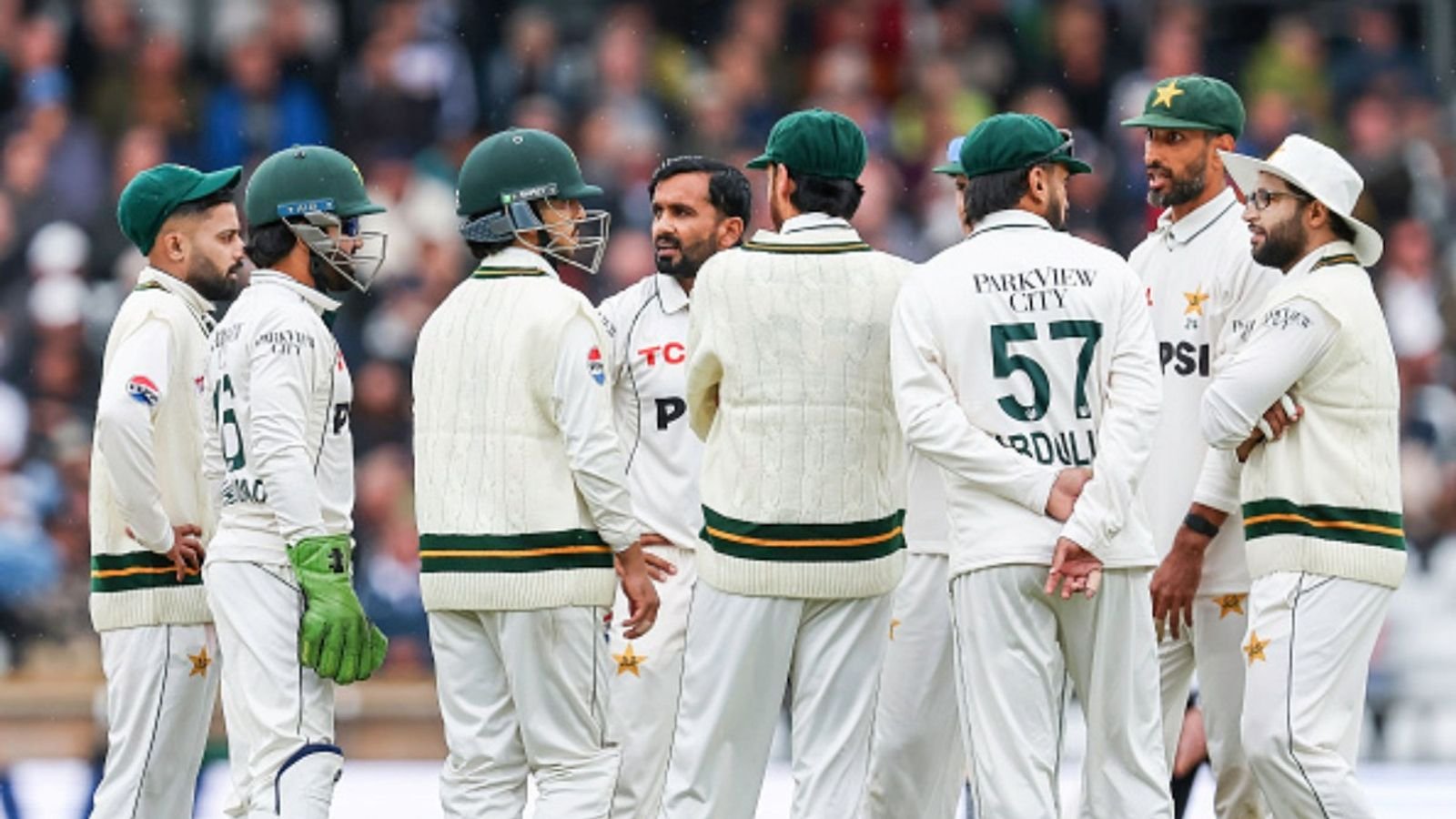
The latest setback came during Pakistan’s 2026 tour of England. The defeat in the second Test at Lord’s became Pakistan’s 154th loss in Test cricket, moving their number of defeats ahead of their 153 victories.
That change means Pakistan’s historical win-loss ratio has slipped to approximately 0.993, a figure that underlines the seriousness of the team’s current Test struggles.
Pakistan’s Historic Test Record Takes a Major Turn
For decades, Pakistan managed to maintain a positive balance between Test victories and defeats. The team’s history includes several dominant periods in which world-class bowlers and technically strong batters made Pakistan a formidable opponent.
That balance has now disappeared.
The latest defeat against England marked a statistical tipping point because Pakistan have now lost more Test matches than they have won across their history. While the difference is currently small, the significance of the milestone is much greater than the numerical gap itself.
A win-loss ratio below one indicates that a team has accumulated more defeats than victories. For a cricket nation with such a long and influential Test history, reaching that point represents a notable change in fortunes.
It also highlights how recent struggles have gradually affected a record built over decades.
Why Pakistan’s Recent Test Record Is So Concerning
The biggest warning sign comes from Pakistan’s results since the beginning of 2022.
During this period, Pakistan have recorded only eight Test victories while suffering 20 defeats. The record demonstrates that the problem is not limited to one series, one captain or one generation of players.
Instead, Pakistan have struggled to develop the consistency required to compete successfully over the long format.
Test cricket demands patience, disciplined batting, sustained bowling pressure and strong tactical planning. A team can survive an occasional poor session, but repeated weaknesses across multiple matches eventually translate into a poor overall record.
Pakistan’s recent numbers suggest that this has become an ongoing structural problem rather than a temporary dip.
Batting Collapses Have Become a Major Problem
One of the most visible issues has been Pakistan’s inability to consistently build substantial batting totals.
Test cricket rewards batters who can occupy the crease for long periods. When a top order collapses, pressure immediately shifts onto the middle and lower order, making it difficult for the team to control the match.
Frequent batting collapses have therefore had a direct effect on Pakistan’s ability to compete. Even when the bowling unit creates opportunities, the team needs enough runs to convert those opportunities into victories.
The problem becomes particularly severe against strong opponents because a short first innings can allow the opposition to establish control early in the match.
Pakistan’s challenge is not simply about finding one reliable batter. They need greater collective consistency across the top and middle order.
Bowling Inconsistency Adds to the Pressure
Pakistan have traditionally been associated with high-quality fast bowling, making their current inconsistency with the ball particularly significant.
A successful Test bowling attack needs to maintain pressure over long spells and create breakthroughs even when conditions are not immediately favourable.
When bowling performances fluctuate, Pakistan can struggle to take 20 wickets, which is essential for winning a Test match. At the same time, inconsistent bowling increases the burden on the batting unit because the team may need to score heavily simply to stay competitive.
The combination of unreliable batting and inconsistent bowling leaves very little room for error.
Constant Changes Have Made Stability Difficult
Another factor behind Pakistan’s struggles has been frequent changes within the team’s management and playing group.
Leadership transitions can be particularly disruptive in Test cricket because developing a consistent approach requires time. Captains, coaches and players need a clear understanding of their roles and selection priorities.
Pakistan’s recent changes have made that continuity difficult.
Sarfaraz Ahmed, who was appointed head coach, was removed after only two series in charge. Bowling coach Umar Gul also departed during the period of restructuring.
Such changes can affect preparation, selection philosophy and the development of younger players. A rebuilding project needs patience, but constant adjustments can make it difficult to establish a clear long-term identity.
Pakistan Have Also Made Major Squad Changes
The restructuring has extended beyond the coaching staff.
Seven players were released from the setup: Mohammad Rizwan, Salman Ali Agha, Imam-ul-Haq, Ali Usman, Aamer Jamal, Awais Zafar and Khurram Shahzad.
Five of the players brought in as replacements were uncapped, demonstrating how aggressively Pakistan have attempted to refresh their squad.
Introducing new players can be an important part of rebuilding, particularly when an existing group has struggled for an extended period. However, major changes also carry risks.
Young or uncapped players require time to adapt to international cricket. Test cricket is particularly demanding because mistakes are often punished over several sessions rather than a few overs.
Pakistan therefore face the difficult task of giving new players opportunities while ensuring that the team retains enough experience to provide stability.
The Experience Versus Rebuilding Debate
Pakistan’s current situation raises an important question about how a struggling Test team should rebuild.
One approach is to retain experienced players and attempt to restore confidence through continuity. Another is to make substantial changes and give younger players an extended opportunity to develop.
| Area | Pakistan’s Current Challenge | What a Successful Rebuild Requires |
|---|---|---|
| Batting | Frequent collapses and inconsistent run production | Longer partnerships and greater consistency |
| Bowling | Inconsistent pressure across innings | Reliable wicket-taking spells |
| Selection | Major squad changes | A clear long-term selection strategy |
| Coaching | Recent changes in leadership | Continuity and clearly defined roles |
| Younger players | Several uncapped replacements introduced | Time and consistent opportunities |
| Results | Eight wins and 20 defeats since 2022 | Turning competitive performances into victories |
There is no guaranteed answer. The key is ensuring that whatever strategy Pakistan choose is supported by consistency rather than another cycle of frequent changes.
Why the 2026 England Tour Matters
The 2026 England tour has become an important chapter in Pakistan’s current Test story because the second Test at Lord’s produced the statistical milestone.
Playing Test cricket in England presents significant challenges. Batters must adapt to conditions that can offer movement, while bowlers need discipline and accuracy to make the most of favourable periods.
Pakistan’s defeat at Lord’s therefore had consequences beyond the individual match.
It became the result that pushed the team’s historical defeat count above its win total, turning a long-term statistical trend into an official milestone.
The result does not by itself explain every problem within Pakistan Cricket, but it provides a clear indicator of how much ground the team needs to recover.
From a Powerful Test Side to a Rebuilding Team
Pakistan’s cricket history includes several periods when the national team was capable of challenging the strongest sides in the world.
The 1980s and 1990s were particularly notable, with Pakistan regularly producing world-class performers and competing strongly across different conditions.
The country’s cricket identity was built partly around exceptional fast bowling, fearless batting and the ability to produce match-changing performances.
The modern team has struggled to reproduce that consistency.
It would be simplistic to attribute the decline to one issue. Player development, selection, coaching stability, leadership changes, injuries, form and the increasing competitiveness of international cricket can all influence results.
What the current statistics show is that these challenges have accumulated over time.
Why Test Cricket Needs a Long-Term Strategy
Rebuilding a Test team cannot happen overnight.
Young players need exposure to international conditions, while established players need clearly defined roles. Coaches also need enough time to implement technical and tactical changes.
Pakistan’s recent record suggests that short-term fixes have not been sufficient. The team needs a broader plan covering domestic cricket, player development, workload management and international selection.
The domestic system is particularly important because Test teams depend on a strong pipeline of players capable of stepping up when senior members lose form or retire.
If Pakistan can consistently produce batters who are prepared for long innings and bowlers capable of sustaining pressure, the national team will have a stronger foundation for recovery.
The Psychological Impact of a Poor Record
Statistics can also influence the mindset surrounding a team.
When defeats become frequent, players may enter matches under additional pressure to avoid another setback. That pressure can become particularly difficult for inexperienced players making their international debuts.
The challenge for Pakistan’s management is therefore to prevent the historical record from becoming a burden for the current squad.
The players on the field are responsible for building the next chapter of Pakistan cricket, not correcting every result from previous generations.
A successful rebuild would focus on individual roles, preparation and measurable improvement rather than allowing historical statistics to dominate the team’s thinking.
What Pakistan Must Fix Going Forward
The immediate priority should be creating greater consistency across the entire Test side.
Pakistan need their top-order batters to spend more time at the crease, their middle order to convert starts into meaningful contributions and their bowlers to maintain pressure for longer periods.
Selection also needs a clearly communicated philosophy. If the team is rebuilding around younger players, those players need sufficient opportunities to establish themselves.
At the same time, experienced players should be retained when their performances and leadership qualities remain valuable to the team.
The most important factor may be continuity. Constantly changing personnel can make it difficult to determine whether a strategy is actually working.
Can Pakistan Reverse the Decline?
Yes, but the turnaround will require more than one series victory.
Pakistan’s history demonstrates that the country has the cricketing talent and tradition to produce strong Test teams. The challenge is converting that potential into a stable system capable of delivering results consistently.
The current statistical milestone should be viewed as a warning rather than a permanent definition of Pakistan cricket.
A new generation of players could eventually change the numbers, but doing so will require sustained performances over multiple series.
The first objective should be to stop the cycle of heavy defeats. Once Pakistan begin regularly competing deep into Test matches, victories can become a more realistic consequence.
Conclusion: Pakistan’s Test Cricket Crisis Reaches a Historic Low
Pakistan’s Test cricket win-loss ratio falling below 1.00 marks an unwanted moment in the country’s long cricket history. The 154th Test defeat, compared with 153 victories, has officially shifted the balance and highlighted the severity of the team’s recent struggles.
The numbers since 2022 are even more concerning, with only eight wins against 20 defeats. Frequent batting collapses, inconsistent bowling, management changes and major squad restructuring have all contributed to an uncertain period.
However, the milestone does not have to define Pakistan’s future.
The introduction of younger players could provide fresh energy, while a clearer selection policy and greater coaching stability could help turn potential into consistent performances. The challenge now is to build a team that can compete over five days, not simply produce occasional flashes of brilliance.
For Pakistan, the road back will likely be long. But a sustained rebuilding process could eventually turn this unwanted record into the starting point of a much-needed Test cricket revival.
For breaking news and live news updates, like us on Facebook or follow us on Twitter and Instagram. Read more on Latest Cricket on thefoxdaily.com.






COMMENTS 0