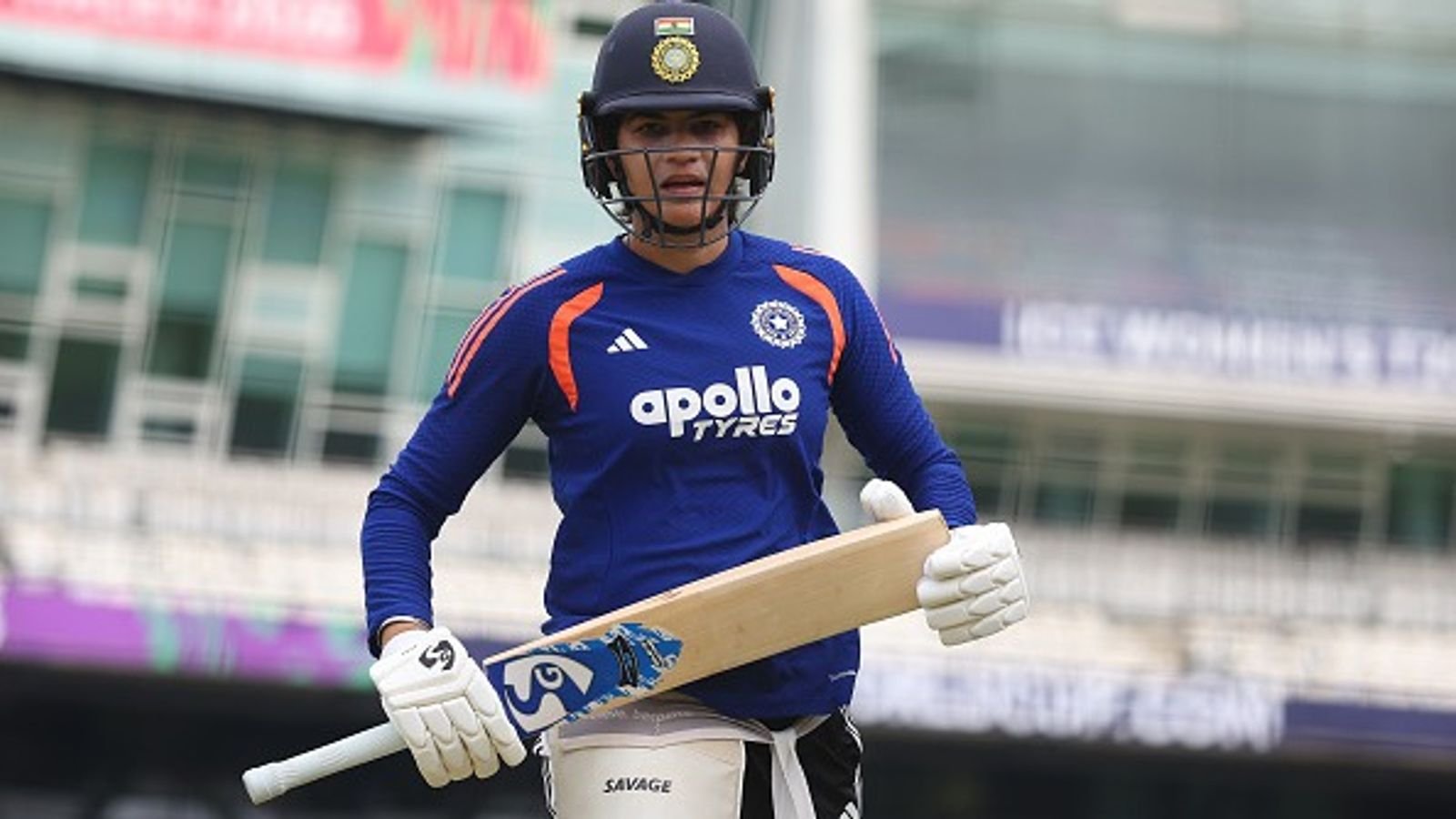
India A Women vs Australia A Women is set to become an important multi-format test of India’s emerging women’s cricket talent after the BCCI Women’s Selection Committee announced squads for the upcoming home series. The tour will feature three T20 matches, three One-Day fixtures and one four-day Multi-Day game across New Chandigarh, Mohali and Dharamshala.
The series begins with the T20 leg on September 12 and continues with matches on September 15 and 17. The teams will then move to the 50-over format, with One-Day games scheduled for September 20, 23 and 25 at the PCA Stadium in Mohali. The tour concludes with a four-day red-ball fixture in Dharamshala from September 29 to October 2.
Rather than selecting one identical group for all three formats, India have adopted a format-specific approach. Anushka Sharma will captain the T20 side, with Sayali Satghare as vice-captain, while wicketkeeper-batter Yastika Bhatia will lead both the One-Day and Multi-Day squads.
India A vs Australia A: Why This Series Matters
The Australia A tour gives India’s next generation of women’s cricketers an opportunity to compete against a high-quality opposition without immediately carrying the full expectations associated with the senior international team.
That makes the series particularly useful for player development. T20 cricket demands quick decision-making, the One-Day format tests consistency and tactical awareness, while the four-day match provides a much longer examination of batting technique, bowling endurance and concentration.
The three-format structure is therefore more than a scheduling choice. It gives selectors an opportunity to evaluate players across different skills and match situations.
For players hoping to progress toward India’s senior side, performances across these matches could provide valuable evidence of their readiness for higher-level cricket.
Anushka Sharma to Lead India A in T20 Format
Anushka Sharma has been given the responsibility of captaining the India A T20 squad, with Sayali Satghare named her deputy.
The T20 group contains several players capable of contributing in different areas, creating a squad designed around flexibility and variety. Vrinda Dinesh, Sujata Dey, Tejal Hasabnis, Nikki Prasad and Shweta Sehrawat are among the batting options, while the bowling group includes Tanuja Kanwer, Minnu Mani, Vaishnavi Sharma, Jintimani Kalita, Shabnam Shakeel and Simran Dil Bahadur.
Shipra Giri and Uma Chetry provide wicketkeeping options alongside the rest of the squad.
The T20 series could therefore offer selectors a useful look at how these players handle the faster pace of modern women’s cricket. With only 20 overs available, players must make their impact quickly, whether with the bat, ball or in the field.
Yastika Bhatia Gets Leadership Role in One-Day Cricket
Yastika Bhatia will captain the India A One-Day squad, with Anushka Sharma serving as vice-captain. The change in leadership from T20 cricket reflects the different demands of the format and gives Bhatia an opportunity to lead a group built for 50-over cricket.
The One-Day squad includes established domestic names such as Priya Punia and Tanisha Singh alongside younger players including Vrinda Dinesh, Nikki Prasad and Vaishnavi Sharma.
Experienced wicketkeeper-batter Bhatia also brings an important perspective to the side. Her dual role as captain and wicketkeeper means she will have responsibility for decision-making while also remaining closely involved in the tactical aspects of the match from behind the stumps.
That combination can make wicketkeeper-captains particularly influential because they have a continuous view of the game and can communicate directly with bowlers and fielders.
India A Multi-Day Squad Offers a Different Challenge
The four-day fixture in Dharamshala is arguably the most technically demanding part of the tour. Yastika Bhatia will again lead the team, with Anushka Sharma as vice-captain.
The squad features Shubha Satheesh, Priya Punia, Tanisha Singh, Tejal Hasabnis and Nikki Prasad among the batting options. Mamata Madiwala is the wicketkeeping option, while the bowling and all-round group includes Sushree Dibyadarshini, Shuchi Upadhyay, Vaishnavi Sharma, Sayali Satghare, Jintimani Kalita, Shabnam Shakeel and Akshita Bhagat.
Multi-Day cricket presents a completely different examination from T20 cricket. Players must maintain concentration over long periods, bowl extended spells, build partnerships patiently and adapt their strategy as the pitch changes.
For India’s developing players, the four-day game could therefore provide some of the most valuable experience of the entire Australia A tour.
Three Formats, Two Captains: The Strategy Behind India’s Squad Selection
One of the most interesting aspects of the BCCI announcement is the decision to split leadership responsibilities between Anushka Sharma and Yastika Bhatia.
Sharma will captain the T20 side, while Bhatia will lead the One-Day and Multi-Day teams. This arrangement allows selectors to develop leadership experience across more than one player instead of placing every responsibility on a single captain.
It also reflects the fact that the skills required to captain a T20 team are not identical to those needed in longer formats.
A T20 captain must frequently make rapid decisions involving field placements, bowling changes and match-ups. In a 50-over or four-day game, captains have more time to construct plans and respond to developments over longer periods.
Giving two players leadership exposure across these formats could therefore become an important part of India’s wider player-development strategy.
Australia A Provides a Strong Benchmark
The quality of the opposition is another reason this tour matters. Australia have established themselves as one of the strongest forces in women’s cricket, making Australia A a useful benchmark for India’s developing players.
India A players will not simply be competing against familiar domestic opponents. They will face a team representing another major cricketing system, bringing different playing styles, tactical approaches and match experiences.
That makes the series particularly valuable from a scouting perspective. A player who succeeds against strong opposition across multiple formats provides selectors with more meaningful evidence than performances limited to one domestic environment.
India A vs Australia A Schedule
| Format | Date | Venue |
|---|---|---|
| T20 | September 12, 2026 | New Chandigarh |
| T20 | September 15, 2026 | New Chandigarh |
| T20 | September 17, 2026 | New Chandigarh |
| One-Day | September 20, 2026 | PCA Stadium, Mohali |
| One-Day | September 23, 2026 | PCA Stadium, Mohali |
| One-Day | September 25, 2026 | PCA Stadium, Mohali |
| Multi-Day | September 29-October 2, 2026 | Dharamshala |
India A T20 Squad
Anushka Sharma (C), Sayali Satghare (VC), Vrinda Dinesh, Sujata Dey, Tejal Hasabnis, Nikki Prasad, Shipra Giri (WK), Shweta Sehrawat, Uma Chetry (WK), Tanuja Kanwer, Minnu Mani, Vaishnavi Sharma, Jintimani Kalita, Shabnam Shakeel, Simran Dil Bahadur.
India A One-Day Squad
Yastika Bhatia (C) (WK), Anushka Sharma (VC), Vrinda Dinesh, Priya Punia, Tanisha Singh, Tejal Hasabnis, Nikki Prasad, Uma Chetry (WK), Minnu Mani, Amandeep Kaur, Vaishnavi Sharma, Sayali Satghare, Jintimani Kalita, Shabnam Shakeel, Akshita Bhagat.
India A Multi-Day Squad
Yastika Bhatia (C) (WK), Anushka Sharma (VC), Shubha Satheesh, Priya Punia, Tanisha Singh, Tejal Hasabnis, Nikki Prasad, Mamata Madiwala (WK), Sushree Dibyadarshini, Shuchi Upadhyay, Vaishnavi Sharma, Sayali Satghare, Jintimani Kalita, Shabnam Shakeel, Akshita Bhagat.
Players to Watch During the Australia A Tour
Yastika Bhatia
Bhatia’s leadership across both the One-Day and Multi-Day squads makes her one of the most important figures in the tour. Her wicketkeeping responsibilities add another layer to her role, while the longer formats will test her ability to manage a team over extended periods.
Anushka Sharma
Sharma will have a particularly interesting assignment because she will captain the T20 team before becoming vice-captain in the longer formats. That gives her leadership responsibility as well as an opportunity to learn from a different captaincy setup.
Sayali Satghare
Satghare has been entrusted with vice-captaincy in the T20 side and retains a place in the One-Day and Multi-Day squads. Her presence across all three formats highlights her value to the broader India A setup.
Shabnam Shakeel
Shakeel is another player selected across all three formats. The Australia A tour will therefore provide an opportunity to evaluate her ability to adapt between short-format cricket and the demands of longer games.
The Biggest Opportunity May Be the Four-Day Match
While T20 cricket will naturally attract attention because of its faster pace, the four-day match may offer the most revealing information about India’s developing talent.
Short-format cricket can reward explosive skills and specialized roles. Multi-Day cricket exposes weaknesses that may remain hidden in a 20-over game. A batter must demonstrate patience, a bowler must sustain quality over long spells, and fielders must maintain concentration for hours.
That makes the Dharamshala fixture particularly useful for identifying players who could eventually contribute to India’s longer-format setup.
What India Can Learn From the Multi-Format Tour
The structure of the series gives selectors a rare opportunity to compare players in three different environments. A cricketer who performs consistently across T20, One-Day and Multi-Day cricket demonstrates adaptability, while specialists can also establish where their strongest skills lie.
There is another important benefit: players can learn how their games need to change between formats.
A successful T20 batter may need to develop patience in red-ball cricket. A bowler accustomed to short spells may need to learn how to maintain accuracy over longer periods. These lessons are difficult to reproduce in training alone.
That is why competitive A-team cricket can be so important in the pathway toward senior international cricket.
India A vs Australia A: What to Expect Next
The immediate focus will be on the three T20 matches in New Chandigarh, where Anushka Sharma will begin her captaincy assignment. The One-Day leg will then shift the focus toward 50-over consistency before the tour reaches its most traditional form with the four-day match in Dharamshala.
For India, the objective should not simply be the number of matches won. The larger value lies in identifying players who can handle international-quality opposition and adapt their games across formats.
Australia A will provide a demanding test, while India’s split leadership structure gives multiple players an opportunity to demonstrate their tactical and cricketing maturity.
Conclusion: A Valuable Test of India’s Emerging Women’s Cricket Talent
The India A vs Australia A Women series represents much more than a collection of matches. With three T20s, three One-Day games and a four-day Multi-Day fixture, the tour offers India’s emerging players a comprehensive test of their abilities.
Anushka Sharma’s T20 captaincy and Yastika Bhatia’s leadership in the One-Day and Multi-Day formats add an interesting leadership dimension, while several players have been selected across multiple squads to maximize their exposure.
The real measure of success will come from how effectively these players respond to strong opposition and different formats. For selectors, the series could provide important clues about India’s next generation. For the players, it is an opportunity to show that they are ready for the next step.
With Australia A arriving for a demanding multi-format tour, India’s emerging women’s cricketers will have a valuable stage on which to prove their adaptability, temperament and long-term potential.
For breaking news and live news updates, like us on Facebook or follow us on Twitter and Instagram. Read more on Latest Cricket on thefoxdaily.com.






COMMENTS 0