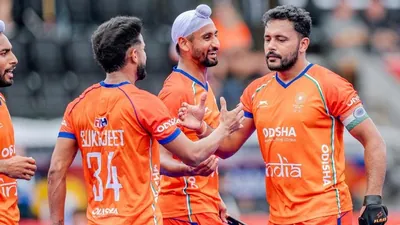
India vs Pakistan Hockey World Cup 2026 is set to deliver another major chapter in the sport’s most celebrated rivalry, with the highly anticipated Pool D encounter on Wednesday, August 19, officially sold out. The match will take place at the 10,000-capacity Wagener Stadium in the Netherlands, where a packed crowd is expected to create an intense atmosphere for the two Asian hockey giants.
The sell-out is significant not only because of the sporting importance of the fixture but also because of the strong response from Indian and Pakistani communities living in the Netherlands. The match has attracted interest well beyond the usual hockey audience, demonstrating how India-Pakistan fixtures can turn a group-stage contest into one of the most watched events of a tournament.
Why India vs Pakistan Is One of Hockey’s Biggest Rivalries
India and Pakistan share one of the deepest rivalries in international hockey. Their history stretches across decades and includes some of the most memorable moments in the sport.
Both nations have played an important role in the development of hockey in Asia and have enjoyed periods of dominance on the international stage. India have traditionally been associated with an attacking style built around skill and passing, while Pakistan have also produced generations of technically gifted players.
That history gives every meeting additional significance.
Unlike an ordinary pool-stage match, an India-Pakistan fixture carries emotional importance for players and supporters. A single result can influence the tournament standings, but the rivalry itself often becomes the headline.
The upcoming encounter is therefore expected to attract attention from viewers far beyond the Netherlands.
Wagener Stadium Reaches Full Capacity
The match will be played at the 10,000-seater Wagener Stadium, one of the Netherlands’ prominent hockey venues.
The venue being sold out demonstrates the exceptional demand for the fixture. According to the Royal Dutch Hockey Association, tickets were released in multiple phases rather than all at once.
The first phase went online in September 2025, while another phase followed in March 2026. The staggered approach allowed organizers to manage demand for some of the tournament’s most attractive matches.
The India-Pakistan fixture eventually reached full capacity.
This is particularly notable because the match does not involve the Netherlands. Dutch supporters have shown strong interest in their home team’s matches, but the India-Pakistan rivalry has generated enough demand to fill the stadium independently.
How Much Did Hockey World Cup Tickets Cost?
The tournament’s ticket structure offered spectators several options at different price points.
| Ticket Option | Reported Price | Details |
|---|---|---|
| South Stand | €35 | Available for matches not involving the Netherlands |
| Covered Main Stand | €57 | Day-ticket option |
| Hospitality Package | €251.34 | Premium spectator experience |
For fans unable to secure individual tickets for sold-out sessions, the tournament also offered half-day passes on certain days. These allowed spectators to watch multiple matches scheduled during a particular session, although fixtures involving the Netherlands were excluded from some of those options.
Indian and Pakistani Communities Add to the Atmosphere
One of the most important reasons behind the enormous demand is the presence of Indian and Pakistani communities in the Netherlands.
For many expatriate families, an India-Pakistan World Cup match provides an opportunity to experience a major sporting rivalry in person rather than watching it on television.
The emotional connection can be particularly strong for supporters who have followed the rivalry for years but now live thousands of kilometres away from the teams’ traditional home venues.
That makes the Netherlands an interesting setting for the fixture.
The match effectively brings a major South Asian sporting rivalry into the heart of Europe, where supporters from both communities can create a unique atmosphere inside the stadium.
Why the Sell-Out Matters for International Hockey
The biggest takeaway from the sold-out fixture is the commercial and cultural value of high-profile hockey rivalries.
International hockey competes with several major global sports for attention. A full stadium for a match involving two teams that are not the host nation demonstrates the ability of established rivalries to attract spectators across borders.
It also provides organizers with evidence that international hockey can generate strong demand when the right combination of teams, venue and tournament setting comes together.
The India-Pakistan rivalry is particularly valuable in that regard because it has a naturally large audience in South Asia and among diaspora communities around the world.
India’s Challenge Goes Beyond the Atmosphere
While the sold-out stadium will create a spectacle, India’s players cannot afford to become distracted by the occasion.
A World Cup pool match still has a straightforward competitive objective: collect points and put the team in the strongest possible position for the knockout stages.
The pressure will be particularly high because the fixture carries importance in Pool D. Every goal, penalty corner and defensive mistake can influence the standings and potentially affect the route through the tournament.
For India, controlling the emotional side of the contest will therefore be just as important as executing their tactical plan.
Pakistan Face a Different Kind of Pressure
Pakistan will enter the match knowing that the occasion provides both an opportunity and a challenge.
Matches against India can create enormous expectations among supporters. That can inspire players, but it can also increase the pressure to produce an immediate result.
Pakistan’s approach will therefore need to balance aggression with discipline.
Against a strong Indian side, conceding early opportunities could make the match considerably more difficult. Defensive organization, penalty-corner management and transitions will likely be critical areas.
The First Few Minutes Could Set the Tone
One of the most important tactical battles will be how each team handles the opening phase.
In a match surrounded by such emotion, there can be a temptation to attack immediately and attempt to establish dominance.
However, overcommitting early can create spaces for counterattacks.
India and Pakistan will therefore have to find the balance between intensity and control. The team that manages possession effectively while avoiding unnecessary turnovers could gain an important advantage.
Penalty Corners Could Become a Major Deciding Factor
Set pieces are often decisive in elite hockey, and penalty corners could become particularly important in a high-pressure encounter.
Winning penalty corners creates opportunities to convert territorial pressure into goals. At the same time, defending them requires concentration, coordination and quick reactions.
For both teams, limiting needless fouls inside dangerous areas will be crucial.
A match that remains closely contested for long periods could ultimately be decided by one successful penalty-corner routine or one defensive mistake.
Why the Netherlands Is an Ideal Stage for This Rivalry
The Netherlands has a strong hockey culture and a sophisticated infrastructure for hosting major international tournaments.
That makes the country a natural location for a World Cup fixture involving two historically important hockey nations.
The Wagener Stadium itself has hosted major hockey events before, giving the tournament a venue capable of handling the attention surrounding high-profile fixtures.
The sold-out India-Pakistan game also benefits the tournament’s overall atmosphere. When a stadium is full and supporters from both sides are highly engaged, even a group-stage match can feel like a knockout contest.
India vs Pakistan Is Bigger Than a Pool Match
The importance of the fixture cannot be measured solely through the points available.
India-Pakistan matches have traditionally carried an emotional intensity that makes them different from ordinary international fixtures. Supporters often remember individual goals, saves and penalty corners long after the tournament has ended.
That history creates additional pressure for the players.
At the same time, the rivalry can help introduce new audiences to hockey. People who may not follow every World Cup match are more likely to watch when these two teams meet.
That makes the fixture an important promotional opportunity for the sport.
A Unique Opportunity for the Hockey World Cup
The sold-out stadium also offers a broader lesson for international hockey.
Major sporting events are increasingly competing for attention through memorable matchups rather than relying only on the overall tournament brand. India versus Pakistan is an example of how a single fixture can become an attraction in its own right.
The presence of a large South Asian diaspora in Europe further expands the potential audience.
If organizers can consistently create strong matchday experiences around fixtures involving traditional hockey powers, international tournaments could strengthen their spectator appeal and commercial reach.
What the Sold-Out Crowd Could Mean for Future Tournaments
The response to this match could encourage tournament organizers to pay even greater attention to fixture scheduling and venue selection.
A high-profile rivalry in a suitably sized stadium can produce a more concentrated atmosphere than a fixture played in a much larger venue with empty sections.
The 10,000-capacity Wagener Stadium provides a useful example: the venue is large enough for a major international event while still allowing the crowd to feel close to the action.
That atmosphere can become part of the tournament’s identity.
India vs Pakistan Hockey World Cup 2026: Key Facts
| Details | Information |
|---|---|
| Match | India vs Pakistan |
| Tournament | FIH Men’s Hockey World Cup |
| Date | Wednesday, August 19, 2026 |
| Venue | Wagener Stadium, Netherlands |
| Capacity | 10,000 |
| Stage | Pool D |
| Status | Officially sold out |
What to Watch When India Take on Pakistan
- Opening exchanges: The first quarter could reveal which team handles the pressure better.
- Penalty corners: Set-piece efficiency could decide a closely fought match.
- Defensive discipline: Avoiding unnecessary fouls and turnovers will be crucial.
- Midfield control: The team that controls possession and transitions could dictate the tempo.
- Goalkeeping: A decisive save in a high-pressure moment could change the entire contest.
- Emotional control: Keeping composure could be just as important as technical execution.
The Bigger Picture: A Rivalry That Continues to Sell Out
The extraordinary demand for the India-Pakistan fixture reinforces a simple reality: some sporting rivalries transcend tournament structure.
The match is officially a Pool D encounter, but the sold-out Wagener Stadium shows that supporters do not view it as just another group-stage game.
For Indian and Pakistani fans in the Netherlands, it is a rare chance to experience one of hockey’s most historic contests in person. For the players, it is an opportunity to perform on a major stage with thousands of supporters watching every movement.
For international hockey, it is another demonstration of the commercial and emotional power that a marquee rivalry can generate.
Conclusion: Wagener Stadium Ready for Another India-Pakistan Classic
India vs Pakistan Hockey World Cup 2026 has already created a major buzz before the first whistle, with the 10,000-seat Wagener Stadium officially sold out for Wednesday’s Pool D encounter.
The ticket demand reflects the enduring popularity of the rivalry and the strong interest among Indian and Pakistani communities in the Netherlands. Tickets were released in phases beginning in September 2025, with another phase following in March 2026, before the highly anticipated fixture eventually reached full capacity.
The sporting implications are equally significant. India and Pakistan will need to manage the pressure, execute their tactical plans and remain disciplined in a match where even one penalty corner or defensive error could prove decisive.
But beyond tactics and points, this fixture represents something larger for hockey. It shows how a historic rivalry can bring thousands of supporters together, create a global talking point and transform a pool-stage match into a major sporting occasion.
When India and Pakistan step onto the Wagener Stadium pitch on August 19, the sold-out stands will provide the perfect backdrop. The rivalry has already won the battle at the ticket window. Now, the players have to decide who wins it on the hockey field.
For breaking news and live news updates, like us on Facebook or follow us on Twitter and Instagram. Read more on Latest Hockey on thefoxdaily.com.






COMMENTS 0