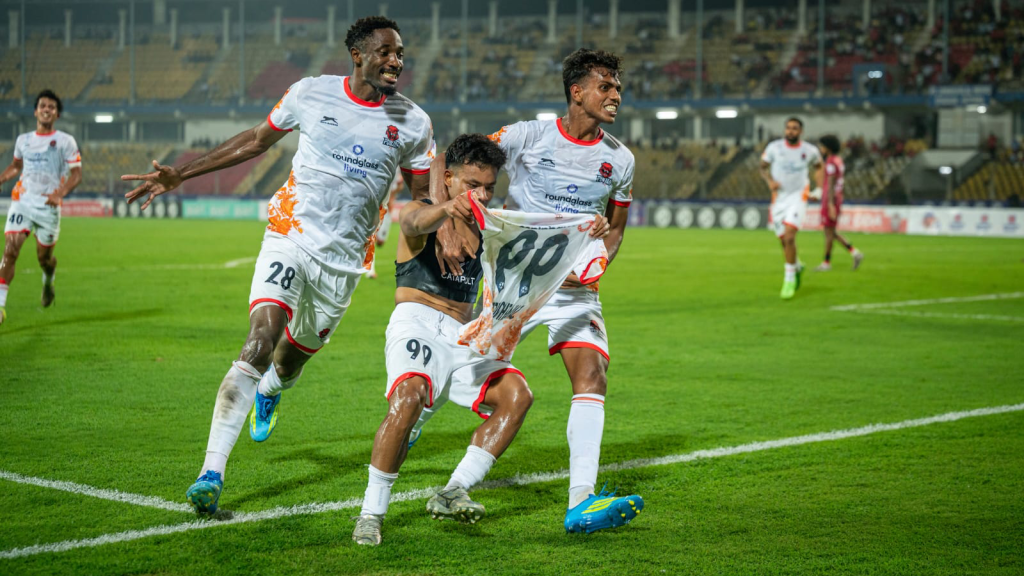
The 2026-27 Indian Super League season is beginning to produce contrasting stories. Defending champions East Bengal have made an explosive start in front of goal, Punjab FC are repeatedly finding ways to score in the closing minutes, and several other teams are struggling to maintain their advantage as matches approach full time.
The latest round highlighted those differences. East Bengal defeated Inter Kashi 5-1 to continue their impressive scoring run, while Punjab FC secured another dramatic victory against Churchill Brothers. At the other end of the spectrum, Odisha FC and NorthEast United played out a goalless draw before Kerala Blasters and Mumbai City FC also failed to score.
The results have raised questions about attacking efficiency, defensive concentration and the physical demands of a congested early-season schedule. With 13 of the first 18 matches featuring goals in the 80th minute or later, the closing stages have become a particularly important part of the competition.
However, late goals do not necessarily point to fatigue alone. Tactical substitutions, defensive mistakes, attacking pressure and changes in momentum can all influence what happens near the end of a match. The challenge for teams is to manage those factors while maintaining their intensity across the full 90 minutes.
Punjab FC Turn Late Substitutions Into a Winning Formula
Punjab FC have emerged as one of the most effective teams at exploiting opportunities in the closing stages of matches. Their ability to introduce fresh attacking players and maintain pressure against tiring defences has helped them collect crucial goals during the opening rounds of the ISL campaign.
Of the 18 matches played so far, 13 have featured at least one goal in the 80th minute or later. Punjab have repeatedly benefited from this trend, using substitutes to change the pace of their attacks and unsettle opponents who appeared close to securing a result.
Their approach has produced a series of decisive moments across their opening fixtures. Rather than relying exclusively on the starting lineup, Punjab have demonstrated the value of making changes that introduce energy and direct running at a stage when defensive organisation can become harder to maintain.
How Punjab FC found a winner against Odisha FC
Punjab’s opening match against Odisha FC provided an early example of the impact substitutes could have. Bishu entered the game in the 68th minute and found space in the closing stages, delivering the ball across the penalty area for Raphael Messi Bouli to score the winner in the fourth minute of added time.
The move demonstrated how a player introduced late in a match can exploit a moment of defensive inattention. Bishu’s run created the opening, while Bouli supplied the finishing touch to secure the result.
For Odisha, the late concession was costly because the team had managed to keep the contest close until the final moments. For Punjab, it reinforced the importance of maintaining attacking intent even when a match appears to be approaching its conclusion.
Gurkirat Singh rescues Punjab against Mumbai City
Punjab continued to benefit from their substitutes in the second match against Mumbai City FC. Konsam Sanathoi Singh entered the game in the 77th minute and repeatedly challenged the opposition defence with his forward runs.
His pressure helped create the conditions for another substitute, Gurkirat Singh, to score a 90th-minute equaliser. The goal illustrated how one player’s movement can create space and opportunities for another, even when the substitute making the decisive contribution is not the player who finishes the move.
The sequence also offered a useful lesson for opponents. Defending a lead requires more than sitting deep and clearing the ball. Teams must continue to manage the spaces around their penalty area and prevent fresh attackers from building momentum.
Konsam Sanathoi Singh delivers against Churchill Brothers
Punjab’s latest victory against Churchill Brothers provided another example of their effectiveness late in matches. Introduced at half-time, Konsam scored the winner in the fifth minute of added time as Punjab secured a 3-2 victory.
His contribution underlined the value of a substitute who can sustain forward movement against defenders dealing with the accumulated demands of a match. Punjab’s ability to create late opportunities has become a notable feature of their opening campaign.
Nevertheless, the pattern should not automatically be interpreted as proof that Punjab are physically superior to every opponent. Their results also reflect tactical decisions, the timing of substitutions and their willingness to attack when matches remain undecided.
Are Fatigue and Limited Pre-Season Preparation Affecting ISL Teams?
Late goals have become one of the defining features of the opening rounds, raising questions about whether teams are struggling to maintain their physical intensity throughout matches. The issue was particularly noticeable after Kerala Blasters and Mumbai City FC played out a 0-0 draw in Kochi.
Fitness became a recurring subject during the post-match press conference, where the word was mentioned eight times. Kerala Blasters head coach Ashley Westwood acknowledged that his team’s conditioning and stamina were still developing after a limited pre-season.
Westwood’s side covered approximately 98.8 kilometres during the match. While that figure provides an indication of the team’s overall running output, it does not independently establish whether the players were sufficiently fit or whether fatigue directly affected their performance.
The distinction matters because total distance alone cannot explain everything that happens during a football match. High-intensity sprints, recovery runs, changes of direction and the ability to repeat demanding actions can be just as important as the overall distance covered.
Westwood also stressed that the team’s preparation was not an excuse for its performance. His comments reflected the difficulty of balancing an honest assessment of physical readiness with the expectation that players must deliver results regardless of the circumstances.
Why the final 10 minutes can change a match
Football matches often become more unpredictable towards the end because teams adjust their tactics according to the scoreline. A side chasing a goal may commit more players forward, while a team protecting a lead may retreat towards its penalty area.
Those decisions can create opportunities that were less available earlier in the match. Attacking players may find additional space behind the defence, while defenders must make decisions under pressure with less protection from the midfield.
Fatigue can contribute to these problems, particularly when players struggle to recover their positions or repeat high-intensity movements. However, tactical changes and individual errors can also explain late concessions.
The frequent appearance of late goals in the ISL therefore deserves attention, but the available results do not establish a single explanation for the trend. More detailed performance data would be needed to determine how much physical exhaustion, tactical risk and defensive decision-making contribute to these outcomes.
Does a Longer Pre-Season Guarantee Better Fitness?
The debate over fitness is complicated by differences in how teams prepare for a new campaign. Some clubs enter the league after participating in other competitions, while others may have had less time to establish their preferred systems and build match readiness.
Mohun Bagan Super Giant coach Panagiotis Dilmperis had previously suggested that his team’s involvement in the Durand Cup final, the IFA Shield and the Calcutta Football League had affected its aerobic and anaerobic capacity.
Aerobic capacity refers broadly to the body’s ability to use oxygen to support sustained physical activity. Anaerobic energy systems become especially important during intense efforts that require players to accelerate, sprint or change direction rapidly.
Football places demands on both systems. Players need sufficient endurance to remain involved throughout a match, but they must also be capable of producing repeated bursts of speed and power.
Dilmperis’s comments illustrate a potential problem with a crowded competitive calendar: playing more matches can provide valuable competitive preparation, but it can also reduce the time available for recovery and structured conditioning.
More matches do not automatically mean better preparation
Competitive matches help players develop familiarity with teammates, understand tactical responsibilities and adjust to the intensity of actual competition. However, match participation is not a complete substitute for a carefully managed training programme.
Coaches must balance playing time, recovery, strength work and tactical preparation. If a team spends an extended period competing in tournaments, its staff may have fewer opportunities to address physical weaknesses or introduce new systems through training.
Conversely, a longer pre-season does not guarantee that every player will reach peak fitness. The quality of the training, the management of workloads and the condition of individual players also matter.
For ISL clubs, the practical challenge is to prepare players for the demands of the competition without accumulating unnecessary fatigue before the campaign develops. The early results suggest that managing energy across the full match will be an important consideration, particularly for teams that frequently concede or score in the closing minutes.
East Bengal’s Attacking Power Makes an Early Statement
While several clubs have been involved in late drama, East Bengal have started the campaign by creating a different kind of headline. The defending champions defeated Inter Kashi 5-1 at Balewadi Stadium, taking their total to nine goals from their first two league matches while conceding only once.
The numbers are impressive, although two matches are not enough to establish how the team will perform over an entire season. What the early results do show is that East Bengal have started with an effective attacking rhythm and have been able to convert opportunities into goals.
Their performance against Inter Kashi was particularly notable because the opening goal demonstrated the speed and coordination of their attacking play. Mohammed Rashid, Ake Arnaud and Dani Ramirez combined through a sequence of quick passes that moved the ball into the opposition penalty area.
Ramirez then evaded a sliding defender before chipping the ball over goalkeeper Albino Gomes. The finish reflected confidence and technical control, but the move also depended on the quality of the passing that created the opportunity.
Why East Bengal’s quick passing matters
One-touch combinations can make it difficult for a defence to settle into position. When players move the ball quickly and offer immediate passing options, defenders have less time to adjust their shape or close down the player receiving possession.
East Bengal’s opening goal illustrated how coordinated movement can create an advantage without requiring an extended period of individual dribbling. The ball moved through several players before Ramirez received the opportunity to finish.
This type of attacking sequence also places demands on the defending team. A defender who commits to a challenge at the wrong moment can leave space behind, while a goalkeeper may be forced to react quickly once an attacker enters the penalty area.
East Bengal’s ability to create such opportunities suggests that their attacking combinations are functioning effectively at this early stage. The next test will be whether they can maintain that efficiency against opponents who adopt more cautious defensive approaches.
Nine goals in two matches: What the numbers tell us
East Bengal have scored nine goals and conceded one across their first two fixtures, providing an excellent opening return for the defending champions.
However, those figures should be interpreted carefully. A strong start can establish confidence and give a team an early advantage, but the quality of future opponents, injuries, tactical adjustments and the consistency of performances will influence the remainder of the season.
There is also a difference between scoring heavily in a small number of matches and maintaining a reliable attacking structure across a full campaign. East Bengal will need to continue creating chances, defending effectively and adapting when opponents limit their space.
For now, their start places them among the most impressive attacking sides in the early ISL discussion. Their performance against Inter Kashi also provides a clear contrast with teams that have struggled to convert promising spells into goals.
Two Goalless Draws Highlight the Other Side of the ISL
The latest round also produced the first two goalless matches of the 2026-27 campaign, with Odisha FC drawing 0-0 against NorthEast United before Kerala Blasters and Mumbai City FC recorded the same scoreline.
These results contrasted sharply with East Bengal’s five-goal performance and Punjab FC’s late attacking breakthroughs. They also demonstrated that an increase in late goals does not mean every match is becoming more open or that attacking opportunities are being converted consistently.
In Kochi, Kerala Blasters supporters created a lively atmosphere despite the lack of goals. Their enthusiasm remained a notable feature of the occasion, even though the home side struggled to turn its attacking activity into a decisive result.
Kerala Blasters attempted 13 shots, but only four were on target. That figure points to a gap between generating attempts and testing the opposition goalkeeper.
Shot accuracy is only one measure of attacking performance, but it helps illustrate why a team can appear active without scoring. Attempts that miss the target or are comfortably dealt with by the goalkeeper do not necessarily create sustained pressure.
Why shot volume does not always produce goals
Teams can accumulate shots without creating enough clear opportunities to score. The location of an attempt, the pressure applied by defenders and the quality of the final decision all influence whether a shot becomes a meaningful threat.
A team may also struggle to create the type of chance that forces defenders to make difficult decisions. Passing around the penalty area can produce possession and attempts, but well-organised opponents may still block shooting lanes or force attackers into unfavourable positions.
Kerala Blasters’ 13 attempts and four shots on target suggest that their attacking activity did not translate into a goal against Mumbai City. However, the statistics alone cannot explain every aspect of the performance or establish whether finishing, chance creation or Mumbai’s defensive organisation was the principal factor.
For Mumbai City, keeping a clean sheet provided a defensive positive, but the absence of a goal at the other end meant the team could not turn that resistance into a victory. Both sides left the match with a point, illustrating how defensive stability can coexist with limited attacking output.
Mohun Bagan Secure a Narrow Win Against Chennaiyin FC
Mohun Bagan Super Giant recorded a 1-0 victory over Chennaiyin FC, adding another example of a close contest to a round otherwise marked by high scores, late goals and goalless draws.
The result underlined the value of converting a decisive opportunity while keeping the opposition from finding an equaliser. Unlike East Bengal, who scored five times against Inter Kashi, Mohun Bagan needed only one goal to secure the three points.
Such matches can be especially demanding for the team protecting a narrow advantage. A single goal leaves little room for defensive errors, and opponents can increase the pressure by committing more players forward as time runs out.
For Mohun Bagan, the victory offered a positive result in a competitive round. Chennaiyin, meanwhile, were left without a goal and will need to find ways to improve their attacking output in subsequent fixtures.
FC Goa and SC Delhi Share the Points
FC Goa and SC Delhi played out a 1-1 draw, ensuring that neither team left the match empty-handed. The result was another reminder that the early ISL campaign has produced a mixture of attacking performances and closely contested encounters.
Unlike the two goalless draws, this match saw both teams find the net. However, neither side managed to establish the decisive advantage needed to claim all three points.
For teams seeking consistency, draws can provide useful evidence of competitive resilience, but their value depends on the wider context of a season. Clubs must balance the need to avoid defeat with the ambition to turn close matches into victories.
As the campaign progresses, Goa and Delhi will need to build on their performances and seek greater consistency in both attacking and defensive phases. The result alone does not reveal every strength or weakness, but it reflects how evenly matched contests can shape the league’s early narrative.
ISL 2026-27 Latest Matchweek Results
| Fixture | Result |
|---|---|
| Inter Kashi vs East Bengal | Inter Kashi 1-5 East Bengal |
| Odisha FC vs NorthEast United | 0-0 |
| Churchill Brothers vs Punjab FC | Churchill Brothers 2-3 Punjab FC |
| Kerala Blasters vs Mumbai City FC | 0-0 |
| Mohun Bagan Super Giant vs Chennaiyin FC | Mohun Bagan Super Giant 1-0 Chennaiyin FC |
| FC Goa vs SC Delhi | 1-1 |
What to Watch as the ISL Season Continues
The latest round has highlighted three developments worth monitoring: East Bengal’s ability to sustain their scoring form, Punjab FC’s success with late attacking changes and the physical readiness of teams navigating the early part of the season.
East Bengal have made an emphatic start, but maintaining their goal-scoring rate will require consistency against different tactical approaches. Opponents may attempt to deny them space in central areas or disrupt the passing combinations that have helped create early opportunities.
Punjab FC’s late goals present a different challenge. Their opponents must find ways to maintain defensive concentration and manage substitutions effectively, especially when protecting narrow leads. Punjab, meanwhile, will want to preserve the directness and energy that have made their late attacks productive.
Fitness will remain an important consideration, although the current evidence does not prove that fatigue is responsible for every late goal. Coaches will need to evaluate individual workloads, tactical decisions and defensive organisation rather than treating physical exhaustion as the sole explanation for late concessions.
The two goalless draws also show that attacking productivity remains uneven across the league. Teams that create opportunities but struggle to hit the target will need to improve the quality of their finishing, while sides that defend effectively must still find ways to threaten at the other end.
Ultimately, the early 2026-27 ISL campaign has offered a varied picture of Indian Football. East Bengal are scoring freely, Punjab FC are producing dramatic finishes, and several other teams are still searching for the right balance between attacking ambition and defensive control. As the season develops, the clubs that manage their physical demands, tactical adjustments and scoring opportunities most effectively will have the strongest chance of turning promising performances into consistent results.
For breaking news and live news updates, like us on Facebook or follow us on Twitter and Instagram. Read more on Latest Football on thefoxdaily.com.






COMMENTS 0