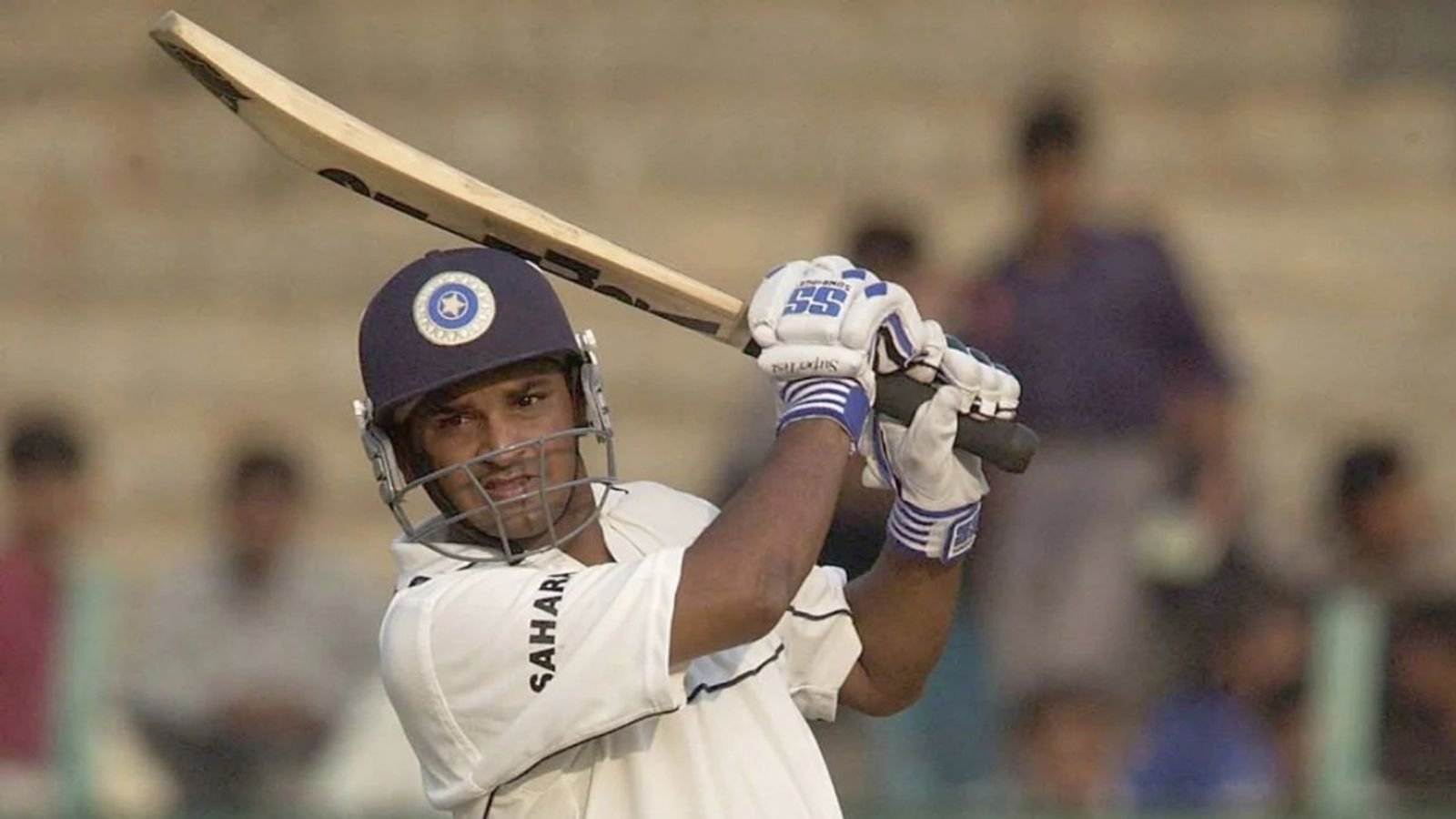
Jacob Martin’s long legal battle has finally come to an end, bringing a major turning point in the former India cricketer‘s life. After more than two decades of uncertainty, Martin has been cleared in a criminal case connected to an incident during India’s 2004 tour of England. The prolonged proceedings had serious consequences for his professional life, including the loss of his Railways job and difficulties in securing opportunities within Indian Cricket.
The case had followed Martin for much of his post-playing life, even though he had represented India earlier in his career and built a substantial record in domestic cricket. The court’s decision therefore represents more than a legal development. For Martin, it closes a chapter that began more than 20 years ago and allows him to move forward without the unresolved case hanging over his career and reputation.
Jacob Martin finally receives relief after 22 years
The Patiala High Court’s decision has provided Jacob Martin with the clean chit he had been waiting for since the case emerged in 2004. Martin had been linked to a criminal investigation arising from an incident involving a member of India’s touring party in England.
The matter became complicated after one player reportedly remained in the United Kingdom beyond the validity period of his visa. According to the account surrounding the case, an attempt was allegedly made to extend the stay using a forged immigration stamp. The individual was eventually deported to India, after which police questioning brought Martin’s name into the investigation.
Martin maintained his position while cooperating with the authorities and the cricket board during the investigation. What followed, however, was an extraordinarily lengthy legal process that continued for 22 years before the former India international finally received relief.
How the 2004 England tour became a turning point
India’s 2004 England tour was supposed to be another chapter in Martin’s cricket career. Instead, events away from the cricket field became closely connected with a legal case that would affect his professional life for years.
The controversy reportedly centred on immigration-related circumstances involving a player who remained in England after the rest of the touring party had returned. When the matter came under investigation, Martin’s name surfaced and he subsequently became involved in the case.
The important point is that the legal proceedings did not end quickly. A case that originated in 2004 continued to affect Martin long after his international playing career had ended. By the time the court finally cleared him, more than two decades had passed.
Why a 22-year legal case matters
A legal case lasting this long can have consequences that go well beyond the courtroom. Careers move on, professional relationships change and opportunities disappear with time. For a former cricketer, the timing can be especially damaging because a playing career is naturally short.
Martin’s experience highlights how unresolved legal proceedings can continue to influence an individual’s professional prospects even after the original sporting career has ended. In his case, the consequences reportedly included the loss of his Railways employment and uncertainty over opportunities with the BCCI.
Jacob Martin says the case affected his career
Martin has spoken about the personal and professional stress caused by the prolonged proceedings. According to his account, he did not receive the clarity he expected during the long period and eventually lost his Railways job.
He also said that he did not get the expected opportunities from the BCCI during those years. For someone who had already represented India, the situation became a particularly difficult chapter of his life.
“I lost my job in the railways. So I had a lot of stress because of this,” Martin said while reflecting on the long-running case.
The court’s decision has therefore carried emotional significance for Martin. After spending 22 years waiting for the matter to reach a conclusion, he described the judgment as a major turning point and effectively a new lease of life.
From India international to domestic cricket mainstay
Before the legal case became a defining part of his post-playing story, Jacob Martin had established himself as a respected domestic cricketer.
The right-handed batter represented India in 10 One-Day Internationals between 1999 and 2001. He scored 158 runs in eight innings, including one unbeaten knock. His international career was relatively brief, but his domestic record was considerably more substantial.
Martin accumulated 9,192 runs in 138 first-class matches, demonstrating the consistency and longevity that made him an important figure on India’s domestic circuit. He also scored 2,948 runs in 101 List A matches.
His numbers underline an important distinction in Indian cricket: international selection is not always a perfect reflection of a player’s domestic contribution. Martin’s first-class record shows that he enjoyed a long and productive career even though his international opportunities were limited.
| Format | Matches | Runs | Key Detail |
|---|---|---|---|
| Tests | 0 | 0 | Did not play Test cricket for India |
| ODIs | 10 | 158 | Represented India between 1999 and 2001 |
| First-class | 138 | 9,192 | Major part of his domestic career |
| List A | 101 | 2,948 | Strong domestic one-day record |
| T20 | 2 | 14 | Limited T20 appearances |
Martin’s domestic record tells a bigger story
Martin’s career statistics offer a useful perspective on how different the domestic and international paths can be. His 9,192 first-class runs came across 138 matches, a significant body of work that required consistency over many seasons.
By comparison, his international career consisted of only 10 ODIs. That gap demonstrates how difficult it was for many talented domestic players of his generation to establish themselves permanently at international level.
However, his international career remains an important part of his story. Martin earned his India opportunity during an era when competition for batting positions was intense. Although his international numbers were modest, reaching the India dressing room itself represented the culmination of years of domestic cricket.
The professional cost of an unresolved case
The most striking aspect of Martin’s story is not simply the length of the legal proceedings but the way the uncertainty reportedly affected his career after cricket.
Professional athletes have a relatively short window in which they can build financial security and establish themselves in coaching, administration or other cricket-related roles. A prolonged legal dispute can make that transition much harder.
Martin’s experience shows why the conclusion of a case can matter even decades after the original allegation. A player may retire from cricket, but unresolved legal questions can continue influencing how organisations view professional opportunities.
In this context, the clean chit is significant because it provides Martin with something that had been missing for years: finality.
What the verdict means for Jacob Martin now
The court’s decision does not restore the 22 years that have passed, nor can it completely undo the professional consequences Martin says he experienced. However, it removes the uncertainty surrounding the case.
That distinction is important. A legal resolution can provide closure even when the practical consequences of a prolonged dispute cannot be reversed completely.
For Martin, the decision could allow him to focus on his life after cricket without the same unresolved matter dominating his personal and professional story.
A rare second chapter after cricket
Martin’s story also offers a broader lesson about sporting careers. Retirement is often treated as the end of an athlete’s journey, but former players can spend decades dealing with issues that emerged during or shortly after their playing days.
In Martin’s case, the legal battle became a second chapter of his career. His cricket statistics were already part of history, but the 22-year case overshadowed much of his life away from the sport.
The clean chit now changes that narrative. Instead of being remembered only as a former India cricketer involved in a long-running legal dispute, Martin can finally look back on the matter as something that has reached its conclusion.
Jacob Martin’s India career in perspective
Martin’s 10 ODI appearances for India came between 1999 and 2001. Although he did not establish himself as a long-term international regular, his domestic career remained impressive for many years.
His 9,192 first-class runs are arguably the strongest statistical reminder of his cricketing ability. Playing 138 first-class matches requires technical adaptability, physical endurance and consistency across changing conditions.
His List A record was also notable, with 2,948 runs from 101 matches. These figures show that Martin was far more than the limited-overs international statistics alone might suggest.
The bigger lesson from Martin’s 22-year wait
Jacob Martin’s case highlights an uncomfortable reality that can be overlooked when sporting stories focus only on runs, wickets and selection. Athletes are also individuals whose professional lives can be deeply affected by events outside the playing field.
The length of the legal process is particularly striking. Twenty-two years is long enough for an entire generation of cricketers to enter and leave international cricket. Martin’s former teammates and contemporaries have long since moved into different stages of their lives, while his case remained unresolved.
That makes the verdict more than a routine legal update. It represents the conclusion of an unusually long chapter in the life of a former India international.
Conclusion: Jacob Martin can finally move forward
Jacob Martin’s clean chit after a 22-year legal battle marks a significant personal victory for the former India cricketer. The case, which originated around India’s 2004 England tour, reportedly affected his employment and created prolonged uncertainty after his playing career.
Martin’s cricket career itself was substantial. He represented India in 10 ODIs and built an impressive domestic record of more than 9,000 first-class runs. Yet the legal proceedings became an enduring part of his life long after his final appearance for India.
Now, after more than two decades, the former cricketer finally has legal closure. The verdict cannot recover the opportunities or years lost during the prolonged proceedings, but it can give Martin the freedom to look ahead without the unresolved case following him.
His story is ultimately a reminder that a cricketer’s journey does not always end when the final innings is played. Sometimes, the most difficult innings can come long after the last ball has been delivered.
For breaking news and live news updates, like us on Facebook or follow us on Twitter and Instagram. Read more on Latest Cricket on thefoxdaily.com.






COMMENTS 0