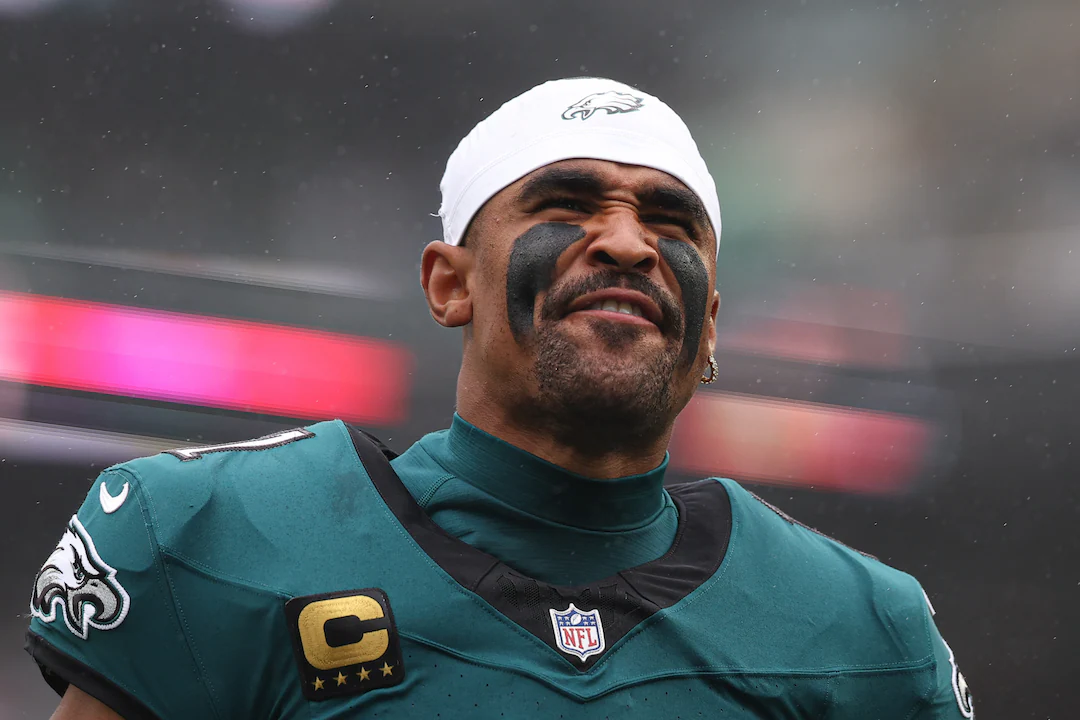
Philadelphia Eagles quarterback Jalen Hurts has been diagnosed with blood clots in both lungs, according to a statement released by the team and his agent on Monday, October 19. Media reports indicate that the former Super Bowl Most Valuable Player is expected to miss the remainder of the 2026 NFL season as he undergoes treatment and recovery.
The diagnosis represents a significant setback for Hurts and the Eagles, who will potentially have to navigate the rest of their campaign without their starting quarterback. However, the medical update also provided encouraging news, with the statement confirming that Hurts is clinically stable and has a very good prognosis for a full recovery.
The latest development follows an earlier announcement from Philadelphia on Thursday, when the team revealed that Hurts had been diagnosed with a superficial blood clot in his calf. Specialists have evaluated him over the past several days, and additional testing and monitoring have since resulted in a more serious diagnosis.
According to the Eagles and Hurts’ agent, Nicole Lynn, doctors initially identified a superficial vein thrombosis in his left calf. Further examinations subsequently confirmed deep vein thrombosis, along with bilateral pulmonary emboli, meaning blood clots are affecting both lungs.
While the diagnosis is serious and is expected to prevent Hurts from participating in contact football activities during treatment, the team indicated that he is expected to make a full recovery. The medical statement also said that no long-term effects are anticipated.
Jalen Hurts Diagnosed With Blood Clots in Both Lungs
The Philadelphia Eagles and agent Nicole Lynn released a joint statement on Monday outlining the results of Hurts’ latest medical evaluations. The statement explained that his initial diagnosis had changed following further testing and monitoring by medical specialists.
“Jalen was initially diagnosed by specialists in London with a left calf superficial vein thrombosis. After further testing and monitoring, the current diagnosis is a deep vein thrombosis, as well as bilateral pulmonary emboli,” the Eagles and agent Nicole Lynn said in a statement.
The initial diagnosis involved a superficial blood clot in Hurts’ left calf. However, further testing identified deep vein thrombosis, a condition involving a blood clot in a deep vein, as well as bilateral pulmonary emboli affecting both lungs.
The updated diagnosis explains why the quarterback’s medical situation has become a major concern for the organization. Blood clots require careful medical management, and the involvement of both lungs makes it especially important for Hurts to follow his treatment plan and avoid activities that could put his health at risk.
The Eagles have not indicated that Hurts is experiencing long-term complications. Instead, the statement emphasized that he is clinically stable and that his prognosis is very good.
Although the team has provided an encouraging medical outlook, Hurts’ immediate return to the field remains uncertain. Contact football will not be an option while he is taking blood-thinning medication, meaning his recovery timeline will be determined by medical considerations rather than the team’s competitive needs.
What Is Bilateral Pulmonary Embolism?
A pulmonary embolism occurs when a blood clot blocks an artery in the lungs. These clots often originate in a deep vein elsewhere in the body, particularly in the legs, before traveling through the bloodstream to the lungs.
When pulmonary emboli affect both lungs, the condition is described as bilateral pulmonary embolism. The severity can vary depending on factors such as the size and location of the clots, their effect on blood flow, and the patient’s overall medical condition.
Deep vein thrombosis and pulmonary embolism are related conditions. A clot that forms in a deep vein can break away and travel to the lungs, where it may obstruct circulation. This is why medical specialists take suspected blood clots seriously and use appropriate testing to establish a diagnosis.
Anticoagulant medications, commonly known as blood thinners, are frequently used to treat blood clots. These medications help prevent existing clots from growing and reduce the risk of additional clots forming while the body gradually breaks down the existing ones.
In Hurts’ case, the Eagles’ statement indicated that his treatment should involve blood thinners. However, because these medications can increase the risk of bleeding following physical contact, he will be unable to participate in contact football while taking them.
The team has not provided a precise timetable for his return to competitive action. His recovery and any eventual return to football will depend on medical guidance and when he can safely stop taking the medication.
Eagles Expect Hurts to Make a Full Recovery
Despite the seriousness of the diagnosis, the Eagles delivered an optimistic update regarding Hurts’ long-term health. The statement confirmed that he is clinically stable and expressed confidence that he will recover fully.
“Jalen’s prognosis is very good, and we expect a full recovery. We anticipate that he will have the opportunity to resume contact football activities when off the blood thinners,” the statement said, adding no long-term effects are expected.
The statement provides reassurance for the quarterback, his family, teammates, and Eagles supporters. While his absence would be a major sporting setback, the organization has made clear that his health and recovery are the immediate priorities.
The expectation that Hurts will be able to resume contact activities after completing treatment offers hope for his future in the NFL. However, it does not guarantee that he will return during the current season, particularly given reports that he is expected to miss the remaining games of the 2026 campaign.
Medical decisions involving blood clots require careful assessment. The Eagles will need to follow the advice of Hurts’ specialists before determining when he can resume training, participate in contact drills, or return to game action.
For now, the most important development is that Hurts is clinically stable and has been given an encouraging prognosis. The team has not reported any expected long-term effects from the condition.
Diagnosis Follows Eagles’ London Game Against the Jaguars
The medical update comes after Philadelphia’s international game against the Jacksonville Jaguars on October 11. The Eagles played at Tottenham Hotspur Stadium in London, where they suffered a narrow 19-17 defeat.
The team previously announced on Thursday that Hurts had a superficial blood clot in his calf. Specialists in London initially diagnosed a superficial vein thrombosis in his left calf, according to the subsequent joint statement from the Eagles and Lynn.
Further testing and monitoring over the following days resulted in the updated diagnosis of deep vein thrombosis and bilateral pulmonary emboli.
The sequence of medical updates has drawn attention to the seriousness of the quarterback’s condition. However, the available information does not establish that the London game caused the blood clots. The team has explained where the initial diagnosis was made but has not identified a specific cause for the condition.
With Hurts expected to be unavailable for contact football while receiving treatment, Philadelphia must now prepare for the possibility of playing the rest of the season without its established starting quarterback.
Jalen Hurts’ Super Bowl Success With the Eagles
Hurts has been one of the central figures in Philadelphia’s recent success, most notably guiding the Eagles to a Super Bowl championship in February 2025.
In the title game against the Kansas City Chiefs, Hurts threw two touchdown passes and scored another touchdown on the ground. His performance helped Philadelphia secure the championship and earned him the Super Bowl Most Valuable Player award.
The achievement cemented his status as one of the NFL’s leading quarterbacks and strengthened his connection with Eagles supporters. His ability to contribute both as a passer and as a runner has been a defining feature of his playing style.
Hurts’ importance to Philadelphia extends beyond his individual statistics. As the team’s starting quarterback and a key figure in its offense, he plays a central role in its passing game, running attack, and overall offensive leadership.
That makes the possibility of losing him for the rest of the season a considerable challenge for the organization. The Eagles will need to adjust their offensive approach if he remains unavailable, while also ensuring that his medical recovery proceeds without unnecessary pressure.
What Hurts’ Absence Could Mean for Philadelphia
If Hurts misses the remainder of the 2026 season as reported, the Eagles will have to rely on their available quarterback options to lead the offense. His absence would force the coaching staff to reassess its game plans and determine how best to maintain consistency without its regular starter.
Replacing a quarterback with Hurts’ experience and dual-threat ability is a difficult task. His capacity to make plays through the air and on the ground gives Philadelphia multiple offensive options, and any replacement would face the challenge of adapting to the team’s system while competing against NFL defenses.
The Eagles’ broader challenge will be balancing their competitive ambitions with the reality of a serious medical issue involving one of their most important players. Although the prospect of losing Hurts for the season is disappointing, the team’s encouraging update about his prognosis offers a positive long-term outlook.
Philadelphia’s immediate focus will be on supporting Hurts through his treatment and preparing the rest of the roster for the games ahead. Any decision about his eventual return will need to be guided by medical professionals rather than the team’s position in the standings.
Jalen Hurts’ NFL Future Remains Encouraging Despite the Setback
Hurts’ diagnosis of deep vein thrombosis and bilateral pulmonary emboli is a serious development for the Philadelphia Eagles. Reports that he could miss the rest of the 2026 season would represent a significant blow to the team’s campaign, particularly given his importance to the offense and his history of performing in high-pressure situations.
Nevertheless, the Eagles and his agent have emphasized that Hurts is clinically stable, that his prognosis is very good, and that a full recovery is expected. The statement also indicated that no long-term effects are anticipated.
His treatment is expected to involve blood thinners, which will prevent him from participating in contact football until he can safely discontinue the medication. The timeline for his return will therefore depend on his medical progress and the advice of his specialists.
For the Eagles, the immediate priority is Hurts’ health. While the team prepares for the possibility of finishing the season without its Super Bowl-winning quarterback, the encouraging medical outlook offers hope that he can eventually return to the field.
As of October 19, 2026, Hurts is reported to be clinically stable and expected to make a full recovery, although media reports indicate that he could miss the remainder of the season. The Eagles have not provided a definitive return date, and his future participation in football will depend on his recovery and medical clearance.
For breaking news and live news updates, like us on Facebook or follow us on Twitter and Instagram. Read more on Latest Sports on thefoxdaily.com.




COMMENTS 0