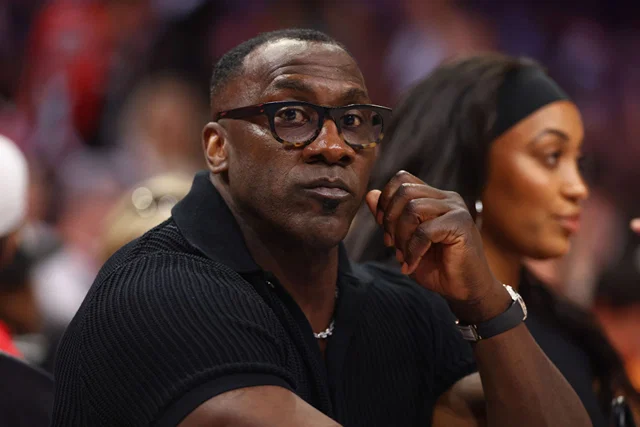
Philadelphia Eagles quarterback Jalen Hurts has become the centre of a major health controversy following reports that he was diagnosed with multiple blood clots, including deep vein thrombosis and bilateral pulmonary emboli. The development has raised serious questions about the medical decisions surrounding his initial diagnosis and clearance to play, with Pro Football Hall of Famer Shannon Sharpe suggesting that the quarterback could have grounds to pursue legal action against the franchise.
Hurts was initially diagnosed with a superficial blood clot in his calf and was reportedly cleared by the Eagles to play in their Week 5 matchup against the Jacksonville Jaguars in London. However, subsequent medical examinations reportedly revealed a more serious condition, with a follow-up ultrasound in Philadelphia showing that the clot had progressed.
The latest diagnosis has intensified scrutiny of the Eagles’ handling of the quarterback’s health. According to the supplied report, Hurts has been diagnosed with deep vein thrombosis and bilateral pulmonary emboli, a serious medical development that could require treatment with blood thinners and prevent him from participating in football-related activities.
Sharpe, who has frequently offered outspoken opinions on major NFL stories, reacted strongly to the situation. He questioned the potential consequences of the medical decisions surrounding Hurts and suggested that the Eagles could face significant financial and legal repercussions if the quarterback’s health or career had been put at risk.
Shannon Sharpe Questions Eagles’ Handling of Jalen Hurts’ Health
Sharpe did not hold back while discussing the situation, expressing concern about the possible consequences of allowing Hurts to play after his initial blood clot diagnosis. His comments suggested that the Eagles could be worried about the potential legal implications of the case.
“Eagles are scared out of their a*s,” Sharpe said. “Cause you might have cost this kid, could have cost him his life and you might have cost him his dam* career.”
The former NFL tight end’s remarks focused on the seriousness of the reported diagnosis and the potential consequences if the quarterback’s condition had deteriorated while he was playing. Blood clots can present significant health risks, particularly when they involve the deep veins or travel to the lungs.
Sharpe’s comments were critical of the circumstances surrounding Hurts’ reported clearance to play in London. The central question is whether the medical information available at the time was sufficient to establish that the quarterback could safely participate in the game.
However, Sharpe’s remarks do not establish that the Eagles committed medical negligence or that Hurts intends to sue the organisation. No lawsuit or formal legal action is confirmed in the supplied report. His comments reflect speculation about the potential consequences of the situation rather than confirmation of an impending legal dispute.
Nevertheless, the incident has prompted renewed discussion about the responsibilities of NFL teams when players experience potentially serious medical conditions. The Eagles’ medical decisions could face greater scrutiny as additional details about the diagnosis and treatment emerge.
Shannon Sharpe Suggests Jalen Hurts Could Have Greater Financial Protection
Sharpe also discussed the potential financial implications of Hurts’ situation, suggesting that the quarterback could now have greater leverage or financial protection because of the seriousness of his medical condition.
“So the last thing they want, he ain’t got no more guaranteed money, he didn’t have any more guaranteed money after that. But he do now, oh, and Joe, he got guaranteed money now. He got plenty guaranteed money, I bet you that.”
Sharpe’s comments appeared to suggest that the Eagles could face financial consequences if the circumstances surrounding Hurts’ treatment led to a dispute. His remarks also raised questions about how a serious medical situation could affect the relationship between a franchise and its starting quarterback.
However, the statement should not be interpreted as confirmation that Hurts has received a new guaranteed contract or that his existing contract has automatically changed because of his diagnosis. The supplied information does not establish that any new agreement has been reached or that legal proceedings have begun.
Questions involving guaranteed money, injury protections, and contractual obligations depend on the terms of a player’s agreement and the circumstances of the case. Any potential claim involving the Eagles would require further information about the medical decisions, relevant contractual provisions, and applicable legal standards.
For now, Sharpe’s comments have added another dimension to the debate surrounding Hurts’ health. While the quarterback’s immediate medical situation remains the primary concern, the controversy could also lead to questions about player protection and the responsibilities of professional sports organisations.
Jalen Hurts Reportedly Played Against Jaguars After 36 Hours Without Sleep
Another detail highlighted in the report is the claim that Hurts played against the Jacksonville Jaguars after reportedly going 36 hours without sleep. The quarterback’s participation in the London game has attracted attention because of the subsequent revelation about the progression of his blood clot condition.
According to the supplied report, the Eagles stated last week that their medical staff and doctors in London had determined Hurts could “safely play” against Jacksonville.
That reported assessment has become a key part of the discussion surrounding the team’s handling of the situation. If the medical staff believed Hurts was fit to play based on the information available at the time, understanding the basis for that decision will be important to assessing the controversy.
At the same time, the claim that Hurts had gone 36 hours without sleep does not, by itself, establish that he was medically unfit to participate. The circumstances of his diagnosis, the results of any tests performed before the game, and the medical advice he received would all be relevant to understanding what happened.
The situation illustrates the difficult decisions that can arise when professional athletes experience health problems while competing during a demanding season. Teams must balance competitive considerations with their responsibility to protect players from avoidable risks.
In Hurts’ case, the subsequent diagnosis has placed the earlier clearance under increased scrutiny. The central issue is whether the medical assessment in London adequately accounted for the condition that was later identified in Philadelphia.
Follow-Up Ultrasound in Philadelphia Reveals Progression of Blood Clot
Hurts’ medical situation reportedly changed following a follow-up ultrasound in Philadelphia. According to the supplied report, the examination showed that the blood clot had moved, leading to further concern about his condition.
The quarterback was subsequently ruled out of the Eagles’ game against the Carolina Panthers after the development became known. The decision marked a significant change from the earlier assessment that he could safely play against Jacksonville.
The report states that Hurts was diagnosed with deep vein thrombosis and bilateral pulmonary emboli. Deep vein thrombosis involves the formation of a blood clot in a deep vein, commonly in the leg. A pulmonary embolism occurs when a clot or part of a clot travels to the lungs and obstructs blood flow.
Both conditions can be serious and require prompt medical evaluation. Bilateral pulmonary emboli indicate involvement of blood vessels supplying both lungs, although the severity and treatment depend on the individual patient’s clinical circumstances.
Blood thinners are commonly used to treat and manage many cases of deep vein thrombosis and pulmonary embolism. These medications help prevent existing clots from growing and reduce the risk of additional clots forming while the body gradually breaks down the existing material.
Because blood thinners can increase bleeding risk, treatment decisions and restrictions on physical activity must be determined by qualified medical professionals. Contact sports such as American football can involve substantial physical impact, making participation particularly complicated for someone receiving anticoagulant treatment.
The supplied report indicates that Hurts will undergo treatment involving blood thinners and be sidelined from football-related activities. His return to the field would depend on his medical progress and the guidance of his treating physicians.
Could the Eagles Face Legal Consequences Over the Jalen Hurts Situation?
Sharpe’s remarks have raised the possibility of legal action, but there is an important distinction between speculation about a lawsuit and a confirmed legal claim. The supplied report does not establish that Hurts has filed a lawsuit against the Eagles or publicly announced plans to do so.
Any potential legal dispute would depend on the available medical evidence, the decisions made by the team and its medical personnel, the information communicated to Hurts, and the relevant contractual and legal obligations.
Questions about medical negligence generally require a detailed examination of whether the care provided met the applicable standard and whether a breach caused harm. A serious medical outcome does not automatically prove negligence, just as a player’s clearance to compete does not, on its own, establish that the decision was appropriate or inappropriate.
The distinction matters in this case because the full medical timeline has not been established by the supplied information. Further details would be needed to determine what the doctors knew before the London game, what tests were performed, and whether the later findings could reasonably have been identified earlier.
Sharpe’s comments reflect concern about the potential risks involved and the financial implications the Eagles could face if wrongdoing were established. They should not be treated as evidence that the team has admitted fault or that Hurts has decided to pursue legal action.
Until more information becomes available, the possibility of litigation remains speculation rather than a confirmed development.
Jalen Hurts’ Health Raises Broader Questions About NFL Player Safety
The controversy has also renewed attention on how NFL teams evaluate players who experience medical problems during the season. Quarterbacks occupy an especially prominent position within their franchises, but their importance to a team’s competitive ambitions cannot outweigh the need for appropriate medical care.
Players can face pressure to remain available, particularly during important games. However, decisions about whether an athlete can safely compete should be based on medical assessments rather than the potential impact of an absence on the team’s performance.
Blood clots present particular challenges because their symptoms and severity can vary. A superficial clot and a deep vein thrombosis are not identical conditions, and a clot that travels to the lungs can create a potentially life-threatening emergency.
The reported progression of Hurts’ condition has therefore raised questions about the medical information available before the Jaguars game and the process used to determine whether he could participate.
Independent medical evaluations can sometimes help provide additional perspectives in complicated cases. However, the need for an independent assessment in Hurts’ situation cannot be established conclusively without knowing the details of the examinations and decisions already made.
The priority remains ensuring that Hurts receives appropriate treatment and that any decision about his future participation is guided by qualified medical professionals. The broader questions about accountability and player safety can be examined as more reliable information becomes available.
What Happens Next for Jalen Hurts and the Philadelphia Eagles?
Hurts’ immediate future will depend primarily on his medical condition and response to treatment. The reported diagnosis of deep vein thrombosis and bilateral pulmonary emboli represents a serious health concern, and any return to football would require careful medical assessment.
For the Eagles, the situation creates both a sporting challenge and a need to address questions about the circumstances surrounding Hurts’ initial clearance. The team’s statement that medical personnel considered him safe to play in London is an important part of the timeline, but the subsequent diagnosis has prompted questions that the available information does not fully resolve.
Sharpe’s comments have brought the possibility of legal and financial consequences into the public discussion. However, there is currently no confirmation in the supplied report that Hurts plans to sue the Eagles, that a lawsuit has been filed, or that his contract has changed as a result of the diagnosis.
The coming developments will likely centre on Hurts’ recovery, further clarification of the medical timeline, and any response from the Eagles to the questions raised about the decision-making process.
Ultimately, the most important issue is Hurts’ health. The quarterback’s condition requires appropriate medical care, and his return to the field should depend on medical advice rather than speculation about his playing status or the team’s competitive needs.
Key Takeaways From the Jalen Hurts Blood Clot Controversy
- Serious diagnosis: The supplied report states that Hurts was diagnosed with deep vein thrombosis and bilateral pulmonary emboli after initially being diagnosed with a superficial blood clot in his calf.
- London appearance: Hurts reportedly played against the Jacksonville Jaguars after Eagles medical personnel and doctors in London said he could “safely play.”
- Follow-up examination: A subsequent ultrasound in Philadelphia reportedly showed that the clot had moved, and Hurts was ruled out against the Carolina Panthers.
- Shannon Sharpe’s reaction: The Hall of Famer criticised the circumstances and suggested that the Eagles could face serious consequences if the quarterback’s health or career had been put at risk.
- Legal uncertainty: Sharpe’s comments have fuelled speculation about a potential lawsuit, but the supplied report does not confirm that Hurts has initiated legal action.
- Medical priority: Hurts’ treatment and any return to football should be determined by his treating medical professionals.
As the situation develops, further information about Hurts’ treatment and the Eagles’ medical decision-making will be crucial to understanding the controversy. For now, the reported diagnosis remains the central concern, while claims about potential litigation and financial consequences remain unconfirmed.
For breaking news and live news updates, like us on Facebook or follow us on Twitter and Instagram. Read more on Latest NFL on thefoxdaily.com.






COMMENTS 0