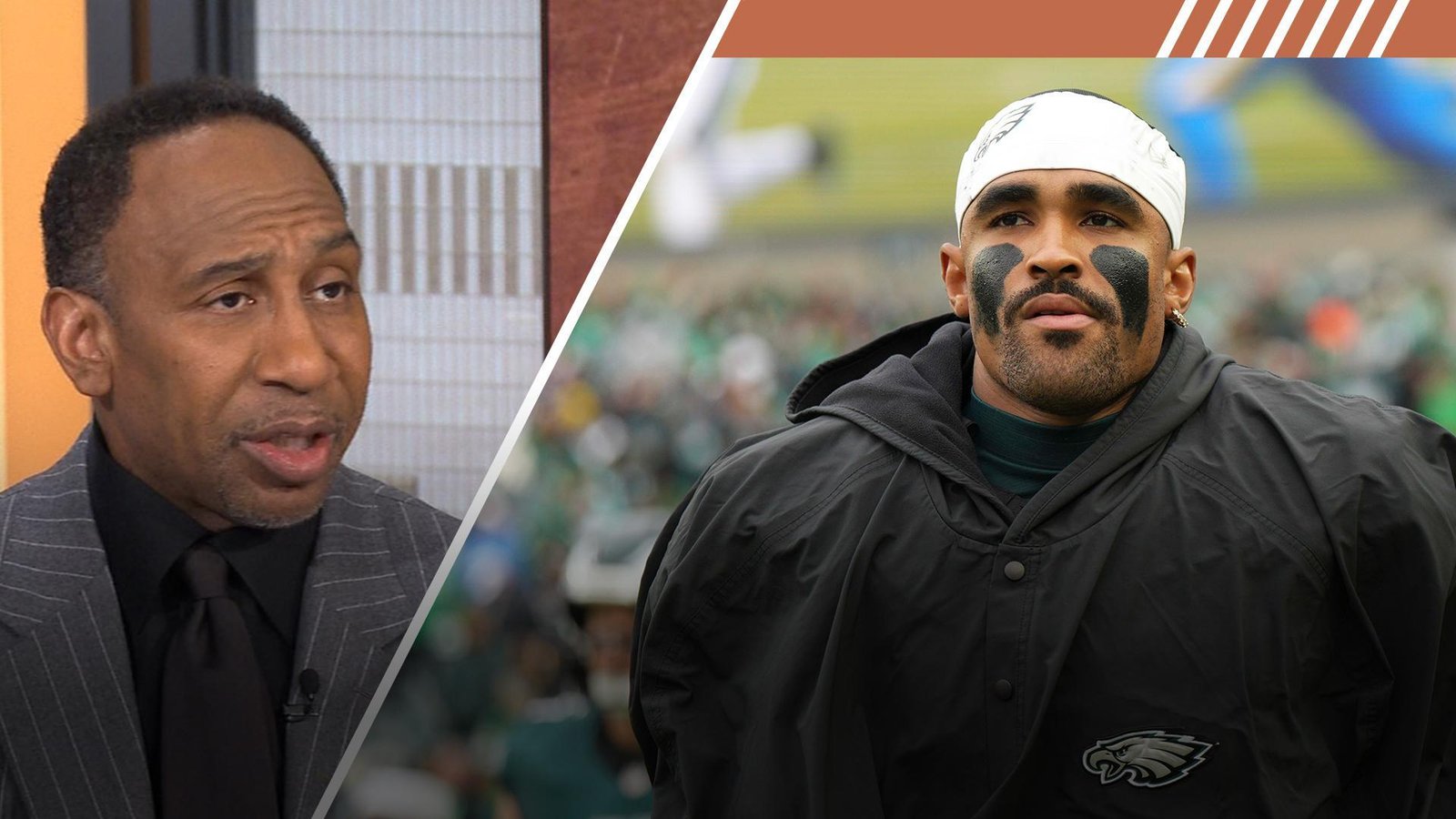
The NFL Players Association (NFLPA) has called for a “full investigation” into the medical care provided to Philadelphia Eagles quarterback Jalen Hurts after reports emerged that the NFL does not plan to punish the franchise over its handling of his blood clot diagnosis and decision to play against the Jacksonville Jaguars in Week 5.
In a statement released Tuesday night, the players’ union questioned whether the league had conducted an investigation into the medical decisions surrounding Hurts. The NFLPA said the league had previously informed the union that it did not intend to review the care provided to the quarterback, raising concerns about whether the circumstances had been adequately examined.
The controversy follows reports that Hurts is expected to miss the remainder of the season after doctors discovered multiple blood clots in his lungs. The diagnosis, reported Monday by NFL Network’s Ian Rapoport and ESPN’s Adam Schefter, has intensified scrutiny of the medical process that allowed the quarterback to play in London’s Week 5 matchup against Jacksonville.
NFL officials have strongly defended the Eagles’ medical staff and the decisions made during Hurts’ treatment. However, the NFLPA insists that a thorough investigation is necessary before conclusions can be drawn about whether the process met the appropriate standards of player safety.
NFLPA Questions Whether the League Investigated Jalen Hurts’ Medical Care
The NFLPA’s statement directly challenged the suggestion that the circumstances surrounding Hurts’ treatment had been adequately reviewed. The union emphasised that establishing the facts is essential to protecting players and ensuring medical decisions are handled appropriately in the future.
“The NFLPA is not aware of any NFL investigation into the medical care provided to Jalen Hurts. In fact, the league previously informed the union that it did not plan to review the care he received,” the statement read.
The union called for a comprehensive examination of the events leading up to Hurts’ appearance against the Jaguars, including the medical assessments, communications and decisions made during his treatment in London.
“Before conclusions are drawn about how this situation was handled, there must be a full investigation into what occurred. Determining the facts is essential to ensuring players receive the highest level of care and protection going forward.”
The statement places player welfare at the centre of the dispute. Professional football players depend on medical professionals to evaluate injuries and illnesses, assess risks and determine whether they can safely participate in games. When a serious medical condition emerges after a player has been cleared to compete, questions about the decision-making process can become particularly important.
The NFLPA’s demand does not, by itself, establish that the Eagles’ medical staff or league officials acted improperly. Instead, the union is arguing that the circumstances should be examined before any definitive conclusions are reached.
The central issue is whether the medical decisions surrounding Hurts were supported by the information available at the time and whether the process provided adequate safeguards for the quarterback’s health.
NFL Chief Medical Officer Defends Eagles’ Handling of Hurts
NFL officials defended the medical process on Tuesday, pushing back against suggestions that external pressures or other considerations had influenced the decisions involving Hurts.
Speaking at the league’s owners’ meetings, NFL chief medical officer Allen Sills rejected the suggestion that physicians would knowingly place a player in danger because of factors unrelated to medical care.
“The notion that there’s external factors that any of our physicians would put a player in harm’s way — that’s nonsense,” Sills said.
Sills also expressed confidence in the Eagles’ medical personnel, describing their approach to Hurts’ treatment as cautious and focused on the quarterback’s wellbeing.
“Very conservative, very patient-focused and appropriately guarded in every step,” Sills said of the Eagles’ treatment of Hurts.
NFL officials confirmed that they had been in contact with the Eagles’ medical team and Cleveland Clinic London throughout the process. The league has declined to discuss the specific medical details, citing patient privacy.
Sills, who has worked as a team physician for three decades, said he had “tremendous confidence” in the Eagles’ medical staff. His defence reflects the league’s position that the decisions were made with player safety in mind.
Jeff Miller, the NFL executive vice president responsible for player health and safety, also rejected the speculation surrounding the case, describing it as “considerable and uninformed” and “unfounded.”
“Conservative steps were taken to ensure Jalen Hurts’ health was always made the first priority and continues to be,” Miller said.
The contrasting positions leave an important question unresolved: whether an independent or formal review will examine the decisions and communications that preceded Hurts’ appearance against Jacksonville.
What Happened Before Jalen Hurts Played Against the Jaguars?
The timeline of Hurts’ medical treatment has become central to the controversy because his initial diagnosis occurred before the Eagles’ Week 5 game in London.
According to a statement released by Philadelphia, an ultrasound performed in London on October 10 revealed a superficial blood clot. The team’s medical staff and London-based doctors reviewed the results and concluded that activity and mobility were important and that Hurts could safely play against the Jaguars.
Hurts subsequently took the field for Philadelphia’s international game. Reports later indicated that he had spent part of the night in hospital before returning to the team hotel at approximately 3 a.m. local time. According to sources cited by Rapoport, he was able to sleep until the team departed for the stadium at 10:30 a.m. and took another nap after arriving before heading out for pregame warmups.
Those details have attracted attention as questions have emerged about how the quarterback was evaluated and cleared to play. However, the available reports do not establish that the decision was made without appropriate medical consideration.
After the Eagles returned to Philadelphia, Hurts underwent a follow-up ultrasound on Wednesday. The examination revealed movement in the blood clot, prompting the team to rule him out of the game against the Carolina Panthers.
Further testing and monitoring subsequently led to a more serious diagnosis. In a statement released Monday, Hurts’ agent, Nicole Lynn, and the Eagles confirmed that the diagnosis was deep vein thrombosis and bilateral pulmonary emboli.
Deep vein thrombosis, commonly known as DVT, occurs when a blood clot forms in a deep vein, often in the leg. A pulmonary embolism occurs when a clot travels into the pulmonary arteries in the lungs, potentially obstructing blood flow. Bilateral pulmonary emboli indicate that clots have affected both lungs.
These conditions can be serious and require medical evaluation and treatment. Their severity varies according to factors such as the size and location of the clots, the patient’s symptoms and the response to treatment.
The updated diagnosis explains why Hurts’ availability has become a major concern for Philadelphia. It also underscores why the decisions made during the initial assessment are now receiving significant attention.
What Is the Difference Between a Superficial Blood Clot, DVT and Pulmonary Embolism?
The medical terminology surrounding Hurts’ condition has added another layer to the discussion. The initial team statement referred to a superficial blood clot, while the subsequent diagnosis identified deep vein thrombosis and bilateral pulmonary emboli.
A superficial blood clot forms in a vein closer to the surface of the body. Deep vein thrombosis involves a clot in a deeper vein, frequently in the lower extremities. A clot can sometimes travel through the bloodstream to the lungs, causing a pulmonary embolism.
Not every superficial clot develops into DVT or causes a pulmonary embolism. The risk depends on the specific condition and individual medical circumstances, which is why clinical assessment and follow-up are important.
In Hurts’ case, the Eagles said the initial ultrasound was reviewed by their medical personnel and doctors in London. The follow-up examination in Philadelphia identified movement in the clot, and further testing resulted in the later diagnosis.
The progression described in the reports does not, on its own, establish whether the initial medical decision was appropriate or inappropriate. That assessment would require a detailed review of the clinical findings, the advice given by the treating physicians and the information available when Hurts was cleared to play.
This distinction is important as the NFLPA seeks an investigation. Medical decisions must be assessed using the facts available at the time, rather than solely on the basis of a subsequent diagnosis.
Nick Sirianni Expresses Confidence in Eagles’ Medical Team
Eagles head coach Nick Sirianni has also defended the organisation’s approach, although he declined to provide details about the medical decisions surrounding Hurts.
Speaking Monday, Sirianni said the health of the team’s players remained its primary concern and expressed full confidence in the medical professionals responsible for their care.
“The health of our players is always at the forefront of our mind,” Sirianni said.
He also pointed to the team’s established medical staff and their work with Philadelphia’s players, noting that the same doctors and trainers who supported the roster during its Super Bowl campaign remained responsible for player care.
“The same doctors and trainers that helped 21 of our 22 starters be available in the Super Bowl are the same guys today that deeply care about our guys, to help them,” Sirianni said.
Sirianni’s comments reflect the organisation’s confidence in its medical personnel, but they do not resolve the NFLPA’s concerns about whether the league should formally investigate the circumstances.
The coach also acknowledged the personal and professional impact of Hurts’ absence. The two have worked together for six years, and losing the starting quarterback for an extended period will require adjustments across the coaching staff and the offensive lineup.
“I haven’t been without Jalen for an extended period of time,” Sirianni said. “I have the utmost confidence in Tanner [McKee], but I miss him. I miss him, and I know that will be the case because Jalen and I have been together, head coach and quarterback, for six years, so that’s natural.”
Sirianni added that he did not want to speak on Hurts’ behalf but cared deeply about the quarterback and hoped he would continue to improve.
Why the NFL’s International Medical Preparations Matter
Hurts’ diagnosis has also drawn attention to the medical arrangements surrounding NFL games played outside the United States.
Sills said the league works one to two years in advance of international fixtures to prepare medical support. That process includes identifying local hospitals, physicians and other resources that may be required during a team’s visit.
Such planning is important because international games introduce additional logistical considerations. Teams must coordinate with local healthcare providers, understand available medical facilities and ensure that appropriate support is accessible while players are away from their usual medical environment.
In Hurts’ case, NFL officials confirmed that they were in contact with Eagles medical personnel and Cleveland Clinic London throughout the treatment process. That communication is relevant to understanding how the quarterback’s condition was assessed and managed.
However, the existence of medical arrangements and communication does not automatically answer every question about an individual decision. A full examination, if undertaken, would need to establish what information was shared, which medical recommendations were made and how the final decision about playing was reached.
The NFLPA’s demand therefore has implications beyond one team or one player. The way the situation is reviewed could influence how the league and its teams communicate with players and medical professionals when serious health concerns emerge during international travel.
What the Blood Clot Diagnosis Means for the Eagles
Hurts’ expected extended absence creates a major challenge for Philadelphia. As the team’s starting quarterback, he is central to the offence’s passing game, running threat and overall leadership.
The Eagles must now prepare for a period without a player who has worked closely with Sirianni for six years. Tanner McKee is among the options available to the coaching staff, and Sirianni has publicly expressed confidence in him.
Still, replacing a starting quarterback involves more than changing one name on the team sheet. The coaching staff may need to adjust play-calling, offensive personnel and the balance between passing and running plays to suit the available quarterback’s strengths.
Philadelphia must also ensure that Hurts can concentrate on his recovery without the pressure of returning prematurely. The seriousness of pulmonary emboli means his medical treatment and monitoring must take priority over any timetable for a return to football.
Sources told Rapoport that Hurts’ clot was considered “provoked,” meaning it was associated with an identifiable factor and was thought to carry a favourable prognosis with treatment and care. The sources said he had been cleated in the calf.
That description should not be interpreted as a guarantee of a particular recovery timeline. His prognosis and return to activity depend on his medical team’s assessment and how he responds to treatment.
What Happens Next in the NFLPA Investigation Dispute?
The NFLPA has made its position clear: the league should investigate the medical care provided to Hurts before drawing conclusions about the events in London.
The NFL, meanwhile, has defended the Eagles’ medical staff and described the process as conservative and focused on player safety. League officials have also cited medical privacy as the reason for not discussing the specifics of the quarterback’s case publicly.
The key questions concern the medical assessments performed in London, the communication between the treating doctors and the Eagles, the reasoning behind the decision to allow Hurts to play and the subsequent follow-up after he returned to Philadelphia.
A thorough review would need to consider the clinical evidence available at each stage, rather than relying on speculation about motives or assuming that the later diagnosis automatically proves the initial decision was wrong.
It is also important to distinguish between the NFL’s public defence of the medical process and a formal investigation into the circumstances. The NFLPA said it was not aware of an investigation and that the league had previously indicated it did not plan to review the care. The league’s comments about the quality of the treatment do not, by themselves, establish that a comprehensive investigation has taken place.
Conclusion
The NFLPA’s call for a “full investigation” into Jalen Hurts’ medical care has intensified scrutiny of the Philadelphia Eagles and the NFL’s handling of the quarterback’s blood clot diagnosis. The union wants the facts established before conclusions are drawn, while league officials and the Eagles have defended the medical professionals involved.
Hurts’ initial diagnosis in London, his appearance against the Jacksonville Jaguars, the subsequent discovery of movement in the clot and the later diagnosis of deep vein thrombosis and bilateral pulmonary emboli form the central timeline of the controversy.
For now, the priority remains Hurts’ health and recovery. Any assessment of the decisions surrounding his participation should be based on the medical evidence and information available at the time. Whether the NFL undertakes the comprehensive investigation sought by the players’ union remains a key unresolved question.
For breaking news and live news updates, like us on Facebook or follow us on Twitter and Instagram. Read more on Latest NFL on thefoxdaily.com.





COMMENTS 0