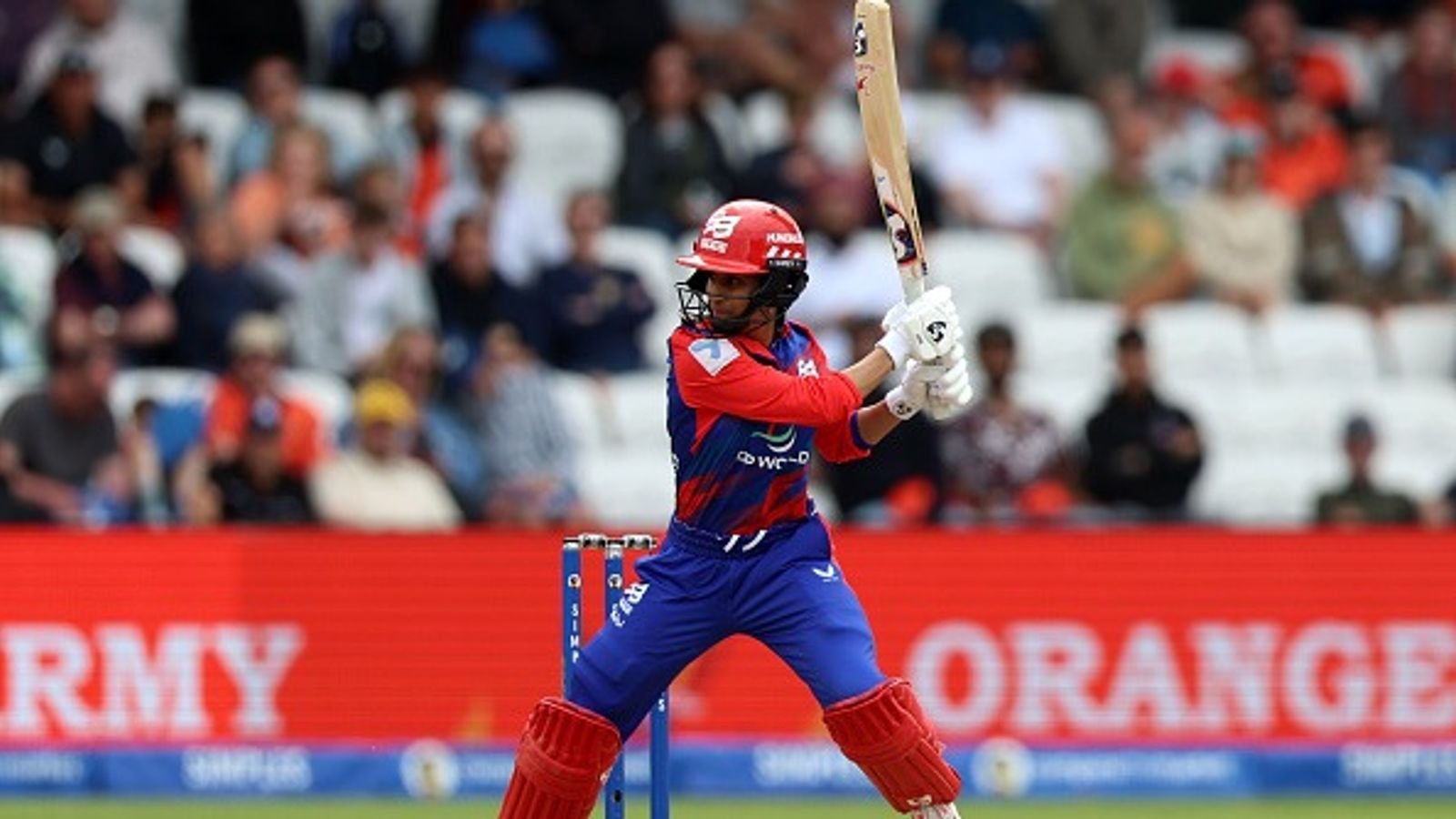
India have suffered a major injury setback ahead of the Women’s Asia Cup 2026, with star batter Jemimah Rodrigues ruled out of the remainder of The Hundred after sustaining a hamstring injury while representing Southern Brave.
The timing could hardly be more concerning for India. The Women’s Asia Cup is scheduled to begin later this month, and Rodrigues has become an important part of the team’s batting structure in T20 internationals. Her absence from the remainder of The Hundred means she will now have to focus on rehabilitation and recovery rather than gaining additional match practice in England.
Rodrigues had been enjoying a productive campaign before the injury interrupted her tournament. She scored 143 runs at a strike rate of 131.19 and an average of 35.75, underlining her importance to Southern Brave and providing evidence of her current batting rhythm.
For India, however, the bigger concern is whether the injury affects her availability and match fitness for the continental tournament.
What Happened to Jemimah Rodrigues?
Rodrigues suffered a hamstring injury during her stint with Southern Brave in The Hundred. The setback has brought her campaign in England to an early conclusion.
Hamstring problems can be particularly troublesome for cricketers because batting, running between the wickets and fielding all require repeated bursts of movement. Returning too quickly can also increase the risk of aggravating the original injury.
For India, the immediate priority will therefore be ensuring that Rodrigues makes a complete recovery rather than rushing her back simply because the Asia Cup is approaching.
The coming weeks should provide a clearer indication of whether she will be fit enough to take part in India’s opening match.
Jemimah Rodrigues’ Numbers Highlight Her Importance to India
Rodrigues is not simply another squad player. She has established herself as one of India’s important T20 batting options.
According to the available figures, she is India’s fourth-highest run-scorer in Women’s T20 internationals, with 2,824 runs, while maintaining a strike rate of 119.
Those numbers explain why her fitness is such an important issue ahead of the Asia Cup.
India’s T20 batting unit needs players capable of changing the momentum of an innings, particularly in the middle overs. Rodrigues’ ability to rotate the strike while also finding boundaries gives the team flexibility when constructing an innings.
Her absence would therefore not simply remove runs from the lineup. It could also force India to reconsider the roles of several other batters.
Why the Injury Comes at a Difficult Time for India
The biggest concern is the proximity of the Women’s Asia Cup.
India are scheduled to begin their campaign on August 30 against Thailand, while the tournament itself is set to get underway on August 28.
That leaves a relatively short recovery window for Rodrigues.
For a player recovering from a hamstring issue, match fitness is just as important as being medically cleared. A batter may be able to train without pain but still require time to regain confidence when sprinting, changing direction and running between wickets.
India’s management will therefore have to assess more than simply whether Rodrigues can return to the squad.
India’s Asia Cup Campaign Begins on August 30
India enter the Women’s Asia Cup as one of the strongest teams in the competition. They are seven-time champions and will be looking to continue their dominant record in the continental tournament.
The opening fixture against Thailand provides India with an opportunity to start strongly, but Rodrigues’ availability could influence the team’s plans for the middle order.
If she is fit, India can retain a familiar batting structure. If she is unavailable, the management will need to identify another batter capable of handling the responsibilities normally assigned to Rodrigues.
What Makes Jemimah Rodrigues Difficult to Replace?
Replacing a player is rarely about replacing their statistical output alone.
Rodrigues provides India with a combination of technique, strike rotation and boundary-scoring ability. She can also adapt her approach according to the match situation, which is particularly valuable in T20 cricket.
A replacement may be able to score at a similar rate but still offer a different batting profile.
That means India’s selectors may need to decide whether they want a direct replacement or whether the team should redistribute Rodrigues’ responsibilities among multiple players.
Option 1: Promote Another Middle-Order Batter
The most straightforward solution would be to promote another established middle-order batter into Rodrigues’ position.
This would allow India to maintain the overall structure of the batting order while making only one change to the playing XI.
The advantage is continuity. The disadvantage is that the replacement may not offer exactly the same combination of strike rotation and attacking intent.
Option 2: Restructure the Batting Order
India could also choose to move another batter up the order and use a different player later in the innings.
This would give the management more tactical flexibility, particularly if the chosen replacement has a different style from Rodrigues.
However, major changes to batting positions shortly before a tournament can also create uncertainty.
Option 3: Wait for Rodrigues’ Recovery
If the injury is considered manageable and Rodrigues responds well to rehabilitation, India could simply wait and monitor her progress.
This may ultimately be the preferred route if medical assessments suggest that she can return safely before the tournament.
The key is avoiding a rushed comeback that could turn a short-term injury into a longer absence.
The Hundred Campaign Was Going Well Before the Injury
Rodrigues’ numbers with Southern Brave make the injury even more frustrating.
She had scored 143 runs at an average of 35.75 and a strike rate of 131.19, showing that she was contributing consistently while maintaining an aggressive scoring rate.
A strike rate above 130 in a competition built around short innings demonstrates her ability to put pressure on bowlers without necessarily relying on high-risk cricket throughout her innings.
For India, that form would have been useful preparation before the Asia Cup.
Instead, Rodrigues must now switch from competitive cricket to recovery, meaning her next priority is getting physically ready rather than adding more runs to her tournament tally.
The Bigger Issue: India’s Injury Management
Rodrigues’ injury also raises a wider question about player workload.
Indian cricketers increasingly move between international assignments, domestic competitions and overseas franchise tournaments. These opportunities provide valuable experience, but they also create additional physical demands.
Hamstring injuries are especially relevant because they can be influenced by sprinting loads, fatigue and inadequate recovery time.
That does not mean The Hundred caused Rodrigues’ injury, and it would be incorrect to make such a claim without medical evidence. However, the situation highlights why workload monitoring and recovery planning are increasingly important for international players.
Why India Should Not Rush Jemimah Rodrigues Back
From India’s perspective, the temptation to bring Rodrigues back quickly will be understandable.
She is an experienced international batter, the Asia Cup is approaching and India will want their strongest possible squad.
But a premature return could carry greater consequences.
A hamstring injury that has not fully healed can affect running, footwork and confidence. If aggravated, it could potentially keep a player out for significantly longer than the original injury.
India therefore have to balance short-term tournament ambitions against Rodrigues’ long-term availability.
India’s Asia Cup Chances Without Rodrigues
If Rodrigues misses the tournament, India would still enter the Women’s Asia Cup with considerable strength.
The team has several established international batters and has experience dealing with changes to its playing XI.
However, her absence would reduce the team’s batting depth and could place additional responsibility on the senior members of the lineup.
The biggest challenge would be maintaining the same balance between stability and attacking intent in the middle overs.
That is where Rodrigues’ presence can make a meaningful difference.
What India Should Monitor Before the Asia Cup
- Hamstring recovery: Medical staff will need to determine whether the injury has healed sufficiently.
- Running fitness: Rodrigues must be able to sprint and change direction comfortably.
- Batting workload: A gradual increase in training intensity will be important before competitive cricket.
- Match readiness: Being medically fit and being fully match-fit are not necessarily the same thing.
- Replacement planning: India should have a clear alternative ready if Rodrigues cannot recover in time.
What This Means for Southern Brave
Southern Brave will also have to adjust their plans following Rodrigues’ departure from The Hundred.
Her 143 runs had made her a productive part of the team’s batting group, and losing an international-quality batter midway through a competition can force a franchise to rethink its combination.
For Rodrigues, however, the priority has shifted from franchise cricket to recovery and preparation for India’s upcoming international commitments.
Jemimah Rodrigues Injury: The Key Question Ahead of Asia Cup 2026
The central question is not simply whether Rodrigues can return before August 30. It is whether she can return at a level where she is physically confident and capable of performing without restrictions.
That distinction could determine India’s approach.
If she makes a strong recovery, India can retain one of their most reliable T20 batting options. If she remains unavailable, the team will need to make tactical adjustments before the tournament begins.
Either way, the next few weeks will be crucial.
Conclusion
Jemimah Rodrigues’ hamstring injury is a significant concern for India ahead of the Women’s Asia Cup 2026. Her impressive campaign for Southern Brave, where she scored 143 runs at a strike rate of 131.19, showed that she was in useful form before the setback.
With India beginning their Asia Cup campaign against Thailand on August 30, the team management will closely monitor her recovery.
India remain one of the tournament’s strongest sides and have enough batting depth to cope with an absence if necessary. Nevertheless, Rodrigues’ experience, versatility and proven T20 record make her difficult to replace directly.
The best outcome for India would be a fully recovered Rodrigues returning to action without unnecessary risk. Until then, her fitness remains one of the most important storylines surrounding India’s preparations for the Women’s Asia Cup 2026.
For breaking news and live news updates, like us on Facebook or follow us on Twitter and Instagram. Read more on Latest Cricket on thefoxdaily.com.






COMMENTS 0