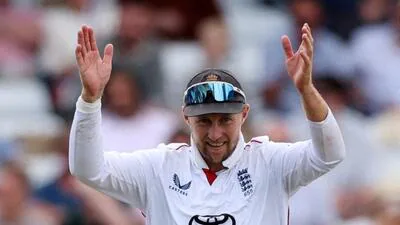
Joe Root England Test captaincy is entering a new chapter as the veteran batter returns to the leadership role, with England seemingly searching for greater stability after years of aggressive Test cricket under Ben Stokes and Brendon McCullum.
Root’s appointment could represent more than a simple return to his former position. England may be attempting to combine the best elements of two different eras: the attacking mindset developed under Stokes and McCullum with the patience, control and experience that have defined Root’s batting career.
Why England Have Turned Back to Joe Root
When Root first became England’s Test captain in 2017, his leadership represented a more traditional approach to the format. During his tenure, England often struggled to convert promising positions into victories, despite Root producing consistently strong individual performances.
By the time he stepped down in April 2022, Root had led England in a record 64 Tests, winning 27 and losing 26. He also accumulated 5,295 runs as captain, another England record.
His departure was followed by one of the most dramatic transformations in modern Test cricket. Stokes and McCullum encouraged England to play with greater freedom, accept risk and place opponents under constant pressure.
Root Adapted to the Bazball Revolution
Interestingly, Root never completely resisted England’s new philosophy. Instead, he adapted parts of his game to fit the attacking environment.
The reverse scoop became one of the most recognizable examples of Root experimenting with his traditional technique. The sight of England’s most technically accomplished batter attempting unconventional strokes illustrated how dramatically the team’s approach had changed.
However, Root did not need to completely transform himself to become successful. His greatest strength remained his ability to control tempo, absorb pressure and score heavily without sacrificing his batting structure.
Root’s Numbers Tell a More Complicated Story
Statistics from the Bazball period suggest that Root’s batting did not suddenly become dependent on extreme aggression. His scoring rate increased in the early stages of the McCullum era, but his fundamental method remained relatively stable.
Against Sri Lanka in 2024, Root averaged 87 during the Bazball era at that point while maintaining a strike rate of 58.8. That was only slightly higher than his career strike rate of 57.5.
The numbers underline an important point: Root can operate within an attacking team without abandoning the patience that has made him one of England’s greatest Test batters.
England’s Bazball Returns Have Become Less Convincing
England’s attacking philosophy delivered memorable victories and helped redefine their approach to Test cricket. But over time, the method also became increasingly predictable.
During the 2025-26 Ashes, England’s batting aggression remained evident, but the results became less convincing. Root’s strike rate fell to 58.3 during the series, compared with 66.89 across the wider McCullum period.
The issue was not necessarily aggression itself. Rather, England appeared to be struggling to turn that aggression into sustained control and consistent results.
Harry Brook’s Omission Reveals England’s Thinking
One of the most revealing aspects of Root’s return is that Harry Brook was overlooked for the captaincy.
Brook is 27, an established white-ball captain and had served as Stokes’ designated deputy. His aggressive and inventive batting style makes him a natural product of the McCullum-Stokes era.
Yet England opted for Root, suggesting that experience and stability currently rank higher in their priorities than simply continuing the existing leadership succession.
Root May Not Be Asked to End Bazball
England’s decision does not necessarily mean that the team intends to abandon its attacking philosophy. Instead, Root could be expected to make that philosophy more adaptable.
The current England batting lineup has been shaped by four years of aggressive cricket. Players such as Zak Crawley, Ben Duckett and Brook have developed their games around freedom, positive intent and pressure cricket.
Simply asking those players to return to a conservative approach would make little sense. Root’s challenge could therefore be to preserve their attacking instincts while improving their ability to recognize when patience and control are required.
Joe Root Has Changed Since His First Captaincy
The Root returning to the England dressing room is not the same player or captain who stepped down in 2022.
He has described himself as being in a “very different place” compared with his first stint as captain. His experience under Stokes and McCullum has also given him a different perspective on leadership and Test cricket.
Root has now accumulated 14,114 runs in 166 Tests, placing him among the most prolific batters in the history of the format.
His longevity has also put him in the conversation surrounding Sachin Tendulkar’s Test records, including the landmark tally of 15,921 runs across 200 Tests.
Root Wants to Take Lessons From the Bazball Era
Root has acknowledged that the last four years have been among the most enjoyable periods of his professional career. He has also credited the England setup with changing how he viewed his role within the team.
Rather than rejecting the previous era, Root appears ready to carry its lessons into his new leadership role.
This could be crucial for England. Root has experienced both traditional Test leadership and the modern attacking approach from inside the same dressing room.
The Challenge Facing Joe Root
Root’s biggest challenge will be finding the right balance between freedom and discipline.
England cannot afford to lose the confidence and positivity that made the Bazball era successful. At the same time, the team needs greater tactical flexibility when aggressive cricket stops producing results.
Root’s understanding of both approaches could make him uniquely suited to the task. He does not need to choose between traditional Test cricket and Bazball. Instead, he can attempt to combine their strongest qualities.
What Joe Root 3.0 Could Look Like
The next version of Joe Root’s England could be less about a complete tactical revolution and more about refinement.
- Experience: Root brings extensive knowledge of Test cricket and England’s previous challenges.
- Stability: His return provides experienced leadership during a period of transition.
- Attacking intent: England can retain the positive mindset developed under Stokes and McCullum.
- Flexibility: Root can encourage players to adapt their tempo according to match situations.
- Batting depth: His experience can help younger players manage difficult Test situations.
Why Joe Root’s Return Could Work
England’s decision to restore Root is intriguing because he is not necessarily the opposite of Bazball. He is one of the players who experienced the philosophy from its earliest days and successfully adapted to it.
That makes him a potential bridge between England’s past and present. Instead of removing the attacking identity, Root could help the team understand when to accelerate and when to slow down.
For England, that balance may be more valuable than another dramatic change in philosophy.
Joe Root 3.0: The Bigger Picture
Joe Root’s return as England Test captain represents an experiment in combining experience with the lessons of the Bazball era. England are not simply turning the clock back to 2019 or 2022.
The team has changed, the players have changed and Root himself has changed. His new role could therefore be about creating a more mature version of England’s attacking Test cricket.
Root has spent much of his career being the batter England relied upon to rescue difficult situations. This time, he will have another responsibility: organizing the team and helping England determine when aggression is necessary and when patience is the better weapon.
If he can successfully combine the freedom of the Bazball era with the control that has defined his own batting, Joe Root 3.0 could become exactly what England need in their next phase of Test cricket.
For breaking news and live news updates, like us on Facebook or follow us on Twitter and Instagram. Read more on Latest Cricket on thefoxdaily.com.

COMMENTS 0