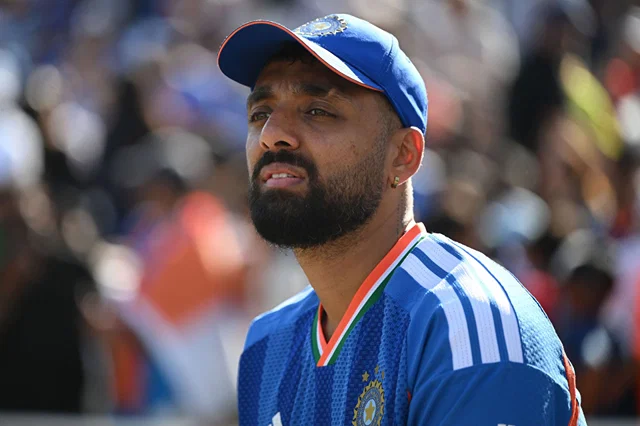
India will face New Zealand in a five-match T20I series beginning October 22, 2026, with several players looking to strengthen their positions in the national team’s plans. While the series will provide an opportunity to build momentum ahead of future international assignments, it will also be an important test for players returning from injuries, struggling for form, or fighting to secure their places in the squad.
The selectors have largely retained the squad that drew the five-match T20I series against the West Indies 2-2 at home, making a few changes for the New Zealand tour. Experienced players Bhuvneshwar Kumar and Varun Chakravarthy have returned to the setup, while leg-spinner Ravi Bishnoi has been left out.
India will continue to manage injuries, workloads and a congested international schedule, with prominent players such as Jasprit Bumrah and Hardik Pandya absent from the T20I squad. This creates opportunities for other members of the team to demonstrate their value and establish themselves in the national setup.
Shreyas Iyer will lead the side as India look to adapt to New Zealand’s conditions and build a competitive combination. Having experienced defeats during the early stages of his T20I captaincy journey in Ireland and England, Iyer will also be keen to demonstrate his growth as a leader.
For some members of the squad, however, the series carries significance beyond the team’s results. Varun Chakravarthy, Shivam Dube and Bhuvneshwar Kumar have individual questions to answer as they attempt to strengthen their cases for future international opportunities.
India’s T20I Squad for the New Zealand Series
India have selected the following 16-member squad for the five-match T20I series against New Zealand:
- Shreyas Iyer (Captain)
- Abhishek Sharma
- Sanju Samson (Wicketkeeper)
- Vaibhav Sooryavanshi
- Ishan Kishan (Wicketkeeper)
- Tilak Varma (Vice-Captain)
- Axar Patel
- Shivam Dube
- Nitish Kumar Reddy
- Naman Dhir
- Prince Yadav
- Mayank Yadav
- Arshdeep Singh
- Bhuvneshwar Kumar
- Varun Chakravarthy
- Kuldeep Yadav
With experienced campaigners and emerging talents competing for opportunities, the series could influence India’s long-term T20I combinations. Here are three players who will be under particular scrutiny during the New Zealand tour.
1. Varun Chakravarthy
Varun Chakravarthy heads into the New Zealand T20I series with an important opportunity to re-establish himself as a dependable option in India’s spin-bowling attack. The mystery spinner has faced concerns over his recent form and fitness, and his latest return to the squad provides a chance to show that he can still deliver consistently at the international level.
The selectors’ decision to retain faith in Chakravarthy after another injury-related absence suggests that they continue to value his ability to trouble batters with variations and an unpredictable bowling style. However, selection alone will not settle questions about his place in India’s long-term plans. He will need to translate that confidence into performances on the field.
A Crucial Opportunity to Strengthen His World Cup Prospects
The next T20 World Cup in 2028 is an important long-term consideration for India’s current T20I group. Chakravarthy will need to remain fit, improve his consistency and demonstrate that he can handle the demands of international cricket if he hopes to remain part of the team’s plans.
His age will also be a factor in long-term selection discussions. The original premise surrounding his future is that he will be approaching his late thirties by the 2028 tournament, making the next phase of his international career particularly significant. Sustained performances in the coming months will be more important than any single standout display.
New Zealand presents a useful opportunity for Chakravarthy to show how effectively he can adapt to different conditions. His variations could make him a valuable option, particularly if he can control his length, limit scoring opportunities and take wickets at important stages of an innings.
India Need Greater Certainty in the Spin Department
India have several spin options, but the team management must determine which bowlers can provide the best combination of control, wicket-taking ability and reliability in T20Is. Kuldeep Yadav remains an important part of India’s plans across formats, while Ravi Bishnoi’s omission from the squad opens the door for other options to strengthen their positions.
Chakravarthy’s mystery spin gives him a different skill set from conventional wrist-spinners and left-arm orthodox bowlers. That distinction could work in his favour if he can consistently produce effective performances against New Zealand’s batting lineup.
The challenge will be to avoid relying solely on reputation. Chakravarthy must demonstrate that he can execute his plans under pressure, respond when batters attack him and contribute to India’s efforts in both the powerplay and middle overs when required.
A strong series would improve his standing in the current setup and strengthen his case for future selection. Conversely, inconsistent performances or further fitness setbacks could make it harder for him to secure a regular role.
What Varun Chakravarthy needs to prove: He remains fit, effective and reliable enough to be a leading option in India’s T20I spin attack, with an eye on the team’s longer-term World Cup plans.
2. Shivam Dube
Shivam Dube is another India player with an important opportunity to improve his standing during the New Zealand T20I series. The all-rounder offers a combination of powerful batting and medium-pace bowling, making him a potentially useful option in a format where teams increasingly value players who can contribute in multiple departments.
Dube’s batting can provide India with power in the middle and lower-middle order, while his bowling gives the captain another option when the frontline attack needs support. New Zealand’s conditions could also offer him opportunities to demonstrate the usefulness of his medium pace, particularly if he can generate extra bounce and maintain a disciplined line and length.
However, Dube needs to turn his potential into more consistent contributions. His recent batting and bowling numbers suggest that he has work to do if he wants to remain firmly established in India’s long-term T20I plans.
Competition From Nitish Kumar Reddy
One of the challenges facing Dube is the competition for the all-rounder’s role. Nitish Kumar Reddy has emerged as another option for India, offering the ability to contribute with both bat and ball. With Reddy included in India’s plans across formats, the management will have to decide how best to distribute opportunities between the two players.
That does not necessarily mean Dube will be pushed out of the side. India’s selection requirements can change depending on conditions, opposition and the balance of the playing XI. If the team needs a left-handed power hitter who can also bowl medium pace, Dube could remain a valuable option.
However, he must make the most of his opportunities when selected. Consistent batting contributions and effective overs could help him distinguish himself from the other all-rounders competing for places.
Recent Numbers Highlight the Need for Improvement
Dube’s recent T20I statistics underline why the New Zealand series could be an important turning point. Across his last 10 T20I innings, he has scored 100 runs at an average of 12.50 and a strike rate of 108.69.
Those figures indicate that he has struggled to produce the sustained impact expected from a middle-order batter in modern T20 cricket. While a player’s value cannot be judged entirely by a short statistical sample, Dube will need to improve his consistency and ability to accelerate when the situation demands it.
His bowling numbers also present a challenge. Since the end of India’s England tour, he has taken six wickets in nine matches while conceding runs at an economy rate of 12.27. That rate is expensive in a format where controlling the opposition’s scoring can be just as important as taking wickets.
Dube will therefore need to show greater control with the ball while continuing to develop his batting role. If he can contribute useful overs without allowing the opposition to score freely, his all-round value to the side will increase significantly.
New Zealand Could Offer the Right Conditions
The New Zealand series gives Dube a chance to demonstrate that he can adapt to different match situations. His height could help him generate bounce with the ball, while his strength and ability to hit boundaries could make him dangerous when India need quick runs.
He does not necessarily need to produce a spectacular performance in every match. Instead, a series featuring timely contributions with the bat, a few economical overs and improved decision-making would help strengthen his case.
With competition for all-rounder positions likely to remain intense, Dube cannot afford an extended run of low-impact performances. The upcoming tour offers him a valuable opportunity to show that he can provide a reliable balance of power and flexibility.
What Shivam Dube needs to prove: He can contribute consistently with the bat and provide useful, controlled overs, making him a dependable all-round option for India’s T20I team.
3. Bhuvneshwar Kumar
Bhuvneshwar Kumar’s return to India’s T20I squad is one of the notable developments ahead of the New Zealand series. The experienced right-arm pacer has an opportunity to resume his international career after a lengthy absence, giving the team management a chance to assess whether he can still contribute at the highest level.
His return follows his inclusion in India’s playing XI for the fifth T20I against the West Indies. However, the match was washed out, meaning he did not get an opportunity to bowl. As a result, the New Zealand series could provide his first chance to deliver with the ball in Indian colours in almost four years.
Unlike Chakravarthy and Dube, Bhuvneshwar does not need to prove that he possesses the skills required to succeed in international cricket. His record and experience have already established his capabilities. The key question is whether he can still deliver those skills consistently in the modern T20I environment.
Can Experience Translate Into Modern T20I Success?
Bhuvneshwar built his reputation on swing bowling, accuracy and the ability to take wickets with the new ball. He has also developed experience in handling different phases of an innings, including situations in which bowlers must defend totals or restrict scoring during the closing overs.
Those qualities could be useful for India, particularly as the team manages the workloads and availability of its frontline fast bowlers. A reliable experienced pacer can provide stability to a bowling attack that includes a mix of established international performers and developing players.
However, T20 cricket has evolved considerably. Batters are increasingly aggressive from the opening overs, and bowlers must adapt through changes of pace, accurate yorkers, effective variations and smart field placements.
Bhuvneshwar will need to demonstrate that his traditional strengths remain effective against modern batting approaches. His ability to move the ball and control the powerplay could be especially valuable, but he will also need to show that he can manage difficult situations when batters look to attack.
A Chance to Rebuild His International Case
The veteran pacer’s selection gives him a rare opportunity to make a fresh impression on the team management. A strong performance in New Zealand could strengthen his case for further T20I opportunities and potentially bring him into consideration for India’s longer-term plans.
At the same time, selection will depend on more than reputation. The management will need to evaluate his current fitness, bowling pace, consistency and effectiveness against international opposition. His performances in domestic cricket and the Indian Premier League can provide useful context, but international matches will offer the clearest indication of his readiness.
For Bhuvneshwar, the immediate objective should be to deliver disciplined spells and demonstrate that he can still influence matches. Taking early wickets, restricting the opposition during the powerplay and maintaining control at the death would all strengthen his case.
His experience could also be valuable in a squad featuring several players who are still establishing themselves in international cricket. Beyond his own bowling figures, he could help younger teammates understand how to execute plans under pressure and adjust to changing match conditions.
Why the Series Matters for India’s Future Plans
India’s selectors must balance the value of experienced players against the need to develop a group capable of competing over the next several years. Bhuvneshwar’s return provides an opportunity to assess whether an established international performer can still meet the team’s changing requirements.
A successful comeback would not automatically guarantee a place in future squads, but it could give the management another dependable option. It would also demonstrate that experienced players can remain competitive when they maintain their fitness and adapt their methods to the demands of modern T20 cricket.
For Bhuvneshwar, the priority is to make his opportunity count. He has the experience and skill set to make an impact, but his performances in New Zealand will determine whether he can turn his recall into a longer international run.
What Bhuvneshwar Kumar needs to prove: He can still deliver effective powerplay bowling, control the opposition’s scoring and adapt his established skills to the demands of contemporary T20I cricket.
What to Expect From India in the NZ vs IND 2026 T20I Series
The five-match series against New Zealand will provide India with an opportunity to evaluate their current squad while preparing for future international commitments. The absence of some high-profile players because of injury and workload considerations means others will have to take greater responsibility.
For Chakravarthy, the focus will be on fitness, consistency and his ability to trouble opposition batters. Dube must improve his overall contribution as an all-rounder, while Bhuvneshwar will look to show that he can still perform at international level after his long absence.
Their individual performances could influence future selection decisions, particularly as India continue to assess the balance of their T20I squad and identify the players best suited to their longer-term objectives.
The series will also be an important challenge for captain Shreyas Iyer as he continues to develop his leadership in the shortest format. Managing bowling resources, selecting the right combination and helping players perform under pressure will be essential against a competitive New Zealand side.
Conclusion
Varun Chakravarthy, Shivam Dube and Bhuvneshwar Kumar enter the NZ vs IND 2026 T20I series with different challenges but a common objective: to strengthen their positions in India’s plans for the future.
Chakravarthy needs to re-establish himself as a reliable spin option, Dube must deliver more consistent contributions with both bat and ball, and Bhuvneshwar has to prove that his experience can translate into effective performances after a lengthy international absence.
With five matches scheduled, each player should have opportunities to make an impression. Strong performances could help all three improve their standing in the squad, while the series will also give India’s management valuable information as it continues to build a competitive T20I combination for upcoming challenges.
For breaking news and live news updates, like us on Facebook or follow us on Twitter and Instagram. Read more on Latest Cricket on thefoxdaily.com.






COMMENTS 0