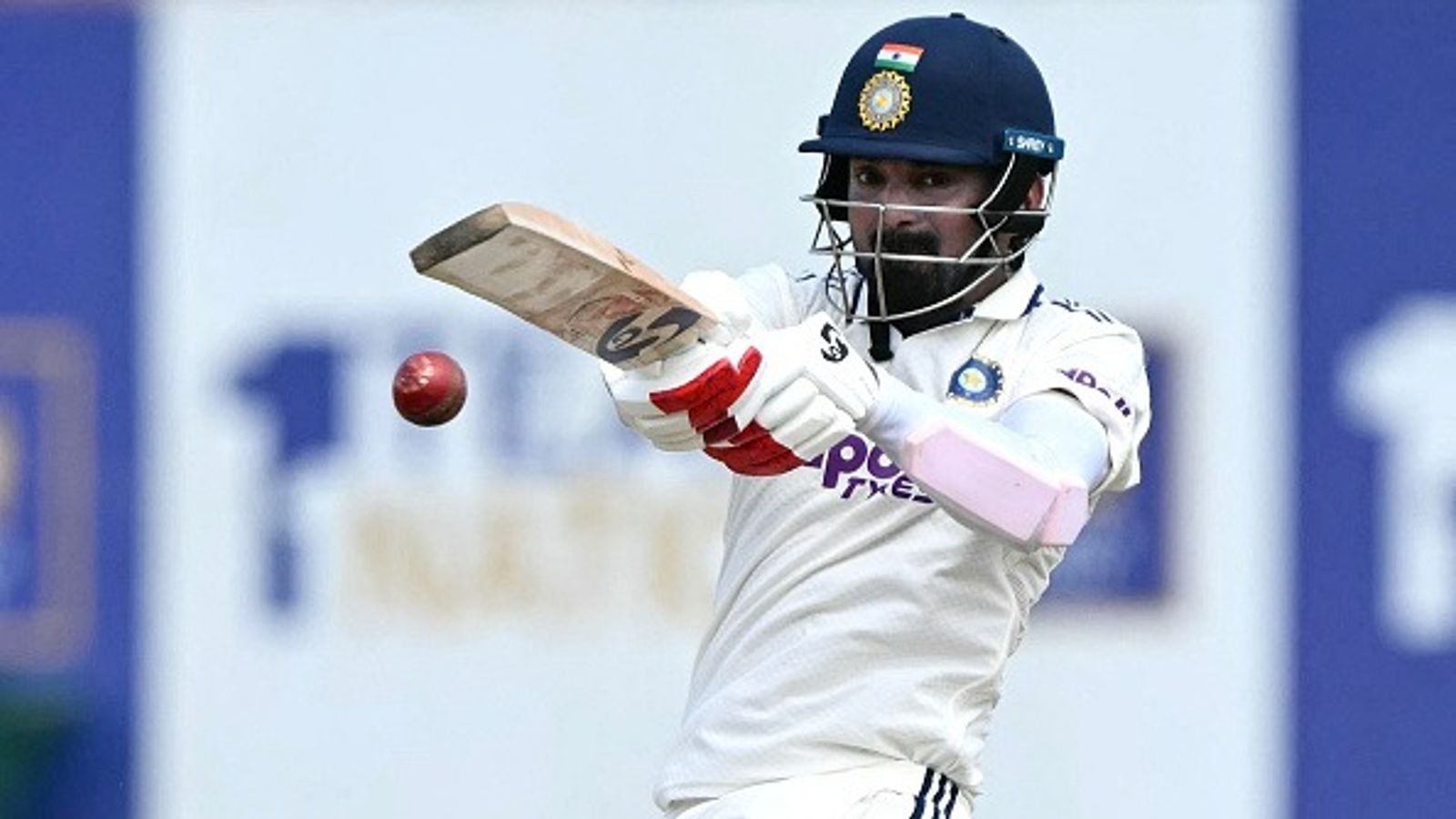
KL Rahul‘s comments on India’s dressing room dynamics have offered an insight into the culture behind India’s impressive 165-run victory over Sri Lanka in the first Test at Galle. The veteran batter explained that India’s dressing room does not operate around rigid seniority, with players of different ages and experience levels encouraged to exchange ideas.
Rahul has been part of India’s Test setup since making his debut during the 2014-15 Border-Gavaskar Trophy in Australia. More than a decade later, his role has naturally evolved. He is now one of the experienced members of a squad led by 26-year-old captain Shubman Gill.
However, Rahul believes being a senior player does not mean having all the answers. Instead, he considers it every player’s responsibility to help teammates improve, regardless of their age, number of Test appearances or position within the team.
KL Rahul explains India’s open dressing room
Speaking after India’s comprehensive win in Galle, Rahul highlighted the importance of an environment where players can communicate without worrying about hierarchy.
“I think it’s every player’s responsibility to help another player out whether you’re older or someone who’s just 26 but played 20 Tests.”
The statement reflects a broader philosophy within the Indian team. Experience is valued, but it is not treated as a barrier between players.
Rahul believes a player with fewer international appearances can still offer a useful perspective to someone who has spent years at the highest level. That approach can be particularly valuable in Test cricket, where small technical adjustments can have a major impact over long innings.
“There was no shame or egos” in India’s dressing room
Rahul also reflected on his own early years in international cricket. He recalled sharing a dressing room with players who had already accumulated 60 or 70 Test appearances while he was still relatively inexperienced.
According to Rahul, those senior players never created an atmosphere in which younger cricketers felt uncomfortable approaching them. At the same time, experienced players were also willing to listen and learn from less experienced teammates.
“Even when we had players who played 60-70 Test matches and I only played 20 or 30 Test matches there was no shame or egos in players to say I can’t learn something from you or to say he’s played so many Test matches so I can’t go and talk to him. So it’s always been an open dressing room and people are learning from each other.”
This type of environment can be especially important during a period of transition. Indian Cricket is continuing to introduce younger players into its Test setup, while established figures such as Rahul provide experience and guidance.
Why an open dressing room matters in Test cricket
Test cricket is not simply about individual skill. Players spend long periods together, face changing match situations and have to make decisions under sustained pressure.
A closed dressing room can make it difficult for younger players to ask questions or challenge established thinking. An open environment, by contrast, allows players to discuss problems before they become larger issues.
For example, a batter struggling against late swing might benefit from a teammate’s experience. A bowler dealing with a particular batter could ask another player for tactical suggestions. These conversations may appear small, but they can influence crucial moments during a Test.
Rahul’s comments suggest that India encourage this exchange rather than relying entirely on formal leadership structures.
KL Rahul is now part of the senior leadership group
Rahul’s own journey makes his comments particularly relevant. When he entered international cricket, he was the younger player learning from established stars. Today, he occupies the opposite position.
With Shubman Gill leading the Test side, Rahul’s experience becomes an additional resource for the captain and the younger members of the squad.
But Rahul’s approach is not based on simply telling younger players what to do. Instead, he appears to view leadership as a two-way process in which experience and fresh ideas can coexist.
That distinction could become increasingly important for India as the team develops a new generation of Test cricketers.
Rahul also learns from younger players
One of the most interesting aspects of Rahul’s comments is that he does not see learning as something that moves only from senior players to youngsters.
He revealed that he regularly discusses batting techniques with younger teammates, including Yashasvi Jaiswal. Rahul has sought Jaiswal’s perspective on shots such as the sweep and reverse sweep, showing that even an experienced international batter can benefit from another player’s approach.
This is an important detail because it demonstrates how modern cricket continues to evolve. Younger batters may have grown up playing a wider range of formats and may approach certain shots differently from players who developed their games in an earlier era.
Instead of dismissing those differences, India’s dressing room appears to use them as a source of additional knowledge.
From technical discussions to match strategy
The exchange of ideas inside a Test dressing room goes far beyond batting shots.
Players can discuss how to handle high pace, late movement, spin, different field settings and changing pitch conditions. A batter who has faced a particular type of delivery successfully can explain the adjustment that worked for them.
Similarly, bowlers can exchange information about release points, lengths and plans for specific batters. The more openly players communicate, the more tactical options become available to the team.
That collaborative approach can also reduce the pressure on individual players. Instead of feeling that every decision has to be made alone, cricketers know they have teammates available to offer another perspective.
Shubman Gill’s leadership benefits from the culture
India’s current Test setup is being led by Shubman Gill, who is only 26. While Gill already has considerable international experience, leading a Test team brings a different level of responsibility.
The presence of senior players such as Rahul can therefore be valuable. An experienced batter can provide tactical input while allowing the captain to make the final decision.
The key is maintaining a balance between leadership authority and open communication. Rahul’s description suggests that India’s dressing room attempts to achieve exactly that.
Gill does not have to rely exclusively on his own experience, and younger players do not have to remain silent simply because they have fewer Test appearances.
Galle victory highlights the value of collective responsibility
India’s 165-run win in Galle provides a strong backdrop to Rahul’s comments. The victory was not built around one individual’s performance alone.
India’s batting and bowling units contributed at different stages, while the team maintained pressure across the match. Such results often depend on players understanding their individual roles while remaining connected to the wider strategy.
The dressing room culture Rahul described could help create that connection. Players who are comfortable communicating with each other are more likely to share information quickly and adapt when a match changes direction.
A major advantage during India’s generational transition
India are entering an important phase in their Test cricket journey. Several established players have moved on from the international stage, while younger cricketers are increasingly being given opportunities.
That transition can create uncertainty, but it can also allow a team to build a fresh identity.
Rahul’s comments indicate that the Indian setup is attempting to make experience transferable rather than simply replacing one generation with another. Senior players can pass on lessons from their careers while younger cricketers bring new tactical ideas and different perspectives.
This could prove particularly valuable over the long term because successful Test teams rarely depend on talent alone. They also need systems that allow players to develop together.
What Rahul’s comments reveal about India’s team culture
The most important takeaway from Rahul’s comments is that India’s dressing room appears to place collective improvement above individual status.
A player with 70 Tests is not automatically considered more knowledgeable about every aspect of the game than someone with 20 Tests. Similarly, a younger player is not expected to remain silent simply because of a lack of experience.
That philosophy creates an environment where questions can be asked, ideas can be challenged and useful information can move freely across the squad.
For a team competing in high-pressure Test cricket, that can be a significant advantage.
Conclusion
KL Rahul’s comments have provided a rare glimpse into the thinking behind India’s dressing room culture after their dominant victory over Sri Lanka in Galle.
His message is simple: experience should create responsibility, not hierarchy. Senior players are expected to guide younger teammates, but they must also remain willing to learn from them.
That philosophy has particular importance for India under Shubman Gill’s leadership. As younger players become increasingly important to the Test setup, an open environment can help them develop without feeling restricted by seniority.
For Rahul, the transition from promising youngster to experienced mentor has come full circle. His willingness to continue learning from players such as Jaiswal may be just as important as the experience he brings to the dressing room.
And if India’s performances continue to match the culture Rahul describes, their greatest strength may not simply be the talent available on the field, but the willingness of that talent to learn from one another.
For breaking news and live news updates, like us on Facebook or follow us on Twitter and Instagram. Read more on Latest Cricket on thefoxdaily.com.






COMMENTS 0