The Question That Separates the Mature From the Young
There is a version of this story that writes itself and requires very little thought. Talented young player misses out on the Ballon d’Or. Talented young player says losing motivated him to work harder. Talented young player performs better the following year. That arc is the standard template, and it is honest as far as it goes.
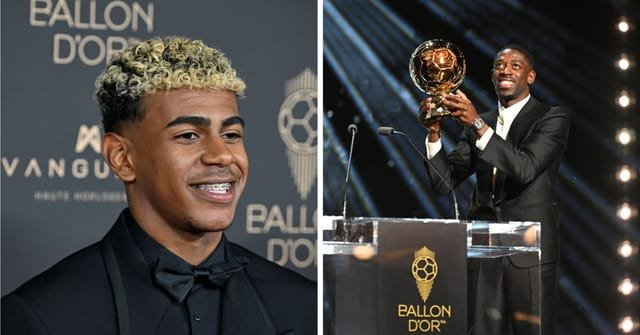
The version that Lamine Yamal offered in a recent YouTube appearance is more interesting and considerably more self-aware. Yes, he thought he was going to win the 2025 Ballon d’Or. Yes, he was disappointed when he did not. But the conclusion he has reached about that disappointment is not the standard motivational script. It is something quieter and more genuinely mature: a recognition that he was not ready for the prize, that the timing would have been wrong, and that what he needed at that stage of his life was growth, not a trophy.
Who is speaking? Lamine Yamal, 18-year-old Barcelona star and one of the most discussed young footballers in the sport’s history. What did he say? That losing the Ballon d’Or to Ousmane Dembele in 2025 was, in retrospect, good for him. When was this revealed? In a recent YouTube video in which Yamal spoke candidly about the ceremony and its aftermath. Where does the conversation fit? In the context of the 2026 FIFA World Cup and the question of whether this year’s tournament might mark the moment his individual brilliance reaches the level that claims football’s highest honor.
The 2024/25 Season: Two Exceptional Campaigns, One Winner
To understand the weight of the Ballon d’Or decision in 2025, the relative performances of the two candidates need proper context. The 2024/25 season saw both players produce numbers that would define most players’ career highlights.
Ousmane Dembele, at Paris Saint-Germain, delivered one of the most complete individual seasons in recent European football history. Fifty-three matches, 35 goals, and 16 assists represents a level of attacking output that transforms any reasonable evaluation of a player from “excellent” to “generational.” More significantly, the collective context was as compelling as the individual numbers: Dembele led PSG to the Ligue 1 title and, in the achievement that arguably tilted the Ballon d’Or conversation decisively, guided the club to their first-ever UEFA Champions League title. For a player who had spent years being described as talented but inconsistent, the 2024/25 season was the definitive, unambiguous statement that the inconsistency narrative was over.
Lamine Yamal’s season at Barcelona was equally extraordinary by any reasonable standard. Fifty-five appearances, 18 goals, and 21 assists: the assist tally in particular reflected his function as the creative engine of the Barcelona attack, a player who does not simply score but shapes the entire offensive structure of his team’s play. At an age when most footballers are still developing at youth level, Yamal was producing numbers that elite senior players would consider career-defining achievements.
| Player | Club | Appearances | Goals | Assists | Collective Achievement |
|---|---|---|---|---|---|
| Ousmane Dembele | PSG | 53 | 35 | 16 | Ligue 1 title + first-ever PSG UCL win |
| Lamine Yamal | Barcelona | 55 | 18 | 21 | Excellent season; assist count exceptional |
The gap between the two in goal-scoring terms is significant. Dembele’s 35 goals against Yamal’s 18 represents a near-doubling of output, and in Ballon d’Or voting, the goals column has historically carried disproportionate weight. Add the Champions League triumph and its specific contribution to Dembele’s case, and the decision, while competitive, was not without logic.
Yamal’s Honest Reaction: The Answer That Stands Out
Asked in the YouTube video about his feelings when the award went to Dembele, Yamal began with what most players would end with, the admission of an expectation, before building toward something genuinely unusual:
“Honestly, if I’m being sincere, I thought I was going to win it that day because of many things that happened. Looking back, I think it was very good for me that Dembele won it. Beyond helping me grow personally, I don’t think it was the right time for me to win it because I was still a kid and probably wouldn’t have appreciated what it really means to win a Ballon d’Or. Let’s see if this year is mine.”
— Lamine Yamal
The phrase “I was still a kid and probably wouldn’t have appreciated what it really means” is remarkable coming from a player who, at the time of the 2025 ceremony, was not much older than he is now. Most young players, asked about a major individual award they narrowly missed, deploy the language of motivation and hunger. Yamal deploys the language of readiness and appreciation, suggesting that the prize’s meaning matters to him more than the prize itself, and that receiving it before understanding its full significance would have diminished the experience.
This is not a typical 18-year-old’s answer. It is the kind of reflection you might expect from a player a decade further into their career, looking back at a near-miss and understanding, with distance, why it was better that way. Yamal has arrived at that understanding while still in the moment. That quality of self-awareness is, arguably, as impressive as any dribble or assist he has produced on a football pitch.
The closing sentence carries its own significance: “Let’s see if this year is mine.” Not a declaration, not a prediction, but an invitation. With the 2026 World Cup beginning on June 12 and Yamal one of its most anticipated performers, the timing of the remark is deliberate. The biggest stage in football is approaching, and the player who has already demonstrated Ballon d’Or-level ability across two seasons at club level is aware that a World Cup summer could be the moment that settles the argument.
The Yamal-Dembele Relationship: Competition and Warmth in the Same Frame
One of the more touching elements of Yamal’s comments was the genuine warmth with which he described his relationship with the man who received the award he had expected to win:
“Ousmane and I get along very well. I’ve spent time with him, talked to him a lot, and even the other day he checked in on me and asked how I was doing. Since then, I’ve matured, changed many things in my life. I’m very happy he won it. We were together at the Dubai awards too and you can see we have a great relationship. We still talk from time to time.”
— Lamine Yamal
The context here is worth noting. Dembele was a Barcelona player for years before his move to PSG, so the two players share a cultural and professional lineage that goes beyond competitive overlap. More significantly, the dynamic between them is one that elite sport rarely produces in public: a player acknowledging genuine happiness at a competitor’s achievement, with specific reference to the relationship that made that genuine happiness possible.
“He checked in on me and asked how I was doing” is the detail that humanizes the entire story. These are not simply rival award candidates maintaining a professional courtesy relationship. These are two football people who have invested in each other as people, whose competitive rivalry exists within a broader frame of mutual respect and actual care. Yamal’s growth that he references, the maturing and changing of many things in his life, appears to include an expanded capacity to appreciate achievements outside his own immediate experience.
Rodri’s Endorsement: A Teammate’s Confident Prediction
The external validation for Yamal’s Ballon d’Or future comes from one of the most credible sources available: Rodri, the Spain midfielder and himself a player of the highest individual distinction, who spoke to DAZN ahead of the 2026 World Cup with a tone that was part analysis and part certainty:
“He’s already a star, but with the future he has ahead of him, it’s impressive. One day he’ll win the Ballon d’Or, he’s a beast. He’s a spectacular guy. He’s incredibly mature. In some ways, he has a somewhat distorted image. He’s a fantastic kid. He has amazing values for his age. Very focused, very mature. Let’s not forget he’s 18, just like we all were. I’m happy because he’s growing so much.”
— Rodri
Rodri’s assessment is notable for what it focuses on beyond the football. Yes, he calls Yamal a “beast” and predicts a Ballon d’Or. But the substance of his endorsement is the character behind the performances: the values, the focus, the maturity that he describes as “incredible” for someone of Yamal’s age.
The phrase “he has a somewhat distorted image” is a specific and interesting observation from someone who knows the player well. It suggests that the public perception of Yamal, constructed from highlights and headlines, does not fully capture the grounded, values-driven person who trains and prepares alongside his teammates. There is a gap, Rodri implies, between Yamal the spectacle and Yamal the person, and the person is more impressive in some ways than even the spectacle suggests.
“Let’s not forget he’s 18, just like we all were” is Rodri’s gentle reminder to the football world to maintain perspective on what Yamal represents and what he should not yet be burdened with. The phrase does not diminish the player’s achievements. It contextualizes them within a developmental arc that has, by any measure, barely begun.
The World Cup as the Deciding Stage
Yamal’s carefully worded “let’s see if this year is mine” points in one obvious direction: the 2026 FIFA World Cup, which begins on June 12, and which represents the highest-profile competitive platform available to any football player on the planet.
For a player whose Ballon d’Or claims have so far been built primarily on club performances, a standout World Cup in an international tournament watched by billions would shift the conversation dramatically. The award has historically been influenced by international tournament performances: players who lead their nations to major tournaments consistently tend to accumulate votes that pure club performances do not always generate.
Spain head into the World Cup as one of the tournament’s strongest sides. Yamal is central to their attacking identity. A tournament in which he performs at the level his club form suggests he is capable of, potentially driving Spain toward the later stages and producing the moments of individual brilliance that World Cup highlight reels are built around, would put his Ballon d’Or case in a category that would be very difficult for the voting body to overlook.
The 2025 award went to Dembele for a season that included a Champions League triumph. If Yamal’s 2026 includes a World Cup-winning campaign, the collective argument for his candidacy would be even more compelling than the individual numbers that already make him a credible contender.
The Maturity Question: Yamal’s Greatest Asset Off the Pitch
Both Yamal’s own comments and Rodri’s endorsement converge on the same central observation: the player’s maturity is extraordinary for his age. The football ability is visible to everyone who watches him. The character is less visible but, according to those who know him, equally exceptional.
The ability to look at a personal disappointment, a Ballon d’Or loss that he genuinely expected to win, and conclude that the timing was wrong and the outcome ultimately beneficial, is a form of emotional intelligence that many adults struggle to apply to much smaller setbacks. Yamal appears to have reached this understanding at 18, while the disappointment was still recent enough to sting.
This maturity will serve him well across the World Cup and beyond. Tournament football produces pressure of a specific kind: external expectations, the weight of an entire nation’s hopes, individual brilliance being demanded in the moments when the collective structure is under its maximum stress. A player who has already processed career disappointment with the equanimity Yamal described will not be destabilized by the pressure that the world’s biggest tournament will apply.
Conclusion: The Kid Who Would Not Have Appreciated It Then, and Might Be Ready Now
Lamine Yamal’s comments about the 2025 Ballon d’Or tell a more complete story than the standard narrative of a young player motivated by near-miss. They tell the story of a person developing self-understanding at the same pace as footballing ability, arriving at honest and nuanced conclusions about their own readiness and the meaning of achievement.
He thought he would win it. He did not. He is glad he did not. He is friends with the man who did. He wonders if this year might be different. All of this is said with the directness of someone who has decided that honesty about his own experience is more valuable than the performance of invulnerability that public figures often substitute for it.
Rodri believes the Ballon d’Or is coming. Yamal believes, cautiously and without declaration, that the moment might be approaching. The World Cup begins on June 12. The stage is the largest available. The 18-year-old who was not ready to appreciate the prize in 2025 may be exactly ready to earn it in 2026.
The kid has grown. The game is watching. Let’s see if this year is his.
For breaking news and live news updates, like us on Facebook or follow us on Twitter and Instagram. Read more on Latest Sports on thefoxdaily.com.






COMMENTS 0