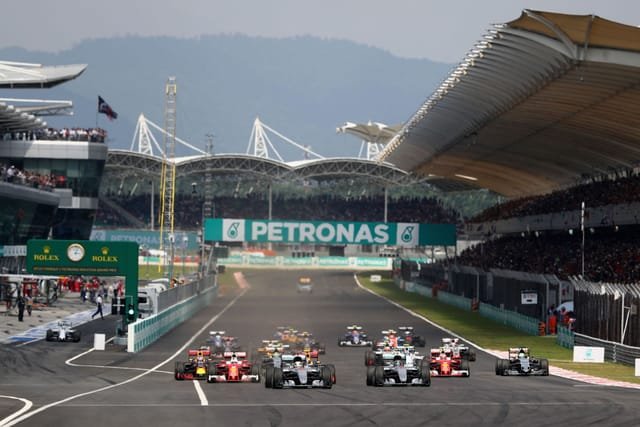
Formula 1‘s 2026 season may soon witness one of its most anticipated returns. The Malaysian Grand Prix, absent from the championship since 2017, is reportedly being considered as a replacement race following the cancellation of the Bahrain Grand Prix earlier this year.
While Formula 1 has spent the last decade expanding into new markets and adding glamorous street circuits, the possibility of Sepang returning to the calendar has generated excitement among fans, drivers, and industry observers alike. Few circuits combine technical complexity, overtaking opportunities, unpredictable weather, and rich racing history as effectively as Malaysia’s iconic venue.
The development comes at a crucial moment for Formula 1 as the sport continues adjusting its 2026 calendar following geopolitical disruptions that forced significant scheduling changes.
Why Was the Bahrain Grand Prix Removed From the 2026 Calendar?
The Bahrain Grand Prix and Saudi Arabian Grand Prix were originally scheduled as rounds four and five of the 2026 Formula 1 season. However, escalating regional tensions in the Middle East forced Formula 1 to cancel both events.
The cancellations created an unusual gap in the championship schedule, resulting in a lengthy break during April and reducing the planned calendar from 24 races.
Rather than immediately announcing replacement events, Formula 1 chose to proceed with a shortened schedule while monitoring global developments.
Now, with the season entering its second half, discussions regarding replacement venues have intensified.
Why Sepang Is Emerging as the Ideal Replacement
Not every former Formula 1 venue can realistically return to the championship. Modern F1 requires world-class infrastructure, FIA-approved safety standards, extensive logistics capabilities, and strong government support.
Sepang checks nearly every box.
Opened in 1999, the circuit was specifically designed for Formula 1 by renowned track architect Hermann Tilke. Unlike many newer venues that have received mixed reviews from drivers, Sepang developed a reputation as one of the most complete racing circuits in the world.
Its wide layout encourages overtaking, while the tropical climate frequently produces unpredictable races.
These characteristics make it particularly attractive in an era when Formula 1 is under increasing pressure to deliver exciting racing.
Sepang’s Formula 1 Legacy
For nearly two decades, the Malaysian Grand Prix was one of the most recognizable races on the Formula 1 calendar.
The circuit hosted numerous memorable moments involving some of the sport’s biggest names.
| Sepang Milestone | Details |
|---|---|
| First Malaysian GP | 1999 |
| Last Malaysian GP | 2017 |
| Circuit Length | Approximately 5.5 km |
| Notable Feature | Long straights and heavy braking zones |
| Last Race Winner | Max Verstappen |
From Michael Schumacher’s Ferrari dominance to Fernando Alonso’s title battles and Sebastian Vettel’s memorable victories, Sepang became synonymous with dramatic Formula 1 action.
The track also played host to several rain-affected classics that tested both driver skill and team strategy.
What Makes Sepang One of Formula 1’s Best Circuits?
Formula 1 drivers often rank circuits based on how challenging and rewarding they are to drive. Sepang consistently scores highly in both categories.
The layout features:
- Long straights that promote overtaking.
- Fast, flowing corners requiring precision.
- Heavy braking zones that create passing opportunities.
- Technical middle sectors that reward driver skill.
- Extreme heat and humidity that test physical endurance.
Unlike some modern venues where overtaking depends heavily on DRS, Sepang naturally encourages wheel-to-wheel racing.
That quality alone has made many fans advocate for its return.
The Strategic Importance of Malaysia in Formula 1’s Asian Expansion
Beyond the racing itself, Malaysia offers Formula 1 a valuable strategic opportunity.
Asia remains one of the fastest-growing markets for motorsport. While races in Singapore, China, and Japan continue attracting strong audiences, Formula 1 is eager to strengthen its presence across Southeast Asia.
Malaysia occupies a particularly important position due to its established motorsport culture, modern infrastructure, and accessibility for fans throughout the region.
A Malaysian Grand Prix could attract spectators not only from Malaysia but also from Singapore, Indonesia, Thailand, the Philippines, and neighboring countries.
That regional appeal makes the event commercially attractive.
How a Malaysian GP Would Fit Into the 2026 Schedule
One of the biggest challenges in modern Formula 1 is calendar management.
Teams already face demanding travel schedules, making geographic efficiency increasingly important.
Reports suggest Formula 1 is considering placing Malaysia between the Azerbaijan and Singapore Grands Prix.
This arrangement would create a triple-header while minimizing logistical complications.
| Potential Asian Stretch | Location |
|---|---|
| Round 1 | Azerbaijan (Baku) |
| Round 2 | Malaysia (Sepang) |
| Round 3 | Singapore (Marina Bay) |
Because Sepang and Singapore are geographically close, teams could move equipment efficiently between venues.
This makes Malaysia a far more practical solution than many alternative circuits.
Malaysian Government Signals Major Announcement
Speculation intensified after Malaysian Prime Minister Anwar Ibrahim publicly acknowledged discussions involving Formula One Management.
While he stopped short of confirming a finalized agreement, his comments strongly suggested that negotiations have advanced beyond preliminary stages.
Government support is often essential for Formula 1 events because hosting fees, infrastructure requirements, and promotional investments can be substantial.
The willingness of Malaysian authorities to engage in discussions indicates serious intent behind the project.
Why Formula 1 Might Prefer Sepang Over Other Alternatives
Several circuits have reportedly been considered as contingency options following calendar disruptions.
Among the names frequently mentioned are Portimão in Portugal and Imola in Italy.
While both venues have recently hosted Formula 1 races, Sepang offers several unique advantages.
- Established Formula 1 infrastructure.
- Large regional fanbase.
- Strategic location within the Asian schedule.
- Strong historical connection to Formula 1.
- Excellent racing reputation among drivers and fans.
These factors collectively strengthen Malaysia’s case.
Financial Challenges That Ended the Original Malaysian GP
One reason the Malaysian Grand Prix disappeared after 2017 was financial sustainability.
Despite its popularity among fans, rising hosting costs and concerns over attendance made it difficult to justify continued investment.
However, Formula 1 today is a very different product than it was a decade ago.
The global popularity boom generated by digital media, streaming platforms, and expanded international audiences has transformed the sport’s commercial outlook.
Markets that previously struggled to justify Formula 1 investment are now reassessing their opportunities.
How Formula 1 Has Changed Since Sepang Last Hosted a Race
If Malaysia returns, fans will see a dramatically different Formula 1 championship compared to 2017.
Several major developments have reshaped the sport:
- Ground-effect regulations transformed car design.
- New sprint race formats increased weekend action.
- Global television audiences reached record levels.
- Social media engagement expanded significantly.
- Multiple new venues joined the calendar.
A Sepang comeback would therefore introduce the circuit to an entirely new generation of Formula 1 followers.
What Drivers Could Expect at Sepang in 2026
Modern Formula 1 cars are heavier and faster than the machines that last raced in Malaysia in 2017.
That combination could produce fascinating racing dynamics.
The circuit’s long straights would provide overtaking opportunities, while its technical corners would test tire management and aerodynamic efficiency.
Weather could also become a major storyline.
Malaysia’s tropical climate has historically delivered sudden rainstorms capable of transforming race strategies within minutes.
In an era where strategy often determines results, those conditions could create unpredictable and entertaining races.
The Bigger Picture: Formula 1’s Flexible Future Calendar
The discussion surrounding Malaysia highlights an important trend in Formula 1’s modern era.
Rather than relying exclusively on fixed venues, the championship increasingly values flexibility.
Unexpected geopolitical developments, logistical challenges, and commercial opportunities mean that adaptable scheduling has become essential.
Historic circuits capable of stepping in when needed now possess greater value than ever before.
Sepang’s potential return demonstrates how former Formula 1 venues can remain relevant even after leaving the calendar.
Could This Become a Long-Term Return?
Perhaps the most intriguing question is whether a 2026 appearance would be a one-off replacement or the beginning of a permanent comeback.
If the event attracts strong attendance, generates positive television audiences, and delivers exciting racing, Formula 1 may view Malaysia as a valuable long-term partner.
The sport continues seeking the ideal balance between traditional circuits and new markets.
Sepang uniquely offers both heritage and commercial potential.
That combination could make it more than just an emergency replacement.
Conclusion
The possibility of the Malaysian Grand Prix returning to Formula 1 in 2026 represents far more than a simple calendar adjustment. It signals the potential revival of one of the sport’s most respected circuits at a time when Formula 1 is balancing global expansion with the preservation of its racing heritage.
With Bahrain’s cancellation creating an opening, Sepang has emerged as a logical and exciting solution. Its proven ability to deliver thrilling races, strategic location within the Asian calendar, and renewed government interest make it one of the strongest candidates available.
While official confirmation remains pending, the momentum behind a Malaysian comeback continues to grow. If finalized, Formula 1 fans could soon witness the return of a circuit that many consider one of the finest ever built—bringing a beloved chapter of the sport’s history back into the modern era.
For breaking news and live news updates, like us on Facebook or follow us on Twitter and Instagram. Read more on Latest Sports on thefoxdaily.com.






COMMENTS 0